
- Release Year: 2017
- Platforms: Windows
- Publisher: Paper Pirates
- Developer: Sokolab
- Genre: Puzzle
- Perspective: Diagonal-down
- Game Mode: Single-player
- Setting: Africa
- Average Score: 56/100
Description
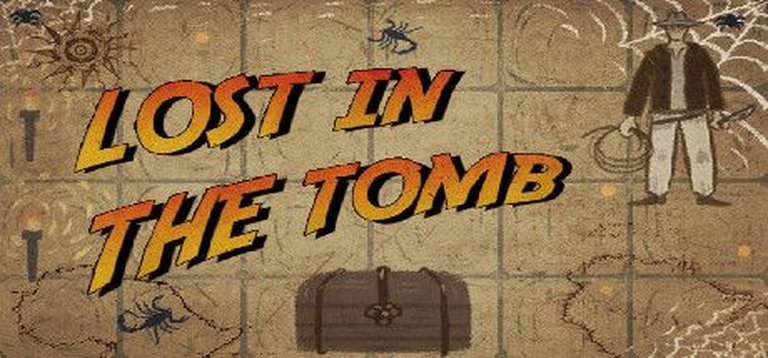
Lost in the Tomb is a turn-based puzzle game set in the crypts of ancient Egyptian pyramids, where players guide an adventurer through treacherous dungeons to escape to the surface. Featuring Sokoban-style mechanics, players push platforms and crates in maze-like levels to reach their goal, with a focus on logic and strategy. The game boasts minimalist chalk-style graphics, a built-in level editor for creating custom challenges, and classic gameplay inspired by retro titles.
Where to Buy Lost in the Tomb
PC
Lost in the Tomb Patches & Updates
Lost in the Tomb Guides & Walkthroughs
Lost in the Tomb Reviews & Reception
steambase.io (56/100): Lost in the tomb has earned a Player Score of 56 / 100.
Lost in the Tomb: A Sandblasted Relic or Hidden Gem?
Introduction
In the vast catacombs of indie puzzle games, Lost in the Tomb (2017) stands as a modest, unassuming artifact—a digital homage to the Sokoban formula draped in Egyptian aesthetics. Developed by Sokolab and published by Paper Pirates, this budget title ($0.99) evokes the minimalist charm of early puzzle classics while grappling with the limitations of its scope. This review argues that Lost in the Tomb is a mechanically faithful but creatively safe iteration of the crate-pushing genre, salvaged by its level editor yet constrained by its refusal to innovate beyond tradition.
Development History & Context
Studio & Vision
Sokolab, an obscure development entity with no prior catalog entries on MobyGames, positioned Lost in the Tomb as a revival of grid-based logic puzzles. The studio’s vision, per the Steam description, was to deliver “classic gameplay in the spirit of old games,” leveraging a “nice chalk graphics” style and user-generated content via a built-in editor. Publisher Paper Pirates—similarly enigmatic—aligned with the late-2010s trend of indie studios resurrecting retro mechanics for niche audiences.
Technological Constraints & Era
Released in November 2017, the game entered a marketplace saturated with indie puzzle titles like Stephen’s Sausage Roll (2016) and Linelight (2017). Unlike its peers, Lost in the Tomb embraced a fixed-screen, turn-based structure reminiscent of 1980s MS-DOS puzzlers, opting for simplicity over modern flair. Its lightweight design (suitable for low-end PCs) and $0.99 price point targeted casual players rather than demanding AAA audiences. The decision to exclude mobile ports—despite its bite-sized levels—likely limited its reach in an era dominated by smartphone gaming.
Narrative & Thematic Deep Dive
Plot & Characters
Storytelling in Lost in the Tomb is skeletal: an unnamed adventurer must navigate “many dungeons” to escape an Egyptian tomb. No dialogue, cutscenes, or lore deepen this premise—the protagonist exists solely as a narrative vessel for the puzzles. This austerity mirrors classic Sokoban, where context is secondary to mechanical rigor.
Themes
The game’s themes orbit isolation and perseverance. Each sterile chamber—devoid of life or text—becomes a meditation on solitude, echoing the existential dread of being “lost” in an endless maze. The Egyptian setting, however, feels underutilized; beyond superficial sarcophagi and sand-textured walls, there’s no engagement with history or mythology. The crypt is a stage, not a story.
Gameplay Mechanics & Systems
Core Loop
Players push crates onto target tiles across 50+ levels, adhering to Sokoban’s foundational rules:
– Crates can only be pushed, not pulled.
– Misplaced blocks often necessitate level restarts.
– Diagonal-down perspective (a rare choice for the genre) slightly obscures depth perception but aids visual clarity.
Innovations & Flaws
The inclusion of a level editor is the game’s sole innovation, empowering players to craft and share crypts. Yet, this feature is double-edged: while extending replayability, it highlights the vanilla simplicity of the core campaign.
Critically, the game lacks QoL staples like undo buttons or checkpointing—a punishing design that clashes with modern sensibilities. The controls, though functional, feel imprecise when navigating tight corridors, leading to frustration in later stages.
UI & Progression
A barebones interface displays moves counter and restart options. No scoring system or leaderboards exist, reducing incentive for optimization. Progression is linear, with difficulty spikes often arising from trial-and-error tedium rather than elegant complexity.
World-Building, Art & Sound
Visual Design
The “chalk graphics” aesthetic—a mix of hand-drawn textures and muted desert hues—evokes a sketched parchment feel. While charmingly minimalist, it borders on austere: environments repeat tilesets ad nauseam, and animations are virtually nonexistent. The fixed-screen presentation, though nostalgic, feels claustrophobic compared to scrolling contemporaries.
Atmosphere & Sound
Ambiance relies on subtle echoes and faint sand-shifting effects, creating a tomb-like silence that amplifies isolation. Yet, the sound design is sparse—no dynamic music or ambient tracks deepen immersion. The result is an experience that feels acoustically hollow, mirroring its narrative emptiness.
Reception & Legacy
Launch Reception
Lost in the Tomb garnered minimal critical attention at release, with zero professional reviews archived on MobyGames or Metacritic. User reviews on Steam (56/100) paint a mixed picture:
– Praise: Budget-friendly price, nostalgic appeal, level editor flexibility.
– Criticism: Repetitive puzzles, “dated” presentation, and unforgiving design.
Evolution & Influence
The game’s legacy lies in its editor—a tool that enabled a minor resurgence of Sokoban-inspired UGC (User-Generated Content) in niche communities. However, its impact pales next to titans like Baba Is You (2019), which reinvented puzzle logic. While indie successors like A Monster’s Expedition (2020) refined the genre, Lost in the Tomb remains a footnote—a proof-of-concept for accessibility over ambition.
Conclusion
Lost in the Tomb is a paradox: competently executed yet forgettable, nostalgic yet regressive. Its commitment to Sokoban’s purity will satisfy genre purists, while its lack of innovation alienates those seeking evolution. At $0.99, it’s a harmless diversion—a dusty relic for puzzle archaeologists—but far from a treasure. History may remember it not for brilliance, but as a testament to the enduring appeal of simplicity in an age of excess.
Final Verdict: A mechanically sound but creatively timid homage—worth excavating for devout puzzle fans, yet easily buried by loftier contemporaries.