
- Release Year: 2021
- Platforms: Android, Linux, Macintosh, Nintendo Switch, Windows
- Publisher: RetroWare, Screenwave Media, Inc.
- Developer: Mokuzai Studio LLC
- Genre: Action
- Perspective: Side view
- Game Mode: Single-player
- Gameplay: Accessibility, Checkpoint system, Dynamic difficulty, Platform, Precision platforming
- Average Score: 91/100
Description
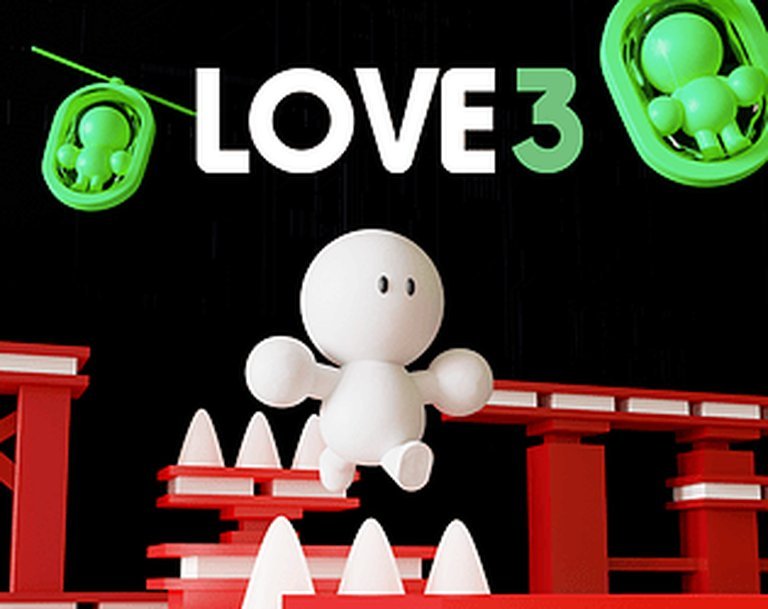
LOVE 3 is a minimalist indie platformer developed by Mokuzai Studio LLC, offering a precision-based challenge in a streamlined 2D side-scrolling format. As the third entry in the LOVE series, it emphasizes accessible yet demanding gameplay with customizable checkpoint systems to dynamically adjust difficulty. Players navigate through meticulously designed levels, praised for their gratifying difficulty balance and soothing soundtrack. Released across multiple platforms starting in 2021, it garnered critical acclaim for its tight controls and player-friendly approach to the precision platformer genre.
Where to Buy Love 3
Love 3 Patches & Updates
Love 3 Reviews & Reception
metacritic.com (95/100): A gift to the genre.
nintendoworldreport.com (95/100): A triumphant return to form for the series.
gamingtrend.com (85/100): A challenging precision platformer without the frustration.
LOVE 3: Review
Introduction
In a gaming landscape often dominated by sprawling narratives and photorealistic visuals, LOVE 3 stands as a defiant testament to the power of minimalism. Released in 2021 by Mokuzai Studio and Fred Wood, this precision platformer distills the genre to its essence: taut controls, razor-sharp level design, and an unflinching commitment to player agency. With a 94% critical average and a passionate fanbase, LOVE 3 isn’t just the culmination of its beloved trilogy—it’s a masterclass in how restraint can breed brilliance. This review explores how Wood’s vision, forged across a decade of indie development, delivers one of the most elegantly crafted platformers of the modern era.
Development History & Context
LOVE 3 emerged from the singular mind of Fred Wood, a San Antonio-based developer whose career began with Duke Nukem 3D mods and Sonic fan games. Wood’s 2014 debut, LOVE, introduced the series’ DNA: minimalist aesthetics, brutal-but-fair challenges, and a checkpoint system that revolutionized player-defined difficulty. By 2017’s LOVE 2: kuso, the formula had crystallized, earning acclaim for its “well-designed, challenging platforming” (The Elite Institute).
The 2021 release of LOVE 3 arrived amid a renaissance of indie platformers, from Celeste to Super Meat Boy Forever. Yet Wood’s approach stood apart. Built in GameMaker, the game eschewed graphical prowess for mechanical purity, leveraging the lessons of its predecessors while refining their rougher edges. Partnering with Screenwave Media allowed Wood to expand the project’s scope, bundling remastered versions of LOVE and kuso—a gesture that acknowledged the series’ cult following while inviting newcomers.
Narrative & Thematic Deep Dive
LOVE 3’s narrative is deliberately sparse, an exercise in environmental storytelling. Players control fiveEight, a stick-figure survivor navigating a mechanical wasteland filled with spinning gears, lethal spikes, and crumbling ruins. There’s no dialogue or cutscenes; instead, the desolate backdrop whispers of collapse. Hidden collectibles—buttons, survivors, and cryptic symbols—hint at a larger mystery, culminating in multiple endings shaped by exploration.
Thematically, LOVE 3 grapples with isolation and perseverance. Its monochromatic worlds evoke a sense of existential weight, with James Bennett’s synth-heavy soundtrack oscillating between melancholic and hopeful. As Indie Gamer Chick noted, the game’s title feels earned: beneath its punishing exterior lies a sincere meditation on “finding hope within the hopeless.”
Gameplay Mechanics & Systems
At its core, LOVE 3 is a symphony of movement. The controls are pared down to a jump button and a checkpoint command, yet every pixel-perfect leap carries tension. Levels demand mastery of momentum, timing, and spatial awareness, with obstacles ranging from homing missiles to disintegrating platforms.
The game’s defining innovation is its checkpoint system: at any moment, players can plant a respawn marker—but only on solid ground. This mechanic transforms difficulty into a dialogue. Novices can checkpoint after every hurdle, while masochists can brave “YOLO mode” (one life, no checkpoints). Rapid Reviews UK praised this flexibility, calling it “the best implementation of player-placed checkpoints” in the genre.
Other features deepen the experience:
– Slow-motion toggle: A lifeline for overwhelmed players.
– Jetpack segments: A divisive addition—some found the controls overly sensitive, per Indie Gamer Chick.
– Speedrun leaderboards: A nod to the community that embraced LOVE’s replayability.
Yet LOVE 3 isn’t flawless. The minimalist art style occasionally confuses, with white hazards blending into white platforms. Still, these missteps are rare in an otherwise immaculate design.
World-Building, Art & Sound
LOVE 3’s visual identity is stark yet striking. Each of its 25 levels embraces a single bold color—blood red, cobalt blue, acid green—accented by stark white geometry. The aesthetic recalls Atari-era abstraction but feels modern in its precision. While some critics found the palette limiting, others, like NintendoWorldReport, celebrated how “the vibrant colors and negative space give detail to barren landscapes.”
Sound design is equally vital. Bennett’s soundtrack—42 tracks spanning chiptune, ambient, and electronica—tailors each level’s mood. The music isn’t just backdrop; it’s a navigational tool, with pulsating rhythms subtly telegraphing obstacle patterns. As GamingTrend noted, the tracks evoke “lo-fi beats to study to,” tempering the game’s intensity with calming focus.
Reception & Legacy
Critically, LOVE 3 was a triumph. NintendoWorldReport’s 9.5/10 review hailed it as “a gift to the genre,” while cosm0.fr awarded a perfect score, praising its “immediate, gratifying” gameplay. Even skeptics acknowledged its craftsmanship—GamingTrend’s 85/100 critique still called it “a great game for anyone looking for a challenge.”
Commercially, the game found niche success, bolstered by speedrunning communities and events like AGDQ 2023, where a custom level debuted. Its legacy lies in democratizing difficulty: LOVE 3 proved that accessibility and rigor aren’t mutually exclusive, inspiring contemporaries like Geometrify and Super Kiwi 64.
Conclusion
LOVE 3 is more than the sum of its checkpoints. It’s a love letter to platforming purists, a gateway for newcomers, and a testament to Fred Wood’s evolving genius. While minor flaws—like occasional visual clutter—keep it from perfection, its triumphs resonate louder. By bundling its predecessors, refining their systems, and wrapping it all in Bennett’s transcendent score, LOVE 3 cements itself as a modern classic.
In the pantheon of indie platformers, few games balance challenge and compassion so deftly. As Wood himself might say: this is LOVE, distilled to its purest form.
Final Verdict: A minimalist marvel and one of the definitive platformers of the 2020s.