
- Release Year: 2021
- Platforms: Windows
- Publisher: Analog Chechen Dudes
- Developer: Taxincrease
- Genre: Role-playing (RPG)
- Perspective: Side view
- Game Mode: Single-player
- Gameplay: Japanese-style RPG, Turn-based
- Setting: Europe
- Average Score: 78/100
Description
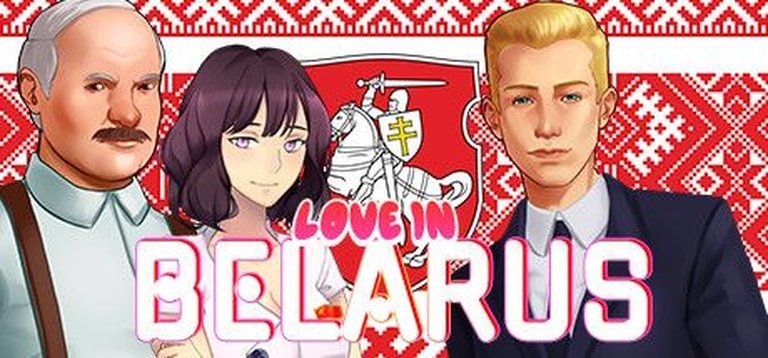
Love in Belarus is a turn-based Japanese-style RPG set in Europe that tells the fictional love story of Belarusian dictator Aleksandr Lukashenko. Players must help the ‘cute little dictator’ overcome his crisis of power by bringing love to the territory of Belarus, navigating classic JRPG gameplay with various character classes and turn-based combat mechanics.
Where to Buy Love in Belarus
PC
Love in Belarus Guides & Walkthroughs
Love in Belarus Reviews & Reception
steambase.io (85/100): Love in Belarus has earned a Player Score of 85 / 100. This score is calculated from 55 total reviews which give it a rating of Very Positive.
stmstat.com (75.37/100): Love in Belarus has garnered a total of 57 reviews, with 49 positive reviews and 8 negative reviews, resulting in a ‘Mostly Positive’ overall score.
completionist.me (75.14/100): Game Rating: 75.14
Love in Belarus: Review
Introduction
In the saturated landscape of indie games, few titles manage to blend political satire, absurdist humor, and heartfelt romance as audaciously as Love in Belarus. Released on June 21, 2021, this JRPG from developer Taxincrease and publisher Analog Chechen Dudes has carved out a peculiar niche in gaming history—a micro-budget ($1.99) exploration of power, vulnerability, and love starring a “cute little dictator” named Aleksandr Lukashenko. More than a mere curiosity, Love in Belarus serves as a cultural artifact of a turbulent era, where real-world political tensions bled into ludic spaces. This review dissects its unlikely legacy, examining how its crude yet earnest execution inadvertently created a commentary on authoritarianism, human connection, and the bizarre alchemy of indie game creation. Ultimately, the thesis is clear: Love in Belarus is not a masterpiece of design but a fascinating, flawed, and unapologetically chaotic document of its time—an imperfect vessel for uncomfortable truths.
Development History & Context
Love in Belarus emerged from the unlikeliest of creative unions. Its developer, Taxincrease, was a pseudonymous entity operating in the shadows of the indie scene, known for provocative low-effort titles. The publisher, Analog Chechen Dudes (a name dripping with deliberate irony), suggested a deliberate intent to court controversy. The game’s genesis occurred during a period of heightened geopolitical tensions in Eastern Europe, specifically the 2020–2021 Belarusian protests against President Lukashenko’s regime. The developers seized this moment, framing the dictator not as a tyrant but as a lonely figure grappling with a “love crisis.” This audacious choice was born from a blend of political provocation and absurdist comedy—classic Taxincrease trademarks.
Technologically, the game was constrained by its low-budget aspirations and reliance on RPG Maker. Built for Windows with minimal specs (2GHz Dual Core CPU, 2GB RAM, DirectX 9.0c graphics), it eschewed graphical fidelity for functional storytelling. This mirrored the broader indie gaming landscape of 2021, where Steam’s open gates allowed games with niche, often controversial themes to flourish. The era saw a surge of “political” indies—games like Supreme Ruler Ultimate or Pax Nova grappling with authoritarianism—but Love in Belarus differentiated itself through its unapologetic silliness. Its release coincided with a wave of Eastern European indie devs leveraging RPG Maker for satirical commentary, positioning it as both a product and a parody of the trend.
Narrative & Thematic Deep Dive
The plot is a surreal whirlwind of farce and melancholy. Players assist Lukashenko (visually rendered as a wide-eyed, bespectacled figure) in his quest for love amid his crumbling dictatorship. The narrative hinges on a central irony: his oppressive grip on power is framed as a desperate attempt to secure affection. Key scenarios include infiltrating a “casino” (a clear nod to real-world Lukashenko controversies), negotiating with political rivals like Navalny and Tikhanovsky, and navigating office-based encounters in the infamous Room 314. Dialogue oscillates between deadpan absurdity (“Bring love to the territory of Belarus!”) and poignant vulnerability, especially in Lukashenko’s monologues about isolation.
Characters are archetypes with satirical edges: Lukashenko as the “usurper of power,” a loyal “little doge” companion, and NPCs embodying Belarusian stereotypes (e.g., babushkas, who can be “punished” for comedic effect). Themes revolve around the dehumanizing nature of autocracy—Lukashenko’s “crisis” is a metaphor for how power corrupts personal relationships. The game’s disclaimer (“All characters and events are fictional”) is an act of both cowardice and courage, acknowledging its real-world inspirations while evading critique. Multiple endings (e.g., “Dictatorship,” “Back to USSR,” “Long live Belarus!”) force players to confront moral choices, though their impact is largely superficial. The pervasive “Hentai” and “Mature” user tags hint at risqué subplots, but the narrative’s focus remains on political satire, titillation serving as a smokescreen for its core message.
Gameplay Mechanics & Systems
Gameplay adheres rigidly to JRPG tropes, executed with RPG Maker’s signature limitations. Turn-based combat is functional but rudimentary, featuring “many classes” (e.g., Dictator, Comrade, Dissident) with little differentiation beyond stat tweaks. Battles feel like filler, often interrupting narrative flow for grinding against generic enemies. Character progression is linear, with levels unlocked through story milestones rather than meaningful customization. The UI is cluttered and utilitarian—a relic of RPG Maker’s constraints—relying on static sprites and text-heavy dialogue boxes.
Innovation is scarce, but the game leans into its absurdity. “Choices Matter” tags suggest branching paths, yet most decisions (e.g., “Make a bad choice” vs. “Make a good choice”) lead to cosmetic endings rather than systemic consequences. Puzzles are perfunctory, like assembling a “secret code” from disjointed clues, emphasizing narrative over challenge. The “Faithful companion” achievement (befriending the doge) underscores the game’s focus on charm over complexity. Flaws are glaring: repetitive combat, a lack of polish in animations, and an over-reliance on exposition. Yet, these shortcomings align with the game’s thematic intent—a broken, glitchy world mirroring a dysfunctional regime.
World-Building, Art & Sound
Love in Belarus’s world is a caricatured Belarus, rendered in low-res, pixel-art sprites. Locations include drab government offices, dimly lit protest zones, and a casino that feels like a fever dream. The art direction prioritizes satire over realism: Lukashenko’s exaggerated features (large head, tiny arms) evoke political cartoons, while environments lack depth. This visual austerity serves the narrative—its starkness mirrors the bleakness of authoritarianism.
Sound design is equally minimalistic. No voice acting exists; reliance on text and MIDI-like chiptunes evokes a sense of nostalgic detachment. Music loops between generic battle themes and melancholic melodies that occasionally hint at Eastern European folk influences. Silence dominates character interactions, amplifying the game’s deadpan humor. Together, visuals and sound create an atmosphere of surreal detachment—a world where absurdity is the norm. While technically primitive, this aesthetic choice reinforces the game’s meta-commentary: a game about a dictator is, fittingly, a “cute little” experience.
Reception & Legacy
Love in Belarus launched with a whimper, garnering no critic reviews on Metacritic but accumulating a “Mostly Positive” Steam rating (49 positive, 8 negative reviews). Player reactions polarized: some lauded its audacity (“Simple, modest, brilliant!” one 893-minute player raved), while others dismissed it as propaganda (“yankee nato propganda, dont buy”). Community discussions on Steam were equally divided, with debates over the “(All commercially fictional)” disclaimer and its real-world parallels. Achievements metrics reveal engagement: “Meet with Lukashenko” (95.7% unlocked) suggests initial curiosity, but endings like “Long live Belarus!” (20.9%) indicate most players abandoned the game early.
Legacy-wise, Love in Belarus remains a footnote, but a significant one. It exemplifies the era’s trend of “political” indie games—titles using low-effort mechanics to dissect real-world issues. Its influence is indirect: it paved the way for similarly absurdist political RPGs, though none matched its specific blend of satire and smut. Culturally, it endures as a meme—screenshots of Lukashenko’s sprite and guides like “How to Plant Potatoes and People” circulate in niche forums. Its inclusion in the “Russian-Belarusian” Steam bundle ($3.18 for two games) underscores its status as a curiosity. Yet, the game’s true legacy lies in its earnestness: in a world of polished political games, Love in Belarus dared to be gloriously, unapologetically broken.
Conclusion
Love in Belarus is a paradox: a game that fails as a JRPG but succeeds as cultural commentary. Its clumsy mechanics, rudimentary art, and nonsensical plot do not redeem it as a “good game,” yet its unfiltered exploration of power and vulnerability is oddly resonant. Taxincrease and Analog Chechen Dudes created a digital artifact—a crude, funny, and uncomfortable mirror reflecting a nation’s turmoil. Its place in history is secured not by design but by intent: it dared to humanize the inhuman, to satirize the sacred, and to challenge players to find love in the darkest corners. For historians, it is a vital, if flawed, document from the indie boom of the early 2020s. For players, it remains a $1.99 enigma—a “fascinating love story” that is, ultimately, more fascinating than it is lovable.