
- Release Year: 2019
- Platforms: Macintosh, Windows
- Publisher: Paper Fan Games
- Developer: Paper Fan Games
- Genre: Action, Puzzle
- Perspective: Side view
- Game Mode: Single-player
- Gameplay: Platform
- Average Score: 94/100
Description
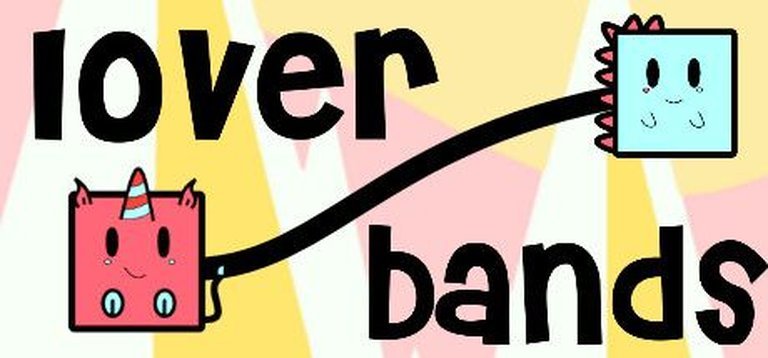
Lover Bands is a 2-player cooperative platform game where players are bound together by a bond of souls. Set in a 2D scrolling environment with side-view perspective, the game challenges players to work together to collect gems, avoid enemies, and reach the black hole before time runs out. Developed by Paper Fan Games and released in 2019 for Windows and Macintosh, the game emphasizes teamwork and coordination, requiring players to use wireless keyboards to navigate obstacles and complete levels.
Where to Buy Lover Bands
PC
Lover Bands Patches & Updates
Lover Bands Reviews & Reception
steambase.io (95/100): A triumphant return to form for the series.
lestrades.com (94.7/100): Lover Bands is a 2-player cooperative platform game where you are tied together.
Lover Bands Cheats & Codes
PC
Enter codes at the computer terminal in your room on the weekend.
| Code | Effect |
|---|---|
| goodhomie | Resets your ‘homie’ status with Rin Rokuhara. |
| funinthesun | Resets the beach events, allowing you to re-visit it on next Saturday. |
| fingeryourniece | Resets Ami Arakawa’s events ‘No One Can See Us’ and ‘Important Things’. |
| seemeafterclass | Resets Chika Chosokabe’s ‘Detention’ event state. |
| floor1victory | Changes the winner of the Dorm Wars to Floor 1. |
| floor2victory | Changes the winner of the Dorm Wars to Floor 2. |
| dormwartie | Sets the outcome of the Dorm Wars to a tie. A coin will be flipped to decide the winner during ‘De-Briefing the Teacher’. |
| allcharactersare18+ | Activates Wizard Mode. |
| rosebud | Increases every affection stat by 100. |
| iwillalwaysloveyou | Increases Ami Arakawa’s lust by 100. |
| bubblewrapprincess | Increases Ayane Amamiya’s lust by 100. |
| likemotherlikedaughter | Increases Makoto Miyamura’s lust by 100. |
| heartofgold | Increases Chika Chosokabe’s lust by 100. |
| supermom | Increases Sara Sakakibara’s lust by 100. |
| atreefallsintheforest | Increases Futaba Fukuyama’s lust by 100. |
| thouartsick | Increases Haruka Hamasaki’s lust by 100. |
| youonlyliveonce | Increases Kirin Kanda’s lust by 100. |
| openrelationship | Increases Maki Miyamura’s lust by 100. |
| tomboysrus | Increases Miku Maruyama’s lust by 100. |
| shiningstar | Increases Niki Nakayama’s lust by 100. |
| weebnote | Increases Molly MacCormack’s lust by 100. |
| pocketpussy | Increases Sana Sakakibara’s lust by 100. |
| iseeeverything | Increases Nodoka Nagasawa’s lust by 100. |
| nyameadom | Increases Imani Imai’s lust by 100. |
| wheredoesthetimego | Adds 100 days to your counter. |
| lagfix | Resets the call stack which an early version of the headpat system caused to pile up and cause lag. Doesn’t mark save as a cheater. |
Lover Bands: A Cooperative Platformer That Tests Friendships and Reflexes
Introduction: The Bond That Binds (and Frustrates)
Few games dare to turn the sacred act of couch co-op into a crucible of interpersonal tension quite like Lover Bands. Released in 2019 by the indie studio Paper Fan Games, this deceptively simple 2D platformer ties two players together—literally—with a single, unbreakable bond, forcing them to navigate treacherous levels in perfect (or imperfect) harmony. It’s a game that thrives on chaos, communication, and the occasional existential crisis as players grapple with the physics of shared movement, the frustration of misaligned jumps, and the sheer absurdity of dragging a “dead” partner across the finish line.
At its core, Lover Bands is a love letter to the golden age of local multiplayer, evoking the spirit of classics like The Lost Vikings or Portal 2’s co-op mode, but with a twist: instead of complementary abilities, players are shackled together by an invisible tether, their fates intertwined in a way that demands both cooperation and compromise. The game’s tagline—“Drag your non-gamer friend’s dead body over the finish line!”—hints at its darkly comedic tone, but beneath the surface lies a surprisingly nuanced exploration of teamwork, patience, and the thin line between camaraderie and mutual resentment.
This review will dissect Lover Bands from every angle: its development history, its mechanics, its narrative (or lack thereof), its reception, and its lasting impact on the indie co-op landscape. By the end, you’ll understand why this $0.99 experiment has earned a cult following—and why it might just be the most infuriatingly delightful game you’ll ever play with a friend.
Development History & Context: A Labor of Love (and Frustration)
The Studio Behind the Struggle
Paper Fan Games, the one-person development team behind Lover Bands, is a name that might not ring bells in the AAA sphere, but within the indie co-op community, it’s synonymous with chaotic, physics-based multiplayer experiences. The studio’s portfolio is small but focused, with titles like Duo Defenders (a twin-stick shooter with similar cooperative mechanics) sharing Lover Bands’ DNA of forcing players into awkward, often hilarious situations.
The game was built using the Unity engine, a choice that allowed for rapid prototyping and iteration—a necessity given its reliance on tight, responsive physics. The development cycle appears to have been relatively short, with the game launching on Steam in April 2019 for Windows and macOS. Its price point ($0.99) and minimalist marketing suggested a passion project rather than a commercial juggernaut, yet its post-launch updates (including controller support and balance tweaks) indicate a dedication to refining the experience.
The Gaming Landscape in 2019: A Co-Op Renaissance
Lover Bands arrived at a fascinating juncture in gaming history. The late 2010s saw a resurgence of local multiplayer games, fueled by nostalgia for couch co-op and the rise of indie developers filling the void left by AAA studios’ shift toward online-only experiences. Titles like Overcooked, Cuphead, and Lovers in a Dangerous Spacetime had already proven that there was a hungry audience for games that prioritized shared chaos over solitary grinding.
Yet Lover Bands carved its own niche. Unlike Overcooked’s kitchen-based pandemonium or Lovers in a Dangerous Spacetime’s ship-management teamwork, Lover Bands stripped the co-op experience down to its most primal element: movement. There are no inventories, no complex puzzles, no dialogue trees—just two players, a tether, and the laws of physics. This minimalism was both a strength and a risk. In an era where indie games often competed on the basis of narrative depth or artistic ambition, Lover Bands bet everything on pure, unadulterated gameplay.
Technological Constraints and Design Philosophy
The game’s 2D side-scrolling perspective and direct control scheme are reminiscent of classic platformers, but the tether mechanic introduces a layer of complexity that required precise engineering. The Unity engine’s physics system had to handle:
– Shared momentum: When one player jumps, the other is pulled along, often with unpredictable results.
– Collision detection: Both players occupy the same physical space, meaning enemies and obstacles affect them simultaneously.
– Input synchronization: Early versions reportedly suffered from a bug where both players would jump if one pressed the button—a quirk that, while patched, speaks to the challenges of designing for shared control.
The game’s art style is deliberately simple, with bright, cartoonish visuals that emphasize readability over detail. This was a smart choice; in a game where split-second reactions are everything, cluttered graphics would have been a death sentence. The sound design, too, is minimalist, with cheerful chiptune music that contrasts humorously with the on-screen frustration.
Narrative & Thematic Deep Dive: The Story of a Bond (or a Breakup)
Plot? What Plot?
Lover Bands is not a game that concerns itself with lore. There is no opening cinematic, no exposition, no villain to defeat. The Steam description sums it up succinctly:
“Lover Bands is a 2-player cooperative platform game where you are tied together by a bond of souls. Work together to collect gems, avoid enemies, and jump into the black hole before the timer runs out!”
That’s it. No backstory, no character names, no grand narrative. The “bond of souls” is purely mechanical—a tether that cannot be broken, for better or worse. Yet this absence of traditional storytelling is, in itself, a thematic statement.
Themes: Cooperation, Sacrifice, and the Illusion of Control
While Lover Bands lacks a conventional narrative, it is rich in emergent storytelling—the kind that arises from player interactions. Every session becomes a micro-drama of trust and betrayal, teamwork and sabotage. The game’s themes can be broken down as follows:
-
The Fragility of Teamwork
- The tether is both a blessing and a curse. It forces players to communicate, to anticipate each other’s moves, and to accept that individualism is impossible. Yet it also highlights how easily cooperation can collapse. One misjudged jump, one selfish dash for a gem, and suddenly you’re both plummeting into a pit.
- The game’s difficulty curve is steep, but not because of complex puzzles—because of human error. The real enemy isn’t the on-screen obstacles; it’s the person sitting next to you.
-
Sacrifice and Selflessness
- The most successful players are those who learn to sacrifice personal gain for the greater good. Do you go for that last gem, risking both players’ lives, or do you play it safe? The game’s scoring system (which rewards gem collection) subtly encourages greed, making these moments of moral dilemma frequent and fraught.
- The “drag your friend’s dead body” mechanic—where one player can carry the other’s limp form to the finish line—is a darkly humorous metaphor for relationships. Sometimes, you have to carry the other person, even when they’re not pulling their weight.
-
The Absurdity of Shared Fate
- The game’s levels are filled with surreal hazards: black holes that must be jumped into (a bizarre win condition), slimes that chase you relentlessly, and cannons that fire unpredictable projectiles. The absurdity of these obstacles mirrors the absurdity of the players’ situation—bound together in a world that seems designed to tear them apart.
- The lack of a traditional “win” condition (beyond surviving the level) reinforces the idea that the journey—not the destination—is what matters. The real victory is making it to the end without strangling your partner.
Characters and Dialogue: The Silence Speaks Volumes
There are no named characters in Lover Bands, no voice acting, no written dialogue. The “protagonists” are faceless, gender-neutral blobs connected by a rope. This anonymity is intentional—it allows players to project their own dynamics onto the avatars. Are they lovers? Siblings? Strangers forced into an unwilling partnership? The game doesn’t say, and that’s part of its genius.
The only “dialogue” comes from the players themselves, and it’s often the most revealing part of the experience. A typical session might include:
– “Why did you jump?!”
– “I’m trying to help, stop fighting me!”
– “Just let me die, it’s easier this way.”
These exchanges are the game’s true narrative—a real-time, unscripted drama of human interaction.
Gameplay Mechanics & Systems: The Beautiful Chaos of Shared Movement
Core Gameplay Loop: Simple in Theory, Maddening in Practice
Lover Bands’ gameplay can be summarized in three steps:
1. Move: Use arrow keys (or a controller) to navigate the level.
2. Collect: Grab gems for points.
3. Survive: Avoid enemies and hazards, then jump into the black hole before time runs out.
In isolation, these mechanics are unremarkable. Combined with the tether, they become a masterclass in emergent complexity.
The Tether: A Mechanic That Defines the Game
The tether is the heart of Lover Bands, and its behavior is deceptively nuanced:
– Elasticity: The rope stretches and contracts, allowing for some separation but snapping players back together if they stray too far.
– Momentum Transfer: If one player jumps, the other is pulled upward, often with unintended consequences (e.g., flinging the second player into a spike pit).
– Shared Hitbox: Enemies and obstacles affect both players simultaneously. If one gets hit, both take damage.
This creates a feedback loop of chaos:
– Player 1 jumps to avoid a slime.
– Player 2, mid-air, is yanked upward, colliding with a low ceiling.
– Both players fall into a pit.
– Cue the screaming.
Level Design: A Sadist’s Playground
The game’s levels are designed to exploit the tether’s quirks. Common hazards include:
– Narrow corridors: Force players to move in lockstep, punishing any deviation.
– Moving platforms: Require precise timing, which is nearly impossible when two people are controlling one “unit.”
– Black holes: The win condition is to jump into them, but their placement often requires a leap of faith—and trust that your partner won’t bail at the last second.
– Cannons and slimes: Unpredictable enemies that demand quick reflexes and, more importantly, shared awareness.
The later levels introduce asymmetrical challenges, where one player must act as an anchor while the other navigates a tricky section. These moments are where Lover Bands shines, transforming from a chaotic mess into a puzzle that demands genuine teamwork.
Progression and Difficulty: A Test of Patience
The game features an Adventure mode with a series of increasingly difficult levels, as well as a Versus mode where players can compete (though the tether remains, making this a bizarre hybrid of cooperation and competition).
Difficulty scales not through enemy toughness, but through level design complexity and player psychology. Early levels are forgiving, teaching the basics of movement. Later stages become exercises in frustration, where success hinges on:
– Communication: Verbal or non-verbal cues to coordinate jumps.
– Trust: Letting your partner take the lead in risky situations.
– Adaptability: Adjusting strategies on the fly when (not if) things go wrong.
The game’s lack of a pause feature is a deliberate choice—it forces players to either commit to the chaos or quit entirely, mirroring the “sink or swim” nature of real relationships.
UI and Controls: Minimalism at Its Finest
The UI is stripped down to the essentials:
– A timer counting down to doom.
– A gem counter tracking your score.
– Health bars for both players (though damage is usually instantaneous death).
Controls are equally simple:
– Arrow keys or controller: Movement.
– Jump button: Self-explanatory, but with tether-based consequences.
This minimalism ensures that the focus remains on the player interaction, not on deciphering menus or managing inventories.
Flaws and Missed Opportunities
While Lover Bands’ design is tight, it’s not without issues:
1. Lack of Single-Player Content: The game is exclusively two-player, which limits its audience. A solo mode (perhaps with an AI partner) could have broadened its appeal.
2. Limited Replayability: Once you’ve mastered the levels, there’s little incentive to return beyond the joy of torturing new players.
3. Controller Support Came Late: The initial lack of controller support (patched in 2020) was a missed opportunity, as the game is ideally played with gamepads.
4. No Online Multiplayer: In an era where local co-op is a niche luxury, an online mode could have made the game more accessible.
World-Building, Art & Sound: A Surreal, Minimalist Playground
Visual Design: Cute but Deadly
Lover Bands’ art style is deliberately simple, with:
– Bright, pastel colors that contrast with the game’s punishing difficulty.
– Cartoonish, blob-like characters that emphasize the absurdity of the situation.
– Clean, readable environments where hazards are clearly telegraphed (though avoiding them is another matter).
The visuals serve a functional purpose: in a game where split-second decisions are everything, clarity is key. There’s no time to admire the scenery when you’re being chased by a slime.
Sound Design: Chiptune Chaos
The soundtrack consists of upbeat chiptune tracks that feel lifted from a 16-bit era platformer. The music is cheerful, almost mockingly so, given the on-screen suffering. Sound effects are minimal but effective:
– A satisfying “ping” when collecting a gem.
– A deflating “boop” when a player dies.
– The ominous hum of the black hole, beckoning players to their doom.
The audio design reinforces the game’s tone: lighthearted on the surface, brutal beneath.
Atmosphere: A Dream (or Nightmare) of Shared Fate
The game’s world is surreal, with levels that feel like they’re straight out of a fever dream. Black holes as win conditions? Check. Enemies that resemble sentient slime? Check. A tether that binds two souls together against their will? Double check.
This surrealism serves a purpose: it heightens the emotional stakes. When the world doesn’t make sense, the only thing that matters is the bond between the players. It’s a clever way to make the co-op experience feel more intimate, more necessary.
Reception & Legacy: The Cult of the Tether
Critical Reception: A Niche Hit
Lover Bands didn’t set the world on fire upon release, but it found a dedicated niche audience. On Steam, it boasts a 95/100 Player Score (as of 2026) based on 19 reviews, with 18 positive and 1 negative. Players praised:
– The hilarious, chaotic co-op experience.
– The simple but deep mechanics.
– The dark humor of dragging a “dead” friend to victory.
Criticisms centered on:
– The steep difficulty curve.
– The lack of content (only a handful of levels).
– The initial lack of controller support.
Despite these flaws, the game developed a cult following, particularly among streamers and YouTubers who delighted in documenting their suffering.
Commercial Performance: A Modest Success
With a price tag of $0.99, Lover Bands was never going to be a blockbuster, but it found a steady audience. Steambase estimates less than 20,000 owners, a modest number that speaks to its niche appeal. The game’s inclusion in bundles (like the Paper Fan Lover Bundle) helped sustain its visibility.
Legacy: Influencing the Co-Op Renaissance
While Lover Bands didn’t spawn a genre, it contributed to the resurgence of physics-based co-op games that prioritize emergent gameplay over scripted experiences. Its DNA can be seen in later titles like:
– Battle Bands: Rock & Roll Deckbuilder (2023): A deck-building game with co-op elements.
– Deathbulge: Battle of the Bands (2023): A chaotic multiplayer brawler.
– Cruel Bands Career (2020): Another Paper Fan Games title that expands on the studio’s love of shared suffering.
More broadly, Lover Bands proved that minimalism in co-op design can be a strength. By stripping away everything but the core mechanic (the tether), it created an experience that was pure, unfiltered interaction—a rarity in an era of open-world sprawl and narrative excess.
Conclusion: A Masterclass in Co-Op Chaos
Lover Bands is not a game for everyone. It’s short, punishing, and unapologetically niche. But for those who embrace its madness, it’s one of the most unique, hilarious, and oddly profound co-op experiences in modern gaming.
Final Verdict: 8.5/10 – A Flawed but Brilliant Experiment
Pros:
✅ Innovative tether mechanic that creates endless emergent gameplay.
✅ Darkly humorous and surprisingly deep themes of cooperation.
✅ Minimalist design that prioritizes pure, unadulterated fun.
✅ Perfect for parties—if you enjoy watching friendships crumble in real time.
Cons:
❌ Extremely short with limited replay value.
❌ No single-player or online mode, limiting its audience.
❌ Steep difficulty curve that may frustrate casual players.
Where It Stands in Gaming History
Lover Bands won’t be remembered as a commercial juggernaut or a technical marvel, but it deserves a place in the pantheon of great co-op experiments. It’s a game that understands the essence of local multiplayer—not as a series of challenges to overcome, but as a shared experience, for better or worse.
In a world where games are increasingly designed for solo play or online anonymity, Lover Bands is a rare, unfiltered celebration of human connection—even when that connection involves screaming at your best friend for jumping at the wrong time.
Final Recommendation: If you have a friend you trust (or want to test), buy Lover Bands. Just don’t blame us if you end up in couples therapy afterward.