
- Release Year: 2015
- Platforms: Windows, Linux
- Publisher: Shiver Games Ltd
- Developer: Shiver Games Ltd
- Genre: Action, Adventure, Horror
- Perspective: Third-person
- Gameplay: Sandbox, Stealth, Puzzle
- Setting: Literary, Supernatural
- Average Score: 48/100
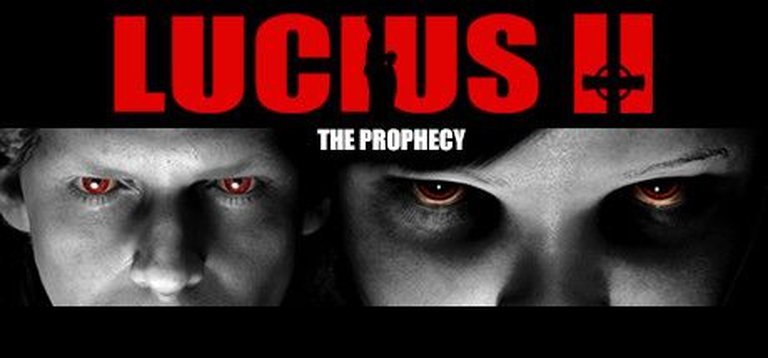
Description
Lucius II: The Prophecy is a horror action-adventure game where players embody Lucius, the son of Satan, with expanded freedom to unleash malevolence. Described as a sandbox of crime empowered by satanic abilities, the game allows players to meticulously orchestrate grim scenarios and manipulate the environment, offering a morbidly amusing, albeit technically flawed, experience as they exploit the ‘mindless inhabitants’ of its world.
Gameplay Videos
Guides & Walkthroughs
Reviews & Reception
en.wikipedia.org (48/100): Lucius II received mixed reviews from critics.
lucius.fandom.com : Reception was mixed-negative, with criticism mostly aimed at the faulty AI and glitches.
hookedgamers.com : Lucius II feels like what it should’ve been in the first place.
adventuregamers.com : Lucius II is worse in every way.
Lucius II: The Prophecy: A Prophecy Unfulfilled
From the darkest corners of video game design emerges a lineage that dares to cast the player as the ultimate antagonist, the Antichrist himself. The original Lucius, released in 2012, introduced us to a chilling premise: a six-year-old boy, son of Lucifer, orchestrating intricate murders within his family mansion. It was a game lauded for its unique concept but criticized for its restrictive linearity. Its 2015 sequel, Lucius II: The Prophecy, arrived with the ambitious intent to rectify these perceived shortcomings, promising an expansive sandbox of supernatural slaughter. As we delve into the depths of its design, narrative, and ultimate reception, we find a title that, despite its grand aspirations, became a cautionary tale of ambition outstripping execution, leaving behind a legacy of mixed feelings and unintentional amusement. This review will meticulously dissect Lucius II, examining its developmental journey, its intricate (if flawed) narrative, its mechanical innovations and frustrations, its atmospheric triumphs and visual missteps, and finally, its place within the broader tapestry of horror gaming history.
Development History & Context
Lucius II: The Prophecy was developed and published by the Finnish studio Shiver Games Ltd, a team that seems to have approached this sequel with a distinct vision. Released on February 13, 2015, for Windows and later in August for Linux, the game emerged during a vibrant, yet challenging, period for independent game development. The proliferation of accessible engines like Unity (which Lucius II utilized) allowed smaller studios to realize projects that might have been impossible just years prior. However, this accessibility also meant a crowded market and increased pressure to innovate.
The primary creative force behind Lucius II appears to be Johannes Aikio, who held an astonishing array of lead roles, including Lead Design, Programming, Music, Audio Design, Environment and 2D Art, Level Design, Animations, and Writing. He was joined by Heikki Pulkkinen in Lead Design, Level Design, Environment Graphics, 2D Art, and the Lucius Character design, alongside Alessandro Lainâ in Lead Design, Animations, and Character/Environment Art. This level of centralized creative control, while potentially fostering a cohesive vision, could also stretch a small team’s resources thin, potentially contributing to the game’s documented technical issues.
The developers’ stated vision for Lucius II was a direct response to the linearity that plagued its predecessor. The original Lucius confined players to specific murder puzzles, limiting creative expression despite its “son of the devil” premise. For the sequel, Shiver Games aimed for a “3D Splatter adventure sandbox,” explicitly promising “more freedom in kills” and allowing players to “decide when, how and who to kill.” This design philosophy aligned with a broader trend in the mid-2010s gaming landscape, where open-world and sandbox mechanics were increasingly popular, offering players greater agency and emergent gameplay opportunities. Lucius II sought to apply this philosophy to its darkly unique “play the bad guy” horror niche, setting it apart from the typical hero-driven narratives of the era. The system requirements (minimum Intel Core 2 Duo 2.66 GHz, 4 GB RAM) reflect the general technical baseline for PC gaming in 2015, positioning it as a relatively accessible title for a mid-range system.
Narrative & Thematic Deep Dive
The narrative of Lucius II: The Prophecy directly follows the calamitous events of the first game, plunging players back into the twisted world of Lucius Wagner, now a seven-year-old Antichrist. The story, as many critics observed, takes a backseat to the gameplay mechanics, often feeling like a mere framework for Lucius’s sandbox of murder.
Plot Progression and Character Arcs
The game opens with Lucius, the lone survivor of the Dante Manor inferno, being committed to St. Benedict Memorial Hospital, his brutal acts dismissed as trauma by the unsuspecting adults. Detective McGuffin, however, has begun piecing together the true nature of the Dante Manor tragedy, realizing Lucius’s satanic involvement. He is soon visited by Lucifer himself, who, with chilling persuasion, convinces McGuffin to aid Lucius, framing his dark destiny as “part of God’s plan.” This establishes McGuffin as a reluctant, yet crucial, ally throughout the game, a fascinating inversion of his traditional role.
Initially, Lucius’s powers wane, causing fears of abandonment. This personal crisis is short-lived, as the urge to attack a nun miraculously restores his strength, just as he is subjected to shock therapy. He obliterates his doctors, marking a brutal reawakening. From here, Lucius systematically works his way through the hospital, eliminating staff, visiting former “followers” (mentally unstable patients), and culminating in the chilling smothering of the nun who inspired his power’s return. A shocking revelation comes with the discovery that Charles Wagner, Lucius’s “father” and the final target from Dante Manor, survived. Lucius dispatches him swiftly, further consolidating his waning powers.
The plot then expands beyond the hospital walls as Lucius uncovers the existence of Isaac, another Antichrist, rapidly advancing his own agenda in the nearby town of Ludlow. Isaac’s goal is to sound the trumpets of revelation, having already burned the cornfields (the first trumpet). A race against Armageddon ensues, with Lucius and McGuffin becoming an unlikely, unholy duo. They work to prematurely sound the remaining trumpets: dropping pesticides into the water supply (third trumpet), shutting down a power plant (fourth trumpet), and freeing locusts from a facility (fifth trumpet). The arrival of the National Guard in Ludlow, imposing martial law, sets the stage for the sixth trumpet, as Lucius murders four guards representing this stage of the prophecy.
The climax sees Lucius searching for an angel to sound the seventh trumpet, only to be confronted by a resurrected Isaac. Lucius defeats him once more, this time with a shotgun. The game concludes with Lucifer arriving to bestow the Sacred Scroll upon Lucius, an artifact destined to unleash further chaos. McGuffin, having hijacked a bus, collects Lucius, setting the stage for Lucius III. An intriguing easter egg allows players to murder the game’s developers and Lucifer on the bus, a meta-commentary that has no bearing on the core plot.
Thematic Exploration
The most prominent theme is, naturally, the evil protagonist. Lucius II fully embraces the player as the son of the devil, reveling in wanton destruction and manipulation. This is underscored by the game’s dark humor, which often derives from the player’s ability to exploit the environment and the abysmal AI of NPCs for morbidly amusing kills. Critics often noted this “guilty pleasure” aspect, finding satisfaction in the theatricality of Lucius’s murders.
Prophecy and Agency form another crucial thematic pillar. Lucius is destined to be the Antichrist, but his journey involves actively fulfilling prophecies and contending with a rival. This introduces a sense of agency, allowing the player to feel like an active participant in shaping the end times, rather than merely a puppet of fate. The struggle against Isaac highlights that Lucius is not merely executing a pre-written script but is a competitive force in the grand demonic scheme.
The narrative’s shift from the character-driven, albeit linear, story of the first game to a more detached, “afterthought” approach in Lucius II reflects the developers’ focus on sandbox gameplay. The story serves primarily as a contextual backdrop for the murder mechanics, a consequence that critics lamented, describing the plot as “boring,” “inconsistent,” and a “nonsensical mush of telling instead of showing.” The “hand-drawn approach to the cutscenes” was a rare point of praise for its “oddly appealing” graphic novel aesthetic, offering brief, stylish pauses between the mayhem.
Finally, the game is saturated with homages to classic horror movies and pop culture references, reinforcing its genre identity and appealing to fans of horror cinema. From newspaper articles referencing Jason Voorhees, Freddy Krueger, Jeffrey Dahmer, and Buffalo Bill, to the Ludlow cornfields mirroring Children of the Corn (and its antagonist, Isaac), and direct allusions to Fight Club, Se7en, The Shining, and Little Shop of Horrors, the game wears its inspirations on its sleeve. These references provide a layer of meta-narrative, inviting players to connect Lucius’s chaotic acts with iconic figures of terror and violence.
Gameplay Mechanics & Systems
Lucius II: The Prophecy was conceived as a direct repudiation of the original’s restrictive linearity, aiming instead for an open-ended “sandbox of murder.” This ambition, while commendable on paper, encountered significant friction in its execution.
Core Gameplay Loop and Innovations
The central pillar of Lucius II‘s gameplay is the sandbox murder loop. Players are placed in vast, multi-floor environments – primarily St. Benedict Memorial Hospital and later the town of Ludlow – tasked with completing objectives, often involving the deaths of specific individuals, but with the freedom to kill “over 100 potential victims” at their leisure. Each level is designed as a self-contained sandbox, encouraging players to experiment with a variety of tools and environmental interactions.
To facilitate this, Lucius possesses a growing arsenal of supernatural powers, including Telekinesis, Mind Control, and Pyrokinesis. These abilities are integral to manipulating the environment and NPCs, enabling complex kill scenarios. Progression is tied to an RPG-style system: killing NPCs and locating hidden devil bobbleheads grant experience points, which are then used to level up Lucius and unlock new or upgrade existing powers. This system was intended to foster player choice in shaping their “unique Lucius” and preferred playstyle.
The game introduced a complex combination system, allowing players to interact with objects to create new tools for murder. For example, combining donuts with poison yields Poisoned Donuts. Environmental manipulation extends to liquids: water conducts electricity, gasoline spreads fire, and a mysterious green slippery liquid can be used to create slip traps. The idea was to give players the tools to construct elaborate, Rube Goldberg-esque death traps.
Levels are segmented into “normal” and “restricted” areas. While Lucius can roam freely in normal zones, suspicious activities (like using powers or being near a crime scene) will alert guards, who will chase and attempt to arrest him. In restricted areas, players must either eliminate guards or employ stealth. A successful arrest allows Lucius a brief window to stun his captor, offering a chance to escape or retaliate. After each level, players receive a grade based on the “dangerous scenarios” they orchestrated, theoretically encouraging creative and elaborate kills.
Flaws and Frustrations
Despite its ambitious design, Lucius II was severely hampered by a cascade of technical and design flaws that critically undermined its open-ended premise:
- Abysmal AI: This was the single most pervasive criticism. NPCs were described as “mindless inhabitants” with “horrid AI” and “mediocre” intelligence, often cited as “one of the worst ever seen in a video game.” This manifested in hilarious, yet game-breaking, inconsistencies. Critics recounted instances of nurses walking past decapitated bodies without reaction, or guards exhibiting unpredictable suspicion levels. This flaw devalued the game’s sandbox nature, as careful planning was often nullified by NPCs behaving nonsensically.
- Bugs and Glitches: The game suffered from “awful bugs” and a general “lack of polish.” These glitches frequently broke the game, leading to frustration and immersion-shattering moments.
- Inconsistent and Unreliable Mechanics: The vaunted combination and environmental interaction systems were often inconsistent or difficult to execute. Players reported plans failing for unclear reasons – was the strategy impossible, or was it due to “wonky physics” or imprecise controls? This led to players abandoning creative solutions and resorting to “the same few tried and true methods over and over again,” such as poisoning coffee, because they were the only ones that consistently worked.
- Repetitive Gameplay: The practical limitations imposed by the AI and bugs resulted in highly repetitive gameplay loops. Despite the promise of choice, players found themselves performing similar kills repeatedly, leading to “boring story, and repetitive gameplay.” Objectives were often described as “irritating and aimless” by critics.
- Stingy Progression and Conspicuous Abilities: The RPG progression system was criticized for being “stingy with experience points,” making it difficult to unlock more impactful supernatural abilities until “much later stages.” Furthermore, Lucius’s method of using telekinesis to pick up items, rather than using his hands, made him “hell-bent (pun intended) on being as conspicuous as possible,” frustrating stealth attempts and making him easily detectable even in normal areas.
- Floaty Controls: Coupled with buggy physics, the controls often felt imprecise, making delicate trap setups or quick escapes challenging and frustrating.
In essence, while Lucius II successfully shed the linearity of its predecessor, it replaced it with a different set of, arguably more detrimental, problems. The underlying systems meant to foster creative chaos instead yielded frustrating inconsistency, transforming the intended “supernatural sandbox of slaughter” into a flawed, often amusingly broken, experience.
World-Building, Art & Sound
The world of Lucius II: The Prophecy is one steeped in the macabre, aiming for a psychological horror atmosphere infused with dark humor. However, the execution of its artistic and auditory elements often met with the same mixed reception as its gameplay.
Setting and Atmosphere
The game’s primary settings are St. Benedict Memorial Hospital and the small town of Ludlow. These locations, especially the “vast five-story hospital,” are designed to be expansive sandboxes for Lucius’s malevolent deeds. The hospital, in particular, carries the weight of classic horror tropes, providing a chilling backdrop for the burgeoning Antichrist. The narrative places the game in 1974, a deliberate choice that perhaps grounds its B-movie horror references and overall aesthetic in a recognizable era for the genre. The atmosphere is intended to be “eerie” and “psychological horror,” but critics often described the overall experience as a “morbid, amusing ride,” suggesting that the intended horror often veered into unintentional comedy due to the game’s technical shortcomings.
Visual Direction
On a technical level, Lucius II reportedly offered some graphical improvements over the original. Critics noted “improved lighting and higher resolution textures.” However, this technical upgrade didn’t necessarily translate into a more engaging or varied visual experience. The hospital environment, despite its size, was often criticized for its monotonous aesthetic, described as “gray corridors, gray hospital rooms, and gray offices [that] seem copied and pasted rather than the handcrafted, individual rooms and grounds of the first game.” This lack of visual distinctiveness contributed to the feeling of repetition in gameplay.
Character animations, a point of contention in the first game, remained “awkward” in the sequel, perhaps even more so due to the increased reliance on real-time physics, which led to “a lot of random twitching and jerking.” This often contributed to the unintentional humor and broke immersion. A notable highlight in the visual department, however, was the hand-drawn cutscenes. These simplistic yet “oddly appealing” vignettes were praised for their graphic novel-like quality, serving as a stylistic respite between the game’s more frustrating real-time segments.
The numerous pop culture references, particularly to classic horror cinema, also inform the visual landscape. The Ludlow cornfields, for example, evoke immediate comparisons to Children of the Corn, consciously tapping into established visual shorthand for horror fans.
Sound Design
The sound and music of Lucius II were generally deemed “serviceable,” performing their function without leaving a significant impression. Johannes Aikio, in addition to his extensive design and programming duties, was also responsible for the game’s music and audio design. While this again points to a singular vision, it also suggests potential resource limitations that might have precluded a more elaborate or distinct audio landscape.
Where the sound design truly faltered was in the voice acting, which was “uniformly terrible.” Poor voice work can significantly detract from a game’s narrative immersion and emotional impact, especially in a horror title where atmosphere and tension are paramount. This weakness, combined with the disjointed storytelling, made it difficult for players to invest in the game’s plot or characters.
In summary, the world-building, art, and sound of Lucius II painted a picture of a game with strong thematic intentions but uneven execution. While some elements, like the cutscenes, shone through, the pervasive issues with monotonous environments, awkward animations, and poor voice acting often undermined the psychological horror ambition, instead contributing to the game’s “trashy” and inadvertently comedic reputation.
Reception & Legacy
Lucius II: The Prophecy landed in the gaming world with a resounding thud, receiving a largely mixed-to-negative reception from critics and players alike. Its aspirations to deliver an open-ended horror sandbox were widely acknowledged, but its technical deficiencies proved too great to overcome.
Critical and Commercial Reception at Launch
Aggregated scores paint a clear picture of its struggles. Metacritic awarded it a score of 48/100 based on 10 critic reviews, while MobyGames recorded an average critic score of 45% (from 6 ratings) and a Moby Score of 5.5. On Steam, where it was priced at $19.99, it garnered a “Mixed” status from over a thousand user reviews.
The criticisms were consistent and damning across many publications:
* Faulty AI and Glitches: This was the most frequently cited flaw, described as “horrid AI” and “awful bugs” that frequently “broke the game.” Reviewers highlighted instances of NPCs ignoring gruesome murders, behaving illogically, and generally undermining any attempt at strategic gameplay.
* Lack of Polish: Many critics noted a general “lack of polish,” indicating that the game felt unfinished or rushed.
* Boring Story & Repetitive Gameplay: Despite the narrative continuation, the story was largely dismissed as “an afterthought,” “boring,” and “inconsistent.” This, coupled with the practical difficulties of executing varied kills due to AI issues, led to “repetitive gameplay.”
* Inconsistent Mechanics: The promised freedom and combination system often proved frustratingly inconsistent, forcing players into a few reliable (and thus repetitive) murder methods.
* Awkward Animations & Terrible Voice Acting: These elements further degraded the production quality and immersion.
Despite these significant drawbacks, a few elements garnered mild praise:
* Increased Freedom: Critics acknowledged the game’s successful departure from the linearity of the first Lucius, offering more choices in how to approach objectives. Hooked Gamers, which gave it its highest score of 70%, called it a “much more fun experience than the original” from a gameplay perspective.
* Sandbox Potential: The idea of a supernatural sandbox of slaughter was appreciated, even if the implementation fell short.
* Horror Homages & Dark Humor: The numerous references to classic horror films and the game’s overall morbid, amusing tone were seen as a “guilty pleasure” by some, with critics noting the enjoyment found in “laughing at the animations” or the exploitation of the poor AI. Everyeye.it even suggested it as a title for “lovers of the most extreme trash,” highlighting its accidental comedic appeal.
* Hand-Drawn Cutscenes: The art style for these narrative intermissions was frequently praised as “oddly appealing.”
Commercially, the game did not achieve widespread success. Its “Mixed” Steam reviews and limited collected player base on MobyGames (68 players) suggest a niche audience, likely comprising those who appreciated the original Lucius‘s concept despite its flaws, or those drawn to its unique brand of dark, B-movie horror.
Evolution of Reputation & Influence
Over time, Lucius II: The Prophecy‘s reputation has remained largely consistent with its initial reception. It is remembered more for its frustrating flaws and unintentional comedy than as a polished, compelling horror experience. Its position on “worst of” lists (e.g., YouTuber RabidLuigi’s #8 on Worst of 2015) solidifies its status as a game that, for many, failed to deliver on its promise.
However, its influence is evident in the direct continuation of the series. Lucius II served as a crucial, albeit problematic, stepping stone to Lucius III, which was released in 2018. Lucius III sought to “continu[e] the narrative and expand[] on the gameplay mechanics introduced in Lucius II,” indicating that Shiver Games likely attempted to learn from the sequel’s missteps.
In a broader industry context, Lucius II contributes to the ongoing conversation about the challenges of indie development and the allure of the sandbox genre. It demonstrates how ambitious design philosophies, particularly for smaller teams, can be undermined by fundamental technical issues. While it didn’t revolutionize the horror or action-adventure genres, it carved out a small, peculiar niche of “evil protagonist” games, appealing to a specific segment of players who could look past its jankiness for its unique premise and dark humor. Its legacy is thus one of unrealized potential, a game that dared to dream big but ultimately stumbled over its own technical limitations.
Conclusion
Lucius II: The Prophecy stands as a fascinating, if deeply flawed, artifact in the annals of horror gaming. Its very premise—to embody the son of the Devil and orchestrate unholy chaos—remains compelling, building upon the controversial foundation laid by its predecessor. Shiver Games embarked on this sequel with a clear and laudable objective: to liberate Lucius from the linear shackles of the original, offering players an expansive sandbox for their destructive creativity.
In principle, Lucius II made significant strides. The introduction of vast, multi-layered environments like St. Benedict Memorial Hospital and Ludlow, coupled with an array of supernatural powers and an intricate combination system, truly expanded the potential for player agency. The game’s commitment to its dark theme, peppered with clever horror movie homages and moments of deliciously morbid humor, resonated with a niche audience hungry for a “guilty pleasure” that dared to cast them as the ultimate villain. The distinctive hand-drawn cutscenes provided a stylistic flourish that hinted at a stronger artistic vision.
However, the game’s ambitions were ultimately betrayed by its execution. The fatal flaw resided in its “abysmal AI,” which, alongside pervasive bugs, inconsistent mechanics, and awkward animations, systematically dismantled the very sandbox it sought to build. What was intended as emergent, creative slaughter often devolved into repetitive frustration, as players resorted to the few reliably exploitable methods against ludicrously unintelligent NPCs. The narrative, while conceptually rich, was relegated to a hurried backdrop, suffering from a “telling instead of showing” approach and uniformly poor voice acting.
As a game historian, it’s clear that Lucius II: The Prophecy represents a pivotal, albeit troubled, moment in the Lucius series. It bravely attempted to course-correct its predecessor’s linearity, showcasing the perennial challenge faced by independent developers in balancing grand design with the technical polish required for a seamless experience. Its legacy is not one of critical acclaim or widespread influence, but rather as a cult curiosity – a game that, despite its numerous flaws, garnered a unique affection for its audacious premise and the unintentional comedy born from its technical shortcomings. It is a testament to the idea that sometimes, even in the pursuit of pure evil, a lack of polish can be its own kind of hilarious hell. While not a masterpiece, it served as a vital, if bumpy, stepping stone that informed the subsequent direction of Lucius III, forever cementing its place as a fascinating, if frustrating, chapter in the chronicles of video game villainy.