
- Release Year: 2006
- Platforms: Windows
- Publisher: Bogosoft
- Developer: Bogosoft
- Genre: Action
- Perspective: Side view
- Game Mode: Single-player
- Gameplay: Metroidvania, Platform, Puzzle elements
- Setting: Sci-fi
Description
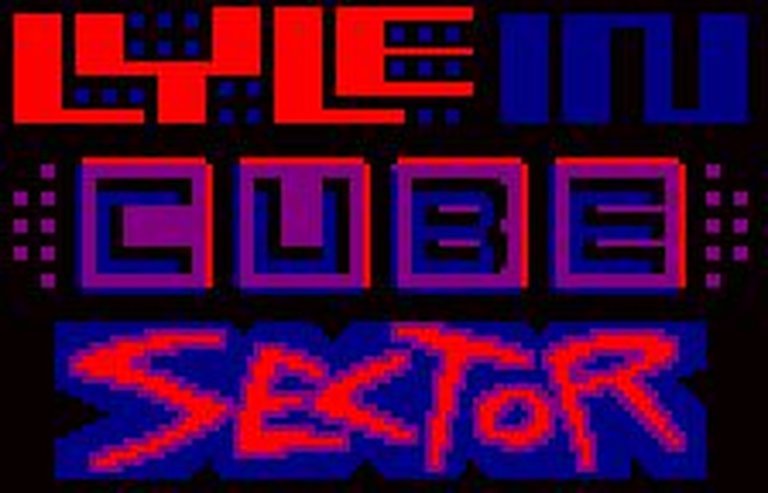
In Lyle in Cube Sector, young Lyle embarks on a perilous quest into the enigmatic Cube Sector to rescue his beloved cat Keddums, who was stolen by a shadowy figure. This freeware Metroidvania platformer, inspired by classic 80s and 90s action games and titles like Metroid, challenges players to explore a non-linear world, collect power-ups that grant new abilities such as attacking enemies and performing a double jump, and overcome obstacles to progress.
Gameplay Videos
Lyle in Cube Sector Free Download
Lyle in Cube Sector Guides & Walkthroughs
Lyle in Cube Sector: Review
Introduction
In the pantheon of freeware Metroidvanias, Lyle in Cube Sector occupies a peculiar and cherished niche. Released in 2006 by solo developer Nic DeStefano under the Bogosoft label, this diminutive 2D platformer feels less like a polished product and more like a love letter to 8-bit aesthetics and non-linear exploration. Its premise is deceptively simple: a young boy named Lyle embarks on a perilous journey through the “Cube Sector” to rescue his kidnapped cat, Keddums. Yet, what begins as a quaint “excuse plot” blossoms into a surprisingly poignant adventure defined by its ingenious cube-manipulation mechanics and unapologetic retro design. This review argues that Lyle in Cube Sector transcends its humble origins to become a foundational work of the indie Metroidvania revival, demonstrating how technical constraints and a singular creative vision can forge a timeless experience that continues to inspire developers and delight players nearly two decades later.
Development History & Context
Lyle in Cube Sector emerged from the fertile soil of the mid-2000s freeware scene, a period where bedroom developers leveraged accessible tools like Multimedia Fusion (later Clickteam Fusion) to create ambitious projects outside industry gatekeeping. Nic DeStefano, operating as Bogosoft, crafted the game in relative isolation, as cheekily acknowledged in the credits’ “Special Thanks To: isolation from society.” The technological constraints of 2006—limited by MMF’s capabilities and the era’s hardware—shaped the game’s essence. The 2D scrolling engine prioritized frame rate and sprite efficiency, resulting in crisp, albeit low-resolution, visuals and responsive controls that belied the developer’s limited resources.
DeStefano’s vision was explicitly nostalgic, aiming to capture the spirit of 1980s/90s platformers (Super Mario Bros. 2) and exploration-driven adventures (Super Metroid, Castlevania: Symphony of the Night). This dual inspiration is evident in the game’s structure: linear progression through interconnected zones, power-gating via abilities, and a focus on environmental puzzles. The gaming landscape at the time was dominated by the rise of Cave Story (2006), which catalyzed the “indie Metroidvania” movement. While Lyle lacked the narrative depth of Cave Story, it carved its own identity through its unconventional “cube combat” system and freeware ethos. The game’s open-source release (v1.11) in 2015 further cemented its legacy, allowing ports like Michael Moffitt’s acclaimed 2024 Sega Genesis version to flourish, proving its enduring technical and artistic flexibility.
Narrative & Thematic Deep Dive
The narrative of Lyle in Cube Sector is a masterclass in minimalist storytelling. The premise—Lyle’s cat Keddums is stolen by a shadowy figure—serves as both a catalyst and thematic anchor, transforming a child’s personal loss into an epic odyssey. DeStefano masterfully balances absurdity with sincerity; the official tagline—”OHNO! LYLE’S KITTY HAS BEEN STOLENED AND NOW HE MUST JOURNEY THROUGH THE WONKED OUT LANDS OF THE CUBESECTOR TO RETRIEVE HIS MEOWMEOW COMPANION!”—establishes a whimsical tone, yet the game’s atmosphere leans into melancholy. Lyle’s lack of dialogue (he never speaks) and his vulnerability (“Lyle is a weakling,” as noted in the MobyGames description) evoke silent heroes like Samus Aran, but his motivation is profoundly relatable: familial devotion.
Thematic layers emerge through environmental storytelling and enemy design. The “Cube Sector” itself is a liminal space—industrial ruins, toxic wastelands, and surreal overworlds—mirroring Lyle’s emotional turmoil. The absence of explicit dialogue forces players to interpret themes of isolation and perseverance through Lyle’s solitary journey. The villains, culminating in the one-winged angel transformation of the final boss, Psychovyle, who uses Keddums as a power source, amplify the stakes. Even minor details, like the hidden TV room flashing disturbing images (Mario, Sadako), inject meta-commentary on gaming’s uncanny valley. The narrative’s power lies in its restraint, turning a simple rescue quest into a meditation on courage and resilience, where a boy’s love for his pet becomes the weapon against cosmic evil.
Gameplay Mechanics & Systems
Lyle in Cube Sector’s genius lies in its deceptively simple yet deeply satisfying core mechanics centered on “cube manipulation.” Lyle begins utterly helpless—unable to attack or jump effectively—forcing players to rely on evasion. The first power-up, the Cube Kick, revolutionizes combat, enabling players to hurl blocks at enemies. This evolves into a sophisticated system: blue cubes are standard, red ones explode, green ones are indestructible, and gold ones yield health or magic refills. Abilities cascade logically: the Double Jump (via downward cube kicks) enables vertical exploration, while the Phantom Cube (materializing cubes mid-air) facilitates aerial combat and puzzle-solving. Progression is meticulously gated—seven red orbs grant pseudo-flight, unlocking the final area—rewarding thorough exploration.
Combat blends puzzle-solving with action. Enemies exhibit tactical behaviors: purple walkers reflect thrown cubes, and bosses like Klobbur (who drops breakable cubes) or Buggzy (requiring breakout mechanics) demand strategic use of the environment. The lack of traditional health pickups is offset by gold cubes and a risk/reward dynamic where aggressive play yields higher rewards. The UI, sparse but functional, features a map system that avoids hand-holding, and a warp room that emphasizes non-linearity. Flaws exist—collision damage from bouncing cubes was mitigated in later updates, and the difficulty spikes in late-game gauntlets may frustrate. Yet, these are overshadowed by innovations: the cube-as-tool-and-weapon system predates indie hits like Celeste and remains uniquely intuitive. The Sega Genesis port’s 60fps support and diagonal-throwing updates (optional in PC v1.13) demonstrate the mechanic’s enduring adaptability.
World-Building, Art & Sound
The “Cube Sector” is a triumph of environmental storytelling. DeStefano’s world-building is economical yet evocative, blending industrial decay (smoking pipes, crumbling structures) with organic oddities (giant trees, toxic ponds). The use of color is iconic: toxic greens, molten reds, and stark whites create a visually striking, often oppressive atmosphere. The art style, a deliberate “Retraux” aesthetic, leans into 8-bit simplicity with expressive sprite work—Lyle’s determined stride, enemies’ quirky animations (exploding caterpillars, stomping robots)—and parallax scrolling that adds depth. Notably, Lyle is one of few early Black protagonists in gaming, subtly normalized through his universal portrayal of vulnerability and courage.
Sound design elevates the experience. The chiptune soundtrack, curated by a collective of demoscene artists (arachno, Estrayk, Dubmood), is a standout. Tracks like “No Mercy” (boss theme) and “A Sad Touch” (overworld) blend melancholic melodies with driving beats, underscoring the game’s emotional core. Sound effects—cube impacts, enemy shrieks, lava bubbling—are crisp and purposeful. The Sega Genesis port’s FM synth arrangements (by Michael Moffitt) prove the music’s timeless appeal, transforming digital chiptunes into analog warmth. Together, art and sound forge an immersive world where every screen feels lived-in, from the eerie silence of abandoned factories to the cacophony of boss arenas.
Reception & Legacy
Lyle in Cube Sector was warmly received upon release, with critics praising its gameplay innovation and retro charm. MobyGames reports an 82% critic average (6 reviews), with Retro Gamer and GameHippo.com awarding 90%. Highlights included its “distinctive style” (Retro Gamer) and “nostalgic fun” (GameHippo), though some noted its brevity (“completed in an afternoon”). The game’s freeware status amplified its cult following, spreading through forums and abandonware sites like Abandonia Reloaded, where it was hailed as “addictive as crack.” Player reception, though sparse (MobyGames lists one rating), remains fervent, with a 4.7/5 score reflecting its dedicated fanbase.
Its legacy is multifaceted. Lyle predates and influenced the indie Metroidvania boom, with reviewers directly comparing it to Cave Story and praising its non-linear design. The 2024 Sega Genesis port by Michael Moffitt—hailed as a “near 1:1 replica” with FM synth music—introduced the game to a new generation, proving its retro viability. DeStefano’s later work, Corn Kidz 64, serves as a spiritual successor. Critically, the game is studied for its efficient world-building and mechanic cohesion, often cited as a blueprint for “less is more” design. It remains a touchstone for developers seeking to blend nostalgia with innovation, demonstrating that a small, passionate project can leave an indelible mark on gaming history.
Conclusion
Lyle in Cube Sector is a testament to the power of focused creativity. What begins as a simple cat-rescue quest evolves into a deeply resonant experience, where cube-throwing mechanics and retro aesthetics coalesce into gameplay poetry. DeStefano’s dedication to non-linear exploration, environmental storytelling, and emotional nuance ensures the game transcends its freeware origins. While its brevity and occasional difficulty spikes may deter some, its influence on indie Metroidvanias is undeniable. The 2024 Genesis port underscores its timeless appeal, proving that a game born from 2006’s constraints can still captivate modern audiences. In the annals of video game history, Lyle in Cube Sector stands not as a masterpiece of graphical fidelity or narrative complexity, but as a paragon of design purity—a small gem that shines brightly, reminding us that the most enduring adventures often begin with the simplest of stories: a boy, a cat, and a world of cubes.