
- Release Year: 2019
- Platforms: Linux, Macintosh, Nintendo Switch, Windows, Xbox One
- Publisher: Graffiti Games Ltd.
- Developer: Triplevision Games Limited
- Genre: Action
- Perspective: Side view
- Game Mode: Single-player
- Gameplay: Platform, Puzzle elements
- Setting: Fantasy
- Average Score: 63/100
Description
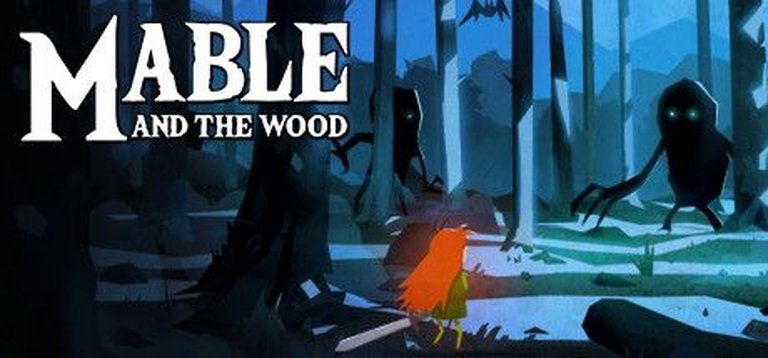
Mable and the Wood is a fantasy side-scrolling Metroidvania game where players control Mable, a female protagonist who transforms into various forms to navigate 2D platforming levels, solve puzzles, and engage in combat within a mysterious enchanted wood setting, featuring multiple endings for replayability.
Gameplay Videos
Where to Buy Mable and the Wood
Mable and the Wood Guides & Walkthroughs
Mable and the Wood Reviews & Reception
metacritic.com (62/100): Mable and the Wood is a seductively whimsical fantasy adventure with excellent graphics, music and a lot of good ideas, but for the moment it is held back by balance and technical problems.
opencritic.com (65/100): It’s such a shame Mable & The Wood can’t back up its interesting premise and impressive visuals with engaging gameplay.
nintendolife.com : Mable & The Wood is yet another example of a game with huge potential that’s somehow been mostly squandered thanks to poor execution.
gamecritics.com : It’s endlessly, aggressively frustrating.
Mable and the Wood: Review
Introduction
In a genre saturated with pixel-art Metroidvanias where power fantasies reign supreme—think Hollow Knight‘s graceful lethality or Dead Cells‘ relentless momentum—Mable & The Wood dares to subvert expectations by handing players a protagonist too frail to even lift her own sword. Released in 2019 by the tiny Triplevision Games, this unassuming indie title thrusts you into a dying fantasy world as Mable, a resurrected girl who shapeshifts into slain beasts to navigate peril. Its legacy, though modest, lies in its bold philosophical pivot: violence as traversal, pacifism as a hidden virtue, and prophecy as unreliable narration. Yet, for all its thematic ambition, Mable stumbles under technical weight, delivering a compelling proof-of-concept that teases brilliance but rarely sustains it. My thesis: Mable & The Wood is a noble experiment in moral Metroidvania design, innovative in fusing combat with movement and choice, but ultimately hampered by clunky execution, making it a cult curiosity rather than a genre-defining triumph.
Development History & Context
Triplevision Games Limited, a micro-studio helmed primarily by Scottish developer Andrew Stewart, brought Mable & The Wood to life as a crowdfunded passion project. Stewart wore nearly every hat—design, art, code—supported by a skeletal crew: Fat Bard on music, Maarten Boot on maps, and minor contributions from Swonqi (effects), Chris W. Early (fonts), and publisher Graffiti Games’ team for marketing and QA. Built in GameMaker Studio, the game leveraged this accessible engine’s strengths for 2D pixel art and rapid prototyping, but its limitations shone through in finicky physics and collision detection—hallmarks of solo-dev indies constrained by budget and scope.
Launched August 23, 2019, on PC (Steam/GOG at $14.99), with ports to Mac, Linux, Nintendo Switch, and Xbox One following swiftly, Mable entered a booming indie Metroidvania renaissance. 2018-2019 saw Hollow Knight‘s enduring success, Ori and the Blind Forest‘s Definitive Edition, and Bloodstained: Ritual of the Night, emphasizing fluid exploration and ability-gated progression. Technological constraints of GameMaker meant no AAA polish, but the era’s landscape favored bold ideas: Kickstarter successes like Turnip Boy Commits Tax Evasion (linked via shared credits) proved small teams could thrive. Stewart’s vision—eschewing jumps and runs for shapeshifting traversal—echoed retro disempowerment like Cave Story or Iconoclasts, critiquing player agency amid a flood of empowerment fantasies. Yet, rushed QA (evident in bugs) and no patches for core issues reflect indie pitfalls: ambition outpacing resources in a market demanding perfection.
Narrative & Thematic Deep Dive
Mable & The Wood‘s story unfolds as a dark fairy tale of resurrection, prophecy, and fractured royalty, delivered through sparse dialogue, environmental storytelling, and branching endings. Awakened by a woodland cult misinterpreting an ancient prophecy, Mable—the “Bringer of Dawn”—is tasked with slaying “great beasts” to avert apocalypse: floods, aggressive wildlife, and crumbling realms signal the “Beast of Beasts.” Her massive sword, infused with ruling lineages’ souls, can’t be wielded traditionally, symbolizing inherent weakness.
Deeper lore reveals Mable’s tragedy: daughter of the future Reclusive King, burned as a witch by the Grand Warlock for forbidden magic. Her brother (unborn at her death) hunts her as a sorceress; the Queen mourns a “returned” daughter. Progression spans forest, mountains, caves, church, priory, and castle. Violent paths pit Mable against kings and beasts, culminating in the Warlock’s power-grab explosion—possibly dooming the world. Pacifist routes (Standard, Perfect) unlock secrets: Quantum Pilgrim praises mercy; guards expose Warlock conspiracies; Queen rejects a “false” Mable in the true pacifist end.
Themes probe violence’s cycle: shapeshifting absorbs victims’ forms, blurring savior/destroyer. Prophecy ambiguity questions cult zealotry; multiple worlds “overlapping” hint multiversal consequences. Dialogue is cryptic, cheeky—cultists optimistic, royals paranoid—fostering unease. Characters like the unknowing brother or praising Pilgrim add emotional layers, but opacity frustrates: no hand-holding clarifies paths, mirroring thematic doubt. Endings redefine Mable—not prophesied hero, but choice’s embodiment—elevating replayability, though obtuse pacifism undercuts nuance.
Gameplay Mechanics & Systems
At its core, Mable reimagines Metroidvania loops: combat is movement, movement is combat. No running or jumping—Mable drags her sword, sluggishly walking. Transform (right stick select, B/Xbox attack button): initial Fairy form flies briefly (magic meter depletes, killing extends it), recalling sword slices linearly. Boss defeats unlock seven forms:
| Form | Mechanic | Strengths | Flaws |
|---|---|---|---|
| Spider | Web-sling to sword (straight line) | Verticality, ranged attack | Awkward swing, enemy collision |
| Mole | Burrow through terrain | Secrets, shortcuts | Stamina clips, geometry bugs |
| Medusa | Petrify gaze/freezes | Crowd control | Limited range, slow revert |
| Stone | Boulder-roll, crush | Speed, destruction | Unpredictable momentum |
| Ghost | Time-freeze dash | Precision, gaps | Frequent clipping/deaths |
| Others (e.g., Raven) | Flight/variant traversal | Exploration | Meter-heavy, situational |
Loops: Explore complex maps (forest swamps to tesla-coil castles), backtrack with forms, optional bosses gate areas. Pacifism skips kills via secrets, altering world (darker, harder). UI: Minimalist map (criticized as “annoying/illegible”), persistent form reminders (redundant), no remapping. Innovations shine—multi-solution puzzles demand form-swaps—but flaws dominate: hitchy controls (analog in 2D feels off), knockback spam, invisible insta-kills (dark lava pits), self-deaths from bugs. Bosses vary (giant spider webs, rock monsters), but frustration mounts in lava caves or combo-heavy sections. Replay for endings (2-4 hours violent run) adds value, but pacifism’s obtuseness (no hints, blind wandering) tests patience over skill.
World-Building, Art & Sound
A sprawling, interconnected 2D realm evokes dying fairy tales: flooded forests glow with god rays; jagged mountains loom; cavernous depths pulse lava; gothic priories/churches host tesla horrors; castles teem soldiers. Atmosphere builds dread—aggressive fauna, ruined villages, overlapping “worlds” via glitches—reinforcing themes. Secrets abound: hidden paths humanize beasts, alt-routes reveal lore (forgotten folk).
Art: State-of-the-art pixel (16-bit inspired), vibrant palettes (swamp greens, castle golds). Detailed sprites (Mable’s dainty drag), dynamic lighting elevate mood, though drab repetition creeps in. Cutscenes: Sprite bubbles, cheeky text—abrupt transitions jar.
Sound: Fat Bard’s OST mesmerizes—jaunty flutes in woods, ominous choirs in depths—immersive, replay-pushing. SFX punchy (sword whoosh, web twang), but missing impacts disappoint. Together, they craft haunting allure, masking mechanical woes.
Reception & Legacy
Critically mixed (MobyGames 63%, Metacritic PC 62, OpenCritic 65), Mable polarized: highs (GameSpace 90%: “fun Metroidvania twist”; GamingTrend 85%: “unique mechanics”) lauded innovation, visuals, endings; lows (ScreenRant 20%: “rough proof-of-concept”; GameCritics 30%: “borderline unplayable”) slammed bugs, controls, frustration. Switch ports fared middling (Nintendo Life 60%: “frustrating navigation”). Commercially niche—42 MobyGames collectors, modest Steam sales—no blockbuster, but free GOG promo (2020) boosted visibility.
Reputation evolved minimally: patches absent, but cult following praises replay (speedruns teased). Influence subtle—inspires pacifist Metroidvanias (Animal Well‘s non-violence)—yet bugs temper emulation. In indie history, it exemplifies 2019’s experimental wave, akin Iconoclasts: ambitious solo-dev risks amid Hollow Knight giants.
Conclusion
Mable & The Wood ambitiously weds shapeshifting traversal, moral choice, and prophecy critique into a Metroidvania mold, yielding memorable highs—creative forms, haunting world, branching tales—undercut by lows: buggy physics, obtuse pacifism, unpolished UI. Andrew Stewart’s vision shines through constraints, but execution falters, rendering it frustratingly uneven. Verdict: Not a hall-of-famer like Symphony of the Night, but a worthy historical footnote for Metroidvania evolution—play for its daring ideas if you stomach flaws. Score: 6.5/10. Recommended for genre enthusiasts seeking subversion, with caveats for precision seekers.