
- Release Year: 2007
- Platforms: Macintosh, Windows Mobile, Windows
- Publisher: Isotope244 Graphics LLC
- Developer: Isotope244 Graphics LLC
- Genre: Strategy, Tactics
- Perspective: Top-down
- Game Mode: Single-player
- Gameplay: Base building, Real-time combat, Resource gathering, Technology research, Unit production
- Setting: Futuristic, Sci-fi
- Average Score: 79/100
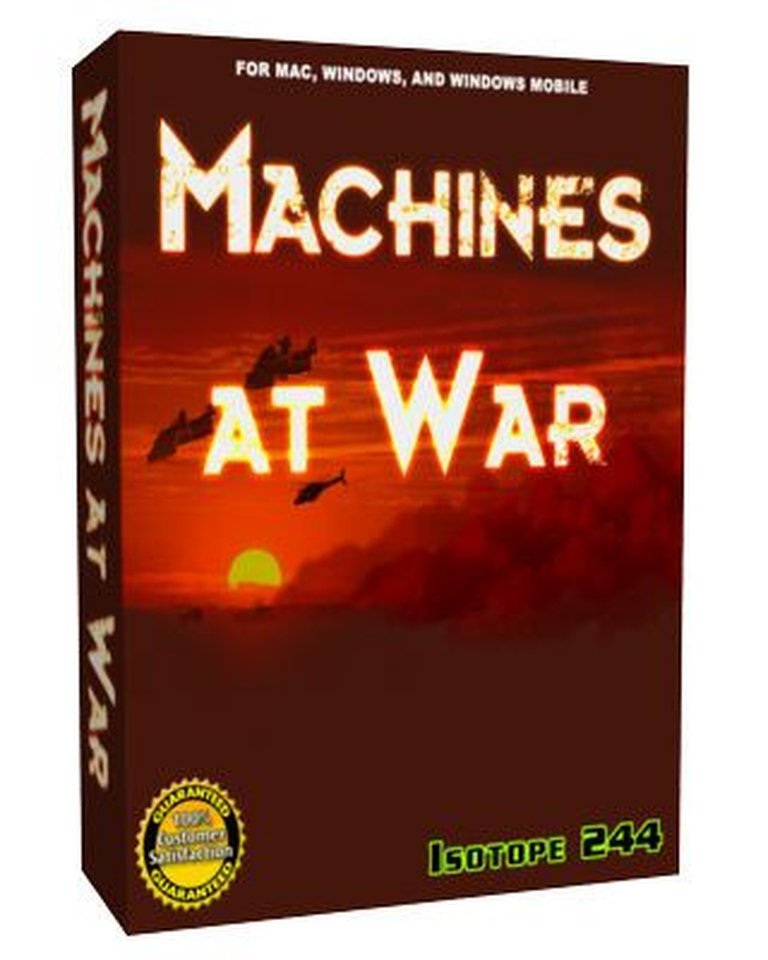
Description
Machines at War is a real-time strategy game set in a sci-fi futuristic world, where players engage in skirmish missions on randomly generated maps featuring diverse terrains like rock, meadow, ice, and desert. Without a campaign or story, gameplay focuses on building bases with over 40 structures and units—including tanks, jeeps, trucks, jets, helicopters, and VTOLs—gathering resources, researching technologies, constructing defenses like walls and turrets, and eliminating opponents using tactics such as tracking unit marks, building bridges over water, and utilizing forest cover.
Where to Buy Machines at War
PC
Machines at War Patches & Updates
Machines at War Reviews & Reception
gamereviewsbox.blogspot.com (75/100): A straightforward RTS game with some clever ideas that is a few features short of complete satisfaction
insidemacgames.com : it gets boring quite quickly
Machines at War Cheats & Codes
PC
On main menu type “machines4eva”.
| Code | Effect |
|---|---|
| machines4eva | Gives all your machines invincibility on any game you play. |
Machines at War: Review
Introduction
In the annals of real-time strategy (RTS) gaming, few titles evoke the pure, unadulterated thrill of vehicular carnage quite like Machines at War, a 2007 indie gem that stormed onto Windows, Macintosh, and Windows Mobile platforms with the ferocity of its titular war machines. Developed by the nimble Isotope 244 studio, this top-down sci-fi skirmisher stripped away the bloat of sprawling campaigns and multiplayer lobbies to deliver bite-sized battles of mechanical mayhem on procedurally generated maps. As a game historian, I’ve pored over countless RTS classics from Command & Conquer to Supreme Commander, and Machines at War stands as a testament to indie ingenuity—automated resource gathering and clever tactical wrinkles make it a brisk, addictive diversion. Yet, its thesis is bittersweet: a masterclass in focused skirmish design that shines brightest on mobile but dims on desktop without deeper modes, cementing its legacy as a cult precursor to modern mobile RTS hybrids rather than a genre titan.
Development History & Context
Isotope 244 Graphics LLC, a small American indie outfit led by designer James Bryant, birthed Machines at War in 2007 amid a RTS landscape dominated by AAA behemoths. The studio, known for cross-platform prowess, initially targeted Windows Mobile devices—a burgeoning market as smartphones like the iPhone loomed on the horizon—before expanding to Windows and Mac OS X. This multi-platform approach was visionary; in an era when mobile gaming meant simplistic ports, Isotope 244 delivered a full-featured RTS optimized for touchscreens and pocket-sized hardware, complete with Universal Binary support for Mac.
Technological constraints shaped its DNA: 2D top-down visuals eschewed the era’s 3D excesses (think Supreme Commander‘s massive scales), ensuring fluid performance on low-spec rigs and PDAs. RAM needs hovered at a modest 128 MB, with downloads around 23-25 MB, making it accessible via CD-ROM or early digital distribution. The gaming context was RTS saturation—Warcraft III (2002) had popularized hero units, Company of Heroes (2006) emphasized cover and squads, and Supreme Commander (2007) pushed epic scopes. Machines at War rebelled with a “pure skirmish” ethos, no infantry or naval units, echoing Command & Conquer‘s vehicular focus but automating tedium like scouting to suit quick sessions. Isotope 244’s vision? Democratize RTS for on-the-go play, spawning sequels like Land Air Sea Warfare (2010, aka Machines at War 2) and Machines at War 3 (2014), proving its model viable in a post-crash mobile boom.
Narrative & Thematic Deep Dive
Machines at War boldly eschews narrative entirely—no campaigns, no cutscenes, no lore dumps—thrusting players into anonymous skirmishes where faceless AI factions clash in a futuristic wasteland. This void is its thematic core: a meditation on mechanized anonymity, where “war” is reduced to algorithmic efficiency, devoid of human frailty. Characters? Absent. Dialogue? Nonexistent beyond unit acknowledgments like engine roars and explosion barks. Instead, themes emerge organically from mechanics—a Darwinian struggle of machines evolving via tech trees, mirroring real-world military-industrial escalation.
The sci-fi setting amplifies this: procedurally generated biomes (rocky badlands, verdant meadows, icy tundras, arid deserts) evoke a post-human Earth reclaimed by rogue automatons, their track marks scarring the land like veins of conflict. Bodies of water demand bridges, forests offer asymmetric cover—environmental storytelling sans words. Underlying motifs include resource predation (scavengers as vampiric harvesters), defensive entrenchment (walls and turrets symbolizing Cold War stasis), and technological arms races (labs unlocking upgrades in offense, defense, or economy). Critiques like Inside Mac Games noted its “simplistic nature,” but this austerity invites philosophical depth: in a storyless void, players project their own narratives of conquest, making each random map a micro-epic. Flaws abound—no faction asymmetry means repetitive “pump tanks till victory”—yet its thematic purity prefigures roguelite RTS like They Are Billions, where survival trumps spectacle.
Gameplay Mechanics & Systems
At its heart, Machines at War is a taut RTS loop: harvest, build, research, annihilate. Core gameplay revolves around eliminating foes on random maps via over 40 units and structures, with automation elevating it above genre drudgery.
Core Loops and Combat
Resource gathering is revolutionized—scavenger units auto-mine ore and return it to refineries or extractors, freeing players for macro decisions. Scouts auto-explore, unveiling fog-of-war. Combat demands rock-paper-scissors mastery: light jeeps shred heavy tanks, armored Challengers pulverize lights, jets/helicopters/VTOLs dominate air/ground. Units leave persistent track marks, turning scouting into detective work—follow trails to enemy bases for surgical strikes. Terrain adds nuance: forests grant cover bonuses, water requires bridge-building, fostering ambushes and chokepoints.
Building balances speed vs. volume—queue too many structures, and construction crawls (abstracting builder units cleverly); surplus power accelerates it, rewarding energy management. Defensive layers shine: walls, gates, turrets form impregnable forts, though reviewers lamented stalemates (e.g., Out Of Eight: “defenses are too cheap and powerful”).
Progression and UI
A robust tech tree via labs allocates points across branches—offense (damage boosts), defense (armor/shields), economy (faster scavengers)—forcing specialization risks. Double-click garages for multi-site queuing; select-box prioritizes military. UI is intuitive (keyboard/mouse on PC, touch-optimized mobile), but flaws persist: no “select all military” button hampers late-game; tooltips lack scaling costs. AI scales well—hard mode builds expansively, mixes rushes/turtles—but predictability limits depth. Matches last 15-30 minutes, with adjustable maps, pop caps, and difficulties ensuring replayability.
Innovations like destructible environments (wreckage lingers, blocking paths) and extractors/radars elevate it, though absent multiplayer and modes (no teams, CTF) cap longevity.
World-Building, Art & Sound
The world is a barren sci-fi canvas—random biomes craft atmospheric variety: meadows lush with exploitable forests, deserts sparse for open warfare, ice/sand/rock evoking alien desolation. Destructible terrain builds history—craters, wrecks, smoke plumes accumulate, turning maps into battle-scarred dioramas that enhance immersion.
Visuals punch above indie weight: crisp 2D sprites (tanks with treads, jets streaking smoke) evoke Red Alert 2, performant on era hardware. No shaders needed; detail shines in unit animations and persistent damage. Sound design impresses—thudding explosions, whirring rotors, orchestral swells create tension, though repetitive cues jar (e.g., erroneous “air attack” alerts). Reviewers raved: Smartphone Games called graphics/sound “great,” Mobility deemed it “Supreme Commander on PDA.” Together, they forge a gritty, believable machine apocalypse, where audio-visual feedback rewards aggression.
Reception & Legacy
Launch reception was solid but niche: MobyGames aggregates 83% from four critics (Mobility: 100%—”Supreme Commander on your PDA”; Smartphone Games: 88%—”way too addictive”; Out Of Eight: 75%—”clever ideas, needs multiplayer”; Gameplay Benelux: 70%). Mac ports fared best (Software Review Boffin/Inside Mac Games: 5/5, praising destructibles but decrying mode paucity). No player reviews on Moby, underscoring its obscurity—collected by just two users.
Commercially modest ($19.95 digital), it thrived on mobile, influencing Isotope 244’s empire (Machines at War 3 bundled on Steam). Reputation evolved from “mobile marvel” to “overlooked indie,” cited in timelines for cross-platform RTS. Influence ripples subtly: automation echoes Supreme Commander: Forged Alliance (2007), track marks prefigure Planetary Annihilation; sequels expanded to navies/multiplayer. In history, it’s a bridge—proving RTS viability on handhelds amid iOS/Android rise, paving for Rusted Warfare et al. No industry shaker, but a preserved artifact (Mac Repository abandonware) for RTS purists.
Conclusion
Machines at War endures as a razor-sharp skirmish RTS, its automated elegance and tactical flourishes distilling genre essence into addictive bursts, bolstered by evocative sci-fi sterility and cross-platform grit. Yet, narrative absence, mode sparsity, and AI predictability relegate it to cult status—not a pantheon entry like StarCraft, but a vital indie footnote influencing mobile strategy’s democratization. Verdict: 8/10—essential for RTS historians craving pure vehicular blitz, a skirmish king whose mechanical heart still hums after 18 years. Fire up a random desert map; the machines await.