
- Release Year: 2023
- Platforms: Windows
- Publisher: Atomic Fabrik
- Developer: Atomic Fabrik
- Genre: Action
- Perspective: Diagonal-down
- Gameplay: 2D scrolling, Point and select
- Setting: Crime
- Average Score: 59/100
Description
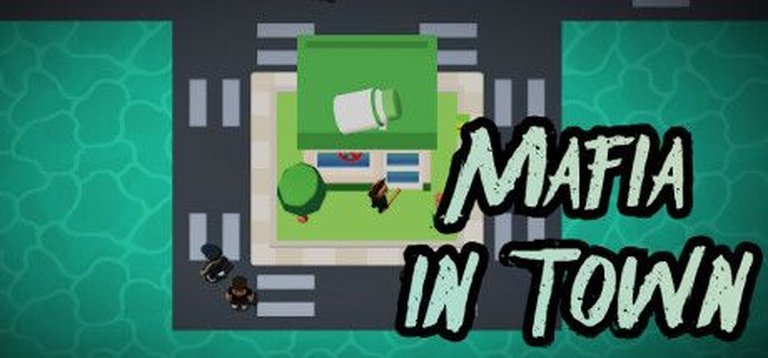
Mafia in Town is an action game set in a crime-ridden town, played from a diagonal-down perspective with 2D scrolling visuals and a point-and-select interface. Players engage in a mafia-inspired narrative, navigating through interactive environments to undertake criminal activities.
Mafia in Town: A Curio in the Shadow of an Empire
Introduction: The Name, The Game, The Chasm
To encounter Mafia in Town is to stumble upon a linguistic and cultural ghost. Released in March 2023 by the obscure Atomic Fabrik, this Windows-exclusive title brazenly co-opts the titanic legacy of 2K’s Mafia franchise while bearing no discernible connection to it beyond a shared lexical interest in organized crime. It is not a prequel, spin-off, or homage; it is a completely separate entity, a faint echo in a canyon dominated by seismic events. This review exists in the peculiar space of analyzing a game defined more by its nomenclature than its notoriety—a strategy game (as categorized on Metacritic) or action title (per MobyGames) that presents itself as a top-down, point-and-click crime spree simulator. The thesis is stark: Mafia in Town is a rudimentary, niche indie project that capitalizes on a famous brand name with almost no substantive link, offering a shallow, repetitive gameplay loop that stands in stark, unfortunate contrast to the narrative depth and historical gravitas of the series it invokes. It is a cautionary tale about branding and a case study in minimalist game design, but it is not, by any meaningful metric, a part of the Mafia saga.
1. Development History & Context: The Atom in the Franchise’s Shadow
1.1. The Studio: Atomic Fabrik and the Indie Landscape
The developer, Atomic Fabrik, is a cipher. No significant digital footprint, prior games, or team bios are presented in the source material. The game’s addition to MobyGames by user “BOIADEIRO ERRANTE” in June 2025—long after its March 2023 release—suggests a community-driven attempt to catalog an obscure title, not one born from industry prominence. Using the Unity engine, Mafia in Town fits squarely into the archetype of a low-budget, single-developer or small-team project leveraging a popular asset store or template to rapidly produce a game for Steam’s vast, crowded marketplace. Its March 2023 release places it between the well-received Mafia: Definitive Edition remake (2020) and the highly anticipated Mafia: The Old Country (2025), a strategic gap where consumer search traffic for “Mafia” would be high, increasing the likelihood of accidental discovery.
1.2. Technological and Market Context
The technological constraints are those of a modest Unity project: 2D scrolling visuals and a diagonal-down perspective point to a simple top-down or isometric view, likely using basic sprite work or low-poly 3D. This is light-years from the cutting-edge Unreal Engine 5 visuals being deployed by the real Mafia series in The Old Country, where developers explicitly cited “MetaHuman tech” and “cinematic presentation” as goals. The “point and select” interface harkens back to real-time strategy (RTS) or older action-RPG controls, not the third-person shooter/ driving hybrid of the canonical series. The game exists in the “Games pulled from digital storefronts” group on MobyGames, a category for titles that have been removed from sale, hinting at its transient, low-impact commercial life.
2. Narrative & Thematic Deep Dive: A Promise Unfulfilled
2.1. The Ad Blurb as De Facto Synopsis
With zero critic reviews and an empty “Description” field on MobyGames begging for contribution, the official Steam store ad blurb provides the only narrative framework:
“A crime that is not proven is not a crime! Welcome to this action game of Mafia in Town. It seems that the police do not work well, but we are professionals. As a part of the mafia, your main mission in the game is to rob as much as possible from this town, starting with cars and ending with businesses and houses. No one is a danger to us anymore, we are the danger.”
This is not a story; it is a premise. It posits a town with ineffective law enforcement and a player-character who is a professional criminal enacting a campaign of theft and violence. There are no named characters, no historical context, no moral ambiguity, and no character arc. Compare this to the Mafia series’ cornerstone narrative of Tommy Angelo in Mafia I, a tale of a man seduced by glamour and destroyed by consequence, set against the meticulously researched backdrop of Prohibition-era Lost Heaven. Mafia in Town offers a power fantasy stripped of all narrative consequence or thematic weight. The line “a crime that is not proven is not a crime” suggests a cynical, amoral worldview, but it is presented as a boast, not a tragic flaw.
2.2. Thematic Vacuum
The canonical Mafia series explores heavy themes: the corruption of the American Dream, the cyclical nature of violence, the price of loyalty, the historical entanglement of organized crime with societal neglect (as deeply explored in The Old Country‘s focus on Sicily’s sulfur mines and landowner exploitation). Mafia in Town has no such ambitions. Its theme is extraction and expansion—”rob as much as possible,” “expand to other proportions.” It mechanically reduces “Mafia” to a synonym for “successful extortionist,” missing the entire point of what makes the franchise a subject of serious historical and cultural study, as seen in the Mob Museum’s analysis of The Old Country. The game’s world is not a “living, breathing” city but a gameboard of assets to be acquired.
3. Gameplay Mechanics & Systems: Repetition as Core Loop
2D Scrolling, Point-and-Select Crime
The core gameplay loop, inferred from its genre tags (“Action,” “Strategy,” user tags “Top-Down Shooter,” “Crime,” “Time Management”) and ad blurb, is likely a simple, real-time top-down action/strategy hybrid. The player controls a single mafioso (or a small squad) within a scrolling 2D townscape. The “point and select” interface suggests clicking to move and interact, with combat probably involving clicking to attack or using hotkeys for actions like robbery or assault.
3.1. Core Activities: Robbery and Expansion
The ad blurb explicitly lists the activities:
* Robbery: Progressing from “cars” to “businesses and houses.” This implies a tiered system of targets, with increasing risk/reward.
* Beating: Mentioned in “Mafia activities (robbing, beating)” from the MobyGames feature list. This suggests simple melee combat or intimidation mechanics.
* Expansion of Territory: The phrase “our territory of work could expand” points to a faction or zone control mechanic. The player likely starts in a limited area and must conquer or extort adjacent districts.
* Rank Increase: A likely progression system where successful crimes increase the player’s standing, possibly unlocking new areas, weapons, or abilities.
3.2. Analysis: Simplicity as Both Flaw and Feature
There is no evidence of the complex, cover-based shooting of Mafia II/III, the realistic vehicle physics and traffic law systems of the main series, or the intricate, scripted mission design of the linear Mafia titles. Instead, the systems appear rudimentary: find a target, initiate a robbery/combat sequence, defeat resistance (if any), gain money/territory, repeat. The “Time Management” tag is intriguing—it could imply a real-time element where police or rival gangs respond over time, forcing the player to manage multiple threats. However, without developer commentary or detailed reviews, this remains speculative. The Steam player score of 59/100 (from 22 reviews, categorized as “Mixed”) strongly suggests these mechanics are found to be shallow, repetitive, and lacking in meaningful progression or variation.
3.3. The Knife and the Rosary: What Isn’t There
A stark contrast to Mafia: The Old Country‘s deeply considered mechanics (the knife durability system tied to Enzo’s origins, the rosary bead perk system reflecting Catholic tradition) is the utter absence of such detail in Mafia in Town. There is no indication of resource management beyond money, no weapon degradation, no skill tree rooted in character background. The “Mafia’s Money” feature is just a currency counter. The game’s design philosophy, if one can call it that, is antithetical to the Hangar 13 approach of “polished gem” focused on cinematic storytelling and systemic authenticity.
4. World-Building, Art & Sound: A Town Without a Name
4.1. Setting: The Generic “Town”
The setting is simply “this town.” It lacks the fictionalized but historically specific locales of the main series: Lost Heaven (Chicago/New York), Empire Bay (a fusion of Northeastern cities), New Bordeaux (New Orleans), or San Celeste/Valle Dorata (Sicily). There is no sense of place, no period (though the presence of cars versus horses in The Old Country suggests this game’s temporal setting is ambiguous/modern), and no cultural texture. It is a backdrop for crime, not a character in the story.
4.2. Visual Direction: Functional 2D Scrolling
The “2D scrolling” and “diagonal-down” perspective suggest a view common in older arcade shooters or early RTS games. Given the Unity engine and 2023 release, it likely uses simple 2D sprites or basic 3D models rendered in a fixed perspective. There is no mention of artistic style, visual flair, or technical ambition. Unlike the series-defining commitment to period-accurate architecture, fashion, and vehicle design (from the 1930s sedans to the 1968 muscle cars), Mafia in Town‘s art is almost certainly generic and utilitarian, designed for function over atmosphere.
4.3. Sound Design: The Unheard Element
The provided sources contain zero information on the game’s soundtrack, sound effects, or voice acting. This silence is deafening for a franchise where sound is so critical—the jazz and swing of the 1930s, the rock ‘n’ roll and soul of the 1960s, the period-specific radio stations that are a hallmark of the series. Mafia in Town almost certainly uses a minimal, looping score or royalty-free music, with generic sound effects for gunshots and car engines. The lack of any mention confirms its status as an audio-visual afterthought.
5. Reception & Legacy: The Sound of One Hand Clapping
5.1. Critical and Commercial Reception: An Absence of Presence
The critical reception is a void. MobyGames has zero critic reviews. Metacritic lists it under “Strategy” but provides no critic scores or aggregated metascore, only the user details page. OpenCritic does not list it. This indicates it received no coverage from established outlets. Commercially, it is a ghost. Steam sales data is private, but its presence on “Games pulled from digital storefronts” lists and a modest SteamDB player count suggest negligible sales. Its Steam player score of 59/100 from 22 reviews indicates a “Mixed” reception among the small audience that found it. The reviews likely focus on the repetitive gameplay, lack of content, and the cynical use of the “Mafia” name.
5.2. Position in the Mafia Franchise: An Illegitimate Offspring
It has no canonical connection to the timeline established in the Wikipedia article and the exhaustive Steam timeline guide. The Mafia series timeline spans from the 1547 founding of Empire Bay to 2016, detailing the lives of Tommy Angelo, Vito Scaletta, and Lincoln Clay. Mafia in Town exists outside this history. It is not a mobile spin-off like Mafia II Mobile or Mafia III: Rivals, which had specific narrative placements. It is an unrelated product that merely shares a keyword. Its “Legacy” is as a cautionary example of brand exploitation and a testament to the difficulty of standing out in the indie space.
5.3. Influence on the Industry: Nonexistent
The main Mafia series is cited for its influence on narrative-driven open-world games, its meticulous historical world-building, and its controversial handling of mature themes (the profanity record, the Italian-American backlash). Mafia in Town has had no such impact. It did not innovate, it did not spark discourse, and it did not sell enough to be noticed. It is a data point in the “long tail” of Steam, a game whose primary historical value may be as a footnote in articles about intellectual property and discoverability.
6. Conclusion: Verdict on a Misfire
Mafia in Town is not a Mafia game. It is a simple, top-down action/strategy hybrid with a brutally repetitive core loop of robbery and territorial expansion, wrapped in a veneer of criminal branding that cynically leverages one of gaming’s most storied franchises. It has no narrative depth, no artistic ambition, no mechanical complexity, and no historical grounding. Compared to the cinematic storytelling of the original Mafia, the gritty wartime drama of Mafia II, the politically charged revenge epic of Mafia III, or the historically meticulous origins story of Mafia: The Old Country, it is a hollow artifact.
Its place in video game history is not as a milestone but as a minor symptom: a symbol of the challenges facing discoverability on digital storefronts and the sometimes-lucrative practice of “title dropping.” For the professional historian, it is a curiosity—a game that shares a name with a pillar of the genre yet represents the antithesis of that pillar’s values. For the player, it is a waste of time and $4.99. There is no “Mafia” here, only a town, and a profoundly uninhabited one at that. The final, definitive verdict is one of irrelevance. It is a forgotten title that forgotten itself, a ghost in the machine of a franchise it does not belong to.