
- Release Year: 2004
- Platforms: Windows
- Publisher: S.A.D. Software Vertriebs- und Produktions GmbH
- Developer: Motelsoft
- Genre: Strategy, Tactics
- Perspective: 3rd-person
- Game Mode: Single-player
- Gameplay: Business simulation, Managerial, Turn-based combat
- Setting: Medieval
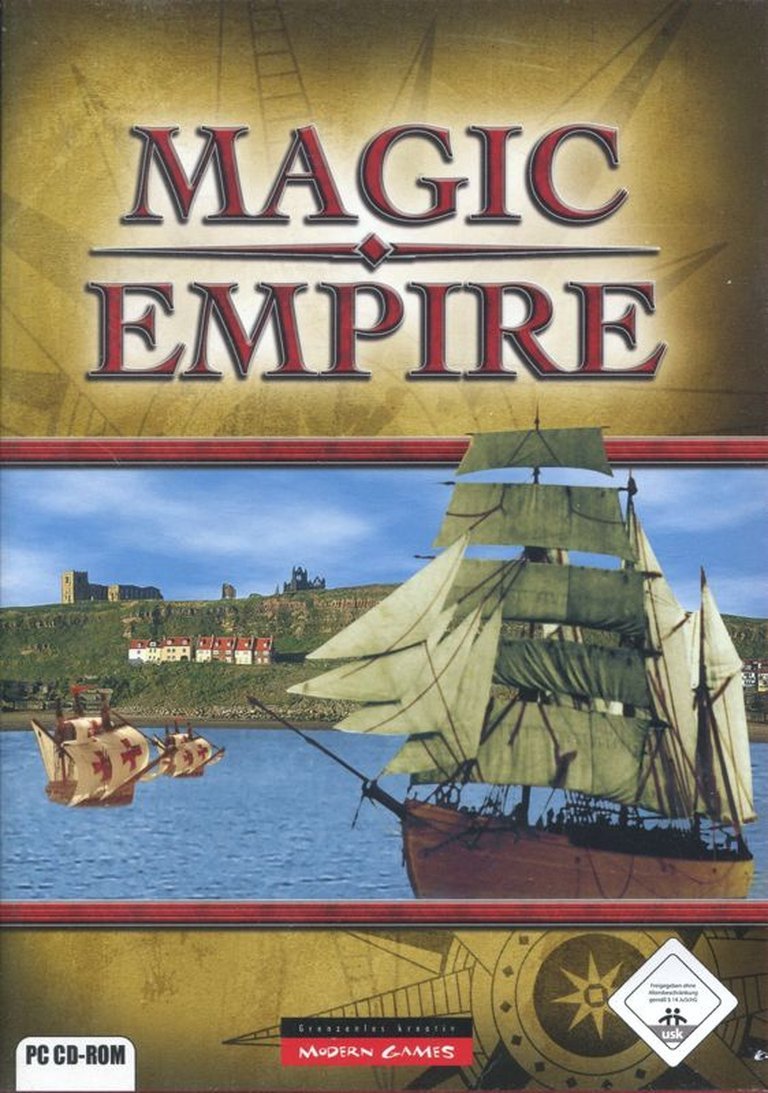
Description
Magic Empire is a turn-based strategy game set in a medieval land where players take on the role of a castle ruler, managing resources by farming crops and breeding livestock to sell or export for profit. The game also involves building military power through soldier recruitment and mercenary hiring, with ten different types of soldiers available to command.
Magic Empire: A Forgotten Gem of Medieval Strategy
Introduction
In the vast landscape of strategy games, few titles manage to carve out a niche as distinct and enduring as Magic Empire (2004). Developed by the relatively obscure Motelsoft and published by S.A.D. Software, this turn-based strategy game offers a unique blend of resource management, military tactics, and economic simulation set in a medieval fantasy world. At its core, Magic Empire is a testament to the creativity of small development teams, offering a deep and engaging experience that, while not widely recognized, deserves a place in the annals of strategy gaming history. This review will delve into the game’s development, narrative, gameplay mechanics, and lasting legacy, arguing that Magic Empire is a hidden masterpiece that deserves more attention.
Development History & Context
The Studio and Its Vision
Magic Empire was developed by Motelsoft, a small German studio founded by Harald Breitmaier and Heinz Munter. The duo, along with Heinz’s wife Jeanette Munter and son Jan Munter, formed the core team behind the game. Motelsoft was known for its work on other titles like Darkstone: Necromina and Walls of Illusion, but Magic Empire stands out as their most ambitious project. The game’s vision was to create a comprehensive strategy experience that combined elements of city-building, resource management, and tactical combat, all within a medieval fantasy setting.
Technological Constraints and the Gaming Landscape
Released in 2004, Magic Empire arrived during a golden age of strategy games, with titles like Civilization IV, Age of Empires III, and The Lord of the Rings: The Battle for Middle-earth dominating the market. Despite the competition, Magic Empire distinguished itself by focusing on a more intimate, single-player experience with a strong emphasis on economic strategy. The game’s turn-based mechanics and managerial elements harkened back to classic titles like SimCity and Caesar III, but with a fantasy twist.
The technological constraints of the early 2000s limited the game’s graphical capabilities, but Motelsoft compensated with a charming, pixel-art aesthetic that gave the game a timeless quality. The interface, while functional, was somewhat clunky by modern standards, but it effectively conveyed the game’s complex systems.
Narrative & Thematic Deep Dive
Plot and Characters
Magic Empire does not have a traditional narrative with a linear plot. Instead, it presents an open-ended sandbox where the player assumes the role of a medieval ruler tasked with building and expanding their empire. The game’s world is populated by various factions, each with their own agendas, but the player’s story is one of their own making. The absence of a scripted narrative allows for a high degree of player agency, making each playthrough a unique experience.
Themes and Dialogue
The game’s primary themes revolve around power, resource management, and strategic decision-making. Players must balance the needs of their people with the demands of warfare, exploring the moral complexities of ruling an empire. The dialogue, while sparse, is functional and serves to convey the game’s lore and mechanics. The lack of voice acting is a minor drawback, but the text-based interactions are well-written and immersive.
Gameplay Mechanics & Systems
Core Gameplay Loops
Magic Empire is a turn-based strategy game that combines elements of city-building, resource management, and tactical combat. The player starts with a modest castle and must expand their territory by purchasing land, growing crops, and breeding livestock. Resources such as corn, grapes, tomatoes, and pineapples can be sold on the local market or exported to other cities for higher profits. Military power is gained by recruiting soldiers or hiring mercenaries, with ten different types of units available.
Combat and Character Progression
Combat in Magic Empire is turn-based and tactical, with each unit type possessing unique strengths and weaknesses. Players must strategically position their forces and exploit enemy vulnerabilities to emerge victorious. Character progression is tied to the player’s economic and military decisions, with upgrades and new units unlocked as the empire grows.
UI and Innovative Systems
The user interface is functional but somewhat dated, with menus that can feel cumbersome by modern standards. However, the game’s innovative systems, such as the dynamic market and export mechanics, add depth to the experience. The ability to export goods to other cities for better prices introduces an element of global strategy, encouraging players to think beyond their immediate surroundings.
World-Building, Art & Sound
Setting and Atmosphere
Magic Empire is set in a medieval fantasy world filled with castles, farms, and bustling markets. The game’s art style is a charming blend of pixel art and low-poly 3D models, creating a visually appealing but somewhat dated aesthetic. The world is richly detailed, with various biomes and landmarks that add to the immersive experience.
Visual Direction
The game’s visuals are a mix of isometric and 3D elements, with detailed sprites for units and buildings. The interface is clean and functional, though it lacks the polish of more modern strategy games. The game’s art direction is consistent and effectively conveys the medieval fantasy setting.
Sound Design
The sound design in Magic Empire is minimal but effective. The soundtrack features medieval-inspired melodies that enhance the game’s atmosphere. Sound effects are basic but functional, with clear audio cues for actions like building construction and combat.
Reception & Legacy
Critical and Commercial Reception
Magic Empire received limited critical attention upon its release, with few professional reviews available. However, the game has garnered a cult following among strategy enthusiasts who appreciate its deep mechanics and unique blend of genres. The game’s lack of widespread recognition can be attributed to its niche appeal and the dominance of larger, more polished titles in the strategy genre.
Influence on Subsequent Games
While Magic Empire may not have had a direct influence on major strategy titles, its innovative mechanics and charming aesthetic have inspired indie developers to explore similar themes. The game’s focus on economic strategy and turn-based combat has echoes in modern titles like Kingdom Come: Deliverance and Mount & Blade, though these games have expanded on the formula with more advanced graphics and narrative elements.
Conclusion
Magic Empire is a hidden gem in the strategy genre, offering a deep and engaging experience that combines resource management, tactical combat, and economic simulation. While its dated graphics and interface may deter some players, the game’s innovative mechanics and charming aesthetic make it a worthwhile experience for fans of classic strategy games. Its legacy, though not as prominent as some of its contemporaries, is one of quiet influence and enduring appeal. For those willing to look beyond the surface, Magic Empire offers a rich and rewarding journey into the world of medieval strategy.