
- Release Year: 2021
- Platforms: Windows
- Publisher: ImperiumGame
- Developer: ImperiumGame
- Genre: Action
- Perspective: Diagonal-down
- Game Mode: Single-player
- Average Score: 80/100
Description
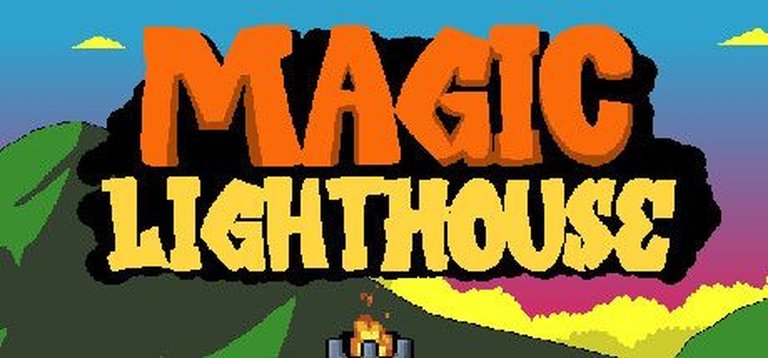
In ‘Magic LightHouse’, players assume the role of an elderly wizard tasked with controlling fire to light signal lighthouses for a kingdom. This top-down action game challenges you to navigate increasingly intricate levels while avoiding self-immolation, blending perilous fire manipulation with strategic lighthouse illumination. Featuring pixel-art visuals, atmospheric music, and hardcore gameplay, the adventure unfolds as the wizard refuses retirement despite escalating dangers.
Magic LightHouse Patches & Updates
Magic LightHouse: Review
Introduction
In the vast ocean of indie games, Magic LightHouse (2021) emerges as a deceptively simple yet punishingly intricate gem. Developed by ImperiumGame, this top-down action-puzzle hybrid casts players as an aging wizard tasked with lighting signal beacons in a world where fire is both a tool and a mortal hazard. Though overshadowed by larger titles at its release, Magic LightHouse has quietly cultivated a cult following for its razor-sharp gameplay loop, evocative pixel-art aesthetic, and unapologetic difficulty. This review argues that while the game lacks narrative depth, its mechanical precision and minimalist charm cement it as a standout entry in the “hardcore indie” canon of the early 2020s.
Development History & Context
Magic LightHouse was crafted by ImperiumGame, a relatively obscure studio specializing in bite-sized, mechanics-driven experiences. Built using GameMaker Studio, the game leverages the engine’s strengths for 2D sprite-based physics, emphasizing tight controls and clean hitbox detection—a necessity given its punishing difficulty. Released on May 15, 2021, it entered a crowded market of pixel-art indies but distinguished itself through a laser focus on systemic simplicity: Light the beacons. Don’t burn yourself.
The early 2020s saw a resurgence of “masocore” games (e.g., Getting Over It, Celeste), and Magic LightHouse fits squarely within this trend. Its design philosophy echoes classics like Lemmings and Bomberman, prioritizing spatial puzzles and risk-reward calculations over story or progression systems. ImperiumGame’s decision to forego multiplayer or metagame elements (e.g., skill trees) reflects both budgetary constraints and a deliberate rejection of modern bloat.
Narrative & Thematic Deep Dive
Narratively, Magic LightHouse is skeletal but effective. The player embodies an unnamed wizard whose mastery of fire has relegated him to maintaining a network of coastal lighthouses—a metaphor for aging professionals clinging to utility in a world that has moved past them. The Steam description frames this as a retirement-age rebellion: “The old wizard is not yet ready to retire.”
Themes of perseverance and self-sabotage permeate the experience. Each level’s escalating complexity—flaming obstacles, erratic wind patterns, and labyrinthine layouts—mirrors the struggle to maintain relevance amid declining faculties. Dialogue is absent, but environmental storytelling suggests a lonely, Sisyphean existence: crumbling towers, overgrown paths, and the ever-present risk of immolation. While not as richly layered as lore-centric titles like Hollow Knight, the game’s subtle melancholy resonates through its gameplay alone.
Gameplay Mechanics & Systems
At its core, Magic LightHouse is a game of precision and foresight. The wizard navigates grid-based levels using direct controls (keyboard or gamepad), igniting beacons by carefully managing fire projectiles. Key mechanics include:
– Fire Propagation: Flames spread dynamically across flammable materials, requiring players to predict paths and avoid feedback loops.
– Environmental Hazards: Wind alters fire trajectories; water extinguishes flames but slows movement.
– Limited Resources: Each level restricts the number of fire spells, demanding efficiency.
The UI is minimalist, with only a spell counter and level timer visible. This austerity amplifies tension, as mistakes cascade rapidly—a misaimed flame can trap the wizard in an inescapable inferno. Later levels introduce multi-tiered lighthouses and moving obstacles, recalling the escalating chaos of Super Meat Boy.
Critically, the lack of checkpoints or difficulty settings polarizes audiences. While some praise the “no compromises” design, others lament unforgiving restarts after 10-minute puzzles. Still, the absence of handholding aligns with ImperiumGame’s vision: mastery through repetition.
World-Building, Art & Sound
Magic LightHouse’s pixel-art aesthetic is both nostalgic and meticulously crafted. The wizard’s animations—stumbling runs, frantic dodges—convey frailty, while lighthouse designs blend Gothic spires with maritime decay. Fire effects are a standout: orange-and-yellow flames ripple convincingly, contrasting against the muted blues and grays of the coastal setting.
Sound design is sparse but impactful. A haunting piano score undercuts the gameplay’s intensity, evoking solitude and determination. The crackle of fire and the wizard’s panicked grunts heighten immersion, though the lack of voice acting may disappoint narrative-driven players.
Reception & Legacy
Upon release, Magic LightHouse garnered muted critical attention but found an audience among niche communities. With a Steam Player Score of 80/100 (based on 20 reviews), it’s praised for its “addictive challenge” and “charming visuals,” though criticized for repetitive levels and abrupt difficulty spikes. Notably, no major critic reviews exist—a reflection of its indie obscurity.
Its legacy lies in its distillation of hardcore principles. Speedrunners celebrate its frame-perfect mechanics, while indie developers cite its “less-is-more” ethos as inspiration. Though not a commercial blockbuster, its presence in “tough-but-fair” game lists (alongside Celeste and Super Meat Boy) ensures its longevity.
Conclusion
Magic LightHouse is a masterclass in focused design. ImperiumGame’s decision to hone a single mechanic to near-perfection results in a game that transcends its minimalist trappings. While its narrative thinness and relentless difficulty alienate some, its triumphant moments—the euphoria of a flawless beacon ignition, the flicker of hope amid pixelated flames—capture the essence of indie resilience.
For players seeking a pure, unforgiving test of skill, Magic LightHouse is a beacon worth chasing. It may not rewrite gaming history, but it burns brightly in the pantheon of great indie experiments.
Final Verdict: A flawed yet fiercely compelling gem for the mechanically daring. 8/10.