
- Release Year: 2013
- Platforms: Windows
- Genre: Simulation
- Perspective: Side view
- Game Mode: Single-player
- Gameplay: Exploration, Relaxation
- Setting: Fantasy
- Average Score: 89/100
Description
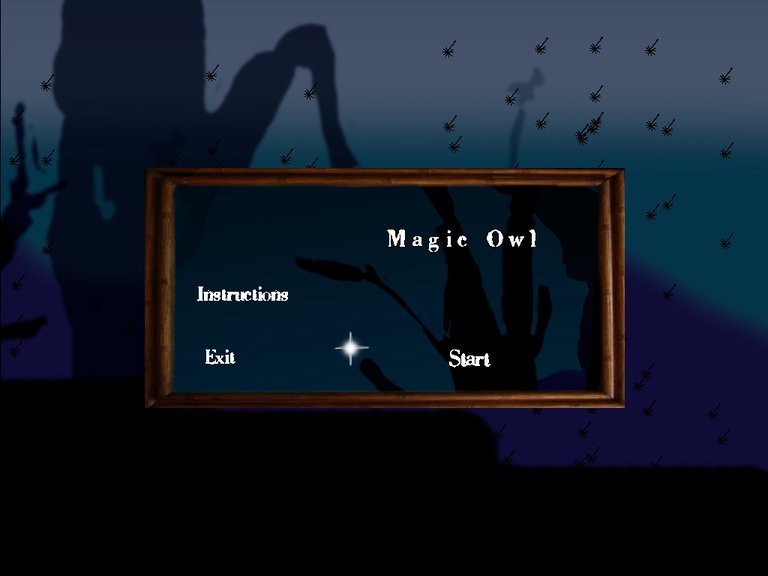
Magic Owl is a serene, goal-free exploration game where players take on the role of an owl gliding through a small, enchanting world at night. Developed for the MAGS competition in 2013, the game emphasizes relaxation and discovery, allowing players to interact with objects and soak in the tranquil, side-scrolling 2D environment. With no objectives or pressure, it offers a meditative experience, perfect for unwinding while navigating the fantasy setting with simple mouse controls.
Magic Owl Free Download
PC
Magic Owl Reviews & Reception
metacritic.com (95/100): A triumphant return to form for the series.
indiedb.com (83/100): charming atmospheric experience, recommended!
Magic Owl Cheats & Codes
Xbox 360
Go to player status page, and click on the promotions page. Push the enter code button at the bottom.
| Code | Effect |
|---|---|
| WMKFGC | Unlocks a bonus foil promo card for each original deck |
| KWPMZW | Unlocks a bonus foil promo card for each original deck |
| FNMDGP | Unlocks a bonus foil promo card for each original deck |
| MWTMJP | Unlocks a bonus foil promo card for each original deck |
| FXGJDW | Unlocks a bonus foil promo card for each original deck |
| GDZDJC | Unlocks a bonus foil promo card for each original deck |
| HTRNPW | Unlocks a bonus foil promo card for each original deck |
| NCTFJN | Unlocks a bonus foil promo card for each original deck |
| PCNKGR | Unlocks a bonus foil promo card for each original deck |
| GPCRSX | Unlocks a bonus foil promo card for each original deck |
PlayStation 3
Click ‘Magic the Gathering Promo Unlocks’ in the player status screen. Click on ‘Enter Code’ and you can enter the codes there.
| Code | Effect |
|---|---|
| WMKFGC | Unlocks a bonus foil promo card for each original deck |
| KWPMZW | Unlocks a bonus foil promo card for each original deck |
| FNMDGP | Unlocks a bonus foil promo card for each original deck |
| MWTMJP | Unlocks a bonus foil promo card for each original deck |
| FXGJDW | Unlocks a bonus foil promo card for each original deck |
| GDZDJC | Unlocks a bonus foil promo card for each original deck |
| HTRNPW | Unlocks a bonus foil promo card for each original deck |
| NCTFJN | Unlocks a bonus foil promo card for each original deck |
| PCNKGR | Unlocks a bonus foil promo card for each original deck |
| GPCRSX | Unlocks a bonus foil promo card for each original deck |
PC
On the player status page, click on the promotions page. From there at the bottom, hit the enter code button.
| Code | Effect |
|---|---|
| WMKFGC | Unlocks a bonus foil promo card for each original deck |
| KWPMZW | Unlocks a bonus foil promo card for each original deck |
| FNMDGP | Unlocks a bonus foil promo card for each original deck |
| MWTMJP | Unlocks a bonus foil promo card for each original deck |
| FXGJDW | Unlocks a bonus foil promo card for each original deck |
| GDZDJC | Unlocks a bonus foil promo card for each original deck |
| HTRNPW | Unlocks a bonus foil promo card for each original deck |
| NCTFJN | Unlocks a bonus foil promo card for each original deck |
| PCNKGR | Unlocks a bonus foil promo card for each original deck |
| GPCRSX | Unlocks a bonus foil promo card for each original deck |
Magic Owl: A Meditative Flight Through the Night
Introduction: The Zen of Exploration
In the vast, often chaotic landscape of video games, where high-stakes combat, complex narratives, and competitive multiplayer experiences dominate, Magic Owl emerges as a serene anomaly. Released in 2013 as a freeware title for Windows, this diminutive yet profound game invites players into a world of tranquility, exploration, and musical discovery. Developed by Edwin Montgomery (under the alias “Emont”) for the Monthly Adventure Game Studio (MAGS) competition, Magic Owl is a testament to the power of minimalism in game design. It strips away the trappings of traditional gameplay—goals, points, and conflict—to deliver an experience that is as much about introspection as it is about interaction. In an era where games are often judged by their scale, graphics, and replayability, Magic Owl stands as a quiet rebellion, a reminder that sometimes, the most profound experiences are those that ask nothing of the player but to exist within their world.
Development History & Context: A Labor of Love in the Indie Scene
Magic Owl was born from the creative constraints and community-driven spirit of the MAGS competition, a monthly challenge hosted by the Adventure Game Studio (AGS) community. The theme for November 2013 was “night time,” a prompt that inspired Montgomery to craft a game centered around the nocturnal adventures of an owl. The development process was swift, as is typical for MAGS entries, with Montgomery handling nearly all aspects of the game’s creation, from programming to art and sound design. The game’s engine, AGS, is a popular tool among indie developers for creating 2D point-and-click adventures, but Magic Owl subverts expectations by eschewing traditional adventure game mechanics in favor of a more open-ended, exploratory experience.
The gaming landscape in 2013 was dominated by blockbuster titles like Grand Theft Auto V, The Last of Us, and BioShock Infinite, games that emphasized narrative depth, cinematic presentation, and high-stakes gameplay. In contrast, Magic Owl was part of a growing indie movement that sought to redefine what games could be. Titles like Proteus (2013), Dear Esther (2012), and Journey (2012) had already begun to explore the potential of games as meditative, emotionally resonant experiences. Magic Owl fits squarely within this tradition, offering players a chance to disengage from the demands of traditional gaming and simply be in its world.
Narrative & Thematic Deep Dive: The Poetry of Silence
Magic Owl is a game without a traditional narrative. There are no characters to meet, no dialogue to parse, and no plot to uncover. Instead, the game’s “story” is told through its atmosphere, its sound design, and the player’s own interactions with the environment. The player takes on the role of an owl, gliding through a small, nocturnal world filled with trees, stars, and subtle interactive elements. The owl’s flight is accompanied by a dynamic soundtrack that shifts and evolves based on the player’s movements, creating a sense of harmony between the player and the game world.
Thematically, Magic Owl is a celebration of solitude and the beauty of the natural world. The game’s nighttime setting is crucial to its atmosphere, evoking a sense of quiet mystery and wonder. The owl, a creature often associated with wisdom and introspection, serves as the perfect avatar for this experience. As the player explores, they may encounter small, glowing objects that respond to the owl’s presence, emitting soft chimes or melodies. These interactions are not tied to any mechanical reward but instead serve to deepen the player’s immersion in the game’s tranquil world.
The absence of goals or objectives is Magic Owl‘s most striking narrative choice. In a medium where players are conditioned to expect clear objectives and measurable progress, Magic Owl offers something radical: the freedom to explore without purpose. This design philosophy aligns with the principles of “zen gameplay,” a concept that emphasizes mindfulness, presence, and the joy of exploration for its own sake. Games like Flower (2009) and The Path (2009) had previously explored similar ideas, but Magic Owl distinguishes itself through its simplicity and brevity. It is a game that can be experienced in a single sitting, yet its impact lingers long after the player has closed the window.
Gameplay Mechanics & Systems: The Art of Effortless Flight
Magic Owl‘s gameplay is deceptively simple. The player controls the owl using the mouse, guiding it through the game’s 2D scrolling environment. The owl can fly in any direction, and the game’s physics are designed to make movement feel weightless and intuitive. There are no enemies to avoid, no puzzles to solve, and no items to collect—at least, not in the traditional sense. Instead, the game’s core mechanic is exploration, with the player free to drift through the world at their own pace.
The game’s most innovative feature is its dynamic sound design. As the owl moves through the environment, it triggers musical notes and ambient sounds that blend together to create a unique, ever-changing soundtrack. This system is reminiscent of generative music pioneers like Brian Eno, whose work in the 1970s and 80s explored the idea of music that evolves organically based on a set of rules or interactions. In Magic Owl, the player becomes the composer, their movements dictating the ebb and flow of the game’s audio landscape.
The lack of traditional gameplay systems is both Magic Owl‘s greatest strength and its most significant limitation. For players accustomed to games with clear objectives and feedback loops, Magic Owl may feel aimless or even frustrating. However, for those willing to embrace its meditative pacing, the game offers a rare and deeply personal experience. The absence of a user interface (UI) further reinforces the game’s minimalist ethos, ensuring that nothing distracts from the player’s immersion in the world.
World-Building, Art & Sound: A Nocturnal Symphony
Magic Owl‘s world is small but richly detailed, with a visual style that blends simplicity and elegance. The game’s 2D scrolling environment is rendered in soft, muted colors, evoking the quiet beauty of a moonlit forest. The owl itself is a charming, cartoonish figure, its large eyes and rounded body giving it a friendly, approachable appearance. The background is filled with stars, trees, and subtle animations that bring the world to life without overwhelming the player.
The game’s art direction is complemented by its sound design, which is nothing short of extraordinary. The dynamic soundtrack is the heart of Magic Owl, transforming the player’s movements into a symphony of chimes, strings, and ambient textures. The music is not merely a backdrop but an active participant in the gameplay experience, responding to the player’s actions in real-time. This creates a sense of synergy between the player and the game, as if the owl’s flight is not just a physical journey but a musical one as well.
The combination of visual and auditory elements in Magic Owl creates a cohesive and immersive atmosphere. The game’s world feels alive, not because it is teeming with activity, but because it is imbued with a sense of quiet wonder. The stars twinkle, the trees sway gently, and the owl’s wings beat softly as it glides through the night. It is a world that invites contemplation, a place where the player can pause and simply listen.
Reception & Legacy: A Cult Classic in the Making
Magic Owl was released to little fanfare in 2013, but it quickly garnered a small but devoted following within the indie gaming community. Players and critics alike praised the game for its innovative sound design, its meditative gameplay, and its ability to evoke a sense of peace and wonder. On platforms like IndieDB and ModDB, Magic Owl received positive reviews, with players describing it as “a beautiful, atmospheric experience” and “an impressive first release” by its developer.
Despite its niche appeal, Magic Owl has had a lasting impact on the indie gaming scene. It serves as a reminder that games do not need to be complex or lengthy to be meaningful. In an industry increasingly dominated by live-service games and sprawling open-world epics, Magic Owl stands as a testament to the power of brevity and simplicity. Its influence can be seen in later titles like A Short Hike (2019) and The Artful Escape (2021), games that prioritize atmosphere and emotional resonance over traditional gameplay mechanics.
Magic Owl also holds a special place in the history of the MAGS competition. As a standout entry, it demonstrates the creative potential of community-driven game jams, where developers are challenged to create something meaningful within tight constraints. The game’s success within the AGS community has inspired other developers to experiment with unconventional gameplay mechanics and to prioritize atmosphere and sound design in their own projects.
Conclusion: A Timeless Flight
Magic Owl is a game that defies easy categorization. It is not a platformer, nor is it a puzzle game or an adventure. It is, at its core, an experience—a brief, meditative journey through a world of quiet beauty. In its simplicity, it achieves something that many larger, more ambitious games struggle to accomplish: it creates a space for the player to reflect, to explore, and to simply be.
The game’s legacy is one of quiet influence. It may not have the name recognition of titles like Ori and the Blind Forest or Journey, but it shares their commitment to creating experiences that resonate on an emotional level. Magic Owl is a reminder that games can be more than just challenges to overcome or stories to consume—they can be spaces for contemplation, for wonder, and for connection.
In the grand tapestry of video game history, Magic Owl is a small but luminous thread. It is a game that asks little of the player but gives much in return: a moment of peace, a sense of wonder, and the joy of flight. For those willing to embrace its meditative pacing, Magic Owl offers a rare and precious experience—one that lingers in the memory long after the game has ended.
Final Verdict: Magic Owl is a masterclass in minimalist game design, a serene and evocative experience that stands as a testament to the power of atmosphere and sound. While it may not appeal to players seeking traditional gameplay, those who embrace its meditative pacing will find a game that is as profound as it is beautiful. A cult classic in the making, Magic Owl deserves a place in the pantheon of indie games that redefine what the medium can achieve. 9/10