
- Release Year: 2018
- Platforms: Windows
- Publisher: CoughCat Software
- Developer: CoughCat Software
- Genre: Simulation
- Perspective: Diagonal-down
- Gameplay: City building, construction simulation
- Setting: Fantasy
Description
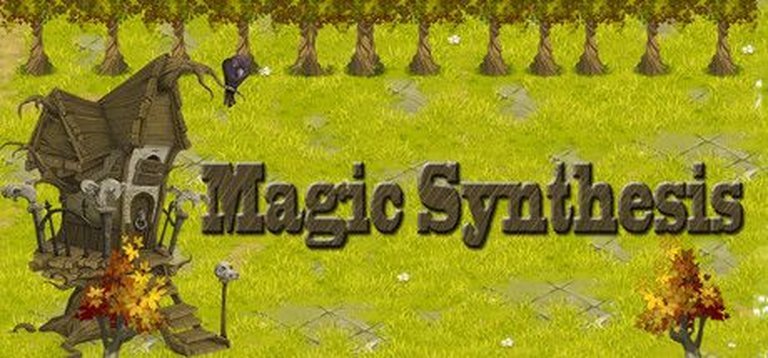
Magic Synthesis is a fantasy city-building simulation game where players assume the role of a magician who farms land, battles monsters, and gathers materials to perform magic synthesis rituals, ultimately summoning and collecting 52 unique girls to inhabit their home. The game combines cultivation mechanics, resource management, and enemy encounters while offering gallery collections for pictures and music, all within a whimsical fantasy setting.
Where to Buy Magic Synthesis
PC
Magic Synthesis Mods
Magic Synthesis Guides & Walkthroughs
Magic Synthesis: Review
Introduction
In the crowded landscape of indie simulations, few titles announce themselves with such unapologetic eccentricity as Magic Synthesis. Released in June 2018 by solo developer CoughCat Software under its publishing label, this Windows RPG Maker-built gem presents a jarring fusion of agricultural simulation, monster-slaying, and… romantic aspiration. The player embodies a sorcerer obsessed with two life goals: cultivating magical crops and collecting 52 girlfriends. This premise, lifted directly from the Steam store tagline (“I am a Sorcerer who loves to grow crops. And I have a dream——have 52 girlfriends”), immediately positions the game as a deliberate departure from conventional fantasy RPGs. Yet beneath its absurd premise lies a surprisingly earnest, if flawed, experiment in emergent storytelling and player-driven progression. This review dissects Magic Synthesis not merely as a product, but as a cultural artifact—a time capsule of 2018 indie game development where ambition, resource constraints, and niche desire collided in the Steam marketplace.
Development History & Context
CoughCat Software operated as a one-man studio, a common model for RPG Maker projects. The choice of this engine was both a blessing and a constraint. RPG Maker offered rapid prototyping capabilities but imposed inherent limitations on graphical fidelity and mechanical complexity. The game’s release on June 29, 2018, occurred during a transitional period for indie simulations. Titles like Stardew Valley (2016) had proven the viability of niche simulations, but the market was already saturating with clones. Magic Synthesis entered this fray as a deliberate outlier—its Steam page ($5.99) and developer message (“This game is not perfect… I have lost of work should to do”) signaled a raw, unpolished vision. Crucially, the developer’s January 2019 update notes reveal a post-release commitment: promising “more cute” art, richer plot structures to combat monotony, and Steam achievements. This admission of imperibility and roadmap for improvement highlights the iterative, community-responsive ethos of small-scale Steam publishing in the late 2010s, where games could evolve post-launch based on player feedback.
Narrative & Thematic Deep Dive
Magic Synthesis rejects traditional narrative structure in favor of a player-driven, goal-oriented fable. The protagonist is a blank-slate sorcerer whose existence is defined by two intertwined ambitions: agricultural mastery and romantic conquest. The narrative unfolds through gameplay loops: farming for resources, battling “terrible” monsters, and synthesizing girls from scrolls and materials. This creates a surreal, cyclical story of accumulation and creation—each girlfriend is not met but crafted, transforming the player’s home into a harem assembled through magical husbandry. The dialogue, sparse and functional, serves only to reinforce core mechanics (“Planting is said to be a magician’s duty”). Thematically, the game explores fantasy tropes through a lens of obsessive specialization. It satirizes the “chosen one” archetype by reducing the protagonist to a breeder-farmer, while the 52-girl collection harkens to Pokémon-style completionism, recontextualized as romantic aspiration. The lack of character depth or interpersonal drama makes the narrative a pure expression of mechanical goals—a minimalist approach that aligns with the game’s simulation roots.
Gameplay Mechanics & Systems
The gameplay loop is deceptively simple: Farm → Fight → Synthesize.
– Farming: The core “planting” mechanic involves cultivating land to generate materials. The game frames this as essential to a magician’s identity, creating a resource-gathering loop that drives progression.
– Combat: Encounters with “terrible” enemies serve as a secondary resource source. Though described as intimidating, combat appears rudimentary—a means to an end rather than a strategic centerpiece.
– Synthesis: The game’s unique hook. When players combine sufficient materials with a “synthetic scroll,” a girlfriend materializes in their home. This process transforms the game into a collection simulator, with 52 distinct girls as the ultimate objective.
Systems are minimal but functional:
– UI: Utilizes RPG Maker’s standard interface with direct control. No complex menus clutter the experience, though this also limits depth.
– Progression: Linear and material-based. Success hinges on efficient farming and grinding, with no traditional character stats or skill trees.
– Post-Content: The Picture Gallery and Music Gallery offer collectibles, rewarding players for exploration and synthesis milestones.
Flaws are evident. The developer’s 2019 admission of “monotonous” gameplay is valid. Synthesis lacks meaningful variation—girls are assembled, not interacted with beyond their existence in the home. The “prayer” mechanic for obtaining a powerful staff introduces randomness without strategic depth, feeling like an afterthought.
World-Building, Art & Sound
The setting exists as a vague fantasy backdrop, defined by its mechanics rather than lore. The “home” serves as the central hub, a space that expands with each synthesized girlfriend, transforming from a humble abode into a crowded harem. This progression creates a subtle, player-driven sense of accomplishment.
Art is purely RPG Maker stock assets, with the developer promising “more cute” art in updates. The lack of custom visuals reinforces the game’s lo-fi aesthetic, focusing functionality over flair. The “terrible” enemies—likely placeholder sprites—embody this utilitarianism, their threat conveyed through text rather than design.
Sound is similarly functional. The Music Gallery suggests original compositions, but no tracks are highlighted in sources. Audio likely serves as atmospheric filler, with no mention of voice acting or dynamic scores. The overall aesthetic is one of deliberate simplicity, aligning with the game’s resource-constrained development.
Reception & Legacy
At launch, Magic Synthesis received no critical coverage. OpenCritic and Metacritic list zero critic scores, and MobyGames shows no reviews. Steam user reviews are absent, with only a single developer update discussing gameplay flaws. This obscurity reflects its niche premise and lack of marketing. However, its Steam presence ($5.99) and RPG Maker status attracted a small, dedicated audience intrigued by its absurd premise.
Its legacy is defined by its uniqueness. The game’s synthesis mechanic prefigures trends in “collection sims,” though it predates more polished titles like Genshin Impact’s character-creation systems. Its influence is indirect—a footnote in discussions of experimental indie RPGs. The developer’s post-launch updates exemplify the 2018 Steam ethos of live-service indie games, even if their impact was minimal. Notably, it shares its name with unrelated titles (e.g., Fairy Fencer F: Synthesis Kit), cementing its status as a standalone oddity rather than a franchise.
Conclusion
Magic Synthesis is a fascinating failure—an earnest, unpolished artifact of 2018 indie game culture. Its fusion of farming and romantic ambition is bold, yet its execution is hampered by RPG Maker’s limitations and a lack of mechanical depth. The game succeeds as a curio: a time capsule where a solo developer’s quirky vision collided with Steam’s accessibility. While its narrative is thin and gameplay repetitive, it offers a pure expression of player-driven goal-setting, transforming a simple loop into a bizarre journey of accumulation. For historians, it exemplifies the double-edged sword of RPG Maker: a democratized tool enabling personal visions, but one that often results in structurally limited experiences. For players, it remains a niche curiosity—charming in its absurdity but ultimately forgettable. In the pantheon of indie simulations, Magic Synthesis is a footnote, but a memorably bizarre one—a testament to the medium’s capacity for embracing the unconventional.