
- Release Year: 1998
- Platforms: Arcade, Nintendo Switch, PlayStation 4, SEGA Saturn, Windows
- Publisher: City Connection Co., Ltd., H2 Interactive Co., Ltd., Success Corp.
- Developer: Success Corp.
- Genre: Action
- Perspective: Side view
- Game Mode: Co-op, Single-player
- Gameplay: Arcade, Shooter
- Setting: Anime, Manga
- Average Score: 81/100
Description
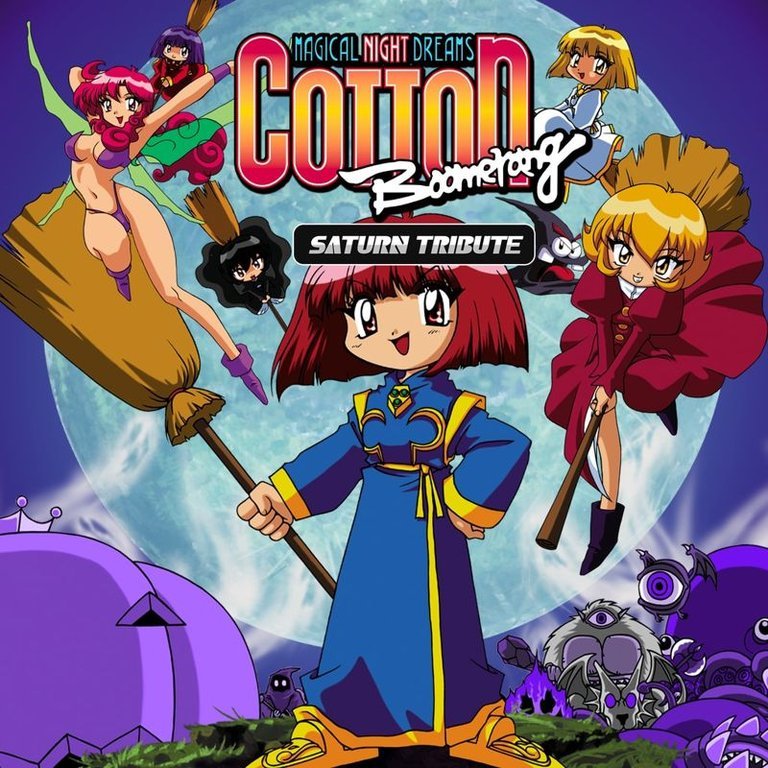
Magical Night Dreams: Cotton Boomerang is an expanded edition of Cotton 2, featuring remixed levels and enemies with a more action-oriented gameplay approach. The game removes the traditional health bar and weapon upgrade restrictions, instead allowing players to choose from 8 unique characters, each with distinct shooting patterns and abilities. Players can switch between characters mid-game, triggering bomb-like effects, and enjoy additional features like an art gallery, multiple difficulty modes, and customizable controls. Originally released on the SEGA Saturn, the game blends anime-inspired visuals with fast-paced shooter mechanics, offering a fresh take on the classic Cotton series.
Gameplay Videos
Magical Night Dreams: Cotton Boomerang Guides & Walkthroughs
Magical Night Dreams: Cotton Boomerang Reviews & Reception
mobygames.com (81/100): Cotton Boomerang is sort of an expanded edition of Cotton 2, with remixed levels and enemies.
mobygames.com (81/100): Average score: 81% (based on 4 ratings)
Magical Night Dreams: Cotton Boomerang Cheats & Codes
Sega Saturn
For bonus options, highlight the ‘Option’ selection, then hold X, Y, and Z. Keep the buttons held, then hold A, B, and C before the options screen appears.
| Code | Effect |
|---|---|
| X, Y, Z, then A, B, C | Unlocks bonus options including ‘Free Play’ |
| C | Activates revival mode when pressed just as the character reaches the ground after being hit |
Magical Night Dreams: Cotton Boomerang: A Masterpiece of Action-Oriented Shooter Design
Introduction
In the pantheon of classic shoot ’em ups, few titles blend whimsy, innovation, and sheer gameplay brilliance as seamlessly as Magical Night Dreams: Cotton Boomerang. Released in 1998 for the SEGA Saturn, this title is not merely a sequel or a spin-off—it is a bold reimagining of the Cotton franchise, a game that dared to defy conventions and carve its own niche in the crowded shooter genre. Developed by Success Corp., Cotton Boomerang is a testament to the creativity and technical prowess of its era, a game that remains revered by enthusiasts and critics alike.
This review will delve deep into the game’s development history, narrative and thematic elements, gameplay mechanics, artistic and auditory design, reception, and lasting legacy. By the end, it will be clear why Cotton Boomerang is not just a footnote in gaming history, but a masterpiece that deserves to be celebrated.
Development History & Context
The Studio and the Vision
Success Corp., the studio behind Cotton Boomerang, was no stranger to the shooter genre. Having already established the Cotton series with Fantastic Night Dreams: Cotton (1991) and Cotton 2: Magical Night Dreams (1997), the team was poised to push the boundaries of what a shooter could be. The development of Cotton Boomerang was spearheaded by a core team that included producer Takato Yoshinari, designer Masahiro Fukuda, and programmer Masaru Hatsuyama—all veterans of the original Cotton games.
The vision for Cotton Boomerang was clear from the outset: to create a more action-oriented experience that retained the charm of its predecessors while introducing innovative mechanics. The team drew inspiration from a variety of sources, including Virtua Fighter (for its command-based combat system) and Sol Divide (for its dynamic gameplay). The goal was to blend the traditional shooter mechanics of the Cotton series with fighting game elements, creating a hybrid that would appeal to both shooter and action game fans.
Technological Constraints and Innovations
The SEGA Saturn, while a powerful console, was notoriously difficult to develop for, particularly when it came to 2D games. However, Success Corp. had prior experience with the hardware, having ported Cotton 2 to the Saturn in 1997. This familiarity allowed them to optimize Cotton Boomerang for the console, ensuring smooth performance and vibrant visuals.
One of the most significant innovations in Cotton Boomerang was the removal of the traditional health bar. Instead, players selected three characters from a roster of eight, each with unique shooting patterns and abilities. These characters acted as “lives,” and switching between them (as long as they were alive) triggered a bomb-like effect, adding a strategic layer to the gameplay. This system was a departure from the norm and required careful balancing to ensure it felt fair and engaging.
The Gaming Landscape of 1998
The late 1990s were a transitional period for the gaming industry. The SEGA Saturn, while struggling against the PlayStation in the West, remained a beloved console in Japan, particularly for its robust library of 2D shooters and arcade ports. Cotton Boomerang arrived at a time when the shooter genre was evolving, with games like Radiant Silvergun and Ikaruga pushing the boundaries of what was possible.
In this context, Cotton Boomerang stood out for its unique blend of action and shooter mechanics. It was not just another horizontal shooter; it was a game that demanded precision, strategy, and quick reflexes, all while maintaining the series’ signature charm and whimsy.
Narrative & Thematic Deep Dive
Plot and Characters
Cotton Boomerang continues the story of Cotton, the young witch with an insatiable appetite for candy, and her fairy companion Silk. This time, they are joined by a roster of eight playable characters, each with their own distinct personalities and abilities. The narrative revolves around Cotton’s quest to retrieve the missing “Bluewater Willow” candy, a journey that takes her through a series of dreamlike, fantastical worlds.
While the plot is relatively simple, it is the characters that bring the game to life. Cotton herself is a delightful protagonist—cheerful, determined, and endlessly charming. The addition of multiple playable characters, each with their own backstories and motivations, adds depth to the narrative. For example, Appli, Cotton’s rival, brings a competitive edge to the story, while other characters like Needle (a sentient hat) add a touch of whimsy.
Themes and Symbolism
At its core, Cotton Boomerang is a celebration of fantasy and adventure. The game’s worlds are vibrant and imaginative, filled with magical creatures, candy-filled landscapes, and surreal dream sequences. The themes of friendship, rivalry, and perseverance are woven throughout the narrative, making the game more than just a shooter—it is a journey of self-discovery and camaraderie.
The game also explores the idea of transformation and adaptability. The ability to switch between characters mid-game is not just a mechanical feature; it is a thematic one. Players must adapt to different playstyles and strategies, much like the characters themselves must adapt to the challenges they face. This theme of adaptability is reflected in the game’s difficulty, which scales dynamically based on the player’s performance.
Dialogue and Localization
The dialogue in Cotton Boomerang is lighthearted and playful, befitting the game’s whimsical tone. The Japanese script is filled with puns, wordplay, and humorous exchanges between characters, all of which contribute to the game’s charm. Unfortunately, the game was never officially localized for Western audiences, which means much of this nuance was lost to non-Japanese players. However, fan translations and retrospectives have helped bridge this gap, allowing a broader audience to appreciate the game’s narrative depth.
Gameplay Mechanics & Systems
Core Gameplay Loop
Cotton Boomerang is, at its heart, a horizontal scrolling shooter. Players navigate through a series of stages, blasting enemies, dodging bullets, and collecting power-ups. However, the game’s true innovation lies in its hybrid mechanics, which blend shooter and fighting game elements.
The core gameplay loop revolves around the following mechanics:
-
Character Selection and Switching: Players choose three characters from a roster of eight, each with unique shooting patterns and abilities. Switching between characters mid-game triggers a bomb-like effect, clearing the screen of enemies and providing a temporary advantage.
-
Command Shots: Inspired by Virtua Fighter, Cotton Boomerang introduces command-based shots. By executing specific button combinations, players can perform special attacks that fire in multiple directions, adding a layer of depth to the combat.
-
Enemy Throwing and Shielding: Players can pick up enemies and their projectiles, sealing them into orbs that can be thrown or used as shields. This mechanic is crucial for scoring high points and surviving tough encounters.
-
Elemental Magic: Collecting elemental crystals allows players to change their primary weapon, adding strategic variety to the gameplay. Each element has its own strengths and weaknesses, encouraging players to experiment and adapt.
Combat and Progression
The combat in Cotton Boomerang is fast-paced and demanding. Enemies come in waves, each with unique attack patterns and behaviors. The game’s difficulty is balanced but unforgiving, requiring players to master the mechanics to progress.
One of the standout features of the combat system is the ability to chain combos. By keeping an orb on-screen and defeating multiple enemies, players can rack up high scores, adding a competitive edge to the gameplay. This scoring system is reminiscent of classic arcade shooters, where skill and precision are rewarded with higher scores and bragging rights.
UI and Controls
The UI in Cotton Boomerang is clean and intuitive, with health bars, score counters, and power-up indicators clearly displayed. The controls are responsive and precise, a necessity given the game’s demanding gameplay. The SEGA Saturn’s controller is well-suited to the game’s mechanics, with the six-button layout allowing for easy execution of command shots and character switches.
Innovative Systems
Cotton Boomerang introduces several innovative systems that set it apart from other shooters of its era:
-
Character-Specific Abilities: Each of the eight playable characters has unique abilities and shooting patterns, encouraging players to experiment and find their preferred playstyle.
-
Dynamic Difficulty: The game’s difficulty scales based on the player’s performance, ensuring that it remains challenging but fair.
-
Art Gallery and Extras: The game includes an art gallery featuring concept art and promotional material, as well as additional difficulty modes and controller configuration options.
Flawed Systems
While Cotton Boomerang is a masterpiece, it is not without its flaws. The most notable issue is the game’s steep learning curve. The command-based combat system, while innovative, can be overwhelming for newcomers. Additionally, the lack of a traditional health bar means that players must rely on their characters’ lives, which can lead to frustration if not managed carefully.
Another potential flaw is the game’s brevity. With only seven stages, Cotton Boomerang is relatively short compared to other shooters of its era. However, the game’s high replay value, thanks to its scoring system and multiple characters, helps mitigate this issue.
World-Building, Art & Sound
Setting and Atmosphere
Cotton Boomerang takes place in a series of dreamlike worlds, each with its own unique theme and aesthetic. From candy-filled landscapes to haunted forests, the game’s settings are vibrant and imaginative, filled with magical creatures and surreal imagery.
The atmosphere is one of whimsy and wonder, with each stage feeling like a journey through a storybook. The game’s art direction is top-notch, with detailed sprites, lush backgrounds, and a color palette that is both vibrant and soothing.
Visual Direction
The visual direction in Cotton Boomerang is a standout feature. The game’s anime-inspired art style is both charming and detailed, with character designs that are expressive and full of personality. The backgrounds are particularly impressive, with hand-painted landscapes that evoke a sense of wonder and adventure.
The game’s use of color is also noteworthy. Each stage has its own distinct color palette, which helps to differentiate the environments and create a cohesive visual experience. The attention to detail in the visuals is evident, from the intricate character animations to the subtle environmental effects.
Sound Design and Music
The sound design in Cotton Boomerang is equally impressive. The game’s soundtrack, composed by Kenichi Hirata, is a blend of upbeat, catchy tunes and atmospheric tracks that perfectly complement the gameplay. The music is dynamic, changing to reflect the on-screen action and adding to the game’s immersive experience.
The sound effects are also well-crafted, with each weapon, enemy, and environmental interaction having its own distinct audio cue. This attention to detail helps to create a rich auditory experience that enhances the gameplay.
Reception & Legacy
Critical and Commercial Reception
Cotton Boomerang was met with positive reception upon its release. Critics praised the game’s innovative mechanics, vibrant visuals, and engaging gameplay. The SEGA Saturn version, in particular, was lauded for its faithful adaptation of the arcade original.
The game’s critical reception was strong, with publications like HonestGamers and SuperGamePower awarding it high scores. Players also responded positively, with the game earning a 4.5 out of 5 rating on MobyGames.
Commercially, Cotton Boomerang performed well in Japan, where the SEGA Saturn had a strong following. The game’s inclusion in the Cotton Guardian Force Saturn Tribute compilation in 2021 introduced it to a new generation of players, further cementing its legacy.
Evolution of Reputation
Over the years, Cotton Boomerang has gained a cult following among shooter enthusiasts. Its innovative mechanics and charming aesthetic have made it a beloved title, often cited as one of the best shooters on the SEGA Saturn.
The game’s reputation has only grown with time, thanks in part to its inclusion in modern compilations and the efforts of preservationists and fans. Today, Cotton Boomerang is recognized as a masterpiece of the shooter genre, a game that pushed the boundaries of what was possible and inspired future titles.
Influence on Subsequent Games
Cotton Boomerang has had a lasting impact on the shooter genre. Its hybrid mechanics, blending shooter and fighting game elements, have influenced subsequent titles, including Ikaruga and Radiant Silvergun. The game’s emphasis on character-specific abilities and dynamic difficulty has also been adopted by modern shooters, making it a trailblazer in the genre.
The Cotton series itself has continued to evolve, with titles like Rainbow Cotton (2000) and Cotton Reboot! (2021) building on the foundation laid by Cotton Boomerang. The series’ enduring popularity is a testament to the strength of its core mechanics and the charm of its characters.
Conclusion
Magical Night Dreams: Cotton Boomerang is more than just a shooter—it is a masterpiece of game design, a title that blends innovation, charm, and sheer gameplay brilliance. From its development history to its narrative depth, gameplay mechanics, and artistic design, every aspect of the game is crafted with care and precision.
While it may not have achieved the same level of mainstream recognition as some of its contemporaries, Cotton Boomerang has earned its place in gaming history as a cult classic, a game that continues to inspire and delight players to this day. Its legacy is one of innovation and creativity, a testament to the power of game design to transcend genres and create something truly special.
For fans of shooters, action games, or simply great game design, Magical Night Dreams: Cotton Boomerang is an essential experience, a game that deserves to be celebrated and remembered as one of the finest titles of its era.