
- Release Year: 2006
- Platforms: Windows
- Publisher: SpinTop Games
- Developer: Jolly Bear Games, Inc.
- Genre: Puzzle
- Perspective: Top-down
- Game Mode: Single-player
- Gameplay: Cards, Tile matching puzzle, Tiles
- Setting: Ancient, Classical, Japan, Medieval
- Average Score: 70/100
Description
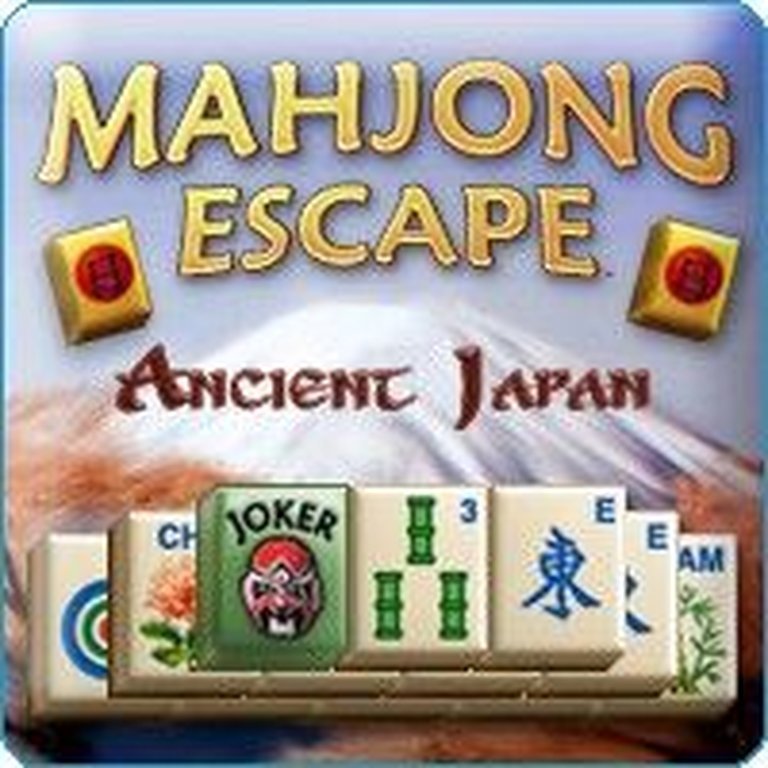
Mahjong Escape: Ancient Japan is a Mahjong solitaire variant set against the backdrop of ancient Japan, where players journey through the nation’s history from 8500 BC to 1912 AD in Emperor’s Adventure mode, unlocking levels one by one, or tackle any of 162 layouts in Classic mode with customizable backgrounds and tilesets. Traditional tile-matching rules apply to clear stacked boards, augmented by innovative elements like Magic Gold tiles for instant clears, matching season/flower/direction tiles, keys to unlock barriers, jokers to remove tile types, and magnets to reposition pieces, all while tracking completion times, scores, and earning pearls of wisdom.
Gameplay Videos
Mahjong Escape: Ancient Japan Free Download
Mahjong Escape: Ancient Japan Reviews & Reception
gamezebo.com (70/100): Mahjong Escape: Ancient Japan is a solid addition to any Mahjong lover’s game library.
Mahjong Escape: Ancient Japan: Review
Introduction
In the golden age of casual gaming during the mid-2000s, when downloadable puzzles like Bejeweled and Zuma were captivating audiences on sluggish dial-up connections, Mahjong Escape: Ancient Japan emerged as a serene tile-matching odyssey. Released on November 13, 2006, by developer Jolly Bear Games and publisher SpinTop Games, this Windows-exclusive title transports players through 10,000 years of Japanese history via the timeless mechanics of Mahjong solitaire. What begins as a simple quest to clear stacked tiles evolves into a meditative journey blending puzzle prowess with cultural nuggets, offering over 200 levels across structured adventure and freeform modes. At its core, Mahjong Escape: Ancient Japan is a masterful refinement of the Shanghai-style Mahjongg formula, proving that thematic immersion and smart power-ups can elevate a familiar genre into an enduring, relaxing escape—flawed only by its conservative design choices, yet timeless in its elegant simplicity.
Development History & Context
Developed by the relatively obscure Jolly Bear Games, Inc., Mahjong Escape: Ancient Japan arrived amid the explosive growth of the casual games market. The mid-2000s marked a pivotal era for browser and downloadable puzzles, fueled by platforms like PopCap’s distribution network (though SpinTop handled primary publishing here) and sites such as Big Fish Games and Gamezebo. Jolly Bear, specializing in tile-based puzzlers, built directly on the success of their prior release, Mahjong Escape: Ancient China (also 2006), shifting the cultural lens from Chinese dynasties to Japanese eras. This sequel reflects a deliberate vision: to infuse educational “ancient wisdom” into addictive gameplay, capitalizing on Mahjong’s global appeal as a digitized board game translation.
Technological constraints of 2006 Windows PCs—modest CPUs (600MHz minimum), 128MB RAM, and DirectX 8.1—dictated a lightweight, 11MB downloadable footprint emphasizing 2D top-down visuals and mouse-driven input. No 3D flourishes or online features; instead, the focus was offline accessibility for casual players, aligning with ESRB “Everyone” ratings and single-player design. The gaming landscape buzzed with PopCap’s dominance (Plants vs. Zombies loomed on the horizon), but Mahjong variants thrived in niche portals, competing with Mahjong Titans and early Luxor titles. SpinTop’s involvement suggests a budget-conscious production, prioritizing replayability (162+ classic layouts) over innovation, yet the game’s hand-painted backgrounds and authentic Japanese audio nod to cultural research, positioning it as an antidote to flashier action puzzles in a post-World of Warcraft era craving zen-like breaks.
Narrative & Thematic Deep Dive
Mahjong Escape: Ancient Japan eschews overt storytelling for a subtle, progression-driven narrative framed as the “Emperor’s Adventure.” Players embody a timeless mystic emperor traversing Japan’s timeline from 8500 BC (prehistoric Jomon era) to 1912 AD (end of the Meiji Restoration), conquering 60 sequential boards across 12 historical dynasties. Each cleared layout unlocks the next, culminating in “pearls of wisdom”—profound proverbs like “Fall down seven times, get up eight” or “The heart that loves is always young”—that serve as reflective interludes, blending philosophy with history. These snippets, drawn from Japanese folklore and Confucian influences, transform tile-matching into a metaphorical quest for the “lost Emperor’s treasures,” with dynasty completions revealing artifacts and new backgrounds.
Thematically, the game romanticizes Japan’s evolution: from ancient shrines shrouded in mist to Heian courtyards blooming with cherry blossoms, evoking themes of impermanence (mono no aware), resilience, and harmony with nature. Absent are voiced characters or branching dialogue; the “plot” unfolds through environmental storytelling—evolving layouts mirroring era-specific motifs (e.g., samurai-era rigidity or feudal complexity)—and post-level lore. Special tiles like Magic Gold (instant victory) symbolize enlightenment, while keys unlocking locks represent historical barriers overcome. Critics like Gamezebo noted its educational charm, yet the narrative’s linearity feels conservative, lacking the interactive depth of later titles like Mahjong Mysteries: Ancient Athena. Nonetheless, this restrained approach amplifies the puzzle’s meditative core, making wisdom feel earned amid strategic triumphs.
Gameplay Mechanics & Systems
At its heart, Mahjong Escape: Ancient Japan adheres to traditional Mahjongg solitaire rules: remove pairs of identical “free” tiles (unblocked on at least one side) from a stacked board until empty, with the UI highlighting matches, free tiles, and counts for transparency. Core loops emphasize foresight—poor moves strand tiles, demanding undo, hint (score penalty), or shuffle options—while tracking completion time and scores fosters competition with oneself.
Emperor’s Adventure Mode structures play across unlocked levels, introducing power-ups for depth:
– Magic Gold Tiles: Uncover and match two to vaporize the entire board, a clutch escape from deadlocks.
– Season/Flower/Cardinal Tiles: Flexible matching (any two within a suit, e.g., Spring with Autumn) adds wildcard strategy.
– Keys/Locks: Keys remove corresponding locks, unveiling hidden tiles.
– Jokers: Erase all instances of a selected tile type.
– Magnets: Reposition any tile, mitigating bad layouts.
Later levels ramp complexity with these, balancing accessibility (three difficulty settings) against challenge. Classic Mode unlocks 162 layouts post-adventure—shapes like bonsai trees, hawks, or harps—sans power-ups, for purist replay. Customizable tilesets (six designs, critiqued as uninspired repeats from Ancient China) and 20+ backgrounds enhance variety.
UI shines: intuitive mouse controls, free-tile glow toggle, and penalty-free tools prevent frustration. No combat or progression trees exist; advancement is score-based, with pearls as milestones. Flaws include repetitive tile sets and occasional shuffle RNG, but innovations like group-matching elevate it beyond vanilla Mahjongg, delivering 20+ hours of strategic bliss.
World-Building, Art & Sound
The game’s world is a tapestry of historical Japan, rendered in hand-painted 2D backdrops that shift per dynasty: prehistoric forests yield to feudal castles, misty shrines, and modernizing Meiji vistas. These 20+ environments immerse without overwhelming, their soft palettes (cherry pinks, emerald greens) complementing tile readability. Tilesets—bamboo, characters, circles, plus themed seasons/flowers—evoke ukiyo-e artistry, though Gamezebo lamented their conservatism, missing samurai or yokai motifs.
Atmospherically, backgrounds foster tranquility, with layouts thematically tied (e.g., rigid grids for shogunate eras). Sound design amplifies this: lush, authentic Japanese instrumentation—koto strings, shamisen plucks, taiko undertones—creates a serene soundscape, toggleable for focus. Subtle effects (tile clinks, gold shimmers) punctuate matches, while ambient nature sounds evoke eras. Together, these elements craft a cohesive, culturally resonant experience, turning puzzles into portals to history, far surpassing sterile Mahjong clones.
Reception & Legacy
Launch reception was modestly positive in casual circles but sparse overall. MobyGames logs a 4.0/5 from two player ratings (no reviews), VideoGameGeek 0.00/10 (unrated), and Metacritic lacks critic scores. Gamezebo’s Joel Brodie awarded 70/100, lauding 200+ creative boards, music, and settings while docking points for recycled tilesets. Retro Replay and archival sites praise its polish, but obscurity persists—collected by few, with no mainstream buzz amid 2006’s Wii Sports frenzy.
Commercially, as a $20 download via SpinTop/Big Fish, it succeeded in niches, spawning the Mahjong Escape series (Ancient China prequel, 2014 browser sequel) and influencing thematics in Mahjong Tales: Ancient Wisdom (2007) or Mahjong Mysteries (2012). Its legacy endures in casual portals, preserving Mahjong solitaire’s evolution toward narrative power-ups and education. In historiography, it exemplifies 2000s casual booms—accessible, thematic puzzles bridging East-West audiences—yet remains underappreciated, a hidden gem for preservationists.
Conclusion
Mahjong Escape: Ancient Japan stands as a polished pinnacle of mid-2000s casual puzzling, weaving Mahjongg’s cerebral depth with Japanese historical elegance across 200+ levels, innovative power-ups, and wisdom-infused progression. Jolly Bear’s vision triumphs in accessibility and immersion, bolstered by evocative art and sound, despite tile-set stagnation and niche appeal. In video game history, it occupies a quiet throne among board-game digitizations—a testament to puzzles’ power for cultural escapism. Verdict: 8.5/10—Essential for Mahjong aficionados, a worthy historical detour for casual historians. Play it today via archives; its pearls of wisdom still shine.