
- Release Year: 2000
- Platforms: Windows
- Publisher: GSP Software
- Genre: Puzzle
- Perspective: Top-down
- Game Mode: Single-player
- Gameplay: Tile matching puzzle
- Average Score: 60/100
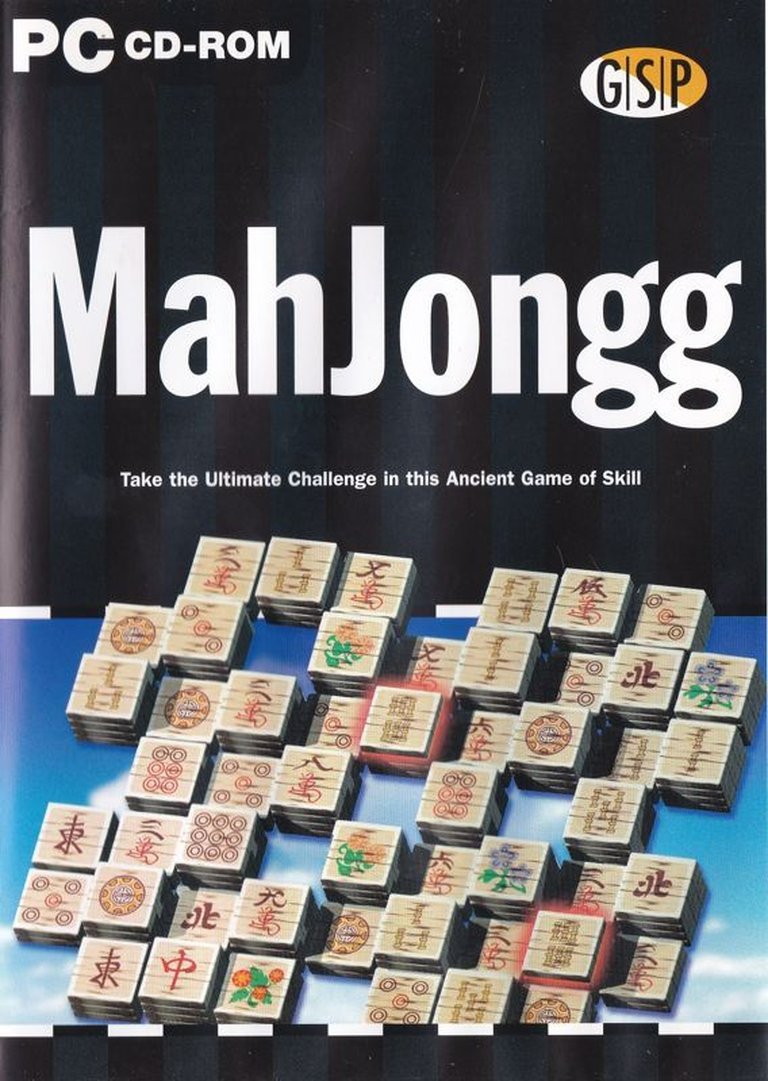
Description
MahJongg is a classic tile-matching puzzle game released in 2000 for Windows, where players must clear an arrangement of 144 tiles by pairing identical visible tiles that have space to the left or right for removal, challenging them to strategically eliminate all tiles across 10 different board layouts featuring six themed tile sets and backgrounds, all set against a simple top-down perspective without advanced features like undo or match counters.
Gameplay Videos
Reviews & Reception
mobygames.com (60/100): Satisfactory albeit slightly functional computerised rendition.
MahJongg: Review
Introduction
In the sprawling tapestry of video game history, few titles embody the quiet elegance of ancient tradition digitized into simple, addictive play like MahJongg (2000). Released at the dawn of the new millennium, this Windows-based puzzle game distills the essence of Mahjong solitaire—a solitary adaptation of the centuries-old Chinese tile game—into a CD-ROM package that invites players to meticulously dismantle towering stacks of ornate tiles. As a professional game journalist and historian, I’ve traced the evolution of digital entertainment back to its roots in folklore and strategy, and MahJongg stands as a modest yet poignant milestone in the genre’s journey from arcade curiosities to ubiquitous browser fodder. Its legacy lies not in groundbreaking innovation but in faithfully capturing the meditative challenge that has hooked players since the Qing Dynasty. This review argues that while MahJongg lacks the polish of modern iterations, it exemplifies the unpretentious charm of early 2000s casual gaming, preserving cultural heritage in an era when puzzle titles bridged the gap between tabletop pastimes and personal computing, ultimately earning its place as an overlooked gateway to intellectual relaxation.
Development History & Context
The development of MahJongg emerges from a landscape dominated by casual software publishers aiming to capitalize on the growing home PC market of the late 1990s and early 2000s. Published by Global Software Publishing Ltd. (GSP), a UK-based company known for budget-friendly educational and entertainment titles, the game credits only one individual in its musical contributions—Glenn Lijestrand—suggesting a lean, possibly in-house or outsourced effort typical of the era’s smaller studios. No explicit developer is named in available records, but the game’s straightforward implementation aligns with the work of independent programmers adapting public-domain mechanics to Windows platforms, much like the shareware explosion of the time.
To contextualize, MahJongg arrived in 2000, a pivotal year when personal computing was transitioning from dial-up internet novelties to essential household tools. Windows 95/98 dominated, with CD-ROMs serving as the primary medium for commercial games due to their capacity for richer visuals and audio compared to floppy disks. The gaming landscape was bifurcated: blockbuster 3D adventures like The Sims and Half-Life vied for attention, but casual puzzles thrived in the “edutainment” niche, appealing to non-gamers seeking low-stakes diversion. Mahjong solitaire itself traces back further in digital form—Brodie Lockard’s 1981 PLATO version Mah-Jongg laid the groundwork, followed by Activision’s landmark 1986 Shanghai for Macintosh, which sold millions and popularized the solitaire variant in the West. By the 1990s, Microsoft’s Taipei in the Entertainment Pack (1990) and Kyodai Mahjongg (1997) normalized tile-matching on PCs.
Technological constraints shaped MahJongg‘s design: early 2000s Windows hardware handled fixed-screen 2D graphics effortlessly, but lacked the power for complex animations or 3D modeling seen in contemporaries. The game’s top-down, flip-screen perspective and point-and-select interface reflect these limits, prioritizing accessibility over spectacle. Creators’ vision, inferred from the product, leaned toward authenticity—drawing from the 144-tile Shanghai solitaire rules established in the 19th century near Shanghai—while adding thematic variety to evoke the game’s cultural origins. Amid a market flooded with Mahjong clones (e.g., Ultimate Mahjongg in 2000 or Mahjongg Empire in 2001), MahJongg positioned itself as a commercial entry for GSP’s portfolio, targeting puzzle enthusiasts in an age before free online ports like Mahjong Titans (2006) would democratize the genre.
Narrative & Thematic Deep Dive
MahJongg eschews traditional narrative structures—no protagonists, no branching plots, no dialogue trees—embodying instead the silent storytelling of abstract puzzles, where the “plot” unfolds through the player’s strategic revelations. At its core, the game narrates a tale of deconstruction and harmony, mirroring the philosophical underpinnings of its ancient inspiration. Traditional Mahjong, emerging in the mid-19th century Qing Dynasty provinces like Kiangsu and Chekiang, was more than a game; it was a gambler’s ritual of chance and cunning, with tiles symbolizing Confucian virtues, winds, dragons, and seasonal cycles. Confucius himself is mythically linked to its origins around 500 BC, with tiles allegedly representing his teachings on ethics, seasons, and human elements—circles for heaven, bamboos for earth, characters for man.
In this digital solitaire rendition, the “narrative” is the player’s solitary journey through 10 board layouts, each a metaphorical mountain of 144 tiles (four each of 36 designs, plus bonuses) that must be paired and removed. Themes of patience and foresight dominate: tiles buried under layers evoke life’s hidden obstacles, only accessible when “free” on the left or right—a rule straight from the Shanghai solitaire codified in the 1920s American rules by Joseph P. Babcock. The six themed tile sets deepen this immersion—perhaps oriental motifs of birds, flowers, or dragons—evoking the artistry of ivory-and-bamboo sets from China’s elite past, now digitized for the masses. Backgrounds reinforce cultural resonance, blending serene Eastern aesthetics with subtle Western accessibility, as seen in the National Mah Jongg League’s 1937 standardization.
Underlying themes explore mental discipline and cultural preservation. As a solo experience, it contrasts the social Mahjong of family gatherings or Jewish-American clubs in the 1920s, emphasizing introspection over competition. No overt story beats exist, but the optional timer’s tension introduces urgency, thematically nodding to the game’s evolution from leisurely pastime to pressured challenge in digital form. Dialogue is absent, yet the tiles “speak” through symbols: Winds (East, South, West, North) represent directional harmony; Dragons (Red, Green, White) symbolize power and prosperity. In extreme detail, clearing a board feels like unraveling a philosophical puzzle—pairing suits (circles, bamboos, characters) mirrors forming “sets” in rummy-like traditional play, underscoring themes of balance amid chaos. Flaws emerge in its austerity: without hints or undos, the narrative can frustrate, turning enlightenment into entrapment, a thematic echo of Mahjong’s gambler roots where poor decisions lead to ruin.
Gameplay Mechanics & Systems
At its heart, MahJongg revolves around the classic Shanghai solitaire loop: arrange 144 tiles in layered formations (turtle, dragon, or custom layouts among the 10 boards), then methodically match identical pairs to clear the field, with visibility and “free” edges as gating mechanics. Core gameplay demands pattern recognition and spatial planning—tiles must be exposed on at least one side to select, preventing arbitrary removals and enforcing strategic depth. The point-and-select interface, mouse-driven for Windows, feels intuitive for the era, though clunky by today’s touch standards: click to highlight, match to vanish with satisfying pops, progressing layer by layer until victory or stalemate.
Subtle systems add replayability without overwhelming. The 10 layouts vary in complexity—from beginner-friendly open fields to intricate towers—encouraging experimentation. Six themed tile sets alter visuals (e.g., floral vs. geometric) but not rules, providing cosmetic variety that subtly affects readability; some shadows obscure symbols, a noted flaw. An optional timer introduces risk-reward, capping sessions at player-set durations (inspired by Shanghai‘s challenges), heightening tension as tiles dwindle—though without a match counter, players rely on intuition, amplifying frustration in dead-end scenarios. No character progression exists; it’s pure skill honing, with offline single-player focus aligning with casual PC play.
Innovations are minimal but effective: the fixed/flip-screen view auto-adjusts layers, streamlining navigation compared to earlier text-based ports. Flaws abound—no undo button dooms impulsive clicks, and absent hints (unlike Mahjong Titans) demand restarts, punishing errors in a genre already unforgiving. UI is barebones: a top-down grid with minimal menus, lacking polish like save states (beyond basic load/save in related titles). Combat? Nonexistent—it’s cerebral warfare against the board. Overall, the loop is addictive for short bursts, deconstructing puzzles like a digital zen garden, but its austerity reveals the genre’s limits pre-2000s bloat.
World-Building, Art & Sound
MahJongg‘s “world” is a minimalist digital shrine to Eastern aesthetics, confined to abstract tile pyramids against evocative backgrounds. The setting evokes ancient Chinese teahouses or 1920s American parlors where Mahjong first captivated Westerners, with no expansive lore but a tangible atmosphere of tranquility laced with challenge. The top-down perspective immerses players in a static yet dynamic tableau—tiles stack in pseudo-3D layers, flipping screens to reveal buried gems, building a sense of archaeological excavation.
Visual direction shines in its thematic fidelity: six tile sets draw from Mahjong’s 136-144 tile canon (suits, honors, flowers/seasons), rendered in crisp 2D sprites that mimic bone-ivory craftsmanship. Backgrounds—serene landscapes or patterned motifs—enhance immersion, contributing to a calming vibe that counters the timer’s stress. Art style is fixed-screen functionalism, prioritizing clarity over flair; however, shadow angles on some sets hinder distinction (e.g., similar characters blending), detracting from accessibility. No animations beyond removal fades, but this restraint fosters focus, making each match a meditative act.
Sound design, courtesy of Glenn Lijestrand, leans ambient: subtle oriental-inspired tracks—flutes, chimes—loop to evoke cultural roots without intrusion, underscoring the game’s heritage from Ming Dynasty card games to Activision’s Shanghai. Tile matches yield soft clacks, mimicking physical shuffles, while the timer adds urgency via ticks (if enabled). These elements coalesce into an experience of quiet escapism—art and sound transport players to Mahjong’s Shanghai origins, fostering nostalgia and mental clarity, though sparse effects reveal budgetary constraints, paling against later 3D evolutions like Mahjongg Dimensions.
Reception & Legacy
Launched in 2000 via CD-ROM, MahJongg flew under the radar, with no critic reviews or player scores on MobyGames—its Moby Score remains n/a, collected by just one user, underscoring its obscurity amid genre saturation. Commercially, GSP’s budget model likely yielded modest sales, targeting puzzle fans in a market where freeware like Kyodai Mahjongg (1997) undercut premiums. Contemporary reception, pieced from broader Mahjong discourse, was lukewarm: players praised the format’s timeless appeal but lamented absent features like undos, echoing critiques of early solitaire ports.
Over time, its reputation has evolved into quiet reverence as a historical artifact. In an era before Mahjong Titans bundled with Windows (2006) or mobile apps exploded, MahJongg exemplified the genre’s democratization—bridging 19th-century China’s social ritual to solo PC play. Its influence ripples through titles like Ultimate Mahjongg (2000), Mahjongg 2 (2004), and even 3D variants (3D MahJongg on 3DS, 2012), standardizing 10-layout variety and themed sets. Industry-wide, it contributed to Mahjong’s resurgence: by the 2010s, online platforms like Mahjong Time and apps boosted popularity, with U.S. trends tying into cultural diversity and anti-tech hobbies. Legacy-wise, MahJongg symbolizes preservation—digitizing a game tied to Confucius myths and 1920s Western fad, influencing cognitive gaming’s rise (e.g., brain-training apps). While not revolutionary, it endures as a foundational clone, inspiring endless iterations and affirming Mahjong solitaire’s status as a billion-play staple.
Conclusion
MahJongg (2000) is a humble digital echo of an ancient masterpiece, transforming Qing Dynasty tiles into a Windows-era puzzle that rewards patience over pyrotechnics. Through its lean mechanics, cultural theming, and atmospheric restraint, it captures the solitaire essence that propelled Mahjong from Shanghai gambling dens to global screens, despite flaws like sparse UI and no safety nets. In video game history, it occupies a niche as an unheralded preserver—bridging eras when casual titles like this nurtured the puzzle genre’s growth into today’s mindful gaming boom. Verdict: Essential for historians and tile aficionados; a solid 7/10 for its faithful, if basic, nod to enduring strategy. Play it to appreciate how a stack of virtual tiles can still challenge the mind after centuries.