
- Release Year: 2019
- Platforms: Windows
- Publisher: Cyberium Multi Media B.V.
- Genre: Puzzle
- Perspective: Top-down
- Game Mode: Single-player
- Gameplay: Cards, Tile matching puzzle, Tiles
Description
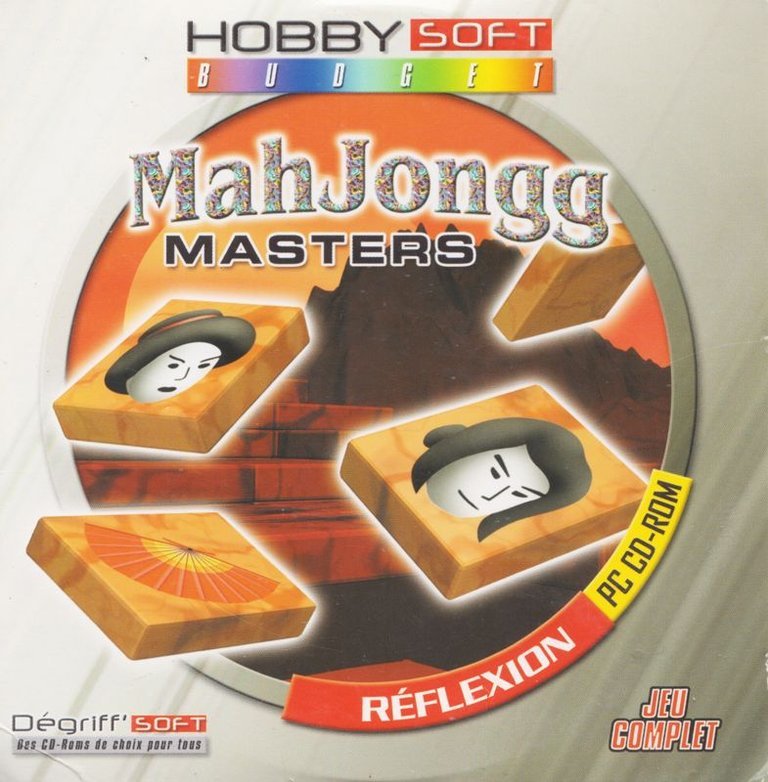
MahJongg is a traditional tile-matching puzzle game featuring fifty unique layouts where players click on matching pairs to clear them from the board. Set against an oriental-themed backdrop, the game includes animated tiles, save/load functionality, and a soundtrack inspired by Eastern aesthetics, offering a meditative yet engaging gameplay experience rooted in centuries-old Chinese tradition.
Gameplay Videos
Where to Buy MahJongg
PC
MahJongg: Review
1. Introduction
In the digital age, few ancient games have endured with the resilience of Mahjong, a tile-based puzzle that has transcended centuries and continents. Cyberium Multi Media B.V.’s 2019 Windows adaptation, MahJongg, arrives as a modern tribute to this cultural cornerstone, offering fifty meticulously crafted tile layouts distilled into a point-and-click experience. While it may lack the narrative depth or competitive fervor of its tabletop counterpart, MahJongg succeeds as a meditative digital vessel for one of humanity’s most enduring pastimes. This review argues that the game, though simplistic in execution, faithfully captures Mahjong’s essence as a tactile, strategic ritual, albeit one stripped of the social and cultural richness that has defined its legacy. Its strength lies in its accessibility, but its ultimate limitation is its failure to bridge the gap between solitary puzzle-solving and the communal soul of the original game.
2. Development History & Context
Developed by Cyberium Multi Media B.V., a studio specializing in casual puzzle games, MahJongg emerged in October 2019 amid a resurgence of classic board game digitalization. The creators’ vision was clear: to distill Mahjong’s core mechanics into a streamlined, single-player experience for Windows. Technologically, the game operates within modest constraints, eschewing 3D graphics or complex AI for a top-down, animated tile interface—a pragmatic choice that ensures broad accessibility. This aligns with the 2019 gaming landscape, where puzzle games dominated casual platforms, and Mahjong solitaire variants thrived on mobile and PC due to their low barrier to entry. However, this simplicity came at a cost: the game omits multiplayer features, regional rule variants, or dynamic opponents, reducing Mahjong to a solitary exercise. This choice reflects a broader trend in casual gaming but overlooks the game’s inherent social DNA, as evidenced by its history as a “social glue” in Chinese communities (Ancient Games).
3. Narrative & Thematic Deep Dive
MahJongg deliberately eschews narrative, characters, or dialogue, focusing instead on the pure abstraction of tile matching. Thematically, it evokes Mahjong’s rich cultural symbolism—bamboo, dragons, and winds adorn the tiles, echoing their origins in 19th-century Chinese cosmology. The absence of a story underscores the game’s philosophical core: Mahjong as a meditative practice, where the rhythmic click of tiles becomes a modern echo of the “clattering sparrows” that inspired its name (Mahjong Playbook). Yet this thematic purity is double-edged. Without context, the tiles feel like abstract puzzles rather than artifacts of a 150-year-old tradition. The game misses an opportunity to narrate Mahjong’s journey—from a Qing Dynasty pastime to a global phenomenon—leaving players with beautiful visuals but no connection to the game’s soul. This contrasts sharply with its real-world role, where every hand played reinforces bonds across generations (Ancient Games).
4. Gameplay Mechanics & Systems
At its heart, MahJongg adheres to the solitaire variant of Mahjong: players click pairs of matching tiles to clear them from fifty pre-designed layouts. The core loop is deceptively simple: identify exposed tiles, match them, and repeat until the board is empty. This accessibility is a strength, but it also betrays the game’s complexity. Unlike traditional Mahjong—which blends strategy, probability, and social deduction—this version is a pure pattern-recognition puzzle. The lack of scoring depth, opponent AI, or variable rules (e.g., Hong Kong vs. American variants) reduces it to a mechanical exercise. The UI is functional but uninspired, with basic save/load functionality and an oriental soundtrack that, while thematic, feels generic. Innovation is absent; the game’s “animated tiles” are minor flourishes. Ultimately, Mahjongg’s systems are both its greatest asset (approachable for novices) and its greatest flaw (a hollowed-out version of a rich game).
5. World-Building, Art & Sound
The game’s “world” is confined to its tile boards, which evoke the tactile beauty of traditional Mahjong sets. Visually, the tiles are rendered with crisp, authentic designs—bamboo stalks, character symbols, and dragon honors—preserving the artistry of physical sets once carved from bone and bamboo (Oh My Mahjong). Animations are subtle: tiles glide smoothly when matched, satisfying but not overwhelming. The sound design leans into this meditative ethos, with a gentle, looping oriental soundtrack that evokes teahouse tranquility. Yet, the audio-visual presentation feels sterile. Unlike the real-world game—where tile shuffling creates communal rhythm—the game’s silence (beyond the soundtrack) underscores its isolation. The absence of tactile feedback (e.g., tile clacks) or ambient chatter flattens the experience. While the art honors Mahjong’s aesthetic heritage, it fails to recreate the sensory richness that has made the game a “social lifeline” for communities worldwide (Retro Game Review).
6. Reception & Legacy
MahJongg arrived with little fanfare. MobyGames records no critic reviews, and its niche release suggests it catered to a dedicated, if small, audience of puzzle purists. Commercially, it likely served as a modest footnote in Cyberium’s catalog, overshadowed by more ambitious titles. Its legacy is similarly muted. The game does not innovate within the Mahjong genre; instead, it exemplifies a trend of faithful but uninspired digital adaptations. Historically, Mahjong’s digital journey began in the 1980s with titles like Shanghai, which similarly reduced the game to a solo puzzle. MahJongg continues this tradition but fails to advance it, lacking the online multiplayer or cultural contextualization seen in later platforms like Mahjong365 (Retro Game Review). Its enduring value lies in preservation: it keeps the tile’s image alive for new players, even as it obscures the game’s true essence as a social and strategic art form.
7. Conclusion
MahJongg is a competent but underwhelming tribute to a legendary game. It succeeds as a accessible, visually appealing puzzle, offering fifty hours of meditative tile-matching for enthusiasts seeking a quiet digital respite. Yet, by stripping Mahjong of its social, strategic, and cultural dimensions, it reduces a vibrant tradition to a solitary, mechanical exercise. The game’s strengths—its faithful tile art, simplicity, and relaxation—are undeniable, but they are also its limitations. In a world where online platforms now recreate communal Mahjong matches across continents (BBC), this 2019 release feels like a relic. It preserves the form of the game but not its soul. For players seeking a pure, no-frills puzzle, MahJongg is a worthy diversion. For those captivated by Mahjong’s legacy as a bridge between culture and chance, it is a missed opportunity—a digital echo of a game that has always thrived on human connection.