
- Release Year: 2007
- Platforms: DoJa, J2ME, Nintendo Switch, Windows
- Publisher: BBMF Co., Ltd., G-mode Co., Ltd.
- Genre: Role-playing (RPG)
- Perspective: 1st-person / Top-down
- Game Mode: Single-player
- Gameplay: Direct control, Japanese-style RPG, Menu structures, Turn-based
- Setting: Contemporary
Description
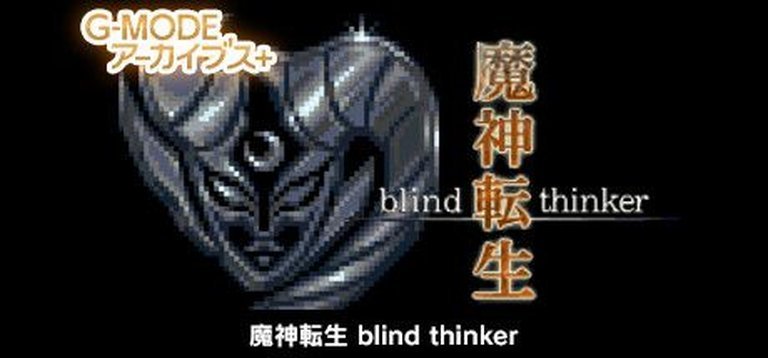
Majin Tensei: Blind Thinker is a strategy role-playing game set in post-World War III Neo Tokyo, where players control devil summoner Yuuji Kashiwagi and allies in turn-based combat. The game features a branching narrative with multiple endings, enabling players to negotiate with enemy demons, recruit them to their side, and fuse them into stronger allies. Originally released for Japanese feature phones in 2007, it was later re-released for Nintendo Switch and Windows in 2023 as part of the G-Mode Archives+ series.
Gameplay Videos
Majin Tensei: Blind Thinker: Review
Introduction
In the shadowed, neon-drenched landscape of post-apocalyptic Tokyo, where demons stalk the ruins of a world scarred by war, lies a forgotten gem of tactical RPG history: Majin Tensei: Blind Thinker. Originally unleashed in 2007 for Japanese feature phones and later resurrected on Nintendo Switch and PC in 2023, this spin-off from Atlus’s iconic Majin Tensei series (itself a cornerstone of the sprawling Megami Tensei universe) stands as a testament to the series’ enduring appeal. Developed by Bbmf and meticulously preserved by G-Mode, Blind Thinker distills the franchise’s signature blend of demon negotiation, fusion mechanics, and morally complex storytelling into a portable, yet surprisingly dense, experience. This review delves deep into the game’s origins, narrative intricacies, gameplay systems, and cultural impact, arguing that despite its mobile-centric constraints, Blind Thinker remains a vital, if niche, entry in the Megaten pantheon—a dark, challenging, and brilliantly crafted strategy RPG that exemplifies the series’ philosophical roots and innovative spirit.
Development History & Context
Blind Thinker emerged from a unique confluence of technological ambition and market reality in mid-2000s Japan. Developed by Bbmf, a studio with roots in mobile gaming, and published by the same, the game was conceived as a spin-off of the 1994 SNES classic Majin Tensei. The creators sought to adapt the series’ core tenets—demon-centric combat, strategic depth, and branching narratives—for the burgeoning feature phone market, where screen real estate and processing power were severe limitations. This forced simplification of mechanics and visuals was not a compromise but a creative reimagining, as Bbmf distilled the franchise’s essence into a form accessible to a wider, mobile-centric audience.
The game’s release on July 11, 2007, coincided with the peak of Japan’s “keitai” (mobile phone) gaming boom, a period when platforms like DoJa and J2ME dominated casual gaming. While console RPGs like Shin Megami Tensei: Persona 3 FES were refining the genre, Blind Thinker carved its niche by embracing the platform’s strengths: discrete play sessions, bite-sized narrative segments, and a reliance on text-driven choices over cinematic cutscenes. G-Mode’s 2023 re-release via the G-MODE Archives+ line further contextualizes the game’s legacy, faithfully recreating the original mobile experience while introducing it to a new generation. This preservation effort highlights the game’s historical significance as a bridge between the golden age of console SRPGs and the mobile revolution, proving that compelling design could transcend technological limitations.
Narrative & Thematic Deep Dive
Set in the year 20XX, two decades after World War III, Blind Thinker plunges players into Neo Tokyo—a gleaming yet dystopian metropolis constructed by the enigmatic AGE Corporation, a energy conglomerate that now wields unchecked power. The story follows Yuuji Kashiwagi, a young devil summoner grappling with the legacy of his missing father, who left behind a cryptic “demon summoning program.” This premise immediately establishes the game’s central themes: the corrupting influence of unchecked corporate power (mirroring real-world anxieties about monopolistic tech giants) and the ethical quandaries of wielding forbidden knowledge. AGE’s utopian facade masks a city teeming with demons, manifestations of humanity’s repressed desires and fears—a classic Megami Tensei trope exploring Jungian archetypes and moral ambiguity.
The narrative is bifurcated into “story parts” and “battle parts,” with player choices dictating the flow of the former. Dialogues between Yuuji, his companions (whose allegiances shift based on player decisions), and antagonists branch into multiple scenarios, leading to over a dozen distinct endings. This multi-scenario structure, a rarity for mobile RPGs at the time, grants the game remarkable replayability. Each choice—whether to ally with a demon-hunting faction or embrace occult power—alters the trajectory of the story, culminating in vastly different conclusions that range from bittersweet triumphs to apocalyptic despair. The dialogue, though constrained by mobile-era brevity, is rich with subtext, exploring themes of betrayal, sacrifice, and the cyclical nature of violence. One standout route, accessible only through hidden conditions, reframes Yuuji’s quest as a tragic inevitability, elevating the narrative beyond typical JRPG tropes.
Gameplay Mechanics & Systems
Blind Thinker’s gameplay is a masterclass in distilled strategy, built around a turn-based combat system where positioning and resource management are paramount. Players command Yuuji and a roster of human allies and summoned demons across grid-based battlefields, with victory conditions varying by chapter (e.g., defeating a boss, defending a location). A rigid loss condition—falling of the protagonist or any human ally—heightens tension, demanding precision and foresight.
The core loop revolves around three interlocking systems:
1. Demon Recruitment: Instead of mindless combat, players can “negotiate” with enemy demons by selecting the “Conversation” command. Success hinges on the lunar cycle—new moons drastically increase odds of recruitment—creating a risk-reward dynamic where players must time engagements strategically. Recruited demons consume magnetite (the game’s resource currency) during battles, forcing players to balance party composition.
2. Demon Fusion: A signature Megaten mechanic, fusion allows players to combine multiple demons into a single entity, inheriting skills and attributes from its “parents.” The system is deceptively deep; different pairings yield unique results, encouraging experimentation. Fusing a low-level imp with a high-level elemental might produce a rare hybrid, while incompatible pairs could backfire, adding layers of tactical planning.
3. Resource Management: Magnetite, earned by defeating enemies, fuels demon summoning and magic. Players must allocate resources judiciously, as over-reliance on powerful demons can drain reserves mid-battle. This economic interplay elevates combat beyond mere tactics, demanding long-term party building.
Commands like “Move,” “Attack,” and “Magic” are straightforward, but the negotiation and fusion mechanics introduce layers of unpredictability. A demon’s temperament—affected by its species and the player’s alignment—can turn negotiations into tense standoffs, while fusion results are randomized enough to prevent rote strategies. The UI, designed for mobile’s touch interface, is admirably intuitive, though the 2023 ports retain vestigial web-connected menus that feel anachronistic.
World-Building, Art & Sound
Neo Tokyo is a character in its own right, a cyberpunk dreamscape rendered in stark 2D scrolling visuals. The city’s juxtaposition of towering corporate spires and decaying alleyways immerses players in its post-war ethos, while the pervasive demon infestation creates a palpable atmosphere of dread. Character designs by series veteran Kazuma Kaneko—whose work defined Shin Megami Tensei’s aesthetic—ensure visual consistency, with demons radiating grotesque elegance and humans clad in utilitarian, battle-scarred attire.
Battle scenes amplify this artistry, shifting to a close-up view of characters with detailed, albeit pixelated, sprites. The contrast between the minimalist field maps and the expressive battle art underscores the game’s mobile origins, yet the latter’s clarity compensates for the former’s austerity. Sound design similarly balances constraint and creativity. The original mobile soundtrack, composed by Hidehito Aoki (who scored earlier Majin Tensei titles), blends ambient synths and electronic beats to evoke Neo Tokyo’s oppressive grandeur. Key tracks, like the battle theme “A.D. 20XX,” pulse with urgency, while fusion sequences employ dissonant chimes to underscore the ritualistic nature of demon synthesis. The 2023 ports slightly alter the BGM, but the core auditory identity remains intact, a nostalgic callback to an era when mobile games prioritized atmosphere over fidelity.
Reception & Legacy
Upon its 2007 release, Blind Thinker was a critical darling in Japan, earning praise for its strategic depth and branching narrative. Famitsu lauded it as a “fun and satisfying strategy game” with “challenging but rewarding combat,” while Den Fami Nico Gamer celebrated its “unique setting” and “rich story.” Players, too, embraced its mobile-friendly complexity, with Inside Games noting its high replayability due to multiple routes. Critics particularly highlighted the demon negotiation and fusion mechanics as standout features, arguing they retained the series’ signature complexity despite platform limitations. The game’s commercial success spawned a sequel, Majin Tensei: Blind Thinker II (2008), but the original’s legacy endured as a cult favorite.
In the broader Megaten context, Blind Thinker occupies a fascinating niche. It predates the Devil Survivor series’ focus on mobile SRPGs, yet shares its DNA of tactical demon manipulation. Its emphasis on branching paths also foreshadowed narrative-driven RPGs like Fire Emblem: Three Houses. The 2023 re-introduction via G-Mode Archives+ introduced the game to international audiences, with outlets like Siliconera and Gematsu underscoring its historical significance. However, its mobile roots limit its accessibility; the dated UI and lack of an official English translation (relying on fan communities for context) have hindered mainstream adoption. Yet, for strategists and Megaten enthusiasts, it remains a revered curiosity—a reminder that innovation can thrive in the most constrained of mediums.
Conclusion
Majin Tensei: Blind Thinker is a triumph of iterative design, a mobile spin-off that transcends its limitations to deliver a profound, challenging experience. Its darkly evocative narrative, leveraging the Megaten series’ signature themes of corporate corruption and moral ambiguity, is elevated by a multi-scenario structure that rewards replayability. The gameplay, distilled to its essence—demon negotiation, fusion, and resource management—proves that depth need not be sacrificed for accessibility. While its 2007-era visuals and UI feel dated, the artistry of Kaneko’s designs and Aoki’s soundtrack ensure its aesthetic cohesion.
In the grand tapestry of video game history, Blind Thinker stands as a vital artifact of mobile gaming’s golden age and a testament to the Megaten franchise’s adaptability. It may never reach the mainstream acclaim of its console brethren, but for those willing to embrace its quirks, it offers a uniquely intimate glimpse into a world where demons walk the neon-lit streets of a broken future. Verdict: An essential, if niche, entry in the Megaten saga, blending tactical brilliance with philosophical depth—a hidden gem worthy of excavation.