
- Release Year: 2023
- Platforms: Linux, Macintosh, Windows
- Publisher: Flimmersoft
- Developer: Flimmersoft
- Genre: Adventure
- Perspective: 1st-person
- Game Mode: Single-player
- Gameplay: Graphic adventure, Point and select
- Setting: Contemporary, Europe
- Average Score: 92/100
Description
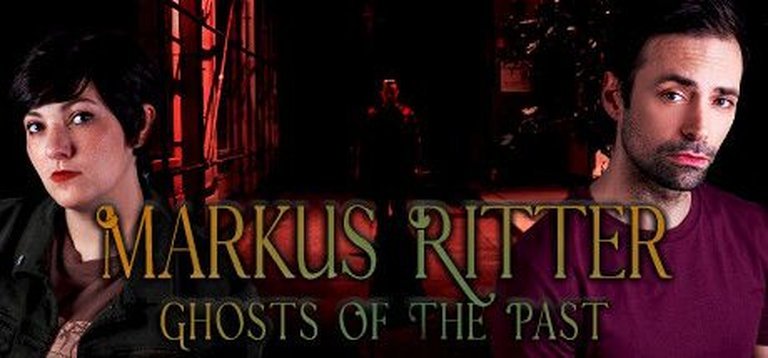
Markus Ritter: Ghosts of the Past is a first-person, full-motion video (FMV) graphic adventure game set in contemporary Vienna. Players take on the roles of two characters investigating a series of murders with supernatural ties, unraveling a mystery through point-and-select interactions, detective work, and exploration of fixed-screen environments. Following the prequel Markus Ritter: The Lost Family, the game blends narrative-driven gameplay with atmospheric visuals and a detective/mystery storyline.
Gameplay Videos
Where to Buy Markus Ritter: Ghosts Of The Past
PC
Markus Ritter: Ghosts Of The Past Free Download
Markus Ritter: Ghosts Of The Past Guides & Walkthroughs
Markus Ritter: Ghosts Of The Past Reviews & Reception
steambase.io (92/100): Markus Ritter – Ghosts Of The Past has earned a Player Score of 92 / 100.
laterlevelsblog.wordpress.com : I absolutely love full-motion (FMV) video games because they’re proud to be imperfect.
Markus Ritter: Ghosts Of The Past – A Modern Love Letter to 90s FMV Adventures
Introduction: The Resurgence of a Forgotten Genre
In an era dominated by open-world epics and hyper-realistic shooters, Markus Ritter: Ghosts Of The Past (2023) emerges as a defiant throwback—a game that unapologetically embraces the quirks, charm, and unpolished magic of 1990s full-motion video (FMV) adventure games. Developed by Austrian indie studio Flimmersoft, this title is not just a nostalgia trip but a bold reimagining of a genre that many had left for dead. With its exaggerated acting, cheesy dialogue, and a narrative that blends supernatural horror with queer romance, Ghosts Of The Past carves out a unique niche in modern gaming. It’s a game that knows exactly what it is—”queer cheesy trash,” as the developers affectionately describe it—and revels in its imperfections.
This review will dissect Markus Ritter: Ghosts Of The Past in exhaustive detail, exploring its development, narrative depth, gameplay mechanics, and cultural significance. We’ll examine how it pays homage to classics like Gabriel Knight: The Beast Within while forging its own identity, and why it has resonated so deeply with a niche but passionate audience.
Development History & Context: A Labor of Love
The Studio Behind the Game
Flimmersoft is a small, Vienna-based indie studio founded by Michael Kozmann, who serves as the game’s director, writer, and lead actor (playing the titular Markus Ritter). The studio’s ethos is rooted in a deep appreciation for the golden age of FMV adventures, particularly the works of Sierra On-Line and Jane Jensen. Their first game, Markus Ritter: The Lost Family (2021), was a short but ambitious prequel that introduced players to the world of Shadowhunters and the supernatural threats lurking in Vienna. While The Lost Family was a modest success, it laid the groundwork for Ghosts Of The Past, which expands the lore, refines the gameplay, and deepens the character arcs.
The Vision: Embracing the “Cheesy Trash” Aesthetic
From the outset, Flimmersoft’s goal was clear: to recreate the magic of 90s FMV games without ironing out their idiosyncrasies. In an interview, Kozmann described the game as “a love letter to the awkward, over-the-top, and sometimes downright bizarre FMV games of the past.” This philosophy is evident in every aspect of Ghosts Of The Past, from its deliberately stilted acting to its melodramatic plot twists. The game doesn’t just mimic the aesthetic of its predecessors; it celebrates their flaws as part of their charm.
Technological Constraints and Creative Solutions
Unlike the high-budget FMV games of the 90s, Ghosts Of The Past was developed with limited resources. The team relied on modern digital filmmaking techniques, including green screens and digital compositing, to create its 15 distinct locations across Austria. The game’s fixed/flip-screen perspective and point-and-click interface are a deliberate nod to classics like Phantasmagoria and The 7th Guest, but the use of contemporary video compression ensures that the FMV sequences run smoothly on modern hardware.
One of the most impressive feats of the development was the seamless integration of interactive elements within the FMV footage. Players can click on objects in the environment, triggering animations or dialogue that feel organic within the pre-recorded scenes. This was achieved through meticulous planning during filming, with actors performing multiple takes to account for different player interactions.
The Gaming Landscape at Release
Ghosts Of The Past launched on November 30, 2023, into a gaming market that was increasingly dominated by live-service titles and AAA blockbusters. However, the indie adventure game scene was experiencing a quiet renaissance, with titles like The Case of the Golden Idol and Norco proving that there was still an audience for narrative-driven experiences. FMV games, in particular, had seen a resurgence in recent years, thanks to titles like The Infectious Madness of Doctor Dekker and The Shapeshifting Detective. Ghosts Of The Past arrived at a perfect moment, offering something fresh yet familiar to fans of the genre.
Narrative & Thematic Deep Dive: A Tale of Shadows, Love, and Identity
Plot Overview
Markus Ritter: Ghosts Of The Past picks up where The Lost Family left off. Markus, a struggling photographer with no grand ambitions, discovers that he is the last descendant of a long line of Shadowhunters—warriors destined to battle demonic entities known as “Shadows.” His life is turned upside down when a Shadow begins terrorizing Vienna, murdering innocent people in gruesome ways. As Markus investigates, he uncovers a conspiracy that ties his family’s past to the present-day killings.
The game’s narrative unfolds over seven days, each representing one of the seven deadly sins (Lust, Greed, Gluttony, etc.). This structure not only provides a thematic framework but also adds a sense of urgency, as Markus must unravel the mystery before the Shadow claims another victim.
Character Analysis
Markus Ritter
Markus is a compelling protagonist because he is deeply flawed and relatable. At the start of the game, he is a man adrift, content to coast through life without purpose. His transformation into a Shadowhunter is not just about gaining supernatural abilities but about finding meaning in his existence. The game does an excellent job of showing his growth, from a reluctant hero to someone who embraces his destiny—even if it comes at a personal cost.
Ro (Roberta)
Ro is one of the most intriguing characters in the game. Initially, she appears as a mysterious figure who seems to know more about the Shadow than she lets on. Her defensive and aggressive demeanor masks a vulnerable side, which is gradually revealed as the story progresses. Ro’s backstory is tied to the Shadow in ways that are both tragic and surprising, and her dynamic with Markus is one of the game’s emotional high points.
Claudia
Claudia, Markus’s publisher and love interest, is another standout character. On the surface, she is confident and sexually assertive, but beneath that façade lies a woman struggling with self-doubt and insecurity. Her relationship with Markus is complicated by the arrival of Ludwig, a charismatic digital designer who also vies for Markus’s affections. The love triangle is handled with nuance, avoiding the clichés that often plague such narratives in games.
Ludwig
Ludwig is the game’s most overtly queer character, and his presence adds a layer of complexity to Markus’s personal journey. His charm and wit make him an instant fan favorite, and his interactions with Markus are some of the game’s most tender and humorous moments. The game’s willingness to explore queer romance without reducing it to stereotypes is one of its strongest suits.
Themes: Identity, Responsibility, and the Supernatural
At its core, Ghosts Of The Past is a story about identity and responsibility. Markus’s journey is not just about defeating a supernatural threat but about coming to terms with who he is and what he is meant to do. The game explores themes of legacy, as Markus grapples with the weight of his family’s history and the expectations that come with it.
The supernatural elements serve as a metaphor for the darker aspects of human nature. The Shadow, as a manifestation of the seven deadly sins, represents the internal struggles that Markus and the other characters must overcome. The game’s use of Austrian folklore and occult symbolism adds depth to its world-building, making the supernatural feel grounded in reality.
Dialogue and Writing
The writing in Ghosts Of The Past is deliberately melodramatic, with dialogue that often veers into campy territory. This is not a flaw but a feature, as the game embraces the over-the-top tone of 90s FMV games. The script is peppered with witty one-liners, emotional monologues, and moments of genuine pathos. The game’s humor is one of its strongest assets, with Ludwig’s quips and Claudia’s sarcastic remarks providing much-needed levity amid the darker themes.
Gameplay Mechanics & Systems: A Modern Take on Classic Adventure Games
Core Gameplay Loop
Ghosts Of The Past is a point-and-click adventure game at its heart, with a gameplay loop that will be familiar to fans of the genre. Players explore environments, interact with objects, solve puzzles, and engage in dialogue with NPCs. The game’s interface is straightforward, with a cursor that changes depending on the context (e.g., a hand for interactable objects, a speech bubble for dialogue).
Puzzle Design
The puzzles in Ghosts Of The Past are varied and inventive, ranging from traditional inventory-based challenges to more complex deduction sequences. One standout puzzle involves piecing together a family tree using clues found in letters and photographs. Another requires players to accuse a murderer based on evidence collected throughout the game, a nod to classic detective adventures like Gabriel Knight.
The game strikes a balance between accessibility and challenge. Most puzzles can be solved within 10-15 minutes, ensuring that the gameplay never feels tedious. However, the solutions are rarely obvious, requiring players to think critically and pay attention to environmental details.
Combat and Supernatural Elements
Unlike many adventure games, Ghosts Of The Past incorporates light combat mechanics, particularly in sequences where Markus confronts the Shadow. These segments are not traditional action sequences but rather quick-time events (QTEs) that test the player’s reflexes. The game’s supernatural elements are woven into the gameplay, with Markus’s Shadowhunter abilities (e.g., seeing visions, using magical artifacts) playing a crucial role in solving puzzles and advancing the story.
Character Progression and Choices
While Ghosts Of The Past is not a branching narrative game, it does feature moments where player choices influence the story’s outcome. For example, Markus’s interactions with Ludwig and Claudia can lead to different romantic developments, though the core plot remains largely unchanged. The game also includes multiple endings, though these are more about the tone of the conclusion (e.g., hopeful vs. bittersweet) rather than drastically different outcomes.
UI and Inventory Management
The game’s UI is clean and intuitive, with an inventory system that allows players to combine items and examine them in detail. The map system is particularly well-designed, allowing players to fast-travel between locations once they’ve been unlocked. This is a welcome feature, as it reduces the backtracking that can often make adventure games feel tedious.
Innovations and Flaws
One of the most innovative aspects of Ghosts Of The Past is its use of FMV in conjunction with interactive elements. The game seamlessly blends pre-recorded footage with player-driven actions, creating a sense of immersion that is rare in the genre. However, the game is not without its flaws. Some players have reported minor bugs, such as black screens during transitions or occasional glitches in the dialogue system. These issues are relatively minor and do not detract significantly from the overall experience, but they are a reminder of the game’s indie roots.
World-Building, Art & Sound: Crafting a Hauntingly Beautiful Vienna
Setting and Atmosphere
Ghosts Of The Past is set in contemporary Vienna, a city rich in history and occult lore. The game’s locations—ranging from Markus’s modest apartment to the opulent Lake House—are meticulously crafted, with each environment telling a story of its own. The game’s use of real-world Austrian landmarks (e.g., Schönbrunn Palace, Neubadgasse) adds a layer of authenticity to its world-building.
The atmosphere is one of the game’s strongest assets. The developers have done an excellent job of creating a sense of dread and mystery, with the Shadow’s presence looming over every scene. The game’s use of lighting and color is particularly effective, with dark, moody tones dominating the supernatural sequences and warmer hues used in the more intimate character moments.
Visual Direction
The game’s visual style is a deliberate throwback to 90s FMV games, with a mix of live-action footage and digital effects. The acting is intentionally exaggerated, with performances that range from hammy to genuinely emotional. This aesthetic choice is not for everyone, but it is a key part of the game’s charm. The costumes and set designs are similarly over-the-top, with Ludwig’s flamboyant outfits and Claudia’s sleek professional attire adding to the game’s campy appeal.
Sound Design and Music
The sound design in Ghosts Of The Past is superb, with a haunting soundtrack that complements the game’s eerie atmosphere. The music shifts seamlessly between tense, orchestral pieces during supernatural encounters and softer, more melancholic tracks during emotional scenes. The voice acting is another highlight, with the cast delivering performances that are both humorous and heartfelt. Michael Kozmann’s portrayal of Markus is particularly strong, capturing the character’s vulnerability and determination.
Reception & Legacy: A Cult Classic in the Making
Critical Reception
Ghosts Of The Past has received overwhelmingly positive reviews from both critics and players. On Steam, the game holds a “Very Positive” rating, with players praising its story, characters, and faithful recreation of the FMV adventure genre. Critics have highlighted the game’s bold embrace of its cheesy aesthetic, with many drawing comparisons to Gabriel Knight: The Beast Within.
One of the most common praises in reviews is the game’s character development. Players have expressed deep emotional connections to Markus, Ro, and Ludwig, with many citing the love triangle as one of the most compelling aspects of the narrative. The game’s humor and wit have also been widely praised, with Ludwig’s one-liners and Claudia’s sarcastic remarks providing much-needed levity.
Commercial Performance
While Ghosts Of The Past is not a mainstream blockbuster, it has found a dedicated audience within the adventure game community. The game’s success on platforms like Steam and GOG has proven that there is still a market for niche, narrative-driven experiences. Its relatively low price point ($11.99) and frequent discounts have made it accessible to a wide range of players.
Influence and Future Prospects
Ghosts Of The Past has already had a noticeable impact on the indie adventure game scene. Its success has demonstrated that there is still an appetite for FMV games, particularly those that embrace the genre’s quirks rather than trying to modernize them. The game’s use of queer themes and characters has also been praised for its representation, with many players expressing gratitude for a game that treats LGBTQ+ romance with respect and nuance.
The future of the Markus Ritter series looks bright. Michael Kozmann has hinted that the game is intended to be part of a trilogy, with the third installment potentially wrapping up Markus’s story. Given the positive reception to Ghosts Of The Past, it’s likely that Flimmersoft will continue to build on this world, possibly expanding into other mediums (e.g., novels, comics).
Conclusion: A Triumph of Nostalgia and Innovation
Markus Ritter: Ghosts Of The Past is a rare gem—a game that successfully blends nostalgia with innovation, creating something that feels both familiar and fresh. It is a love letter to the FMV adventure games of the 90s, but it is also a bold statement about the power of storytelling in games. With its compelling characters, intricate puzzles, and haunting atmosphere, it stands as one of the best adventure games of recent years.
Final Verdict: 9/10 – A Masterclass in FMV Storytelling
Ghosts Of The Past is not without its flaws, but its strengths far outweigh its weaknesses. It is a game that knows exactly what it is and embraces it wholeheartedly. For fans of adventure games, FMV classics, or queer narratives, this is a must-play experience. Flimmersoft has crafted something truly special, and if this is the future of FMV games, then the genre is in good hands.
Recommendation: Buy it, play it, and prepare to be enchanted by its cheesy, heartfelt, and utterly unforgettable world.