
- Release Year: 2012
- Platforms: Windows
- Publisher: Breakfall Inc.
- Developer: Breakfall Inc.
- Genre: Action
- Perspective: Side view
- Game Mode: Single-player
- Gameplay: Collection, Platform, Racing, Sketching
- Setting: Fantasy
- Average Score: 82/100
Description
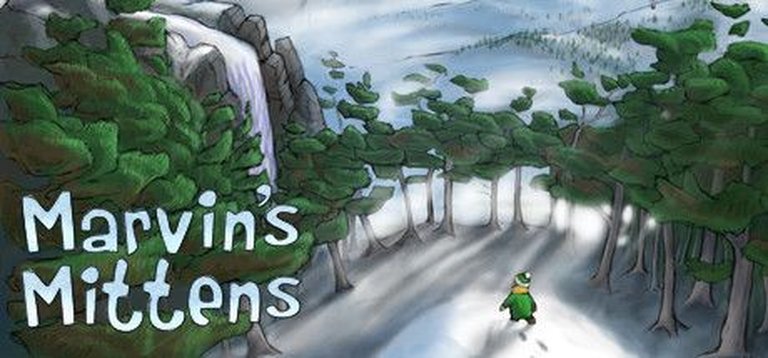
In the charming, non-violent fantasy platformer Marvin’s Mittens, young Marvin embarks on a heartwarming winter adventure after a mysterious creature steals his left mitten while he’s playing in the snow. Players guide Marvin through a picturesque snowy landscape, collecting snowflakes to increase his jump height, encountering friendly characters and sketching wild animals in his notebook. The game features a day-night cycle where Marvin must return home at sunset, saving progress through dream sequences, and includes shortcuts and toboggan racing to unlock secret areas, all without any enemies or combat.
Gameplay Videos
Where to Buy Marvin’s Mittens
PC
Marvin’s Mittens Cracks & Fixes
Marvin’s Mittens Guides & Walkthroughs
Marvin’s Mittens Reviews & Reception
metacritic.com (82/100): In many ways, Marvin’s Mittens is a perfect game for young ones. Its story, aesthetic, and mechanics are simple and inviting enough to remain engaging, but despite its younger skew, I found the game to be delightful.
nerdybutflirty.com : What I thought would be a simple, pretty little platforming title turned into something so much more than that.
store.steampowered.com : Marvin’s Mittens, which looks like a game and quacks like a game but by rejecting dogmas about goals and score is instead an experiential art piece which beautifully captures nostalgic childhood memories of playing in the snow.
Marvin’s Mittens: Review
Introduction: A Winter’s Tale of Innocence and Wonder
In the often-frantic landscape of modern gaming, Marvin’s Mittens emerges as a rare gem—a serene, non-violent platformer that captures the unfiltered joy and boundless imagination of childhood. Developed by Ottawa-based studio Breakfall and released in 2012, this 2D adventure transcends genre conventions by eschewing combat, enemies, and traditional scoring systems. Instead, it offers a meditative journey through a snow-dusted world where curiosity, exploration, and empathy are the only rewards. As players guide young Marvin through his quest to reclaim a stolen mitten, they are invited to revisit the unadulterated wonder of winter, where every snowflake collected and every animal sketched becomes a brushstroke in a larger, heartfelt narrative. This review posits that Marvin’s Mittens is not merely a game but a masterclass in experiential design—a nostalgic lullaby for the young at heart and a bold experiment in minimalist storytelling that has quietly secured its place in indie gaming history.
Development History & Context: Crafting a Canadian Dream
Marvin’s Mittens was born from the collective childhood memories of Breakfall’s founding team, who sought to recreate the magic of northern winters. “Inspired by our experiences as children of a northern climate,” the team aimed to capture “the feeling of childhood wonder we all felt when outdoors in the winter,” blending imagination with the tactile reality of bundled-up exploration in a snowsuit (Breakfall Press Kit). The studio began as a small group but expanded to 27 developers, recruiting art talent from Algonquin College’s Game Design program, reflecting a grassroots ethos common in Canadian indie circles.
Technically, the game was built on a custom engine optimized for 2D scrolling, prioritizing hand-drawn art over graphical complexity. This choice was deliberate; as director Jason Nuyens noted, the team rejected “dogmas about goals and score” to create an “experiential art piece” (Edge Magazine). Released first on Desura in December 2012, Marvin’s Mittens later navigated Steam Greenlight in 2013—a process Breakfall actively promoted to reach a wider audience. The game’s launch coincided with the indie boom on PC, where platforms like Desura and Steam Greenlight democratized access for niche titles. Its $4.99 price point signaled a commitment to accessibility, aligning with a market hungry for intimate, atmospheric experiences.
Narrative & Thematic Deep Dive: A Symphony of Simplicity
The plot unfolds with the charm of a children’s book. Marvin, bundled in a snowsuit, builds a snowman when a mysterious, fox-sized creature with reindeer antlers snatches his left mitten. Driven by determination (and a brief, magical nudge from his animate mitten), he embarks on a quest that unravels a cyclical mystery: the Mitten Thief steals mittens every thirteen years to line its nest for its babies—a revelation that reframes the antagonist not as a villain but as a desperate parent (TV Tropes).
Characters are few but vivid. Marvin’s journey introduces him to the Snow Elves, whose campsite serves as a narrative and gameplay hub. These elves, missing their own mittens, bestow upon Marvin a magical double-jump, binding their fate to his. Their dialogue is sparse yet evocative, with Randy Smith of Edge praising the “puerile treatment” that avoids condescension. Marvin’s mother, though never seen beyond her shadowy doorway, grounds the story in domestic warmth; her lullabies and calls to home reinforce themes of safety and routine.
Themes of empathy and cyclical time permeate the narrative. The Mitten Thief’s motivation transforms a simple quest into a lesson in understanding, while the day/night cycle—where Marvin must return home at sunset—mirrors the inevitability of childhood routines. As one review noted, the game’s “sincerity” stems from this balance: it’s “not about defeating an enemy, but about simple action and atmosphere” (Mash Those Buttons).
Gameplay Mechanics & Systems: Gentle Loops of Discovery
Core gameplay revolves around exploration and progression without combat. Marvin’s initial jump is modest, but after finding the elves, he gains a double-jump—mechanically, the game’s spine. Collecting snowflakes scattered across the world incrementally increases jump height, transforming traversal into a tactile puzzle. This system echoes Metroidvania design but without combat; instead, progression is fueled by curiosity, as players must revisit areas once new heights are unlocked.
The sled, acquired mid-game, adds verticality and speed. Racing down hills and launching off ramps reveals secret zones, rewarding experimentation. Time management adds urgency: the sun’s descent triggers a musical shift, and Marvin’s mother’s call forces a return home. This “anti-poop-socking” mechanic (TV Tropes) prevents marathon sessions but encourages strategic use of shortcuts dug by elves—permanent pathways that reduce traversal time.
Other systems include a sketchbook for sneaking up on animals (e.g., squirrels, deer), requiring patience and precision. Criticism from Mash Those Buttons notes that snowflakes “blend-in with the background,” causing frustration, yet this minor flaw is outweighed by the satisfaction of incremental growth. The UI is minimalist, with a map tracking snowflakes and a dream sequence each night serving as the save mechanic—a poetic nod to memory preservation.
World-Building, Art & Sound: A Hand-Painted Winter Postcard
Breakfall’s art direction is the game’s crown jewel. Environments are hand-drawn with watercolor textures, evoking a storybook aesthetic. The exaggerated scale—towering trees, colossal railroad tracks—frames the world through a child’s lens, as noted by Mash Those Buttons: “You are seeing this world through the eyes of a child.” This design choice fosters immersion, making mundane objects (snowdrifts, branches) feel monumental.
Character animations are equally expressive. Marvin’s waddling gait, mittened hand flailing, and joyful leaps bring him to life, while the elves’ whimsical designs (pointy hats, rosy cheeks) reinforce fantasy. Particle effects—falling snow, glittery snowflakes—enhance atmosphere, though some elements (e.g., paper-like hot air balloons) feel unfinished.
Sound design, composed by Mike Keogh, is a character in itself. Piano-driven tracks swell with daylight and fade at sunset, mirroring Marvin’s energy. Voice acting is minimal but authentic; Marvin’s childlike cadence and his mother’s gentle hum (voiced by Erin Keogh) add emotional weight. GameCritics lauded the soundtrack as “soothing,” while Hooked Gamers called it “pure magic.” The absence of combat soundscapes amplifies the game’s tranquility, making rustling leaves and crunching snow the only soundscape.
Reception & Legacy: A Cult Classic of Cozy Gaming
Upon Desura’s 2012 launch, Marvin’s Mittens received lukewarm critical attention but gained traction via word-of-mouth. Its Steam debut in 2014, after successful Greenlight voting, catalyzed broader acclaim. On Metacritic, it holds a “Generally Favorable” user score (8.5/10), with critics praising its atmosphere. GameCritics awarded it 90/10, calling it “perfect for young ones,” while Indie Game Reviewer scored it 80%, noting its “minor hiccups in pacing” but “heartwarming” charm.
Player reviews on Steam are overwhelmingly positive (98% “Very Positive”), with players citing its “perfect for a cold evening” vibe (Steam). Legacy-wise, it’s cited in Edge as rejecting “dogmas about goals,” positioning it as a precursor to experiential indies like Journey. Its influence lies in proving that non-violent, story-driven games can resonate deeply. Breakfall’s later title, Starwhal, shares its whimsical DNA, but Marvin’s Mittens remains their most poignant work—a “timeless classic,” as Nerdy But Flirty crowned it.
Conclusion: An Ode to Winter’s Whisper
Marvin’s Mittens is a triumph of restraint. In just two hours, it crafts a world where every snowflake collected and every animal sketched feels profound. Its non-violent ethos, hand-drawn beauty, and gentle mechanics stand as a counterpoint to gaming’s often loud, competitive trends. While its linearity and brevity may frustrate some, they are also its strengths—the game ends before its charm wanes, leaving players with a lingering sense of warmth.
As a piece of interactive art, Marvin’s Mittens succeeds in capturing ephemeral childhood wonder. It is a game not played, but inhabited—a winter’s tale that reminds us that sometimes, the most adventuresome journeys require no monsters, only mittens, snowflakes, and the courage to follow a trail of magic. In the annals of indie history, it is a quiet masterpiece: a snow globe of a game, forever holding a moment of unblemished joy.