
- Release Year: 2016
- Platforms: Android, Linux, Windows
- Publisher: Rootify Studios
- Developer: Rootify Studios
- Genre: Action
- Perspective: Diagonal-down
- Game Mode: Single-player
- Gameplay: Arcade, Shooter
- Setting: Horror, Post-apocalyptic
- Average Score: 94/100
Description
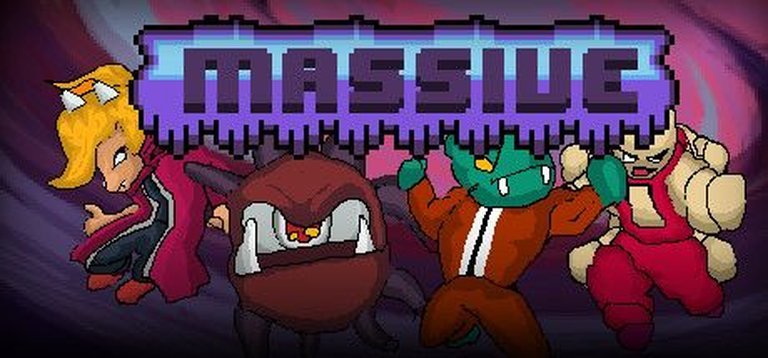
Massive is a post-apocalyptic, horror-themed arcade shooter developed by Rootify Studios, released in 2016 for Android, Linux, and Windows. The game features a diagonal-down 2D scrolling perspective, blending fast-paced action with a dark, immersive setting. Players navigate through a ruined world, battling relentless enemies in a fight for survival, with gameplay emphasizing frenetic combat and exploration.
Where to Buy Massive
PC
Massive Free Download
Massive Patches & Updates
Massive Reviews & Reception
metacritic.com (93/100): A triumphant return to form for the series.
pcgamer.com (93/100): Despite some technical troubles—which are steadily being patched out—Dishonored 2 is one of our favorite games of the year.
opencritic.com (91/100): Inside very clearly builds upon what made Limbo great, and in fact builds something greater.
ign.com (100/100): Inside very clearly builds upon what made Limbo great, and in fact builds something greater.
Massive Cheats & Codes
PC
Press the ‘~’ (tilde) key during gameplay to bring up the command console, then type the following codes (without the quotes) to enable the corresponding effect.
| Code | Effect |
|---|---|
| g_fov X | Change FOV (where X is the FOV number) |
| Com_showFPS 3 | Draw FPS |
| cvarAdd g_permaGodMode 1 | God Mode |
| god | God Mode |
| cvarAdd g_permaInfiniteAmmo 1 | Infinite Ammo |
| cvarAdd g_inhibitAi 1 | Dumb AI |
| DebugUnlockPerkByAbility -1 | Unlock Perks |
| DebugUnlockPerkByRequirement -1 | Unlock Perks 2 |
| dev 1 | Developer Mode (disables Steam achievements) |
| DevMode_enable 1 | Enable DevMode |
| G_fov xxx | FOV Change (xxx is desired number for Field Of View) |
| com_showfps 3 | Show FPS |
| Listcvars | Cheats List (brings up all the cvar commands) |
| ListCmds | Commands List |
| /timescale x.x | Game Speed Change (replace x’s with numbers, 1.0 is default game speed) |
Massive: A Post-Apocalyptic Horror Shooter That Slipped Through the Cracks
Introduction
In the vast, ever-expanding universe of video games, some titles emerge as towering giants, casting long shadows over the industry, while others flicker briefly before fading into obscurity. Massive, a 2016 post-apocalyptic horror shooter developed and published by Rootify Studios, belongs to the latter category—a game that, despite its ambitious premise and niche appeal, struggled to carve out a lasting legacy. Released amidst a year dominated by blockbuster titles like Doom (2016), Overwatch, and Uncharted 4: A Thief’s End, Massive arrived with little fanfare, its potential overshadowed by the juggernauts of the industry. Yet, beneath its modest exterior lies a game that deserves a closer look—a title that, while flawed, offers a unique blend of retro-inspired gameplay, eerie atmosphere, and unapologetic brutality.
This review aims to resurrect Massive from the depths of gaming obscurity, dissecting its development, narrative, gameplay, and artistic vision to determine whether it is a forgotten gem or a cautionary tale of missed potential. By examining its place in the broader context of 2016’s gaming landscape and its thematic connections to other post-apocalyptic horror shooters, we can better understand what Massive attempted to achieve and why it ultimately failed to resonate with a wider audience.
Development History & Context
The Studio Behind the Game: Rootify Studios
Massive was developed by Rootify Studios, a relatively unknown indie studio that emerged during the mid-2010s. Little is known about the studio’s origins or its team, but its ambition was clear: to create a game that harkened back to the golden age of top-down shooters while infusing it with modern sensibilities. Rootify Studios’ decision to self-publish Massive reflects the indie ethos of the time, where small teams sought creative freedom outside the constraints of major publishers. However, this independence also meant limited resources, marketing reach, and technical support—factors that would later contribute to Massive’s struggles.
The Vision: A Love Letter to Retro Shooters
From its inception, Massive was conceived as a homage to classic arcade shooters, particularly those of the 1980s and 1990s. The developers drew inspiration from titles like Robotron: 2084, Smash TV, and Alien Shooter, games that emphasized frenetic action, high scores, and relentless enemy waves. Unlike many modern shooters that prioritized narrative depth or open-world exploration, Massive sought to strip the genre down to its core: pure, unadulterated gameplay. The developers’ vision was to create a game that felt both nostalgic and fresh, blending retro aesthetics with contemporary mechanics.
Technological Constraints and Design Choices
Massive was built using a proprietary engine, a bold but risky decision for a small studio. While this allowed for greater creative control, it also meant that Rootify Studios had to tackle technical challenges without the support of established engines like Unity or Unreal. The game’s 2D scrolling perspective and diagonal-down viewpoint were deliberate choices, evoking the feel of classic arcade cabinets. However, these design decisions also limited the game’s visual complexity and depth, making it difficult to compete with the polished 3D environments of mainstream titles.
The game’s development cycle was relatively short, with Massive entering early access on Steam in 2016 before its full release later that year. This rapid development timeline, while impressive for an indie studio, may have contributed to the game’s lack of polish and depth. Without the luxury of extensive playtesting or iterative design, Massive launched with a handful of bugs, imbalanced mechanics, and a narrative that felt underdeveloped.
The Gaming Landscape of 2016
2016 was a banner year for the video game industry, marked by the release of several critically acclaimed and commercially successful titles. Doom (2016), id Software’s triumphant return to form, redefined the first-person shooter genre with its relentless pace, brutal combat, and unapologetic embrace of its retro roots. Overwatch, Blizzard’s team-based hero shooter, took the world by storm, becoming a cultural phenomenon and dominating the multiplayer scene. Meanwhile, Uncharted 4: A Thief’s End set new standards for narrative-driven action-adventure games, showcasing the power of modern storytelling in gaming.
In this crowded landscape, Massive faced an uphill battle. As a niche, retro-inspired shooter, it lacked the marketing muscle and mainstream appeal of its competitors. While games like Doom (2016) successfully blended old-school mechanics with modern sensibilities, Massive struggled to find its footing, caught between its retro aspirations and the expectations of contemporary gamers.
Narrative & Thematic Deep Dive
Plot Overview: A Post-Apocalyptic Nightmare
Massive is set in a post-apocalyptic world where humanity has been decimated by an unknown catastrophe. The remnants of civilization are overrun by grotesque, otherworldly creatures, and the few survivors cling to existence in the ruins of a once-thriving society. Players assume the role of an unnamed protagonist, a lone warrior tasked with battling through hordes of monstrous enemies to uncover the truth behind the apocalypse.
The game’s narrative is minimalist, delivered primarily through environmental storytelling and cryptic text logs scattered throughout the levels. There are no cutscenes or voice acting, and the protagonist remains a silent, faceless avatar for the player. This approach, while effective in creating a sense of isolation and mystery, also leaves much of the story open to interpretation. The lack of a clear narrative throughline may frustrate players seeking a more structured experience, but it also allows for a degree of player-driven storytelling, where the imagination fills in the gaps.
Characters: The Silent Protagonist and the Horrors of the Wasteland
The protagonist of Massive is a cipher, a blank slate onto which players can project their own interpretations. There is no backstory, no dialogue, and no character development—just a lone figure armed to the teeth, fighting for survival in a world gone mad. This design choice is reminiscent of classic arcade heroes, where gameplay, not narrative, was the primary focus. However, in an era where even the most action-oriented games often feature deep character arcs and emotional storytelling, the protagonist’s lack of personality can feel jarring.
The true stars of Massive are its enemies, a grotesque menagerie of mutated creatures and demonic abominations. From hulking brutes to nimble, insectoid horrors, each enemy type is designed to challenge the player in different ways. The game’s bestiary draws heavily from horror tropes, with influences ranging from Alien to The Thing. The lack of a clear origin story for these creatures adds to the game’s sense of dread, leaving players to wonder what horrors lurk beyond the next corner.
Themes: Isolation, Survival, and the Futility of Hope
At its core, Massive is a game about survival in a world that has long since given up on humanity. Themes of isolation and despair permeate every aspect of the game, from its bleak, desolate environments to its relentless, punishing combat. The protagonist’s struggle is not just against the creatures that roam the wasteland but against the very notion of hope. There is no promise of salvation, no hint of a brighter future—just an endless cycle of violence and survival.
The game’s post-apocalyptic setting also serves as a commentary on the fragility of civilization. The ruins of once-great cities and the remnants of human technology serve as stark reminders of what has been lost. The creatures that now dominate the world are not just mindless monsters but symbols of humanity’s hubris, the inevitable consequence of playing god with forces beyond our control.
Dialogue and Storytelling: Minimalism as a Double-Edged Sword
Massive’s approach to storytelling is deliberately sparse, relying on environmental details and cryptic text logs to convey its narrative. This minimalist approach can be highly effective, immersing players in the game’s world and encouraging them to piece together the story for themselves. However, it also runs the risk of leaving players feeling disconnected or uninterested, particularly if they are accustomed to more narrative-driven experiences.
The game’s lack of dialogue is a double-edged sword. On one hand, it reinforces the protagonist’s isolation and the game’s bleak tone. On the other, it deprives the game of emotional weight and character development, making it difficult for players to form a meaningful connection with the protagonist or the world. The absence of voice acting or cutscenes also means that the game’s few narrative moments lack the impact they might have had in a more traditionally structured story.
Gameplay Mechanics & Systems
Core Gameplay Loop: A Relentless Onslaught
Massive’s gameplay is built around a simple but effective loop: fight, survive, and progress. Players navigate through a series of procedurally generated levels, battling waves of enemies while scavenging for weapons, ammunition, and upgrades. The game’s top-down perspective and diagonal-down viewpoint evoke classic arcade shooters, emphasizing fast-paced action and twinstick controls.
The core gameplay is divided into two main modes: campaign and survival. The campaign mode offers a structured progression through the game’s post-apocalyptic world, with each level introducing new enemy types and environmental hazards. Survival mode, on the other hand, is a pure test of endurance, challenging players to last as long as possible against increasingly difficult waves of enemies. Both modes are designed to be replayable, with procedurally generated elements ensuring that no two playthroughs are exactly alike.
Combat: Brutal, Chaotic, and Unforgiving
Combat in Massive is brutal and unrelenting, with players facing off against hordes of enemies that swarm from all directions. The game’s twinstick controls allow for precise aiming and movement, but the sheer number of enemies ensures that players are constantly on the move, dodging attacks and prioritizing targets. The lack of cover mechanics or regenerative health means that every encounter is a high-stakes battle for survival, where a single mistake can spell disaster.
The game’s arsenal is diverse, ranging from pistols and shotguns to flamethrowers and plasma rifles. Each weapon has its own strengths and weaknesses, encouraging players to experiment and adapt their playstyle to different situations. Ammunition is scarce, forcing players to scavenge for supplies and make tough decisions about when to use their most powerful weapons.
Character Progression: A Slow Burn
Massive features a progression system that allows players to upgrade their character’s abilities and unlock new weapons. However, the system is deliberately slow and methodical, with upgrades requiring significant investment and offering only incremental improvements. This design choice reinforces the game’s punishing difficulty, ensuring that players must earn every advantage through skill and perseverance.
The game’s upgrade system is tied to a currency called “scrap,” which is collected by defeating enemies and completing objectives. Scrap can be spent on a variety of upgrades, including increased health, improved weapon damage, and new abilities like grenades or turrets. However, the high cost of these upgrades means that players must carefully prioritize their spending, adding a layer of strategic depth to the game’s otherwise straightforward combat.
UI and HUD: Functional but Uninspired
Massive’s user interface is functional but unremarkable, with a minimalist HUD that provides essential information without distracting from the action. The health bar, ammunition counter, and mini-map are all clearly visible, but the lack of visual flair or personality makes the UI feel generic and forgettable. The game’s menus are similarly utilitarian, with a no-frills design that prioritizes functionality over aesthetics.
One notable omission is the lack of a detailed map or objective tracker, which can make navigation confusing in the game’s more complex levels. While the procedurally generated environments add replayability, they also make it difficult to orient oneself, particularly in the heat of battle. The absence of a pause feature in survival mode further compounds this issue, forcing players to rely on instinct and memory to navigate the game’s treacherous landscapes.
Innovative or Flawed Systems: Procedural Generation and Permadeath
Massive’s use of procedural generation is one of its most ambitious features, ensuring that each playthrough offers a unique experience. Levels are randomly generated, with enemy placements, item drops, and environmental hazards varying from one session to the next. This approach adds a significant amount of replayability, but it also introduces a degree of unpredictability that can be frustrating. Some levels may feel unfairly difficult due to poor enemy placement or a lack of resources, while others may be too easy, robbing the game of its tension.
The game’s permadeath mechanic is another bold but divisive feature. In survival mode, death is permanent, with players losing all progress and starting from scratch. This high-stakes approach adds a layer of tension and urgency to the gameplay, but it also punishes mistakes harshly, potentially alienating less skilled or more casual players. The lack of a checkpoint system or mid-level saves means that even a single moment of inattention can result in hours of lost progress, a design choice that may feel outdated in an era where many games prioritize accessibility and player-friendly mechanics.
World-Building, Art & Sound
Setting: A Bleak, Desolate Wasteland
Massive’s post-apocalyptic setting is one of its strongest assets, offering a richly detailed world that feels both familiar and alien. The game’s environments are a mix of urban ruins, industrial complexes, and eerie, otherworldly landscapes, each teeming with the remnants of a fallen civilization. The attention to detail is impressive, with crumbling buildings, abandoned vehicles, and scattered debris creating a sense of a world that has been thoroughly ravaged by catastrophe.
The game’s art direction is heavily influenced by classic horror and sci-fi, with a color palette dominated by muted grays, browns, and sickly greens. The lighting is moody and atmospheric, with flickering neon signs, eerie glowsticks, and the occasional burst of fire illuminating the darkness. The result is a world that feels oppressive and claustrophobic, a perfect backdrop for the game’s relentless combat.
Visual Direction: Retro Meets Modern
Massive’s visual style is a deliberate throwback to the arcade shooters of the 1980s and 1990s, with pixelated sprites, simple animations, and a distinct lack of realism. However, the game also incorporates modern touches, such as dynamic lighting, particle effects, and detailed environmental textures. The result is a hybrid aesthetic that feels both nostalgic and contemporary, appealing to fans of retro gaming while offering enough visual polish to satisfy modern audiences.
The game’s enemy designs are particularly noteworthy, with each creature boasting a unique, grotesque appearance. From hulking, armored brutes to nimble, insectoid horrors, the enemies are a nightmarish menagerie of mutated flesh and twisted metal. The attention to detail in their animations and attack patterns adds to the game’s sense of dread, making each encounter feel like a battle against something truly alien and terrifying.
Sound Design: A Symphony of Chaos
Massive’s sound design is a crucial component of its atmosphere, with a mix of eerie ambient noise, pulsating electronic music, and the cacophony of battle. The game’s soundtrack is minimalist but effective, with synth-heavy tracks that evoke the tension and urgency of the gameplay. The lack of a traditional orchestral score or licensed music ensures that the sound design remains focused on the action, with every gunshot, explosion, and enemy screech contributing to the game’s chaotic, immersive experience.
The game’s ambient sounds are equally impressive, with the howling wind, distant screams, and creaking metal creating a sense of a world that is both desolate and alive with unseen horrors. The sound effects for the weapons and enemies are punchy and satisfying, with each shot and explosion feeling weighty and impactful. The result is a sound design that enhances the gameplay, drawing players deeper into the game’s nightmarish world.
Reception & Legacy
Critical Reception: A Mixed Bag
Massive’s reception upon release was decidedly mixed, with critics praising its retro-inspired gameplay and atmospheric world-building while criticizing its lack of polish, repetitive mechanics, and punishing difficulty. The game’s minimalist narrative and sparse storytelling were also points of contention, with some reviewers appreciating the focus on gameplay while others found the lack of context and character development disappointing.
On Steam, Massive received a lukewarm response, with a user score that reflected its niche appeal. Many players praised the game’s challenging combat and replayable levels, but others criticized its steep learning curve, lack of accessibility options, and occasional technical issues. The game’s permadeath mechanic was particularly divisive, with some players embracing the high-stakes gameplay while others found it frustrating and unfair.
Commercial Performance: A Quiet Release
Massive’s commercial performance was similarly underwhelming, with the game failing to make a significant impact in a year dominated by blockbuster titles. The lack of marketing and promotional support from Rootify Studios meant that Massive struggled to find an audience, particularly among mainstream gamers who were more likely to gravitate toward high-profile releases like Doom (2016) or Overwatch.
The game’s niche appeal and retro-inspired design also limited its potential audience, with many players dismissing it as a throwback to an earlier era of gaming. While Massive found a small but dedicated fanbase among fans of classic arcade shooters and post-apocalyptic horror, it ultimately failed to achieve the commercial success or cultural impact of its competitors.
Evolution of Reputation: A Cult Following
In the years since its release, Massive has developed a modest cult following, with a small but passionate community of players who appreciate its uncompromising gameplay and atmospheric world-building. The game’s retro-inspired design and punishing difficulty have made it a favorite among hardcore gamers and fans of niche genres, while its post-apocalyptic setting and horror themes have earned it a place in the pantheon of underrated indie titles.
However, Massive’s legacy remains overshadowed by the giants of 2016, and it is unlikely to be remembered as a defining title of its era. While it offers a unique and challenging experience, its lack of polish, repetitive mechanics, and minimalist storytelling prevent it from standing alongside the year’s most celebrated games.
Influence on Subsequent Games: A Minor Footnote
Massive’s influence on subsequent games is difficult to quantify, as its niche appeal and limited commercial success mean that it has not had a significant impact on the broader gaming landscape. However, its retro-inspired design and punishing gameplay have likely inspired other indie developers to explore similar themes and mechanics, particularly in the realm of post-apocalyptic horror and arcade-style shooters.
The game’s use of procedural generation and permadeath mechanics may also have influenced other titles in the roguelike and survival genres, where replayability and high-stakes gameplay are key components. While Massive is unlikely to be cited as a major influence by mainstream developers, its unique blend of retro and modern elements has likely resonated with other indie creators seeking to carve out their own niche in the gaming world.
Conclusion: A Flawed but Fascinating Experiment
Massive is a game that defies easy categorization—a retro-inspired shooter with modern sensibilities, a post-apocalyptic horror experience with minimalist storytelling, and a punishingly difficult challenge that rewards skill and perseverance. It is a game that wears its influences proudly, drawing from the golden age of arcade shooters while incorporating contemporary mechanics and design choices. Yet, for all its ambition and creativity, Massive ultimately falls short of greatness, held back by its lack of polish, repetitive mechanics, and niche appeal.
That said, Massive is not without its merits. Its atmospheric world-building, brutal combat, and uncompromising difficulty make it a compelling experience for fans of retro gaming and post-apocalyptic horror. The game’s procedural generation and permadeath mechanics add a layer of replayability and tension that is often lacking in more mainstream titles. And while its minimalist storytelling may leave some players cold, it also allows for a degree of player-driven interpretation, inviting players to fill in the gaps with their own imaginations.
In the grand tapestry of video game history, Massive is unlikely to be remembered as a landmark title or a defining moment in the evolution of the shooter genre. It is, instead, a fascinating experiment—a game that dared to blend the old with the new, the brutal with the atmospheric, and the punishing with the rewarding. For those willing to overlook its flaws and embrace its challenges, Massive offers a unique and memorable experience, a testament to the creativity and ambition of indie developers in an era dominated by blockbuster titles.
Final Verdict: 6.5/10 – A flawed but fascinating experiment that offers a unique blend of retro-inspired gameplay and post-apocalyptic horror, but ultimately falls short of greatness due to its lack of polish and niche appeal.