
- Release Year: 2018
- Platforms: Macintosh, Windows
- Publisher: GameChain
- Developer: GameChain
- Genre: Strategy, Tactics
- Perspective: 1st-person
- Game Mode: Single-player
- Gameplay: Tile matching puzzle, Turn-based
- Average Score: 62/100
Description
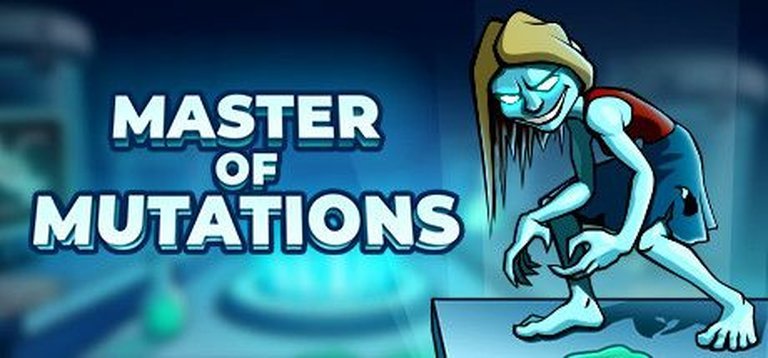
Master of Mutations is a turn-based strategy puzzle game where players take on the role of a mad scientist creating and evolving zombies in a laboratory. By matching tiles of similar objects on a grid, players trigger mutations that produce more advanced forms, ultimately unleashing chaos across four areas of human life. The goal is to fill chaos scales evenly without tipping the balance too far in one direction, as excessive imbalance risks exposure. With a mix of tile-matching mechanics and strategic planning, the game challenges players to manage their zombie horde while avoiding overcrowding in the lab.
Master of Mutations Cracks & Fixes
Master of Mutations Mods
Master of Mutations Guides & Walkthroughs
Master of Mutations Reviews & Reception
steambase.io (62/100): Master of Mutations has earned a Player Score of 62 / 100.
Master of Mutations: A Mad Scientist’s Puzzle of Chaos and Evolution
Introduction: The Alchemy of Mutation and Mayhem
In the vast, often oversaturated landscape of indie puzzle games, Master of Mutations (2018) emerges as a curious hybrid—a blend of tile-matching mechanics, strategic resource management, and darkly comedic world-domination fantasy. Developed and published by the obscure studio GameChain, this first-person, turn-based puzzle game casts players as a mad scientist engineering an apocalypse, one mutated zombie at a time. At its core, Master of Mutations is a game about evolutionary alchemy: combining cellular components on a grid to spawn increasingly advanced abominations, all while balancing the delicate scales of global chaos.
Yet, despite its intriguing premise, Master of Mutations remains a niche, underdiscussed title—one that slipped through the cracks of mainstream gaming discourse. With a Steambase Player Score of 62/100 (based on 21 mixed reviews) and no critical coverage on major platforms like OpenCritic or Metacritic, it exists in the shadowy limbo of “forgotten indie experiments.” This review seeks to excavate its design philosophy, dissect its mechanics, and evaluate its place in the pantheon of puzzle-strategy hybrids.
Was Master of Mutations a bold innovation, a flawed but fascinating oddity, or a missed opportunity? Let’s don the lab coat and find out.
Development History & Context: The Birth of a Mad Scientist’s Plaything
The Studio Behind the Mutations: Who Is GameChain?
Master of Mutations was developed by GameChain, a studio with a minimal digital footprint. Beyond this title, their portfolio is virtually nonexistent, suggesting they may have been a small, possibly one-person team or a short-lived collective. The game’s Unity engine foundation hints at indie development constraints—leveraging accessible tools to bring a unique vision to life without AAA resources.
The lack of post-launch support (no patches, updates, or DLC) further reinforces the impression of a passion project rather than a commercial juggernaut. This aligns with the game’s Steam Community discussions, where players lamented missing features like windowed mode and options menus, indicating a rushed or under-resourced release.
The Gaming Landscape of 2018: A Puzzle Among Giants
2018 was a banner year for indie puzzlers and strategy games, with titles like:
– Into the Breach (Subset Games) – A tactical masterpiece.
– Return of the Obra Dinn (Lucas Pope) – A narrative puzzle revolution.
– The Messenger (Sabotage Studio) – A meta-platformer with time-bending mechanics.
Amidst these critically adored darlings, Master of Mutations arrived with little fanfare. Its October 5, 2018 launch coincided with heavyweight releases like Assassin’s Creed Odyssey and Red Dead Redemption 2, ensuring it would be buried under the weight of AAA marketing machines.
Technological Constraints & Design Philosophy
The game’s fixed/flip-screen perspective and first-person viewpoint (a rarity in tile-matching puzzles) suggest an attempt to immerse players in the mad scientist’s lab. However, the lack of graphical polish and minimalist UI betray its indie roots. The Unity engine, while versatile, was stretched thin—resulting in a game that feels functional but unrefined.
The turn-based, tile-matching puzzle core is reminiscent of classics like Bejeweled or Puyo Puyo, but with a progressive evolution mechanic that sets it apart. The challenge was balancing accessibility (simple drag-and-drop controls) with depth (strategic chaos management). Did it succeed? The answer lies in the gameplay itself.
Narrative & Thematic Deep Dive: The Mad Scientist’s Manifesto
Plot: A One-Man Apocalypse
Master of Mutations eschews traditional storytelling in favor of environmental and mechanical narrative. You are Dr. [Unnamed], a brilliant but deranged scientist hellbent on plunging humanity into chaos. Your laboratory is your kingdom, your test tubes the crucibles of creation, and your zombies the harbingers of doom.
The game’s Steam description frames the premise succinctly:
“Various objects consistently drop out from the test tube connected to the bioreactor. You must take them and place them on the playing field. When three same objects (or two same and one special) are side by side, they evolve into a more advanced form!”
This is evolutionary puzzle-solving as world-ending strategy. Each successful mutation sends your creations into the world to disrupt four key areas of human society (likely representing economy, government, culture, and military). The goal? Fill all chaos meters without tipping any single one past 30% dominance—lest society catch on to your schemes.
Themes: Playing God, Playing with Fire
-
The Hubris of Creation
- The game is a satirical take on scientific ambition, echoing Frankensteinian themes. You are not just solving puzzles; you are defying natural order, and the game punishes recklessness (e.g., overcrowding the lab leads to uncontrollable outbreaks).
-
Chaos Theory as Gameplay
- The balancing act of chaos scales mirrors real-world systemic collapse. Too much disruption in one sector (e.g., economy) triggers societal alarm—a clever metaphor for unintended consequences.
-
Dark Comedy & Absurdist Villainy
- The tone is campy, self-aware evil. You’re not a tragic antihero; you’re a cartoonish supervillain, and the game revels in that. The lack of dialogue or character development reinforces this—you are the chaos, and chaos needs no justification.
Characters & World-Building: The Lab as a Character
There are no named characters, no NPCs, no lore dumps. The laboratory itself is the protagonist—a cluttered, neon-lit den of experimentation where the only “dialogue” is the clinking of test tubes and the groans of evolving zombies.
This minimalist storytelling works in the game’s favor, allowing players to project their own mad scientist persona onto the experience. The absence of narrative hand-holding makes Master of Mutations feel like a pure gameplay sandbox—a rare quality in modern puzzle games.
Gameplay Mechanics & Systems: The Science of Mutation
Core Gameplay Loop: From Cells to Zombies
At its heart, Master of Mutations is a tile-matching puzzle game with evolutionary progression. The loop is as follows:
-
Cell Harvesting
- A test tube dispenses random cellular objects onto the playing field.
- Players drag and drop these objects onto a grid-based lab table.
-
Mutation Triggers
- Matching three identical cells (or two identical + one “special” cell) causes them to merge and evolve into a higher-tier organism.
- This process repeats multiple times, with each evolution bringing you closer to the “perfect zombie.”
-
Chaos Deployment
- Once fully evolved, zombies are sent into the world to disrupt one of four societal sectors.
- Each sector has a chaos meter that fills incrementally.
-
Balancing Act
- If any single chaos meter exceeds 30% over the others, society detects the anomaly, and you lose.
- Fill all meters evenly to win the game.
-
Lab Management
- The lab has limited space. If the grid fills up, zombies break free uncontrollably, ending the game.
Combat? No. Strategy? Absolutely.
While Master of Mutations lacks traditional combat, every placement is a tactical decision:
– Where to place cells to maximize evolution chains.
– Which chaos sector to target to maintain balance.
– When to sacrifice efficiency for long-term stability.
The turn-based nature allows for methodical planning, but the randomized cell drops introduce controlled chaos—a fitting thematic parallel.
Progression & Difficulty: The Law of Diminishing Returns
- Early Game: Simple, satisfying evolution chains. The thrill of watching cells merge into grotesque new forms is initially engaging.
- Mid Game: Chaos management becomes increasingly tense. Players must prioritize which sectors to disrupt while avoiding detection.
- Late Game: The lab space constraint becomes the biggest challenge. Poor planning leads to gridlock and inevitable failure.
Flaw: The game lacks a difficulty curve. Veterans of puzzle games may find it too easy early on, while the sudden spike in late-game pressure can feel unfair.
UI & UX: Functional, But Flawed
- Pros:
- Clean, minimalist design keeps focus on the puzzle.
- Drag-and-drop controls are intuitive.
- Cons:
- No options menu (a glaring oversight—players couldn’t even adjust volume or switch to windowed mode).
- Lack of tutorials—new players were left confused (evidenced by Steam forum posts like “Okay, how do you even play this game?”).
- No save system—progress is session-based, which may frustrate some.
Innovation vs. Execution: A Mixed Bag
Innovative Elements:
✅ Evolutionary tile-matching (a fresh twist on a stale genre).
✅ Chaos balancing mechanic (adds strategic depth).
✅ Darkly comedic premise (stands out in a sea of generic puzzlers).
Flawed Execution:
❌ Lack of polish (no options, no tutorials, no post-launch support).
❌ Repetitive late-game grind (once you master the mechanics, it becomes a test of patience).
❌ Minimal replay value (no randomizers, no unlockables, no leaderboards).
World-Building, Art & Sound: The Aesthetics of Madness
Visual Design: A Lab of Neon and Grotesquery
- Art Style: Low-poly 3D with a sci-fi/horror aesthetic.
- The laboratory is bathed in eerie green and purple neon, evoking B-movie mad scientist labs.
- Zombie designs are cartoonishly grotesque, leaning into comical horror rather than realistic gore.
- Animation: Simple but effective. Cells pulse and writhe as they evolve, reinforcing the living experiment theme.
- Limitation: The fixed/flip-screen perspective restricts immersion. A free-roaming lab could have elevated the atmosphere.
Sound Design: The Symphony of Mutation
- Ambient Lab Noises:
- Bubbling bioreactors, clanking test tubes, and distant zombie groans create a creepy, isolated mood.
- Music:
- A synth-heavy, ominous soundtrack that ramps up in intensity as chaos meters fill.
- Lack of dynamic audio—the same loops play regardless of progress, which can grow repetitive.
- Missing Features:
- No voice acting (not necessarily a flaw, but more atmospheric sound cues could have helped).
- No distinct sound for evolution events (a missed opportunity for auditory feedback).
Atmosphere: A Love Letter to B-Movie Villainy
Master of Mutations doesn’t aim for AAA cinematic grandeur. Instead, it embraces retro sci-fi camp, channeling the spirit of:
– The Brain That Wouldn’t Die (1962)
– Re-Animator (1985)
– Dr. Horrible’s Sing-Along Blog (2008)
The lack of narrative depth is compensated by strong thematic cohesion—every element, from the UI to the sound design, reinforces the mad scientist fantasy.
Reception & Legacy: The Game That Time (Mostly) Forgot
Critical Reception: A Void of Coverage
- No professional reviews on Metacritic, OpenCritic, or major gaming sites.
- Steambase Player Score: 62/100 (Mixed) – Based on 21 user reviews (13 positive, 8 negative).
- Steam Community Feedback:
- Praise for the unique premise and addictive puzzle mechanics.
- Criticism for lack of options, repetitive gameplay, and technical oversights.
Sample Player Reactions:
“Fun concept, but gets old fast. Needs more variety.” – Steam User
“No windowed mode in 2018? Really?” – Mickmane (Steam Forums)
“I love the idea, but the execution feels rushed.” – Cozy_Crim (Steam)
Commercial Performance: A Niche Experiment
- No sales data available, but frequent discounts (75% off) suggest modest success.
- Bundled in indie packs, indicating it was not a standalone hit.
- No sequels or spin-offs—GameChain has since faded into obscurity.
Legacy: A Footnote in Puzzle Game History
Master of Mutations didn’t revolutionize the genre, but it experimented with mechanics that could inspire future titles:
– Evolutionary tile-matching (seen in later games like Monster Sanctuary’s breeding mechanics).
– Chaos balancing as a win condition (a fresh take on puzzle-strategy hybrids).
– Darkly comedic villainy (a trend in indie games like Evil Genius 2).
Where It Fell Short:
– Lack of post-launch support (no patches, no DLC, no community engagement).
– Minimal marketing (buried under 2018’s AAA juggernauts).
– Repetitive design (could have benefited from procedural generation or roguelike elements).
Cult Following? Not Quite.
Unlike Undertale or Papers, Please, Master of Mutations never developed a cult fanbase. Its Steam forums are dormant, and no modding community emerged. It remains a curio—a game that could have been great with more refinement.
Conclusion: A Flawed but Fascinating Mutation
The Verdict: A 6.5/10 – A Noble Experiment with Missed Potential
Master of Mutations is not a masterpiece, but it is a bold, flawed experiment that deserves recognition for its innovative mechanics and darkly comedic premise. It stumbles in polish, replayability, and accessibility, but its core gameplay loop is oddly compelling—a testament to the power of simple, well-executed ideas.
Who Should Play It?
✔ Puzzle enthusiasts looking for a fresh twist on tile-matching.
✔ Strategy gamers who enjoy resource balancing and risk management.
✔ Fans of dark comedy and villain protagonists.
Who Should Avoid It?
❌ Players seeking deep narrative or character development.
❌ Those who dislike repetitive gameplay loops.
❌ Gamers who demand polished UI/UX and options menus.
Final Thoughts: A Game That Deserved a Second Mutation
Had Master of Mutations received post-launch support—perhaps new lab layouts, zombie types, or a sandbox mode—it could have evolved into something truly special. Instead, it remains a fascinating relic of indie experimentation, a game that dared to be different but lacked the resources to fully realize its vision.
In the grand evolutionary tree of video games, Master of Mutations is a curious offshoot—a mutant strain that didn’t quite take over the world, but left its mark on those who dared to play with its DNA.
Final Score: 6.5/10 – “A Mad Scientist’s Rough Draft”
Would you like to see a sequel? A modding community revival? Or is Master of Mutations best left as a quirky footnote in gaming history? The lab is still open—what will you create?