
- Release Year: 2022
- Platforms: Quest, Windows
- Publisher: ROG Studios
- Developer: ROG Studios
- Genre: Simulation
- Perspective: 1st-person
- Game Mode: Single-player
- Gameplay: Puzzle elements
- Setting: Futuristic, Sci-fi
- Average Score: 67/100
- VR Support: Yes
Description
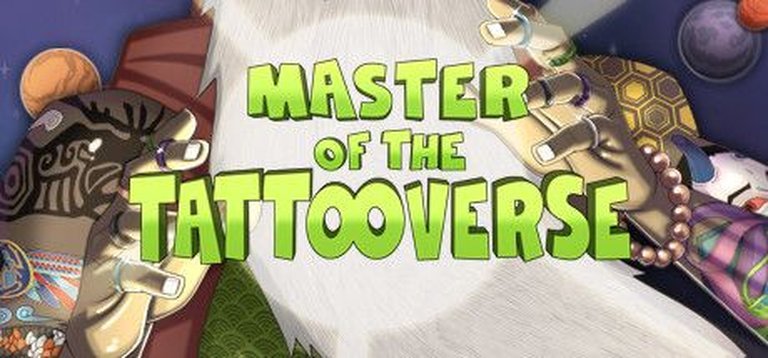
In Master of the Tattooverse, players step into the shoes of an apprentice tattoo artist masquerading as the legendary Master in a vibrant sci-fi universe. Armed with a mysterious mask, specialized tattoo machines (Tatguns), and a BucketBoi9000 tool for materials, players must cater to eccentric clients like vampires, internet celebrities, and possessed Viking warriors by creating unique tattoos. Designed as a VR simulation with puzzle elements, the game offers direct and motion-controlled interfaces for an immersive experience, allowing players to unlock new equipment and navigate a wacky adventure through the Tattooverse.
Gameplay Videos
Where to Buy Master of the Tattooverse
PC
Master of the Tattooverse Guides & Walkthroughs
Master of the Tattooverse: Review
Introduction
In an industry saturated with high-octane shooters and sprawling RPGs, Master of the Tattooverse emerges as a bold, eccentric anomaly—a VR simulation that dares to blend the artistry of tattooing with absurdist sci-fi comedy. Released on August 30, 2022, by indie studio ROG Studios, this title thrusts players into the role of an apprentice impersonating the legendary “Master,” a tattoo artist who has vanished on an indefinite vacation. The premise alone—a cosmic parlor serving vampires, possessed Vikings, and internet celebrities—promises a unique experience. Yet beyond its whimsical surface lies a surprisingly nuanced exploration of identity, creativity, and the chaos of human eccentricity. This review deconstructs Master of the Tattooverse as a landmark in VR simulation, examining how its ambitious design, technical quirks, and thematic depth collectively secure its place in gaming history despite its niche appeal.
Development History & Context
Master of the Tattooverse was developed by ROG Studios, a Turkish team led by Director Dogan Cetin and Art Director N. Huseyin Sekerciler. Built on the Unity engine, the project was a labor of love for its 52-person team—including 46 developers and 6 thanked contributors—whose credits span from Hogwarts Legacy to Psychonauts 2. Development began with a 2021 demo on Oculus AppLab and itch.io, showcasing early VR ergonomics and the game’s core conceit: a tattoo parlor simulator in a wacky universe.
The 2022 release arrived during VR’s maturation phase, where accessibility and innovation were paramount. ROG Studios prioritized inclusivity by designing locomotion systems (teleportation, grip-dragging, analog movement) and options for standing, sitting, or one-handed play. This aligns with the era’s push for VR accessibility, though the team faced constraints typical of indie studios: Unity’s limitations in physics fidelity and the challenge of crafting complex VR interactions without AAA resources. The game’s dual release on Windows and Meta Quest underscored ROG Studios’ ambition to bridge PC and standalone VR audiences—a rarity for a title this specialized.
Narrative & Thematic Deep Dive
The narrative unfolds as a farcical odyssey through the “Tattooverse,” where players masquerade as the enigmatic Master while managing his clientele. The plot’s central irony—fraudulence fueling artistic growth—drives both comedy and pathos. Characters like Klaudia Slasiric (voiced by Andrea Petrille), a vampiric diva, and Mumblestein (Alex Mitts), a Viking vessel of chaotic spirits, are caricatures of modern absurdity. Their dialogue, peppered with petulant demands (“It needs more glitter!”) and existential dread (“Will my soul remember this ink?”), satirizes celebrity culture and identity obsession.
Thematic resonance emerges in how the game links tattooing to storytelling. Each client’s request—be it a Viking’s mystical rune or an influencer’s viral-worthy logo—becomes a narrative artifact. The Master’s absence mirrors the player’s own journey: an apprentice learning to wield artistry as both disguise and truth. The narrative’s comedic tone never undermines its subtle commentary on authenticity, as even the most flamboyant clients crave permanence in a transient world.
Gameplay Mechanics & Systems
Master of the Tattooverse’s core loop revolves around two hands: a Tatgun (tattoo machine) and the BucketBoi9000 (BB), a multifunctional tool for inks, needles, and pain-relief sprays. Three Tatguns—each with unique properties like precision or shading—encounter-design variety. The BB’s radial menu, though initially clunky, rewards muscle memory, letting players switch between needles (shading, erasing, relief) or colors mid-session.
Combat is absent; instead, “puzzle” elements emerge through client management. A vampire’s low pain tolerance demands strategic use of relief spray, while an influencer’s vanity requires intricate stencil overlays. Progression unlocks new tools (e.g., wide needles for bold designs) and expands the portfolio, but the experience is linear—a trade-off for accessibility. VR ergonomics shine: grip-angle adjustment and dominant-hand customization mitigate controller fatigue, though technical hiccups (e.g., texture seams on vampire models) occasionally disrupt immersion.
World-Building, Art & Sound
The Tattooverse is a vibrant, low-poly dreamscape where art deco parlors coexist with cyberpunk alleyways. environments are stage-like but evocative: a neon-drenched parlor for human clients contrasts with an icy Viking longhouse. Art Director N. Huseyin Sekerciler’s cartoonish style exaggerates character quirks—Becky’s (Samantha Philyaw) oversized glasses amplify her neuroticism—while textures, though simple, embrace bold colors.
Sound design elevates the atmosphere: Tatguns emit tactile hums, and BB tools offer satisfying clicks. Voice acting is a highlight; William Sage’s gravelly Master voice anchors the absurdity, while Andrea Petrille’s Klaudia delivers campy grandeur. The score blends electronic beats with acoustic melodies, reflecting the game’s blend of modernity and tradition. Together, these elements transform the parlor into a character—a chaotic sanctuary where creativity and chaos collide.
Reception & Legacy
Master of the Tattooverse launched to mixed critical reception. While Metacritic lists no critic scores, Steam’s 15 user reviews (67/100 on Steambase) reveal a polarized audience. Praise centered on its novelty (“A VR masterpiece for art lovers”), while criticism targeted technical flaws: Index controller misalignment, black-screen bugs, and repetitive gameplay. ROG Studios addressed some issues via patches, but texture errors lingered.
Commercially, the game found a niche among VR sim enthusiasts, particularly for its accessibility features. Its legacy lies in validating VR as a platform for creative, non-violent experiences. Though it didn’t spawn sequels, it influenced titles like Handyman Legend by demonstrating how niche hobbies could yield compelling gameplay. Its collaboration with artists like Jovanny Lemonad (fonts) also underscored the indie scene’s collaborative spirit.
Conclusion
Master of the Tattooverse is a flawed gem—a testament to VR’s potential for intimate, inventive worlds. Its greatest strengths lie in its audacious premise, client-driven storytelling, and commitment to accessibility, which elevate it beyond a mere tech demo. Yet technical shortcomings and repetitive gameplay prevent it from reaching masterpiece status. Historically, it stands as a bridge between VR’s experimental phase and its mainstream future, proving that the most memorable journeys can begin with a tattoo gun and a lie. For players seeking whimsy and creativity, it remains an essential, if imperfect, artifact of the medium’s evolution.