
- Release Year: 2009
- Platforms: Android, iPad, iPhone, Windows
- Publisher: Big Blue Bubble Inc., G5 Entertainment AB
- Developer: Big Blue Bubble Inc.
- Genre: Adventure
- Perspective: 1st-person
- Game Mode: Single-player
- Gameplay: Hidden object, Puzzle elements
- Setting: Detective, Mystery
- Average Score: 70/100
Description
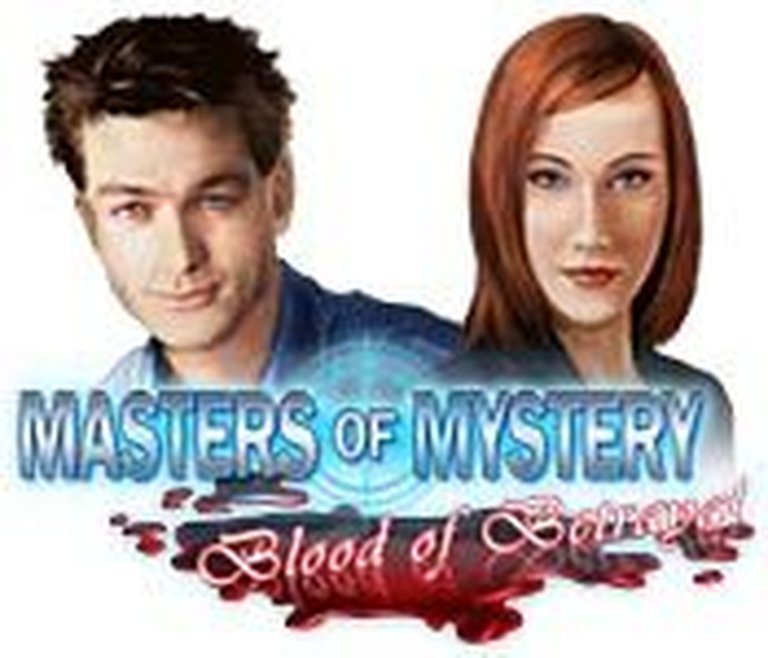
Masters of Mystery: Blood of Betrayal is a hidden object adventure game where players step into the shoes of Manhattan police detective Carrie Chase, investigating a drug-related double murder in a penthouse. As the case unfolds, secrets from her past resurface, forcing her to balance professional duties with personal life while using investigative tools like UV lights and magnifying glasses to uncover clues, solve puzzles, and ultimately capture the culprit.
Gameplay Videos
Masters of Mystery: Blood of Betrayal Guides & Walkthroughs
Masters of Mystery: Blood of Betrayal Reviews & Reception
gamezebo.com : Still, most of the hidden object puzzles are fair and enjoyable.
familyfriendlygaming.com (60/100): Masters of Mystery Blood of Betrayal has one really important thing going for it – the story. The story in Masters of Mystery Blood of Betrayal is interesting, engaging, and will make most players want to go through the painful levels just to find out what is going on.
Masters of Mystery: Blood of Betrayal: Review
Introduction
In the shadowed streets of Manhattan, where neon signs reflect off rain-slicked pavements and secrets lurk in penthouse suites, Detective Carrie Chase returns to unravel a web of deceit in Masters of Mystery: Blood of Betrayal. As the sequel to 2009’s Masters of Mystery: Crime of Fashion, this hidden object adventure from Canadian developer Big Blue Bubble Inc. promises a deeper dive into forensic investigation and personal betrayal. Released on December 4, 2009, for Windows and later ported to iOS and Android, Blood of Betrayal stands as a testament to the potential of the hidden object genre to deliver more than mere pixel-hunting—it offers a compelling narrative, meticulous world-building, and innovative mechanics. Yet, its legacy is a delicate balance of brilliance and frustration. This review argues that while the game excels in atmosphere and storytelling, it is ultimately defined by its challenging gameplay and the compromises inherent in catering to a niche market saturated with formulaic titles.
Development History & Context
Masters of Mystery: Blood of Betrayal emerged from the creative crucible of Big Blue Bubble Inc., a studio founded in 2004 by Vlad Suglobov, known for titles like My Singing Monsters and the Masters of Mystery series. The game’s development team, comprising 35 credited individuals including art director Vsevolod Chernushevich (under the pseudonym Morbid), programmer Vladimir Davidovich, and storywriter Steven Lang, operated during an era when hidden object games (HOGs) were experiencing a boom on casual platforms like Big Fish Games. Technologically constrained to Windows XP/Vista systems, the team leveraged shareware distribution—a model allowing free trials with paid unlocks—to maximize accessibility. The game’s release coincided with a crowded market, where HOGs ranged from polished narratives to “cash-in” titles. Big Blue Bubble’s vision was clear: elevate the genre by integrating forensic tools (UV light, fingerprint duster) and a mature, adult-oriented narrative reminiscent of CSI, complete with voice acting and moral ambiguity. This ambition positioned Blood of Betrayal as a refined sequel, building on its predecessor’s foundation while adding atmospheric depth and mechanical innovation.
Narrative & Thematic Deep Dive
The narrative unfolds with Carrie Chase, a Manhattan police detective, investigating a drug-related double murder in a penthouse. As she digs deeper, the case intertwines with a haunting personal saga: her father, also a cop, vanished seven years ago, and his reemergence as a key figure in a corrupt drug ring forces Carrie to confront her past. The plot, structured in three chapters (“Deception,” “Secrecy,” “Redemption”), masterfully balances procedural investigation with emotional turmoil. Carrie’s internal conflict—balancing duty to the badge with loyalty to her family—anchors the story, while external threats from drug smugglers and crooked officers heighten tension. Characters like Captain Cross (her fallen mentor), Brent Hodgins (her morally ambiguous partner), and enigmatic antagonists like “Burning Ace” drive the narrative forward through twists that subvert expectations. Dialogue, voiced by Kelly Atchinson (Carrie) and Mike Rodgers (Brent), adds gravitas, though occasional Canadian accents occasionally clash with the Manhattan setting. Thematically, the game explores betrayal on multiple levels: institutional corruption, familial estrangement, and the erosion of trust. The penthouse murder symbolizes the fragility of privilege, while Carrie’s quest for redemption mirrors the broader theme of atonement. These elements elevate Blood of Betrayal beyond typical HOG fare, transforming it into a noir-tinged psychological drama.
Gameplay Mechanics & Systems
At its core, Blood of Betrayal is a hidden object game, but its genius lies in how it recontextualizes the formula. Players scour intricately detailed scenes for items on a list, with critical progress tied to green-highlighted plot objects that trigger dialogue. The game offers two modes: timed (10 minutes per scene) or relaxed, catering to both thrill-seekers and casual players. However, the true innovation lies in its forensic toolset, accessed via a bottom-tier inventory:
– Magnifying Glass: Zooms into small objects, crucial for locating micro-details like pills or bullets.
– UV Light: Reveals hidden bloodstains, footprints, and chemical traces, adding a layer of realism.
– Duster Brush uncovers fingerprints, essential for mini-games.
– Flashlight: Illuminates dark scenes, replacing the cursor with a spotlight.
These tools transform static scenes into interactive crime scenes, though they are underutilized beyond key moments. Mini-games diversify the experience, including:
– License Plate/Bootprint/Fingerprint Analysis: Time-sensitive matches requiring quick identification.
– Handwriting Analysis: Scanning documents for specific words to link suspects.
– Spot-the-Difference: Comparing crime-scene photos or lab samples.
– Item Replacement: Returning objects to their original positions under duress, like fixing Carrie’s apartment after a break-in.
Despite this variety, the gameplay falters in execution. Objects are often deceptively small or obscured—e.g., a pen wedged under a couch or a bullet camouflaged in shadows. The hint system (unlimited but slow-recharging) becomes a necessity, and rapid clicking incurs a penalty, punishing experimentation. The UI, while clean with a map for navigation, suffers from cluttered scenes that overwhelm the eye. Ultimately, Blood of Betrayal demands patience, rewarding persistence with narrative progression but frustrating players with its punitive difficulty curve.
World-Building, Art & Sound
The game’s Manhattan is a character in itself, rendered with meticulous attention to detail. From the opulent penthouse with its zebra-print pillows and blood-spattered sheets to the gritty underbelly of the Tugboat Pier and the sterile ambiance of the Crime Lab, each location pulses with life. Environments like Le Wave nightclub (with its vinyl records and ashtrays) and the Warehouse (filled with cluttered evidence) feel lived-in, enhancing immersion. The art direction, helmed by Chernushevich, adopts a photorealistic style, blurring the line between game and reality. Characters are animated during cutscenes, with expressive facial details that convey emotion.
Sound design, overseen by Tomislav Slogar, is equally immersive. Ambient noises—the hum of a crime lab, distant sirens, dripping water—ground the player in the noir atmosphere. The soundtrack, a blend of tense strings and melancholic piano, swells during climactic moments. Voice acting, though occasionally uneven, adds depth: Atchinson’s Carrie conveys weary determination, while Rodgers’ Brent exudes charm with underlying menace. Together, these elements create a cohesive world where every visual and auditory cue reinforces the game’s themes of deception and hidden truths.
Reception & Legacy
Masters of Mystery: Blood of Betrayal received a mixed-to-positive reception at launch. Critic Chad Sapieha of GameZebo awarded it 80%, praising its “polished and challenging” gameplay, “slicker story,” and “beautifully rendered” scenes. He noted the game’s appeal to “discerning HOG lovers” seeking quality over cash-in titles, but criticized the difficulty of object hunting, quipping that “at least one sadist is employed at Big Blue Bubble.” Players rated it 4.0/5 on MobyGames, with positive sentiment but limited detailed reviews. Family Friendly Gaming offered a more critical take, scoring it 60% and citing “infrequent/mild horror” and “language” as issues, though they lauded the “interesting, engaging” story. Commercially, the game performed well enough to warrant ports to iOS (2012) and Android, cementing its place in the mobile HOG market.
Its legacy is nuanced. Blood of Betrayal did not revolutionize the genre but raised the bar for narrative integration and mechanical innovation. The forensic toolset influenced later HOGs, such as the Mystery Case Files series, by emphasizing investigation over static hunting. However, its difficulty and reliance on repetitive scenes limited its mass appeal. Today, it is remembered as a cult favorite—a game that balanced ambition with accessibility, proving that hidden object titles could deliver mature storytelling amidst their puzzle-driven loops.
Conclusion
Masters of Mystery: Blood of Betrayal is a flawed gem, a game where ambition occasionally outpaces execution. Its strengths—a gripping narrative, stunning artistry, and innovative forensic mechanics—create an immersive detective experience that stands tall in a crowded genre. Yet, its punishing object-hunting and repetitive mini-games risk alienating players seeking pure escapism. For those willing to embrace its challenges, Blood of Betrayal offers a rewarding journey into the heart of noir, where every clue uncovered feels like a victory. In the pantheon of hidden object games, it occupies a unique space: a sequel that honors its roots while pushing the genre toward greater narrative depth. While it may not have rewritten the rules, it remains a testament to the potential of HOGs to be more than mindless diversions—they can be compelling, atmospheric, and deeply human. Verdict: A must-play for fans of detective fiction and challenging puzzles, albeit with a healthy dose of patience.