
- Release Year: 1997
- Platforms: Macintosh, Windows
- Publisher: Gallimard Multimédia, Malmberg, Tivola Publishing, Inc., Uitgeverij Bombilla, Uitgeverij Van In, Viva Media, LLC, VNU Interactive Media
- Developer: IJsfontein Interactive Media, Karakter Interactive, Moby Score
- Genre: Adventure, Educational
- Perspective: 1st-person
- Game Mode: Single-player
- Gameplay: Exploration, Item collection, Puzzle
- Setting: Fantasy
Description
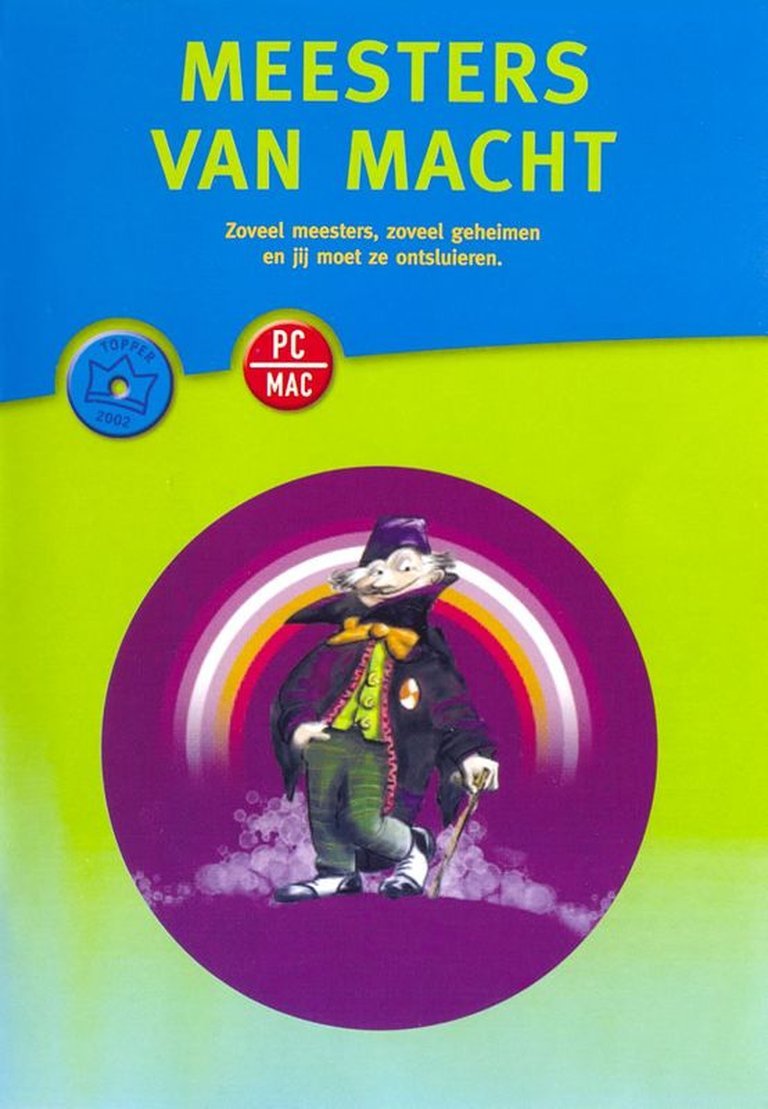
In ‘Masters of the Elements’, players embark on an educational adventure set in the fantastical Castle of Infinity, home to eccentric elemental masters like Time, Gravity, Warmth, Light, and Electricity. When the mysterious Master of Chance loses his cat, the other masters abandon their posts in search of the pet, scattering their power-granting rings and disrupting the natural order. As the protagonist, ages 8 to 102, you explore interactive rooms themed around scientific principles, solve physics-based puzzles to retrieve rings and story pages, and unravel clues about the missing cat. The journey culminates in a Garden of Chance board game where collected four-leaf clovers influence a luck-based final challenge to restore balance.
Gameplay Videos
Masters of the Elements Free Download
Masters of the Elements Cracks & Fixes
Masters of the Elements Guides & Walkthroughs
Masters of the Elements Reviews & Reception
gameboomers.com : The game was fun but not very challenging, with puzzles requiring more dexterity than thought.
Masters of the Elements Cheats & Codes
PC
Press [Tab] during gameplay, then enter the code.
| Code | Effect |
|---|---|
| nwcagents | Fill empty slots with ten Black Knights |
| nwclotsofguns | Gain all war machines |
| nwcneo | Increase one level |
| nwctrinity | Fill empty slots with five Archangels |
| nwcfollowthewhiterabbit | Maximum Luck |
| nwcnebuchadnezzar | Unlimited movement |
| nwcmorpheus | Maximum Morale |
| nwcoracle | Reveal puzzle map |
| nwcwhatisthematrix | Reveal world map |
| nwcignoranceisbliss | Hide world map |
| nwctheconstruct | Gain 100,000 gold and 100 of each resource |
| nwcbluepill | Lose game |
| nwcredpill | Win game |
| nwcthereisnospoon | Gain 999 Mana and all spells |
| nwczion | Gain all buildings |
| nwcphisherprice | Alternate color scheme |
Masters of the Elements: Review
In the pantheon of educational adventure games, few titles stand out as distinctly as Masters of the Elements. Released in 1997, this game was a pioneering effort by the Dutch studio IJsfontein Interactive Media, blending the realms of entertainment and education in a way that was both innovative and engaging. This review will delve into the various facets of Masters of the Elements, examining its development history, narrative depth, gameplay mechanics, world-building, and enduring legacy.
Development History & Context
The Studio and Creators’ Vision
IJsfontein Interactive Media, founded by Jan Willem Huisman, Hayo Wagenaar, and Sander Hassing, was a fledgling studio at the time of Masters of the Elements‘ development. The trio, who had studied together at the Utrecht School of the Arts, sought to create a game that would captivate young minds while imparting valuable scientific knowledge. Their vision was to bridge the gap between fun and education, a goal that was ambitious for the time but ultimately successful.
The name “IJsfontein” itself is a testament to their creativity and cultural roots. Translating to “Ice Fountain,” it symbolizes the dynamic interplay between static and moving elements, reflecting the game’s core themes. The studio’s choice to use a Dutch name was a deliberate move to stand out in an industry dominated by English-speaking developers.
Technological Constraints and Gaming Landscape
The late 1990s were a transitional period for the gaming industry. CD-ROMs were becoming the standard medium for game distribution, allowing for richer multimedia experiences. Masters of the Elements leveraged this technology to its fullest, incorporating high-quality graphics, sound effects, and voice acting that were relatively advanced for the time.
The gaming landscape of the era was dominated by action and adventure games, with educational titles often relegated to the sidelines. IJsfontein’s decision to focus on education was bold, but it paid off, as the game’s unique blend of learning and entertainment resonated with both critics and players.
Narrative & Thematic Deep Dive
Plot and Characters
The narrative of Masters of the Elements revolves around the Castle of Infinity, home to five eccentric masters of the elements: grandfather Time, uncle Gravity, father Warmth, mother Light, and their daughter Electricity. The story begins when the Master of Chance loses his cat, disrupting the balance of the elements. The player’s mission is to restore order by solving puzzles and collecting missing pages of the Garden of Chance story.
The characters are whimsically eccentric, each embodying a different natural element. This personification makes the scientific concepts more relatable and engaging for young players. The Master of Chance, in particular, serves as a guide and narrator, providing clues and encouragement throughout the game.
Dialogue and Themes
The dialogue in Masters of the Elements is designed to be both educational and entertaining. The Master of Chance’s voiceovers are particularly noteworthy, as they convey complex scientific ideas in a simple and engaging manner. The game’s themes revolve around the interconnectedness of natural elements and the importance of balance in the universe. These themes are woven into the narrative and gameplay, making them accessible and relevant to young players.
Gameplay Mechanics & Systems
Core Gameplay Loops
The core gameplay of Masters of the Elements revolves around solving puzzles and navigating the Castle of Infinity. The game is structured around five main rooms, each corresponding to a different element and master. Players must solve puzzles in each room to unlock new areas and progress in the story.
The puzzles themselves are a mix of logic, physics, and environmental interaction. For example, in the room of the Master of Gravity, players must manipulate objects to create a stable environment. In the room of the Master of Electricity, players must complete electrical circuits to power various devices. These puzzles are designed to teach basic scientific principles in a fun and engaging way.
Combat and Character Progression
Unlike traditional adventure games, Masters of the Elements does not feature combat. Instead, the focus is on problem-solving and exploration. The player’s character does not progress in the traditional sense, as there are no levels or stats to upgrade. Instead, progression is measured by the number of puzzles solved and pages of the Garden of Chance story collected.
User Interface
The user interface of Masters of the Elements is intuitive and user-friendly. The game is controlled entirely by the mouse, with a point-and-click interface that is easy for young players to grasp. The UI elements, such as the inventory and map, are clearly labeled and easy to navigate.
Innovative and Flawed Systems
One of the most innovative aspects of Masters of the Elements is its use of a “Book” as a central navigation tool. The Book allows players to access any room in the game, providing a sense of freedom and exploration. However, the game’s lack of an inventory system can be frustrating, as players must use items in the screen where they were found.
World-Building, Art & Sound
Setting and Atmosphere
The setting of Masters of the Elements is the Castle of Infinity, a fantastical world filled with whimsical characters and puzzling environments. The castle is divided into five main rooms, each corresponding to a different element and master. The rooms are beautifully designed, with vibrant colors and detailed illustrations that bring the world to life.
The atmosphere of the game is one of wonder and curiosity. The soundtrack, composed by André Dragu, complements the visuals perfectly, creating an immersive and engaging experience. The sound effects are also noteworthy, as they provide feedback and guidance during puzzle-solving.
Visual Direction
The visual direction of Masters of the Elements is a testament to the studio’s artistic vision. The game’s graphics, while simple by today’s standards, were cutting-edge for the time. The use of 2D illustrations and animations gives the game a unique and charming aesthetic that has aged well.
Sound Design
The sound design of Masters of the Elements is equally impressive. The voice acting, particularly that of the Master of Chance, is clear and engaging. The sound effects are used strategically to enhance the gameplay experience, providing feedback and guidance during puzzle-solving.
Reception & Legacy
Critical and Commercial Reception
Upon its release, Masters of the Elements was met with critical acclaim. The game won several awards, including a BAFTA Award in 1999 for learning and a La Flèche d’Or in 1998. Critics praised the game’s unique blend of education and entertainment, as well as its innovative gameplay mechanics and charming visuals.
Commercially, the game was also a success. It became one of the best-selling pieces of Dutch CD-ROM software, a testament to its enduring appeal. The game’s reception at launch set the stage for its lasting legacy in the gaming industry.
Influence on Subsequent Games and the Industry
Masters of the Elements had a significant impact on the development of educational games. Its success demonstrated that it was possible to create games that were both fun and educational, paving the way for future titles in the genre. The game’s innovative gameplay mechanics and charming visuals have been cited as influences by numerous developers, and its legacy can be seen in the educational games of today.
Conclusion
Masters of the Elements is a landmark title in the history of educational adventure games. Its unique blend of entertainment and education, innovative gameplay mechanics, and charming visuals have earned it a place in the pantheon of classic games. The game’s enduring legacy is a testament to the vision and creativity of its developers, and it continues to inspire and influence the gaming industry to this day. For those seeking a game that is both fun and educational, Masters of the Elements is a must-play title that stands the test of time.