
- Release Year: 2003
- Platforms: Windows
- Publisher: bhv Software GmbH & Co. KG, Espaço Informática Ltda
- Developer: Caipirinha Games GmbH, Espaço Informática Ltda
- Genre: Sports
- Perspective: 3rd-person (Other)
- Game Mode: Hotseat, Single-player
- Setting: Global
- Average Score: 56/100
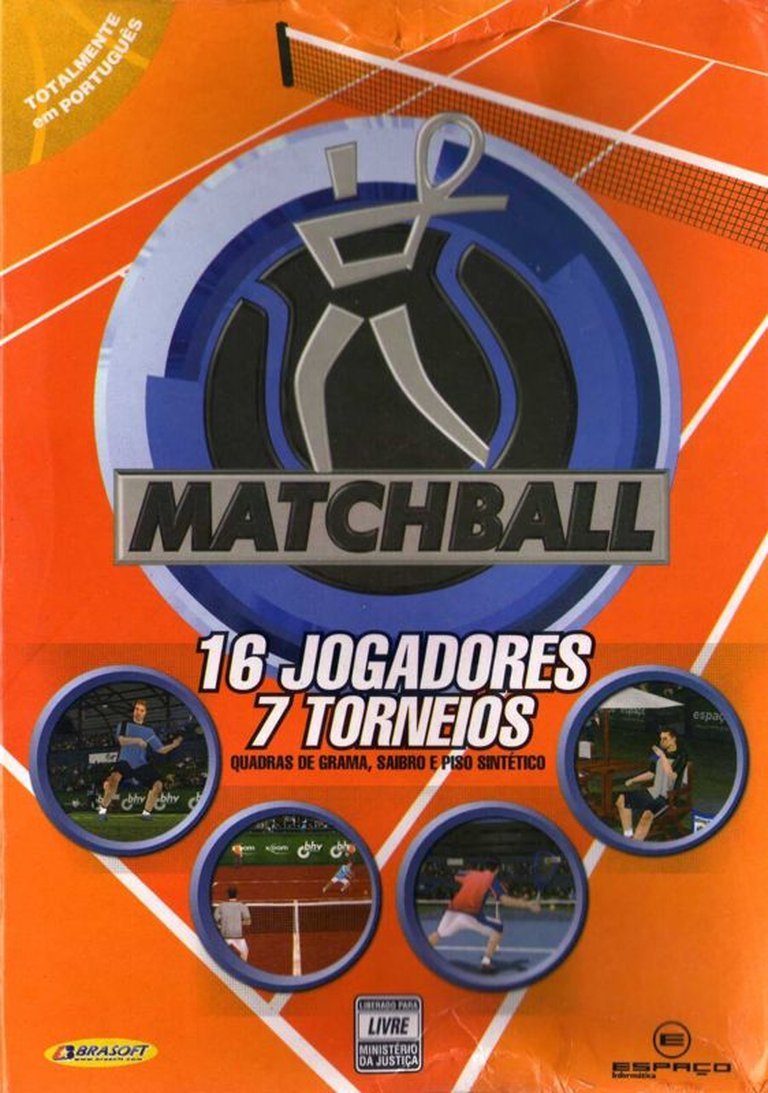
Description
Matchball is an arcade-style tennis game featuring 16 unique players with distinct abilities and 7 international arenas, offering multiple game modes including Quick Match, Tournaments, Career Mode, Training, and two-player Multiplayer. Players can progress through a career path to climb rankings, purchase items to enhance performance, and enjoy features like training sessions, camera views, replays, a hall of fame, and three difficulty levels. Gameplay centers on three core actions—hit, lob, and curve—with varied techniques from baseline to net play, augmented by visually colorful indicators for ball trajectory and spin.
Matchball Free Download
PC
Matchball: A Cautionary Tale of Ambition and Flawed Execution in the Golden Age of Sports Gaming
Introduction
The year 2003 stands as a watershed moment in video game history, a period where the medium transitioned from niche entertainment to a cultural juggernaut. Dominated by the triumvirate of the PlayStation 2, Xbox, and GameCube, this era birthed iconic franchises like Star Wars: Knights of the Old Republic, The Legend of Zelda: The Wind Waker, and Virtua Tennis 2. Yet, amidst these industry titans, lesser-known titles emerged—ambitious projects that dared to innovate but ultimately faltered. Among them is Matchball, a Windows-exclusive tennis simulation from Brazilian developer Espaço Informática Ltda and German studio Caipirinha Games GmbH. Marketed as a “tennis game featuring sixteen players with different characteristics and abilities and seven arenas all over the world,” it promised a comprehensive tennis experience. However, its legacy is one of profound regret. While its vision of a career-driven, arcade-infused tennis world was compelling, Matchball is remembered not as a pioneer, but as a textbook example of how a single critical flaw—its abysmal control scheme—can undermine even the most earnest ambitions. This review dissects Matchball‘s development, mechanics, and cultural footprint to reveal a cautionary tale of unrealized potential in an industry on the cusp of its golden age.
Development History & Context
Matchball emerged from an unlikely transatlantic collaboration between Espaço Informática Ltda of Brazil and Caipirinha Games GmbH of Germany, published by Espaço Informática and bhv Software GmbH & Co. KG. This partnership, reflected in the game’s multilingual support (English, German, and Portuguese), aimed to capture a global market. Released in 3, the game occupied a precarious niche: the PC sports genre was waning in the face of console dominance, where established franchises like Virtua Tennis ruled the courts. The development team, led by Augusto Bülow (programming) and Gustavo Bülow (art direction), was notably compact for a project of this scope. With 48 credited individuals—including voice actors playing fictional personas like “Roberto Passos” and “Claus van Heyden”—the team leveraged the Gamestudio engine (formerly 3D GameStudio), a popular choice for indie developers seeking accessible 3D tools.
Contextually, 2003 was a year of seismic shifts in gaming. As Alexander Galloway noted in Artforum, video games were “becoming fully mainstream,” with auteur developers like Hideo Kojima and Sid Meier redefining the medium’s artistic credibility. Meanwhile, tennis games were defined by Sega’s Virtua Tennis, celebrated for its “intuitive control” and “ball-changing gameplay.” Matchball‘s creators, however, pursued a different vision: an arcade-like simulation that merged accessibility with depth. Their goal, as described in promotional materials, was to create a game where “gameplay is very arcade-like, based on three main actions: hit, lob and curve, but with a wide variety in actions from the baseline and close to the net.” This ambition to innovate within a crowded genre, however, collided with the technological and design constraints of the era, resulting in a product that felt both overreaching and undercooked.
Narrative & Thematic Deep Dive
As a sports simulation, Matchball eschews traditional storytelling in favor of player-driven narratives. Its “Career Mode” serves as the thematic backbone, casting players as an aspiring tennis climber. Starting as a “beginning player,” the journey involves ascending global rankings through tournament victories, earning prize money to purchase performance-enhancing items. This structure echoes the rags-to-riches tropes of sports dramas, emphasizing ambition, competition, and incremental self-improvement. The 16 diverse players—with names like “Anders Larsson” and “Diego Ramirez”—and seven international arenas (from unnamed locales to implied global hotspots) attempt to capture tennis’s cosmopolitan allure. Yet, these elements remain superficial. The players lack distinct personalities or backstories, reducing them to stat blocks rather than characters. Similarly, the arenas are mere visual set pieces without lore or cultural context, failing to build a cohesive world.
The game’s thematic core lies in its arcade-meets-simulation hybrid. It promises the thrill of professional tennis—climbing rankings, wielding custom gear, and chasing Hall of Fame induction—but this promise is hollowed out by technical limitations. Unlike narrative-rich titles like The Witcher or Halo, where lore deepens immersion, Matchball‘s world-building is transactional. Its “Hall of Fame” and “training sessions” are mechanical rewards, not narrative hooks. The absence of a compelling story or thematic resonance underscores a fundamental issue: Matchball prioritizes systems over substance, resulting in a sterile world where victory feels procedural, not emotionally resonant.
Gameplay Mechanics & Systems
Matchball‘s gameplay is defined by a bold but fatally flawed control philosophy. The core actions—hit, lob, and curve—are executed via a three-step ritual: positioning the player, aiming with a directional line, and applying power via a secondary visual cue. As GameStar lamented, this “umständliches Eingaberitual” (cumbersome input ritual) demands precision within fractions of a second, leading to “Hektik und ungewollte Rhythmuswechsel” (hectic play and unintended rhythm shifts). The ball’s trajectory, shown with “lines with bright colours,” is meant to aid readability but instead exacerbates the chaos. This design choice, intended to simulate shot variety, backfired spectacularly. DemoNews.de condemned it as “bescheuert” (stupid), noting the control made the game either “kinderleicht” (childishly easy) or “brutalst schwer”brutally hard).
Beyond this systemic flaw, Matchball boasts a commendable suite of features. The Career Mode is robust, with a progression system mirroring real-world tennis: rising through rankings, purchasing items like upgraded rackets or stamina boosts, and participating in tournaments. Quick Match, Tournaments, Training, and two-player multiplayer add variety. Training sessions, multiple camera angles, and replay functions suggest a commitment to depth. Three difficulty levels cater to different skill levels, and the Hall of Fame provides long-term goals. Yet, these elements are rendered impotent by the controls. As PC Games noted, “Ohne diesen Makel könnte Matchball Tennis weit oben in der Tennisweltrangliste mitspielen” (Without this flaw, Matchball Tennis could rank high among tennis games). The AI, described by PC Action as “in der virtuellen Umkleidekabine geblieben” (stuck in the virtual locker room), fails to compensate, offering no meaningful challenge. Ultimately, Matchball‘s gameplay is a paradox: ambitious in scope but unplayable in practice.
World-Building, Art & Sound
Matchball‘s world-building is rooted in tennis’s global appeal, though executed with minimal depth. The seven arenas span continents, implying a tour of tennis’s iconic venues, but their designs are generic and lack distinguishing architectural or cultural details. The 16 players, while varied in skill sets (power, speed, precision), are visually indistinct. Their animations, handled by Gustavo Bülow, are functional but stiff, failing to convey the fluid athleticism of real tennis. The Gamestudio engine, capable of competent 3D rendering, produces graphics that PC Games deemed “veraltet, aber dennoch akzeptabel” (outdated, but still acceptable). Character models and environments are basic, with textures that lack polish.
The ball-physics, however, are a surprising bright spot. Described as “rundum überzeugen” (convincing in all aspects), the ball’s spin and bounce respond to player actions with realistic unpredictability. The colored lines indicating trajectory and spin, while divisive, represent an earnest attempt at clarity in a fast-paced sport. Sound design, unfortunately, remains unremarkable. The soundtrack, composed by Márcio Stein and Murilo Juchem, features generic electronic tracks (“Farol,” “Purple Horizon”) that lack the energy of a live tennis match. Crowd and impact effects are forgettable, failing to evoke the atmosphere of a Grand Slam. In essence, Matchball‘s world is a sterile approximation of tennis’s global stage—visually and auditorily competent but emotionally sterile, more a collection of assets than a living, breathing universe.
Reception & Legacy
Matchball‘s reception was uniformly damning, cementing its status as a critical and commercial failure. Aggregating reviews from German outlets, MobyGames reports a dismal 29% average score, with individual reviews painting a consistent picture of disappointment. GameStar awarded 38%, praising its “innovative Steuerung” (innovative control) but calling it “schlecht gemacht” (badly made). PC Action and DemoNews.de both scored it 29%, decrying its “extrem unrealistisch” (extremely unrealistic) controls and “mies” (crappy) overall experience. The harshest verdict came from PC Games, which gave it 22%, stating, “Die Ursache des Fehlers war die verkorkste Steuerung” (The cause of the error was the botched control). Commercially, Matchball vanished without a trace, overshadowed by genre leaders like Virtua Tennis 2 and the impending release of Top Spin in 2004.
In retrospect, Matchball‘s legacy is one of obscurity and cautionary relevance. It is now abandonware, remembered only by niche communities and game preservationists. Its failure highlights the importance of control in sports games, a lesson reinforced by the enduring success of titles like Virtua Tennis and WTA Tour Tennis. Unlike contemporaries that pushed the medium forward—Prince of Persia: The Sands of Time or Call of Duty—Matchball left no discernible impact. Its story, however, endures as a case study in development hubris. As the industry embraced more intuitive mechanics and deeper player engagement in the years following 2003, Matchball stood as a reminder that even the most comprehensive feature set cannot rescue a game from foundational flaws. Its place in history is not one of innovation, but of a missed opportunity in an era brimming with creative possibility.
Conclusion
Matchball is a tragic microcosm of early 2000s sports gaming: a product of grand ambition executed with fatal imperfection. Its Career Mode, diverse player roster, and global arenas signaled a desire to compete with genre titans, yet its cumbersome control system rendered these features irrelevant. The game’s failure lies not in its ideas, but in its execution—a reminder that innovation without playability is a hollow promise. In 2003, a year defined by landmark achievements in narrative, artistry, and gameplay, Matchball serves as a stark contrast. While peers like The Legend of Zelda: The Wind Waker redefined exploration, and Star Wars: Knights of the Old Republic elevated storytelling, Matchball stumbled at the most basic level: how players interact with the virtual world.
Today, Matchball is a relic—a cautionary tale for developers and historians alike. Its legacy is one of “what could have been,” a testament to the unforgiving nature of game design. For players, it is an unplayable curiosity; for the industry, a footnote in the evolution of sports simulations. In the pantheon of video game history, Matchball will never grace the Hall of Fame. Instead, it occupies a far more fitting position: as a reminder that even the most promising visions can be undone by a single, fatal flaw. As sports gaming evolved to prioritize fluid controls and authentic experiences, Matchball remains a ghost at the net—a symbol of ambition undone, and a game best left unplayed.