
- Release Year: 2017
- Platforms: iPad, iPhone, Macintosh, Nintendo Switch, tvOS, Windows Apps, Windows, Xbox One
- Publisher: Isdec Soluciones Globales En RR.HH., S.L., Titan Deep Space Company
- Developer: Titan Deep Space Company
- Genre: Adventure, Educational
- Perspective: First-person
- Game Mode: Single-player
- Gameplay: Shooter
- Setting: Fantasy
Description
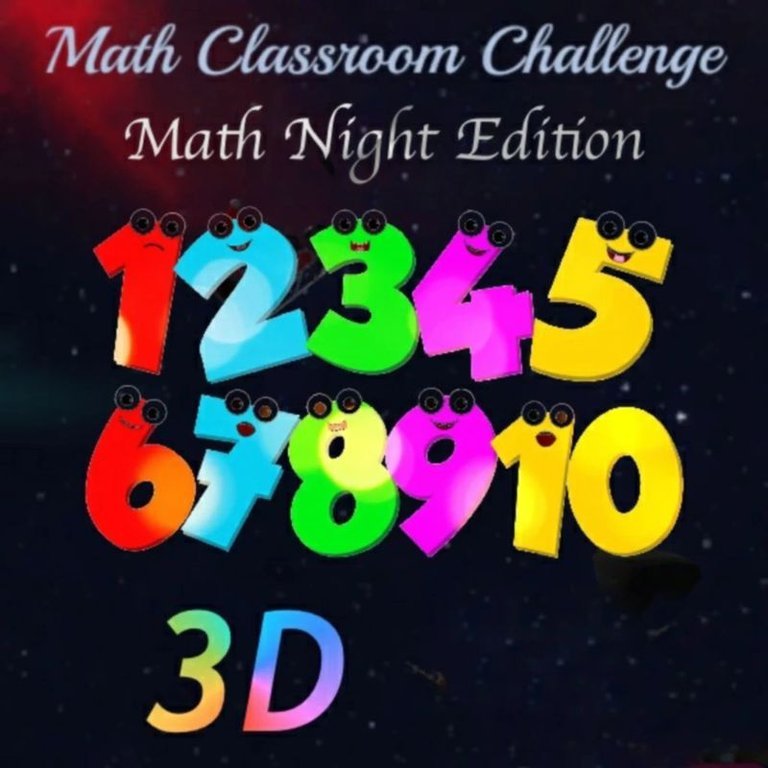
Math Classroom Challenge is an educational adventure game played in first-person, where players solve random mathematical exercises by using a water hose to spray the correct numerical solutions. Set in a safe, fantasy-themed environment, it is designed for children over four, offering activities with flying numbers and dynamic panels to make learning math fun and engaging without the pressure of losing.
Gameplay Videos
Where to Buy Math Classroom Challenge
PC
Math Classroom Challenge Guides & Walkthroughs
Math Classroom Challenge Reviews & Reception
store.steampowered.com : Math Classroom Challenge is a excellent (iOS) app for learning basic Math skills (i.e. additions, subtraction, etc.).
Math Classroom Challenge: A Soothing Soak in the Waters of Arithmetic
Introduction: The Most Relaxing First-Person Shooter Ever Made?
What if I told you there exists a first-person shooter where the most visceral thrill is successfully hitting a floating numeral with a stream of digital water? Where the climax of tension is deciding whether to wet a flying dragon to erase an error, knowing it might backfire? Welcome to Math Classroom Challenge, a title that represents the absolute antithesis of the high-octane, anxiety-inducing action we typically associate with the FPS genre. Released in 2017 by the small Spanish indie studio Titan Deep Space Company, this game is not merely an educational title; it is a deliberate, almost philosophical, exercise in designing a mathematically engaging experience thatactively eliminates failure, pressure, and fear. In an era where the conversation around educational games is increasingly shaped by titles like Baldi’s Basics—which weaponizes nostalgia and strict discipline to create a unique horror-comedy—Math Classroom Challenge consciously carves out the opposite end of the spectrum: a safe, whimsical, and completely stress-free zone for arithmetic practice. This review will argue that while the game is a minimalist and historically minor entry in the canon, its value lies in its unwavering commitment to a specific pedagogical ethos: that the first step to learning math is to ensure the experience is psychologically unthreatening. It is a quiet, competent, and profoundly gentle alternative in a genre often defined by its loudness.
Development History & Context: From Mobile Beginnings to a Cross-Platform Calm
Math Classroom Challenge emerged from the solitary vision of Iñaki Campomanes, operating under the Titan Deep Space Company banner. The game’s genesis is a classic indie story: a focused project built in the ubiquitous Unity engine, targeting the burgeoning mobile educational market before gradually expanding to PC (via Steam in 2018) and eventually consoles like the Xbox One and Nintendo Switch. Its initial release on iPhone and iPad in December 2017 placed it squarely in a post-Angry Birds world where touchscreens were seen as ideal portals for casual, accessible gaming. The “kids version of Math Combat Challenge” moniker, as stated in its official description, hints at a parallel project—likely a more structured, competitive title—suggesting Campomanes was experimenting with different emotional tones for mathematical engagement within the same foundational mechanics.
Technologically, the game reflects its mobile roots. The system requirements for the Steam version are modest (an Intel i5 4400 and Geforce 670), emphasizing accessibility over graphical fidelity. The use of first-person perspective on touch devices is a smart, if not revolutionary, choice, making the “shooting” of answers intuitive for young children. The development context is one of constrained means but clear purpose: create a tool for parents and educators that is easy to pick up, safe to use, and adaptable. There is no evidence of a large team or significant budget; the game’s simplicity is both a consequence of its indie origins and a central feature of its design philosophy. It arrived not as a disruptor but as a supplement, a quiet offering in a marketplace saturated with flashier, more gamified attempts at teaching arithmetic.
Narrative & Thematic Deep Dive: The Story of a Sandbox, Not a Story
To speak of “narrative” in Math Classroom Challenge is to engage with a deliberate void. There is no plot, no characters with dialogue, no overarching goal beyond solving math problems within a time limit. The “fantasy” setting listed on MobyGames is not a narrative fantasy but a psychological one—a safe, abstract, and brightly colored 3D space that exists to separate the act of calculation from any real-world stakes. This is its most significant thematic choice. Where Baldi’s Basics in Education and Learning (2018) builds its entire恐怖 experience on the narrative tropes of a strict, punitive teacher and a hostile school environment, Math Classroom Challenge consciously evacuates all narrative tension.
The player is an unseen, unstressed agent in a featureless arena. The only “characters” are the mechanical elements: static panels, dynamic panels, and the flying dragons that offer a risk-reward mechanic for error correction. The dragons are not characters; they are tools with a randomized effect. This absence of narrative is therefore a profound narrative statement. The game posits that the story of math education should not be one of fear, punishment, or escape (as in Baldi’s relentless pursuit), but one of calm exploration and self-paced mastery. Its theme is security. The official description repeatedly uses words like “safe,” “fun,” “enjoyable,” and “for the whole family.” It is a direct refutation of the idea that educational games need high-stakes drama to be engaging. The experience is thematically aligned with a utopian classroom where the teacher’s sole function is to provide a positive, encouraging space for practice, devoid of shame or failure. This makes it a fascinating counterpoint in the taxonomy of educational horror—it is the “comfort game” to Baldi’s “anxiety simulator.”
Gameplay Mechanics & Systems: The Zen of the Water Hose
The core gameplay loop is elegantly simple and repeats across all platforms: a first-person view presents a vibrant, open environment. The player, armed only with a continuously flowing water hose (controlled by a touch screen, mouse, or controller trigger), must identify the correct numerical solution to a presented mathematical problem and “water” it. The genius of the mechanic is its physicality and its forgiving nature.
Core Loop & Activities:
The game categorizes its challenges into two types, as detailed in its official description and the NSG Reviews breakdown:
1. Static Panels: These are fixed screens, often placed on walls or structures, that display a mathematical problem (e.g., “5 + 3”). The player must explore the environment to find floating numbers (the “8”) and hose them down. This incorporates a mild element of spatial exploration and number recognition.
2. Dynamic Panels: These appear suddenly in the player’s field of view, presenting a problem with three possible answers. The player must quickly aim and hose the correct one. This adds a test of rapid recall and decision-making under minimal pressure.
Supporting Mechanics & Systems:
* The Hose: The primary interaction is a non-violent, continuous stream. It requires aim but not precision timing, reducing frustration. On Switch version 4.0, a “Magic Wand” alternative was added, allowing for point-and-click capture, further lowering the physical skill barrier.
* Dragons: Flying dragons occasionally appear. Hosing them can either reduce the count of errors made on dynamic panels or, perversely, increase it. This introduces a delightful layer of tactical risk-assessment. Should I spend time chasing a dragon to potentially erase a mistake, or could that action make things worse? It’s a low-stakes gamble that adds depth without punishment.
* The Rocket: A rocket that launches during play temporarily doubles the points earned, encouraging bursts of efficient play.
* Parameterization: This is the game’s masterstroke. The developer understands the player is likely a parent or teacher. The difficulty (type of operation from sums to equations), the presence of horizontal vs. vertical problem formats (added in v4.0), and the timer (from “infinity” to 2 minutes) are all fully customizable. The game explicitly states, “In the game the player never loses.” There is no “game over,” only a completed session with a score. This removes all performance anxiety and frames the activity purely as a timed drill or playful assessment.
Innovation vs. Flaw:
The innovation lies in its systemic commitment to a no-fail, parameterizable sandbox. It treats the player not as a competitor to be tested, but as a learner to be accommodated. The potential flaw is its profound simplicity. The “game” part is minimal; it is essentially a interactive worksheet with a joystick. Engagement for a child beyond the initial novelty of the water hose may be limited unless externally motivated (e.g., by a parent tracking scores). The dragon mechanic is clever but underutilized as a core balancing system. Compared to the intricate, systemic horror of Baldi’s Basics—where the rules of the school (slapping a ruler, opening doors) become terrifying gameplay mechanics—Math Classroom Challenge‘s systems are transparent and benevolent, which is precisely the point.
World-Building, Art & Sound: A Blandly Pleasant Void
The game’s world is a triumph of bland positivity. Screenshots and descriptions point to a low-poly, brightly colored 3D environment. It is generic to the point of being a non-space: a grassy field, perhaps some simple structures, a blue sky. This is not a Criticism. In an educational context, especially for young children, a visually chaotic or narratively dense world would be a distraction. The “fantasy” is simply “not a classroom.” It is a digital playground where math problems materialize. The art style is functional, clear, and inoffensive, using saturated colors to attract the eye but complex shapes that could confuse a young learner.
The sound design follows the same ethos. The Steam store page mentions “simple music.” This likely means cheerful, unobtrusive loops or ambient tracks designed to fade into the background. Sound effects for hosing water, panel appearances, and dragon calls are probably clear and cartoony. The entire audiovisual package is engineered for low cognitive load. It does not aim to immerse the player in a story world; it aims to keep them in a calm, focused state for solving math problems. The atmosphere is one of serene, almost bland, encouragement. It is the auditory and visual equivalent of a patient tutor smiling and saying, “Take your time.”
Reception & Legacy: The Quiet Giant of Non-Threatening Edutainment
Critical and Commercial Reception:
By any mainstream metric, Math Classroom Challenge is a non-entity. Its MobyScore is “n/a,” with only one player recorded as having “collected” it. Metacritic shows no user or critic reviews for any platform. Steam users have left only a handful of reviews, with one describing it as “an excellent (iOS) app for learning basic Math skills.” The NSG Reviews on Nintendo Switch gives it a perfect 5.0, but this is from a niche site focused on Switch coverage and based on a single, undated review. The game has flown almost entirely under the radar of both the gaming press and academic researchers studying game-based learning.
Academic Context & The Anxiety Question:
This is where the source material from the Springer paper by Rocha and Dondio becomes crucial. Their research on a history-based math adventure game found it improved math performance but increased math anxiety in female students. This highlights a critical tension in educational game design: does weaving math into a narrative (especially one with historical figures and puzzles) increase engagement for some while inadvertently raising stress for others? Math Classroom Challenge‘s entire design seems to be a pre-emptive solution to this problem. By having no narrative, no characters, no stakes, and no failure state, it systematically removes every common trigger for math anxiety identified in the literature—time pressure, social evaluation, fear of failure. The dragons’ random effect might introduce a tiny speck of uncertainty, but the player’s overall score is irrelevant to the core task of correct answers. It is, in essence, an attempt to create a “math anxiety-proof” zone. We lack empirical studies on this specific game, but its design is a direct, practical response to the concerns raised in papers like Rocha & Dondio’s.
Legacy and Influence:
The game’s legacy is subtle and occurs within a specific ecosystem. On MobyGames, it is linked to a curious family of “classroom” games: The Classroom (2003), Superheroes Math Challenge (2001), and the infamous Baldi’s Basics. It sits at the far end of a spectrum from narrative-horror (Baldi) to pure abstraction (Challenge Math on Commodore 64). Its influence is likely limited; it did not spawn a genre or a meme. However, it represents a persistent and valid design philosophy within edutainment: that simplicity and safety are virtues, not vices. Its multi-platform release strategy—starting mobile, moving to PC and Switch—mirrors the path of many successful indie titles, proving there is a market for calm, affordable, family-focused educational software even amidst the noise. It is a footnote, but a purposeful one.
In the Shadow of Baldi:
The loaded article on Baldi from Loaded Dice Films is not about our subject, but it is an essential comparative text. Baldi’s success is built on neurotic tension—the horror of a teacher who is both a memorably insane character and an relentless, punishing punisher of math errors. Math Classroom Challenge is Baldi’s therapeutic counterpart. If Baldi answers the question, “What if math class was a nightmare?”, Math Classroom Challenge answers, “What if it was a calm, sunny afternoon with no homework?” Both are valid responses to the cultural memory of school, but only one has captured the internet’s imagination. This comparison underscores that Math Classroom Challenge‘s lack of narrative aggression is its defining, and commercially limiting, feature.
Conclusion: A Pleasant Interlude, Not a Landmark
Math Classroom Challenge is not a great game by any conventional metric. It lacks depth, challenge, narrative, and aesthetic distinction. It will not be remembered in lists of influential titles or studied for its revolutionary mechanics. However, as a piece of educational software, it is a resounding success in its narrow brief. It takes the core anxiety of mathematics—the fear of being wrong—and architecturally dismantles it. The parameterizable timer, the absence of a loss state, the whimsical water hose, and the risk-free dragon mechanic create an environment where the only possible outcome is practice. It is a tool, polished and patient, designed for a specific user: a parent wanting their 5-year-old to engage with numbers without tears, or a teacher seeking a low-stress drill activity.
Its place in video game history is as a exemplary case study in “anxiety-averse” design within the educational genre. In an academic landscape increasingly concerned with games that reduce math anxiety (as the Rocha & Dondio paper shows), it stands as a commercial, if obscure, prototype of that very goal. It is the calm to Baldi’s storm, the soothing bath to the electric chair. For historians of educational gaming, it represents a branch of the design tree that prioritizes psychological safety over gamified stakes—a branch that, while not bearing the most famous fruit, is essential for understanding the full spectrum of how we try to teach through play. Ultimately, Math Classroom Challenge is a good game. Not a great one, but a good one. It accomplishes what it sets out to do with kindness, competence, and a complete absence of cruelty. In a world of educational games that often try to be clever or intense, that is a quiet, radical achievement.
Final Verdict: 6/10 – A mechanically sound and psychologically thoughtful educational tool that fails as a conventional game but succeeds brilliantly at its singular goal: making math practice a safe, non-threatening, and even mildly pleasant activity. Its historical significance lies in its role as a clear, minimalist counter-proposal to anxiety-inducing educational design.