
- Release Year: 2002
- Platforms: Windows
- Publisher: Electronic Arts, Inc., Sold Out Sales & Marketing Ltd.
- Developer: Electronic Arts Seattle, Engineering Animation Inc.
- Genre: Simulation, Sports
- Perspective: Third-person
- Game Mode: LAN, Single-player
- Gameplay: Timed input
- Setting: Europe
- Average Score: 68/100
Description
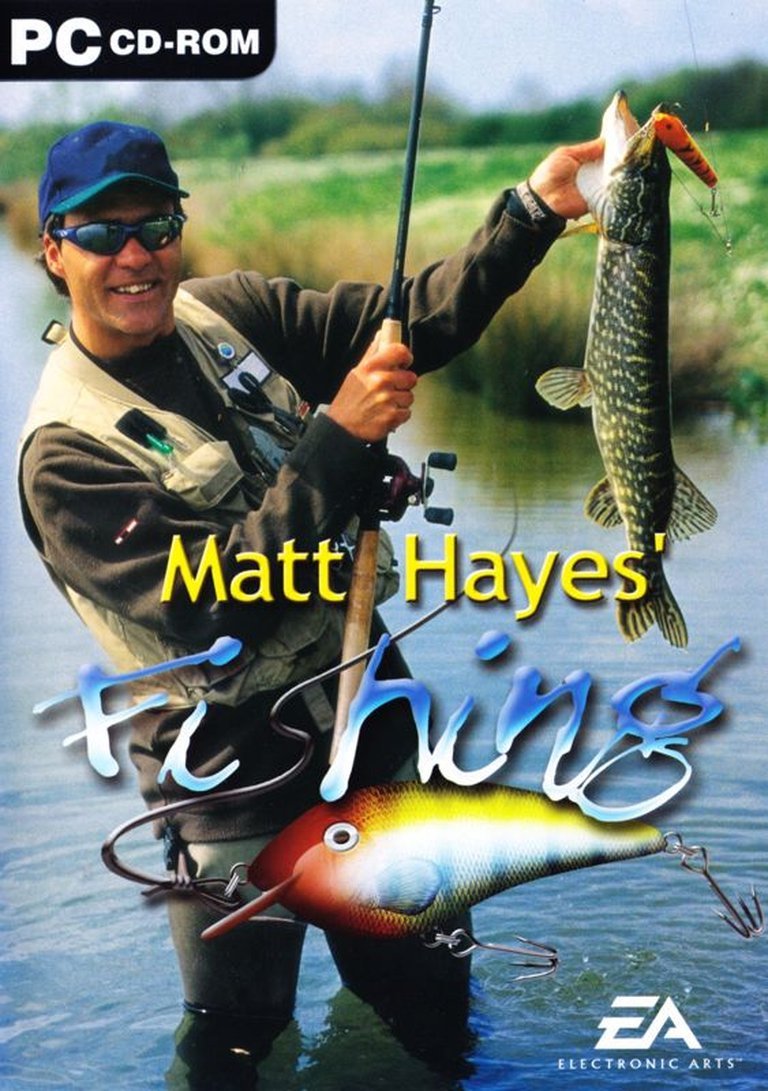
Matt Hayes’ Fishing is a fishing simulation game set in Europe, offering both single-player and multiplayer experiences for up to eight players. Players can engage in four distinct modes: Matt’s Challenge with progressive levels and objectives, a relaxed Fishing Trip mode, competitive Tournaments, and online Multiplayer matches. The game provides instructional tips, supports various input devices including a specialized fishing rod with vibration feedback, and features realistic lake conditions and species variety.
Matt Hayes’ Fishing Free Download
Matt Hayes’ Fishing Cracks & Fixes
Matt Hayes’ Fishing Patches & Updates
Matt Hayes’ Fishing Guides & Walkthroughs
Matt Hayes’ Fishing Reviews & Reception
mobygames.com (70/100): A fishing simulation game that can be played as a single player game off-line or as an on-line multiplayer game with up to eight players.
gamepressure.com (75/100): The simulation of this popular recreational sport created by EA Sports is at a very high level.
gamefaqs.gamespot.com (76/100): 7 users have rated this game (average: 3.79 / 5).
sockscap64.com (51/100): This Game has no review yet, please come back later…
Matt Hayes’ Fishing Cheats & Codes
PC
Enter codes at the console (press ~).
| Code | Effect |
|---|---|
| pikemon | Win Current Level |
| powerup monsterbonus | Get Monster Bonus |
| powerup twominute | Two Minute Bonus |
| powerup fiveminute | Five Minute Bonus |
| powerup powercast | Get Powercast |
| powerup superpowercast | Get Super Powercast |
| powerup silentcast | Get Silentcast |
| powerup stealthboat | Get Stealthboat |
| powerup shallowboat | Get Shallowboat |
| powerup pikeflag | Get Pike Flag |
| powerup bigpikeflag | Get Big Pike Flag |
| powerup lunkerpikeflag | Get Lunker Pike Flag |
| toggle manualcam | Cam Moves Freely |
| toggle fps | Show FPS |
| bonusLure | Unknown Effect |
| metric | Unknown Effect |
| powerup skipcast | Unknown Effect |
Matt Hayes’ Fishing: Casting a Line into Niche Waters
Hook, line, and sinker – EA’s 2002 angling simulator remains a curious artifact of early 2000s sports simulation, offering surprising depth for enthusiasts while exemplifying the challenges of translating solitary pastimes into compelling digital experiences.
Introduction
When Electronic Arts – synonymous with mainstream sports juggernauts like FIFA and Madden – released Matt Hayes’ Fishing in March 2002, it epitomized both the ambition and peculiarity of early millennium gaming. Licensed by British angling celebrity Matt Hayes, this Windows-exclusive title attempted to transform the contemplative ritual of fishing into a structured digital sport. Despite polished production values and authentic mechanics, it remains entrenched as a cult artifact – a technically competent simulator that inadvertently highlights why certain real-world activities resist compelling gamification. This review dissects its historical context, mechanical nuances, and paradoxical legacy as both a zenith of genre authenticity and a cautionary tale about audience constraints.
Development History & Context
The EA Sports Paradox
Developed collaboratively between Electronic Arts Seattle and Engineering Animation Inc., Matt Hayes’ Fishing emerged during EA’s experimental phase with mid-tier sports simulations. Fresh off successes like FIFA and NBA Street, EA leveraged its resources to explore marginalized sports markets. The project echoed earlier niche titles like Championship Bass (1999) but elevated realism through Hayes’ direct involvement – a celebrity endorsement strategy later mirrored in Tiger Woods PGA Tour.
With executive producer Paul Jackson (later EA Sports VP) and lead programmer Robert Smith steering development, the team prioritized:
– Technical Authenticity: Simulating seven freshwater species (pike, perch, salmon, etc.) with distinct behavioral AI
– Peripheral Innovation: Native support for MadCatz’s vibration-enabled fishing rod controller
– Structural Diversity: Four distinct gameplay modes blending competition with leisure
The early 2000s PC market’s technical constraints shaped critical decisions:
– Limited Physics Engines: Required bespoke coding for line tension, water drag, and fish struggle mechanics
– LAN-Centric Multiplayer: Reflecting pre-broadband infrastructure, supporting 2-8 players via local networks
– Asset Optimization: 3D-rendered European locales (Loch Lomond, River Usk) balanced visual fidelity with Pentium II-era hardware limitations
Marketing materials emphasized Hayes’ television persona – a deliberate bid to attract his UK angling audience rather than core gamers. This dual identity – part edutainment tool, part sports sim – created inherent tension in its design philosophy.
Narrative & Thematic Deep Dive
The Quiet Drama of the Waterside
Unlike narrative-driven contemporaries, Matt Hayes’ Fishing embraces fishing’s inherent meditative solitude. Its “story” manifests through:
- Self-Set Challenges: Players pursue personal bests across species/weight categories
- Hayes’ Didactic Commentary: Vocalized tips contextualize actions (“That trout favors deeper pools when spawning”)
- Locational Mythology: Real-world sites like Sweden’s Gamlebyviken carry implied histories
Thematically, it explores:
– Human-Environment Negotiation: Weather, time-of-day, and bait choices dictate success
– Measurement Culture: Tournament modes fixate on leaderboard rankings and weight metrics
– Meditative Repetition: The core loop mirrors actual fishing’s cyclical patience-and-reward rhythm
Hayes functions less as a character than a spectral mentor – a Woodes Rogers of angling guiding players through technique glossaries and equipment stats. This absence of traditional narrative paradoxically strengthens its simulation credibility: fishing’s real-world stakes derive from personal achievement, not scripted drama.
Gameplay Mechanics & Systems
Anatomy of a Digital Angler
The game structures itself around four distinct modes – each targeting different engagement philosophies:
- Matt’s Challenge (Tiered Objectives):
- Three-stage progression with rank-based unlocks
- “Bonus fish” system rewards ecological knowledge (e.g., targeting salmon in loch tributaries)
- Fishing Trip (Sandbox):
- Fully customizable lake conditions/time-of-day
- Pure simulation with optional Hayes commentary
- Tournament (Competitive Structure):
- Time-limited matches with CPU opponents
- Real-time weight leaderboards create tension
- Multiplayer (LAN Focused):
- Host-based sessions (Trip/Tournament only)
- Technical achievement hampered by 2002’s limited online infrastructure
Core mechanics reveal nuanced design:
– Casting System: Mouse/joystick tension meters dictate distance/accuracy
– Fish AI: Species-specific struggle patterns (trout’s surface jumps vs. pike’s deep drags)
– Equipment Management: Rod/reel/line stats impact performance (e.g., fluorocarbon lines for wary trout)
Yet flaws emerge:
– Input Lag: Keyboard controls lack the MadCatz rod’s tactile feedback
– Randomness Overload: Weather shifts sometimes overrule player skill
– UI Clutter: Multiple nested menus for bait/location selection
The manual’s 25-page appendix – detailing everything from hair rigs to ledgering – exemplifies its simulation-first ethos, albeit at accessibility’s expense.
World-Building, Art & Sound
Europe’s Digital Waterscapes
Unlike arcade-y contemporaries (Sega Bass Fishing), Matt Hayes’ Fishing adopts a subdued aesthetic:
-
Environmental Design:
- Photo-textured lakeshores with dynamic weather (rippling rain effects)
- Day-night cycles altering fish behavior (nocturnal feeding cues)
- Site-specific geography (Lough Derg’s peat-stained waters)
-
Character Models:
- Generic angler avatars (no customization)
- Fish rendered with species-accurate textures/silhouettes
-
Auditory Landscape:
- Diegetic Focus: Lapping waves, reel gears, splashes
- Non-Diegetic Elements: Menu-only country guitar tracks
- Hayes’ VO: Calm, instructional delivery (“Mind your drag – he’s making a run!”)
This restrained approach prioritizes ambience over spectacle – a design choice lauded by 7Wolf Magazine’s Russian review:
“В качестве музыки достаточно милое гитарное кантри… Сам процесс ловли лишен музыкального сопровождения. А сверхстильное меню… действительно радует глаз.”
(Translation: “The music features pleasant country guitar… The actual fishing lacks soundtrack. But the ultra-stylish menu… truly pleases the eye.”)
Yet modern players may find the silence isolating – a missed opportunity for atmospheric scoring during lengthy battles.
Reception & Legacy
Niche Acclaim, Mainstream Obscurity
Upon release, critical response proved polarized:
| Critic | Platform | Score | Key Insights | |
|---|---|---|---|---|
| 7Wolf Magazine | Windows | 70% | Praised interface/peripheral support; noted genre limitations |
Commercial performance remains undocumented – likely overshadowed by EA’s AAA catalog. Post-release legacy includes:
- Cult Following: Abandonware communities preserve its LAN multiplayer
- Genre Influence: Mechanically inspired Rapala Fishing Frenzy (2006)
- Historical Significance: Early example of celebrity-licensed sims
Its 2004 re-release via Sold Out Sales underscored bargain-bin positioning – a fate shared by contemporaries like Deer Hunter.
Core tensions defined its lifespan:
– Authenticity vs. Accessibility: Simulation depth alienated casual players
– Niche Marketing: Targeted anglers over gamers (manual’s glossaries over tutorials)
– Technological Timestamp: LAN dependency became swiftly obsolete
Conclusion
The One That Didn’t Get Away
Matt Hayes’ Fishing remains a fascinating paradox – a technically polished simulator that perfectly captured angling’s deliberate pacing, yet failed to transcend its genre’s inherent audience constraints. Modern reassessment reveals:
- Strengths: Peripheral innovation, ecological accuracy, Hayes’ mentorship
- Weaknesses: Input imprecision, undercooked multiplayer, intimidating depth
For historians, it epitomizes early 2000s EA’s willingness to experiment beyond predictable franchises. For players, it offers a meditative – if mechanically dated – time capsule of when gaming sought to digitize even our quietest pastimes. While unlikely to rank among fishing sims’ Moby Dicks, Hayes’ digital outing remains worthy of curation – not as a masterpiece, but as evidence of simulation gaming’s boundary-pushing ambitions.
Final Verdict: An earnest, flawed love letter to angling best appreciated by genre devotees or gaming archaeologists. Three stars – it won’t reel in the masses, but deserves a spot in the tackle box of history.