
- Release Year: 1997
- Platforms: Windows 16-bit, Windows
- Publisher: Mindscape (UK) Limited
- Genre: Educational
- Perspective: 1st-person
- Game Mode: Single-player
- Gameplay: Mini-games, Typing
- Average Score: 70/100
Description
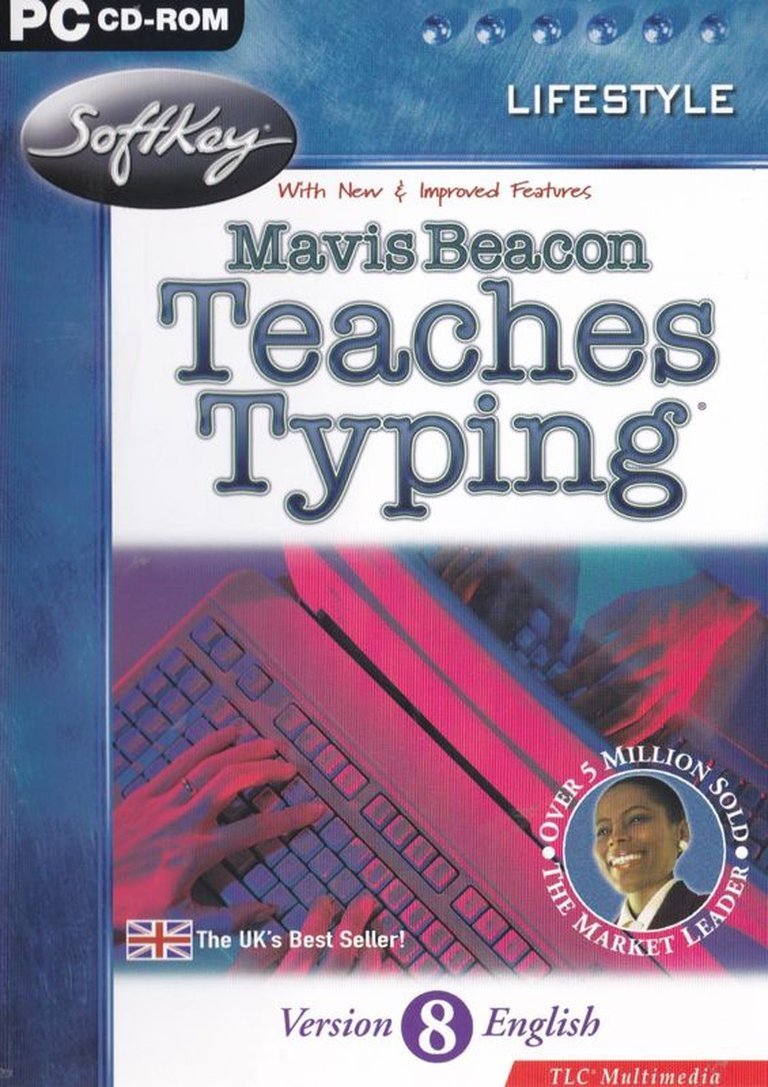
Mavis Beacon Teaches Typing Version 8 is an educational typing tutor software released in 1997 for Windows, featuring a series of engaging mini-games to teach typing skills, rhythm, prefixes/suffixes, numbers, and speed. Players navigate diverse settings like a ragtime piano for fluid typing, space ships battling junk, road races avoiding bugs, supermarket checkouts, chameleon picnics against ants, shark chases underwater, and penguin crossings on ice floes, with scores based on accuracy and words per minute, accompanied by music, sound effects, and audio guidance.
Gameplay Videos
Mavis Beacon Teaches Typing: Version 8 Reviews & Reception
myabandonware.com (70/100): Certainly one of the better typing programs of the time.
Mavis Beacon Teaches Typing: Version 8: Review
Introduction
In the pixelated dawn of personal computing, when floppy disks spun tales of productivity and play, few programs bridged the chasm between drudgery and delight as masterfully as Mavis Beacon Teaches Typing: Version 8. Released in 1997 amid the CD-ROM revolution, this unassuming typing tutor transformed keyboard mastery from a chore into a symphony of mini-games and rhythmic challenges. As the eighth iteration of a series that began in 1987—selling over six million copies by century’s end—Version 8 arrived as a polished UK edition, courtesy of Mindscape, building on the fictional allure of its eponymous instructor, Mavis Beacon. This review posits that Version 8 is not merely an educational tool but a pioneering edutainment artifact: a testament to how gamification can embed lifelong skills into the DNA of a generation, proving that even the simplest input—typing—could fuel addictive, score-chasing loops in an era dominated by Doom clones and Quake fragfests.
Development History & Context
Mavis Beacon Teaches Typing originated in 1987 from The Software Toolworks, founded by Les Crane, Walt Bilofsky, and Mike Duffy—visionaries who had already conquered chess sims with Chessmaster 2000. Norm Worthington joined the fray, crafting the core program to teach touch-typing on QWERTY (and early Dvorak) layouts across platforms like DOS, Apple II, C64, and Amiga. Mavis herself was a marketing masterstroke: a fictional Black educator portrayed by Haitian model Renée L’Esperance for a mere $500 photo shoot, her poised image evoking guidance (“Beacon”) inspired by singer Mavis Staples. By 1997, the series had evolved under Mindscape (UK) Limited, with Version 8 targeting Windows 95/NT users via CD-ROM—a medium exploding in popularity for its multimedia heft.
Development credits reveal a robust team of 67, led by producer Dave Buoncristiani, technical director John Schultheiss, and lead programmer Guido Marx. Art director Tansi Brooks (credited as Tansy Brooks) oversaw animations from Slingshot Productions, while firms like View By View handled 3D environments. Technological constraints of 1997 loomed large: 16-bit and 32-bit Windows versions grappled with DirectX precursors, limited RAM (often 8-32MB), and Pentium-era CPUs, prioritizing lightweight 2D sprites over polygons. The gaming landscape? A post-Doom boom of first-person shooters and strategy epics like Quake and Diablo, yet edutainment thrived—Oregon Trail remakes and Mario Teaches Typing (1992) showed demand for “fun learning.” Mindscape’s vision refined this: use mini-games to mask drills, with audio guidance and progress tracking suiting home/school PCs. Absent Ragtime from later entries like UK Version 11, Version 8 captured a transitional ethos—pre-web, pre-broadband—where CD-ROMs were portals to interactive tuition.
Narrative & Thematic Deep Dive
Lacking a linear plot, Version 8 weaves its “story” through Mavis Beacon’s avuncular guidance, positioning her as the archetypal mentor in a classroom of chaos. Mavis—warm, authoritative, voiced via audio prompts—narrates lessons, offering encouragement like a patient teacher: “Great job! Keep that rhythm going.” Her presence bookends sessions, unlocking certificates upon mastery, symbolizing progression from novice to virtuoso. Themes revolve around perseverance and rhythm: typing isn’t conquest but harmony, echoing real-world demands for fluid communication in an emerging digital age.
Mini-games personify these motifs with whimsical characters. In Penguin Crossing, a hapless penguin squawks in frustration at errors, embodying vulnerability—its leaps across ice floes demand precision, mirroring the player’s growth. Shark Attack casts you as a diver fleeing jaws, goggles splattering with mistakes, thematizing urgency and consequence. Chameleon Picnic pits a vigilant lizard against letter-bearing ants, protecting blooming flowers—a metaphor for nurturing skills amid invasion. Road Race and Space Junk anthropomorphize speed and accuracy via bug-splattered windscreens and charging lasers, while Check-out Time grounds numeric drills in mundane retail realism. Ragtime uniquely fuses jazz-era piano with wordplay, teaching fluidity as musicality.
Dialogue is sparse but effective: audio cues (“Correct that now!”) and post-game recaps (“Accuracy: 95%, WPM: 45”) foster self-reflection. Underlying themes critique rote learning—Mavis humanizes the keyboard, subverting 90s fears of tech alienation. No deep lore, yet this episodic structure prefigures modern skill-apps like Duolingo, where narrative emerges from achievement.
Gameplay Mechanics & Systems
At its core, Version 8 loops through lessons → drills → mini-games → scoring, a scaffolded progression tracking WPM, accuracy, and certificates. UI is intuitive: a 1st-person keyboard view with “ghost hands” (legacy from earlier versions) highlights home-row mastery; mouse/keyboard input toggles modes. Customizable plans adapt to skill levels, from alphabetic basics to suffix/prefix blasts.
Mini-games deconstruct typing into innovative systems:
- Ragtime: Type random words to sustain a player piano’s tune. Rhythm is king—stumbles stutter the melody. Flaw: Limited word pool risks repetition.
- Space Junk: Defend a station typing suffix/prefix clusters (e.g., “un-“, “-ing”); complete sets charge/fires lasers at junk. Corrections allowed pre-damage; ends on station destruction or word exhaustion. Innovation: Builds morphological recognition.
- Road Race: Dashboard words demand rapid input; errors splat bugs on the windshield, obscuring vision. Pure speed test—too many splats crash the car.
- Check-out Time: Numeric keypad exclusive. Scan groceries, input prices + Enter; errors drop items. Teaches 10-key efficiency, tolerant of fixes.
- Chameleon Picnic: Ants bear word letters leftward; type correctly to chomp them, letting too many escape ends play. Bonus: Perfect runs bloom flowers. Balances accuracy over speed.
- Shark Attack: Swim via word-typing; slowness advances the shark, errors fog goggles. Goal: Ocean treasure.
- Penguin Crossing: Ice floes bear words; type to jump. Errors prompt squawks for correction, emphasizing feedback.
Post-game metrics (accuracy %, WPM) fuel progression, with graphs/charts for meta-review. Flaws: No multiplayer (unlike later editions), CD-ROM swaps frustrate modern emulators; innovations like error tolerance and themed drills outshine contemporaries. Loops are addictive—short bursts (2-5 mins) yield dopamine hits, rivaling arcade cabinets.
World-Building, Art & Sound
No sprawling open world, but fixed/flip-screen vignettes craft intimate atmospheres. Settings evoke 90s edutainment charm: cosmic debris in Space Junk, supermarket bustle in Check-out, arctic peril in Penguin Crossing. 2D art—bright, cartoonish sprites by Tansi Brooks and Slingshot—pops on CRTs: chameleons tongue-lash ants, penguins waddle comically, sharks lunge menacingly. Animations are fluid for the era, with 3D architectural hints (View By View) adding depth to titles/menus. Mavis’s classroom hub, implied via audio, feels welcoming.
Sound design elevates: Ragtime’s jaunty piano syncs to keystrokes, creating emergent jazz; squawks, splats, laser zaps, and shark chomps provide tactile feedback. Audio guidance—Mavis’s calm voiceovers—guides without overwhelming. Music loops subtly, sound effects punchy via CD-ROM quality. Collectively, they immerse: typing feels consequential, transforming a desk into a racetrack or reef, heightening tension and triumph.
Reception & Legacy
Launch reception is ghostly—no Metacritic aggregate, MobyGames lists zero critic reviews (player average 5/5 from one vote). Yet series context screams success: 6M+ sales by 1999, top educational charts (Version 10 #4, 5 #8 in 2000). Abandonware sites rate 3.5/5 (4 votes), with nostalgic comments lauding efficacy (“taught us to type young,” “cursing the penguin on Win95”). Early praise (NYT 1987: skill-booster; Compute! 1989: Dvorak nod; Amiga Format: user-friendly) carried over.
Legacy endures: Progenitor of typing genre (Typing of the Dead, indies like Tauriel Teaches Typing). Influenced gamified edtech (Duolingo streaks, Khan Academy badges). 2024’s Seeking Mavis Beacon documentary unearthed L’Esperance’s story, sparking cultural revival. Version 8, UK-specific, bridged 90s CD-ROM to 2000s (Version 15, 18). Nostalgia fuels abandonware downloads, despite 64-bit woes—proof of tactile impact.
Conclusion
Mavis Beacon Teaches Typing: Version 8 distills edutainment’s golden ratio: rigorous drills cloaked in playful peril, where penguins teeter and sharks stalk, forging touch-typists from hunt-and-peckers. Its exhaustive mini-games, feedback-rich systems, and Mavis’s mythic warmth transcend 1997’s tech limits, influencing a genre that gamifies input itself. Flaws like absent multiplayer pale against innovations in rhythm, correction, and progression. Verdict: Essential historical artifact—9/10. In video game history, it claims a vital niche: the unsung tutor that typed the internet age into existence. Boot it on a virtual Win95, and feel the keys sing.