
- Release Year: 2002
- Platforms: Windows
- Publisher: 1C Company, Activision Publishing, Inc., MEGA Enterprise Co., Ltd.
- Developer: Creative Assembly Ltd., The
- Genre: Strategy, Tactics
- Perspective: Diagonal-down
- Game Mode: LAN, Online PVP, Single-player
- Gameplay: Base building, Open World, Real-time tactics, Turn-based strategy
- Setting: Africa, Europe, Historical events, Medieval, Middle East
- Average Score: 94/100
Description
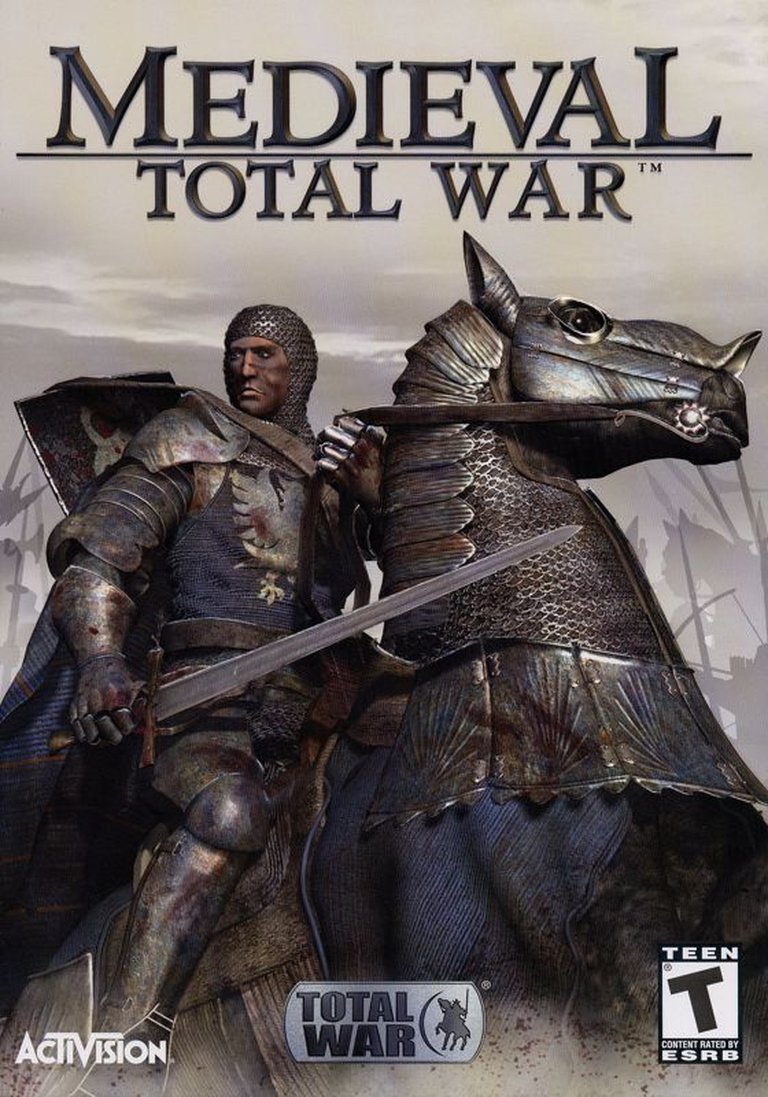
Medieval: Total War is a grand strategy game set between 1095 and 1453, allowing players to rewrite medieval history by commanding one of 12 factions across Europe, the Middle East, and North Africa. Combining turn-based empire management with real-time tactical battles featuring over 10,000 troops, players must navigate alliances, sieges, and historical conflicts like the Crusades or the Hundred Years’ War. With 100 unique unit types, dynamic castle sieges, and the ability to lead legendary figures such as Richard the Lionheart or Saladin, the game blends deep strategy with immersive 3D warfare.
Gameplay Videos
Where to Buy Medieval: Total War
Medieval: Total War Free Download
Medieval: Total War Cracks & Fixes
Medieval: Total War Mods
Medieval: Total War Guides & Walkthroughs
Medieval: Total War Reviews & Reception
metacritic.com (100/100): No other game can be properly compared to it.
oldpcgaming.net : Even with some limitations, Medieval is still a great strategy game.
mobygames.com (83/100): Rewrite 400 years of medieval warfare – from the first Crusade in 1095 to the fall of Constantinople in 1453.
imdb.com (100/100): The Best Total War Game
Medieval: Total War – A Masterpiece of Strategy and Tactics
Introduction
Medieval: Total War (2002) is not just a game—it is a defining moment in the evolution of grand strategy and real-time tactics. Developed by The Creative Assembly and published by Activision, it expanded upon the groundbreaking formula of Shogun: Total War (2000), transporting players from feudal Japan to the tumultuous battlefields of medieval Europe, North Africa, and the Middle East. With its seamless blend of turn-based empire management and large-scale real-time battles, Medieval: Total War redefined what a historical strategy game could achieve. This review explores its development, gameplay, narrative depth, reception, and enduring legacy, cementing its place as one of the most influential strategy games of all time.
Development History & Context
The Creative Assembly’s Vision
Following the critical and commercial success of Shogun: Total War, The Creative Assembly sought to broaden the scope of their Total War series. Initially announced in August 2001 under the working title Crusader: Total War, the game’s focus was later expanded to encompass the entire medieval period—from the First Crusade in 1095 to the fall of Constantinople in 1453. This shift reflected the studio’s ambition to capture the political, religious, and military complexities of the era.
The game was built on an enhanced version of the engine used in Shogun, allowing for larger battles (up to 10,000 troops), improved AI, and dynamic siege mechanics. The team conducted extensive historical research to ensure authenticity, incorporating real-world figures like Richard the Lionheart, Saladin, and Joan of Arc, as well as historical events such as the Hundred Years’ War and the Mongol Invasions.
Technological Constraints and Innovations
In 2002, real-time strategy games were dominated by titles like Age of Empires II and Warcraft III, which focused on base-building and resource management. Medieval: Total War stood apart by merging turn-based grand strategy with real-time tactical battles, a hybrid approach that was revolutionary at the time. The game’s engine pushed the limits of contemporary hardware, requiring careful optimization to handle thousands of units on-screen without crippling performance.
Key innovations included:
– Dynamic siege battles, where players could breach castle walls with siege engines before storming the keep.
– A “Vices and Virtues” system, which gave historical figures unique personality traits affecting their behavior.
– Religious mechanics, including Crusades, Jihads, and the influence of the Papal States.
The game’s development was not without challenges. The AI, while improved over Shogun, still struggled with pathfinding and unit management in large battles. Additionally, the strategic layer, though deeper than its predecessor, was criticized for being somewhat simplistic compared to the tactical depth of the battles.
Narrative & Thematic Deep Dive
A Living History Book
Medieval: Total War is not a story-driven game in the traditional sense—there is no linear campaign with scripted characters. Instead, it offers a sandbox of historical possibility, where players rewrite history through their choices. The game’s narrative emerges organically from its systems: alliances shift, religions clash, and empires rise and fall based on player actions.
The game’s three starting periods (Early: 1087, High: 1205, Late: 1321) allow players to experience different historical contexts:
– Early Period: The height of the Crusades, with the Byzantine Empire still powerful and the Muslim world united under the Seljuks.
– High Period: The rise of the Mongol Empire and the fragmentation of Europe.
– Late Period: The decline of the Byzantines, the Hundred Years’ War, and the advent of gunpowder.
Themes of Power, Faith, and War
The game’s themes are deeply rooted in the medieval era:
1. Religion as a Tool of Power: The Catholic Church wields immense influence, with the Pope capable of excommunicating wayward rulers or calling Crusades. Muslim factions can declare Jihads, while Orthodox factions must navigate their relationship with Constantinople.
2. The Brutality of Medieval Warfare: Battles are visceral and unforgiving. Unlike Shogun, where samurai duelled with honor, Medieval embraces the chaos of medieval combat—knights charge into infantry, archers rain arrows, and siege engines crush defenders beneath collapsing walls.
3. Dynasty and Betrayal: The “Vices and Virtues” system ensures that no two playthroughs are alike. A pious king may lead a Crusade, while a treacherous noble might assassinate his liege, sparking a civil war.
Historical Figures and Events
The game’s historical battles and campaigns allow players to relive key moments:
– The Battle of Hastings (1066): Play as William the Conqueror and claim England.
– The Siege of Jerusalem (1099): Lead the Crusaders in a brutal assault on the Holy City.
– The Mongol Invasions: Face the unstoppable horde as they sweep across Europe.
These scenarios are not just gameplay challenges—they are interactive history lessons, immersing players in the tactics and strategies of the era.
Gameplay Mechanics & Systems
The Dual-Layered Experience
Medieval: Total War is divided into two distinct but interconnected layers:
-
The Strategic Layer (Turn-Based)
- Players manage their empire on a province-based map, handling diplomacy, economics, and military logistics.
- Provinces generate income through taxes and trade, which fund military recruitment and construction.
- Agents (spies, assassins, emissaries, and religious figures) allow for espionage, diplomacy, and religious conversion.
- Rebellions and civil wars can erupt if loyalty is mismanaged, adding unpredictability.
-
The Tactical Layer (Real-Time Battles)
- When armies clash, players can either auto-resolve the battle or fight it in real-time on a 3D battlefield.
- Unit diversity is staggering, with over 100 unique units, from English Longbowmen to Mamluk Cavalry.
- Terrain and morale play crucial roles—archers on high ground dominate, while routed units can be rallied by a charismatic general.
- Siege battles introduce a new dimension, requiring players to breach walls with trebuchets, battering rams, and siege towers before engaging in urban combat.
Strengths and Weaknesses
Strengths:
✅ Unmatched tactical depth – Battles feel epic and realistic, with thousands of soldiers clashing in dynamic environments.
✅ Historical authenticity – Units, factions, and events are meticulously researched.
✅ Replayability – 12 playable factions, three starting periods, and random events ensure no two games are the same.
✅ Siege warfare – A groundbreaking addition that later Total War games would refine.
Weaknesses:
❌ Strategic layer lacks depth – Compared to later entries like Rome: Total War, the economic and diplomatic systems feel underdeveloped.
❌ AI limitations – The AI struggles with large-scale battles, often making questionable tactical decisions.
❌ Performance issues – Large battles could cause slowdowns on mid-range PCs of the era.
❌ No naval battles – Unlike Shogun, naval combat is abstracted, which disappointed some fans.
World-Building, Art & Sound
A Living Medieval World
The game’s art direction is a masterclass in immersion:
– Provinces are visually distinct, from the lush fields of France to the arid deserts of North Africa.
– Castles are intricately designed, with multiple layers of walls, towers, and gates that must be breached in sieges.
– Unit models, while not as detailed as modern games, are recognizable and varied, with unique animations for different weapons and armor.
The Sound of War
The sound design and music are integral to the experience:
– Battle sounds – The clash of steel, the twang of bowstrings, and the screams of dying soldiers create a chaotic, immersive soundscape.
– Dynamic music – The soundtrack, composed by Jeff van Dyck, shifts between European orchestral pieces and Middle Eastern themes, depending on the faction. The music swells during battles, heightening the drama.
– Ambient sounds – The strategic map is filled with the sounds of bustling cities, marching armies, and distant thunderstorms.
Reception & Legacy
Critical Acclaim
Medieval: Total War was met with universal praise, earning an 88% average score on Metacritic and an 8.3/10 from players on MobyGames. Critics lauded its:
– Innovative blend of strategy and tactics (Computer Gaming World: “A masterpiece of the genre”).
– Epic battles (Eurogamer: “The sensation of scale and drama is incredible”).
– Historical depth (GameSpot: “Religion played an enormous role in shaping history, and so it is in the game”).
However, some reviewers noted its steep learning curve and underdeveloped strategic layer (GameSpy: “The AI can be frustrating at times”).
Commercial Success and Awards
The game was a commercial hit, topping the UK charts for two weeks and selling over 100,000 copies in its first year. It received numerous accolades, including:
– GameSpy’s “PC Strategy Game of the Year” (2002)
– Computer Gaming World’s “Hall of Fame” induction (2004)
– PC Gamer UK’s “Game of the Year” (2002)
Influence on the Genre
Medieval: Total War set the template for future Total War games:
– Rome: Total War (2004) expanded on its formula with improved graphics and deeper strategy.
– Medieval II: Total War (2006) refined siege battles and introduced new factions.
– Modern Total War games (e.g., Shogun 2, Warhammer) owe much of their design to Medieval’s innovations.
Beyond the Total War series, its influence can be seen in games like:
– Crusader Kings (Paradox Interactive) – A deeper dive into medieval dynasty management.
– Mount & Blade – Combines real-time combat with RPG elements.
– Age of Empires IV – Borrows the hybrid strategy/tactics approach.
Conclusion: A Timeless Classic
Medieval: Total War is more than just a game—it is a time machine that transports players to the blood-soaked battlefields and treacherous courts of the Middle Ages. While its strategic layer may feel dated by modern standards, its tactical battles remain unmatched in their scale and intensity. The game’s historical authenticity, dynamic gameplay, and immersive atmosphere ensure that it remains a benchmark for strategy games over two decades after its release.
Final Verdict: 9.5/10 – A Masterpiece of Strategy Gaming
Medieval: Total War is not just a great game—it is a cornerstone of the strategy genre, influencing countless titles that followed. For fans of history, tactics, and grand strategy, it remains an essential experience, proving that some games truly stand the test of time.
Would you like a follow-up review on Medieval II: Total War or its Viking Invasion expansion? Let me know in the comments!