
- Release Year: 2008
- Platforms: Windows
- Publisher: GSP Software
- Genre: Compilation
- Game Mode: Single-player
- Setting: Medieval
- Average Score: 85/100
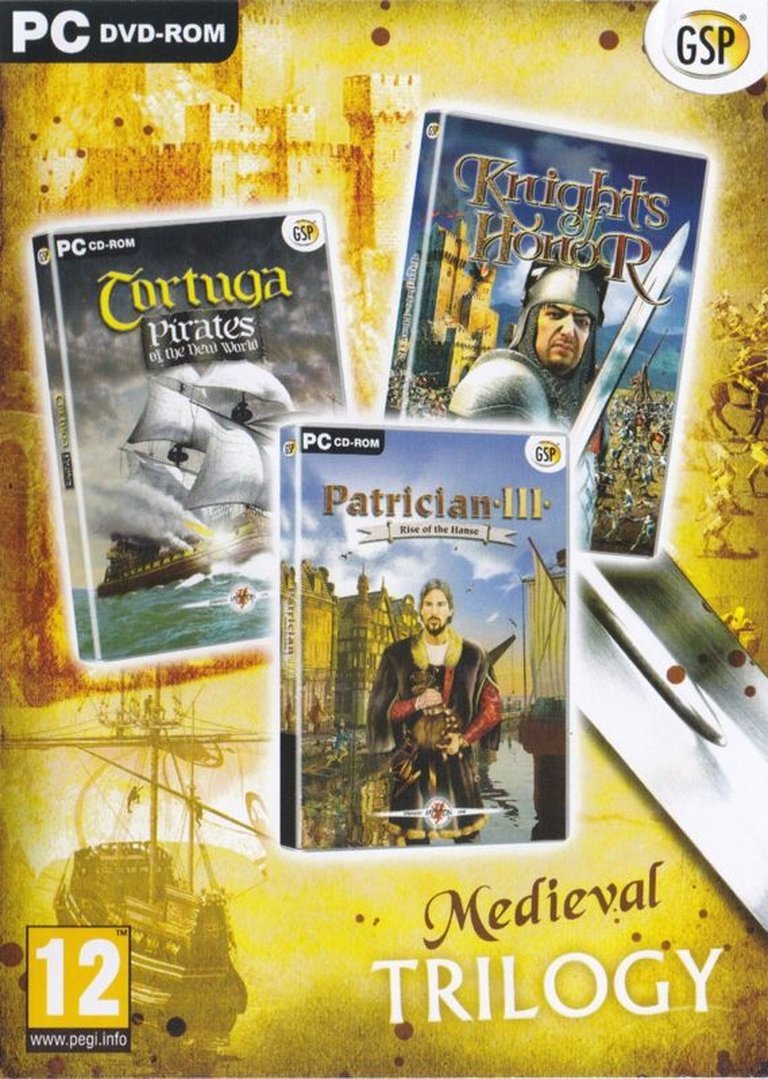
Description
Medieval Trilogy is a compilation of three strategy and adventure games set in the medieval era, offering diverse experiences across land and sea. The bundle includes Knights of Honor, a real-time strategy game focused on kingdom management and warfare; Patrician III: Rise of the Hanse, a trading and economic simulation centered around the Hanseatic League; and Tortuga: Pirates of the New World, an open-world pirate adventure combining naval combat and exploration. Together, these games provide a rich tapestry of medieval life, from political intrigue and commerce to swashbuckling piracy.
Medieval Trilogy Free Download
Medieval Trilogy Reviews & Reception
metacritic.com (86/100): A triumphant return to form for the series.
gamerant.com (85/100): The biggest advancement was that data could be passed between the first two Game Boy Advance titles via passwords.
Medieval Trilogy Cheats & Codes
PC
Press ~ during gameplay to display the console window.
| Code | Effect |
|---|---|
| character_reset | Allows a character to move again. Does not always work |
| process_cq “settlement name” | Anything in the city’s building queue will be built automatically |
| create_unit “ |
Create unit |
| rogan | Elephant Artillery to selected city or unit |
| vindaloo | Elephant Rocketeer to selected city or unit |
| madras | Elephants to selected city or unit |
| give_trait “character” “trait” “level number” | Give any trait your faction can have to a specific general |
| add_population “settlement name” “amount” | Give city more population |
| add_money “amount” | Gives you the specific amount of gold |
| istanbul | Mercenary Monster Bombard to selected city or unit |
| george | Mercenary Monster Ribault to selected city or unit |
| houston | Mercenary Rocket Launcher to selected city or unit |
| show_cursorstat | Shows coordinates under mousecursor in format x,y |
| toggle_fow | Toggles on or off the fog of war |
| auto_win “attacker/defender” | When at the battle scroll, input this code in, attacker if attacking, defender if defending and press auto retaliate button. Automatically wins |
| move_character z x,y | Move character |
| jericho | and the walls came a-tumblin’ down |
| date |
changes the campaign date to the given year |
| clear_messages | Clear all the current stacked messages |
| process_rq _______ | Completes all (possible) recruitment pending in queue |
| diplomacy_mission |
creates a diplomacy mission |
| capabilities |
details of the current recruitment capabilities of a settlement |
| recruitment_pool |
details of the current recruitment pool of a settlement |
| control |
Switch the faction you are playing as to the specified faction |
| surrender_regions |
Surrenders all regions of the specified faction to the rebels |
| kill_character |
Kills the respective character |
| test_ancillary_localisation | adds all ancillary to the character info display |
| create_mission |
Attempt to create and add a mission to the specified faction |
| reveal_map | Uncovers the entire campaign map |
| have_all_regions | Grants ownership of all regions to your faction |
| win_battle / lose_battle | Forces the current battle to end in victory or defeat |
| grant_unit X Y | Spawns units in a selected army |
| toggle_ai / freeze_ai | Disables or pauses AI behavior for one or more factions |
| set_agent X Y | Alters agent attributes or traits |
Medieval Trilogy: A Forgotten Gem of Historical Strategy Gaming
Introduction
The Medieval Trilogy is a compilation of three distinct strategy games—Knights of Honor, Patrician III: Rise of the Hanse, and Tortuga: Pirates of the New World—each offering a unique perspective on medieval and early modern European history. Released in 2008 by GSP Software, this collection is a fascinating artifact of an era when historical strategy games were flourishing, blending grand strategy, economic simulation, and naval combat. While overshadowed by more mainstream titles, the Medieval Trilogy remains a cult favorite among fans of deep, immersive strategy experiences. This review will explore its development, gameplay mechanics, narrative depth, and lasting legacy, arguing that it deserves recognition as a hidden gem in the pantheon of historical strategy games.
Development History & Context
The Studio and Creators’ Vision
The Medieval Trilogy was developed by Black Sea Studios, a Bulgarian game studio known for its ambition in creating historically rich strategy games. The studio’s vision was to craft experiences that immersed players in different facets of medieval life, from the chivalric ideals of knighthood to the cutthroat world of maritime trade and piracy. Each game in the trilogy was designed to stand alone, yet together they form a cohesive exploration of Europe’s medieval and early modern periods.
- Knights of Honor (2004): Focused on the grand strategy of medieval warfare and diplomacy, this game allowed players to build and expand their kingdoms, manage resources, and engage in large-scale battles.
- Patrician III: Rise of the Hanse (2002): A deep economic simulation set in the Hanseatic League, where players took on the role of a merchant, navigating the complexities of trade, politics, and naval warfare in the Baltic and North Seas.
- Tortuga: Pirates of the New World (2003): A swashbuckling adventure that shifted the focus to the Caribbean, blending naval combat, exploration, and the lawless world of piracy.
Technological Constraints and Innovations
The early 2000s were a transitional period for strategy games, with developers pushing the boundaries of what was possible on contemporary hardware. The Medieval Trilogy reflects this era’s limitations and innovations:
- Graphics and UI: The games feature 3D graphics that, while dated by today’s standards, were impressive for their time. The UI, though functional, can feel clunky to modern players, reflecting the design sensibilities of the early 2000s.
- Gameplay Depth: Despite technological constraints, the trilogy offered remarkable depth in its mechanics. Knights of Honor, for instance, featured a complex diplomacy system and large-scale battles, while Patrician III introduced a dynamic economy that responded to player actions.
- Modding and Community: The games were designed with modding in mind, allowing players to create custom scenarios, maps, and even total conversions. This modding support contributed to the trilogy’s longevity and cult following.
The Gaming Landscape of the Early 2000s
The Medieval Trilogy emerged during a golden age for historical strategy games. Titles like Medieval: Total War, Crusader Kings, and Europa Universalis were redefining the genre, offering players unprecedented depth and historical accuracy. The Medieval Trilogy carved out its niche by focusing on specific aspects of medieval life rather than attempting to cover entire epochs. This specialization allowed it to offer unique experiences that complemented rather than competed with the broader grand strategy games of the era.
Narrative & Thematic Deep Dive
Plot and Characters
Each game in the Medieval Trilogy tells a distinct story, united by their shared medieval setting and themes of power, ambition, and survival.
-
Knights of Honor:
- Plot: Players assume the role of a medieval king, tasked with expanding their kingdom through diplomacy, warfare, and economic management. The game’s narrative is emergent, shaped by the player’s choices and the dynamic interactions between AI-controlled factions.
- Characters: The game features a cast of historical and fictional characters, from knights and nobles to clergy and peasants. Each character has unique traits and abilities that influence gameplay.
- Themes: The game explores the ideals of chivalry, the brutality of medieval warfare, and the complexities of feudal politics. It challenges players to balance their ambitions with the needs of their people, often forcing difficult moral choices.
-
Patrician III: Rise of the Hanse:
- Plot: Set in the Hanseatic League, players take on the role of a merchant seeking to build a trading empire. The narrative revolves around economic competition, political intrigue, and the rise of powerful merchant families.
- Characters: The game’s characters include merchants, pirates, and city officials, each with their own agendas and alliances. The player’s interactions with these characters shape their reputation and influence within the Hanseatic League.
- Themes: Patrician III delves into the themes of economic power, the tension between cooperation and competition, and the role of trade in shaping medieval Europe. It highlights the often-overlooked importance of merchants in medieval society.
-
Tortuga: Pirates of the New World:
- Plot: Players step into the boots of a pirate captain, navigating the treacherous waters of the Caribbean. The narrative is driven by the player’s quest for wealth, fame, and survival in a world where alliances are fleeting and betrayal is common.
- Characters: The game features a colorful cast of pirates, naval officers, and colonial governors, each with their own personalities and motivations. The player’s reputation as a pirate or privateer influences their interactions with these characters.
- Themes: Tortuga explores themes of freedom, lawlessness, and the struggle for power in the New World. It presents piracy not as a romantic adventure but as a brutal and unpredictable way of life.
Dialogue and Writing
The Medieval Trilogy is notable for its attention to historical detail in its dialogue and writing. Each game features period-appropriate language and terminology, immersing players in the medieval world. The writing is functional rather than literary, focusing on conveying information and enhancing immersion rather than delivering a cinematic narrative. This approach suits the games’ strategic focus, where clarity and depth are prioritized over dramatic storytelling.
Underlying Themes
The trilogy’s overarching themes revolve around the exercise of power in different contexts:
- Power Through Warfare (Knights of Honor): The game examines how military might and diplomatic skill can be used to build and sustain a kingdom. It highlights the fragility of power, where a single misstep can lead to the downfall of an empire.
- Power Through Trade (Patrician III): This game explores the idea that economic power can be as influential as military strength. It challenges players to navigate the complexities of trade networks, alliances, and rivalries to build a lasting legacy.
- Power Through Lawlessness (Tortuga): The game presents piracy as a form of power that exists outside traditional structures. It forces players to confront the moral ambiguities of their actions, where survival often requires ruthlessness and cunning.
Gameplay Mechanics & Systems
Core Gameplay Loops
Each game in the Medieval Trilogy offers a distinct gameplay experience, united by their strategic depth and historical authenticity.
-
Knights of Honor:
- Kingdom Management: Players must manage their kingdom’s economy, military, and diplomacy. This involves constructing buildings, recruiting troops, and negotiating treaties with other factions.
- Battle System: The game features a real-time tactical battle system, where players command armies in large-scale engagements. The battles are visually impressive, with hundreds of units clashing on the battlefield.
- Diplomacy: The diplomacy system is robust, allowing players to form alliances, declare wars, and engage in espionage. The AI-controlled factions are dynamic, forming their own alliances and pursuing their own agendas.
-
Patrician III: Rise of the Hanse:
- Trade and Economy: The core of Patrician III is its economic simulation. Players must establish trade routes, manage supply and demand, and compete with rival merchants. The economy is dynamic, responding to player actions and external events.
- Naval Combat: The game features a detailed naval combat system, where players can engage in ship-to-ship battles. The combat is tactical, requiring players to consider wind direction, ship positioning, and crew morale.
- Political Intrigue: Players must navigate the political landscape of the Hanseatic League, forming alliances with city officials and competing for influence. The game’s reputation system affects how other characters interact with the player.
-
Tortuga: Pirates of the New World:
- Naval Exploration: The game’s open-world design allows players to explore the Caribbean, discovering hidden coves, treasure maps, and rival pirates. The exploration is rewarding, with each discovery offering new opportunities for wealth and power.
- Pirate Management: Players must manage their crew, ship, and reputation. This involves recruiting new pirates, upgrading their ship, and balancing their reputation as a feared pirate or a respected privateer.
- Combat and Boarding: The game features a mix of naval combat and boarding actions. Players can engage in ship-to-ship battles or board enemy vessels for hand-to-hand combat. The combat is visceral and unpredictable, reflecting the chaotic nature of piracy.
Combat Systems
The combat systems in the Medieval Trilogy are designed to be tactical and immersive, reflecting the realities of medieval and naval warfare.
- Knights of Honor: The battle system is real-time with pause, allowing players to issue orders to their units and adjust their strategy on the fly. The battles are large-scale, with hundreds of units engaged in melee and ranged combat.
- Patrician III: The naval combat is tactical, with players needing to consider factors like wind direction, ship speed, and crew morale. The combat is turn-based, allowing for careful planning and execution.
- Tortuga: The combat system blends naval warfare with boarding actions. Players can engage in ship-to-ship battles or board enemy vessels for hand-to-hand combat. The combat is fast-paced and unpredictable, reflecting the chaotic nature of piracy.
Character Progression
Character progression in the Medieval Trilogy is tied to the player’s actions and choices, with each game offering unique systems for advancement.
- Knights of Honor: Players progress by expanding their kingdom, unlocking new buildings, units, and technologies. The progression is tied to the player’s strategic decisions, with each choice shaping the future of their kingdom.
- Patrician III: Progression is tied to the player’s economic success and political influence. As players accumulate wealth and reputation, they unlock new trade routes, ships, and political opportunities.
- Tortuga: Progression is tied to the player’s reputation and wealth. As players gain notoriety and accumulate treasure, they unlock new ships, crew members, and opportunities for adventure.
UI and Accessibility
The UI in the Medieval Trilogy is functional but dated, reflecting the design sensibilities of the early 2000s. While the games offer deep strategic gameplay, the UI can be overwhelming for new players, with complex menus and dense information displays. The learning curve is steep, but the depth of the gameplay rewards persistence.
Innovative and Flawed Systems
The Medieval Trilogy introduced several innovative systems that set it apart from other strategy games of the era:
- Dynamic Economy (Patrician III): The game’s economy is dynamic, responding to player actions and external events. This creates a living, breathing world where trade routes and prices fluctuate based on supply and demand.
- Reputation System (Tortuga): The game’s reputation system affects how other characters interact with the player, offering different opportunities and challenges based on the player’s standing as a pirate or privateer.
- Large-Scale Battles (Knights of Honor): The game’s battle system allows for large-scale engagements with hundreds of units, creating epic and immersive combat experiences.
However, the games are not without their flaws. The UI can be clunky, the learning curve is steep, and the AI can be unpredictable at times. These issues reflect the technological constraints of the era but do not detract from the overall depth and enjoyment of the gameplay.
World-Building, Art & Sound
Setting and Atmosphere
The Medieval Trilogy excels in creating immersive and historically authentic worlds, each with its own unique atmosphere.
- Knights of Honor: The game’s medieval setting is richly detailed, with castles, villages, and battlefields that reflect the architectural and cultural styles of the period. The atmosphere is one of grandeur and brutality, capturing the essence of medieval warfare and diplomacy.
- Patrician III: The game’s Hanseatic League setting is meticulously researched, with cities, trade routes, and ships that reflect the economic and political realities of the time. The atmosphere is one of bustling commerce and political intrigue, immersing players in the world of medieval trade.
- Tortuga: The game’s Caribbean setting is vibrant and dangerous, with tropical islands, pirate havens, and naval battles that capture the lawless spirit of the age of piracy. The atmosphere is one of adventure and peril, where every decision could lead to wealth or ruin.
Visual Direction
The visual direction of the Medieval Trilogy is functional rather than groundbreaking, reflecting the technological constraints of the early 2000s. However, the games make effective use of their 3D graphics to create immersive and detailed worlds.
- Knights of Honor: The game’s visuals are focused on large-scale battles and kingdom management. The castles, villages, and battlefields are detailed, with a color palette that reflects the medieval setting.
- Patrician III: The game’s visuals emphasize the economic and naval aspects of the Hanseatic League. The cities, ships, and trade routes are rendered with a focus on clarity and functionality.
- Tortuga: The game’s visuals capture the vibrant and dangerous world of the Caribbean. The tropical islands, pirate ships, and naval battles are rendered with a focus on immersion and excitement.
Sound Design
The sound design in the Medieval Trilogy is understated but effective, enhancing the immersion and atmosphere of each game.
- Knights of Honor: The game’s soundtrack features medieval-inspired music, with a mix of orchestral and folk instruments. The sound effects, from the clash of swords to the roar of battle, are immersive and realistic.
- Patrician III: The game’s soundtrack is more subdued, reflecting the economic and political focus of the game. The sound effects, from the creaking of ships to the bustle of trade, are detailed and atmospheric.
- Tortuga: The game’s soundtrack is adventurous and swashbuckling, with a mix of sea shanties and orchestral music. The sound effects, from the crash of waves to the roar of cannons, are dynamic and exciting.
Reception & Legacy
Critical and Commercial Reception
The Medieval Trilogy received mixed but generally positive reviews upon release, with critics praising its depth, historical authenticity, and innovative gameplay mechanics. However, the games were also criticized for their steep learning curves, clunky UIs, and occasional technical issues.
- Knights of Honor: The game was praised for its grand strategy elements and large-scale battles but criticized for its complex UI and steep learning curve.
- Patrician III: The game was lauded for its economic simulation and dynamic trade system but criticized for its repetitive gameplay and lack of narrative depth.
- Tortuga: The game was praised for its open-world exploration and naval combat but criticized for its repetitive missions and lack of innovation.
Commercially, the Medieval Trilogy was a modest success, appealing to a niche audience of strategy gamers. While it never achieved the mainstream popularity of titles like Medieval: Total War or Crusader Kings, it developed a dedicated fanbase that appreciated its unique blend of historical authenticity and strategic depth.
Evolution of Reputation
Over time, the Medieval Trilogy has gained a reputation as a cult classic among strategy gamers. Its depth, historical accuracy, and innovative mechanics have earned it a place in the pantheon of great historical strategy games. While it may not be as well-known as other titles from the era, it is remembered fondly by those who experienced its unique blend of gameplay and historical immersion.
Influence on Subsequent Games
The Medieval Trilogy has had a subtle but significant influence on subsequent strategy games, particularly in the areas of economic simulation and naval combat.
- Economic Simulation: Games like Crusader Kings III and Europa Universalis IV have drawn inspiration from Patrician III’s dynamic economy and trade systems, incorporating similar mechanics into their own designs.
- Naval Combat: The naval combat systems in games like Assassin’s Creed IV: Black Flag and Sid Meier’s Pirates! owe a debt to Tortuga’s blend of exploration, ship management, and tactical combat.
- Grand Strategy: The grand strategy elements of Knights of Honor have influenced later titles like Total War: Medieval II and Mount & Blade II: Bannerlord, which similarly blend large-scale warfare with kingdom management.
Conclusion
The Medieval Trilogy is a remarkable collection of strategy games that offers a unique and immersive exploration of medieval and early modern European history. While it may not have achieved the mainstream success of other titles from the era, its depth, historical authenticity, and innovative mechanics have earned it a dedicated following and a lasting legacy in the world of strategy gaming.
Each game in the trilogy—Knights of Honor, Patrician III: Rise of the Hanse, and Tortuga: Pirates of the New World—stands on its own as a masterpiece of historical strategy, offering players the chance to experience different facets of medieval life. Whether commanding armies in grand battles, navigating the complexities of medieval trade, or sailing the high seas as a pirate, the Medieval Trilogy provides a rich and rewarding experience for strategy gamers.
In the end, the Medieval Trilogy is more than just a compilation of games; it is a testament to the creativity and ambition of its developers, who sought to capture the essence of medieval Europe in all its complexity and grandeur. For those willing to brave its steep learning curves and dated interfaces, the Medieval Trilogy offers a journey through history that is as educational as it is entertaining. It is a hidden gem that deserves to be rediscovered by a new generation of strategy gamers.