
- Release Year: 2023
- Platforms: Linux, Macintosh, Nintendo Switch, Windows, Xbox One, Xbox Series
- Publisher: Odencat
- Developer: Odencat
- Genre: Role-playing (RPG)
- Perspective: Diagonal-down
- Game Mode: Single-player
- Gameplay: Direct control, JRPG, Turn-based
- Setting: Fantasy
- Average Score: 79/100
Description
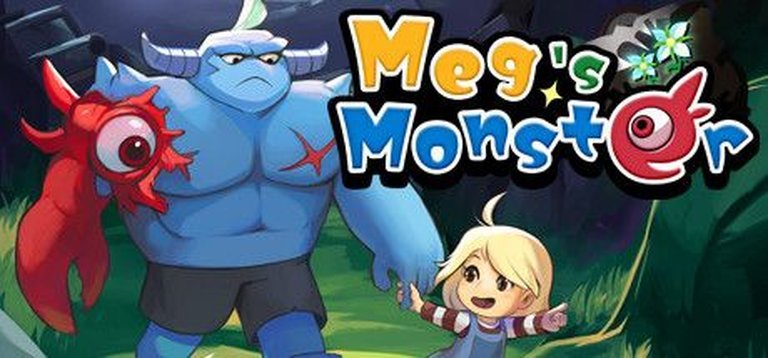
Meg’s Monster is a charming Japanese-style RPG set in a fantasy world, featuring 2D scrolling anime/manga visuals and turn-based gameplay. Players embark on a narrative-driven adventure focusing on character relationships and unique battle mechanics, offering a compact but engaging experience across multiple platforms including Windows, Nintendo Switch, and Xbox.
Gameplay Videos
Where to Buy Meg’s Monster
PC
Meg’s Monster Guides & Walkthroughs
Meg’s Monster Reviews & Reception
nintendolife.com : A perfect little game to devote a weekend to.
switchitongaming.com : A heartwarming story with fun combat and a memorable cast.
rpgamer.com : it makes up the balance with its well-crafted narrative.
Meg’s Monster: Review
Introduction
In the crowded landscape of indie role-playing games, few titles manage to balance whimsical charm with profound emotional weight as deftly as Meg’s Monster. Developed by the Japanese studio Odencat and released in March 2023, this deceptively simple narrative-driven RPG has carved a unique legacy through its masterful storytelling, innovative mechanics, and heartrending character dynamics. At its core, the game explores the unlikely bond between Roy, a hulking, emotionally stunted monster, and Meg, a lost human child whose tears possess apocalyptic power. While its premise—summoned by the likes of Undertale and Monsters, Inc.—may seem familiar, Meg’s Monster transcends its influences through meticulous execution. This review argues that the game’s true triumph lies not in its pixel-art aesthetics or turn-based combat, but in its ability to weave a narrative tapestry of found family, responsibility, and the transformative power of empathy. Despite its brevity (a 4–5 hour runtime), Meg’s Monster delivers an emotional punch that resonates long after the credits roll, establishing itself as a modern benchmark for story-centric indie design.
Development History & Context
Meg’s Monster marks a significant departure for Odencat, a studio primarily known for mobile titles like Bear’s Restaurant and Fishing Paradiso. Conceived by director and writer Ryota Saito during the development of Mouse Busters (2019), the project evolved into Odencat’s first major console/PC release—a deliberate pivot from mobile to home platforms. Development commenced in October 2020, leveraging the Ebitengine to achieve a vibrant, 16-bit-inspired art style. The team comprised key talents: producer Daigo, Danish artist Tomas Anker Praestholm (responsible for the game’s expressive character sprites), composer Reo Uratani (of Monster Hunter fame), and singer-songwriter Laura Shigihara, who contributed the haunting main theme, “Wishing Star.”
Technically, the game was ambitious for an indie project. Its combat system, which eschews random encounters in favor of scripted, narrative-driven battles, required precise balancing to maintain tension without frustration. The Ebitengine’s flexibility allowed for dynamic pixel animations and seamless transitions between exploration, puzzle-solving, and combat. Released on March 2, 2023—simultaneously on Steam, Nintendo Switch, and Xbox Series X/S—Meg’s Monster arrived during a golden era for narrative indies, riding the wave of games like Deltarune and Chained Echoes that prioritized emotional storytelling over mechanics. Its modest $14.99 price point and multiplatform accessibility (including a Linux port) further broadened its appeal, positioning it as a contender for the year’s most impactful indie releases.
Narrative & Thematic Deep Dive
The narrative of Meg’s Monster unfolds with the precision of a fable, anchored by a premise both absurd and profound. When Roy, a solitary ogre subsisting on “Magic Tar,” and his gregarious friend Golan discover Meg—a human child who fell into the Underworld—they stumble into a cosmic predicament: Meg’s tears trigger apocalyptic cataclysms. This “Harbinger of Ruin” mechanic forces Roy and Golan into the role of reluctant guardians, navigating a labyrinthine underworld to reunite Meg with her mother while preventing global annihilation.
What elevates this setup is its thematic depth. The game interrogates the duality of “monstrous” and “human” identities. Roy, initially portrayed as a brute, reveals layers of vulnerability and empathy as Meg’s presence chips away at his isolation. Their relationship evolves from transactional (Roy agrees to protect Meg in exchange for Golan’s companionship) to familial, culminating in scenes where Roy invents absurd games with a deck of cards or Meg critiques his bare-bones “mancave.” Golan, meanwhile, serves as comic relief but also a moral compass, his boisterous demeanor masking genuine care. The narrative’s true genius, however, lies in its subversion of expectations. Mid-game revelations—such as the true nature of the Underworld’s Council or Roy’s origin as a lab-created entity—recontextualize early interactions, transforming what seems like a simple “monster babysits human” tale into a meditation on loss, sacrifice, and the creation of identity.
Dialogue reinforces these themes through subtle nuance. Roy’s gruff, monosyllabic lines (“Meg. Safe.”) contrast with Meg’s childlike wonder (“Why is the sky red, Roy?”), while Golan’s bombastic speech (“Bros before hoes… I mean, monsters before humans!”) underscores the awkwardness of their bond. The dialogue is sparse yet effective, relying on expressive pixel animations to convey emotion—a raised pixelated eyebrow, a slump of the shoulders—making even silent moments feel weighty. Ultimately, Meg’s Monster argues that “monsterhood” is not inherent but defined by action: Roy’s growth from a passive observer to an active protector is the game’s quiet triumph.
Gameplay Mechanics & Systems
At first glance, Meg’s Monster appears to adhere to traditional JRPG tropes: turn-based combat, stat progression, and exploration. Yet its systems are reimagined to serve the narrative, prioritizing player engagement over mechanical complexity. Combat is the most notable deviation. Roy enters battles with a staggering 99,999 HP, rendering him functionally invulnerable to most attacks. The true challenge, however, lies in protecting Meg, who cowers behind him. If Meg’s “heart gauge” depletes—representing her emotional distress at witnessing Roy’s pain—she cries, triggering an instant game over via apocalypse.
This mechanic transforms battles into tense, high-stakes puzzles. Players must balance offense with defense, using Meg’s toys (e.g., a soccer ball, crayons, or a picture book) to pacify her mid-fight. These single-use items restore her heart gauge and occasionally grant temporary buffs (e.g., increased attack or defense). Roy, meanwhile, can accumulate “physical force” by abstaining from attacks, unleashing devastating charged strikes when needed. Battles are meticulously scripted, featuring unique gimmicks: a boss requiring a Simon Says mini-game to disable its contraption, or another forcing rapid-fire button presses to counter a flurry of attacks. While early encounters feel fresh, later battles suffer from repetition—a valid critique from reviewers like RPGamer’s Michael Baker, who noted the “deluge of fights” leading to the climax.
Outside combat, the game adopts a light adventure structure. Exploration is confined to a handful of interconnected locations (salvage yard, monster village), with green exclamation points marking optional sub-events. These—such as helping the Council prepare a hamburger—serve as vignettes, fleshing out the world but offering no tangible rewards. Stat progression is similarly streamlined: Roy and Meg receive predetermined stat boosts after battles, eliminating grinding. The UI, clean and Pokémon-inspired, emphasizes clarity over complexity. While these choices streamline the experience, they also limit player agency, reducing Meg’s Monster to an interactive storybook rather than a sandbox. Yet this intentional constraint aligns with the game’s strengths: by stripping away extraneous mechanics, it forces players to focus on the emotional core.
World-Building, Art & Sound
The Underworld of Meg’s Monster is a character in its own right—a subterranean society teeming with quirky contradictions. Salvage yards overflow with human trash, repurposed into makeshift dwellings, while the High Underworld Council—a quartet of bumbling, bureaucratic monsters—governs with ineffectual whimsy. This world-building is both a foil to the surface and a mirror: monsters mimic human rituals (e.g., Roy’s card games) but lack context, creating poignant comedy. The Council members, in particular, are standout creations: Gustav, a muscular tyrant with a hidden soft spot; Nancy, a pragmatic scholar; and Len, a prankish youth. Their backstories, uncovered through optional dialogues, add depth to a world that could have easily been a one-note setting.
Artistically, the game excels. Praestholm’s pixel art balances cartoonish charm with subtle melancholy. Roy, a towering blue ogre, contrasts with Meg’s diminutive pink form, their sizes visually reinforcing their power imbalance and eventual bond. Environments—from Roy’s spartan cave to the overgrown Flower Field—are rich in detail: a flickering campfire, a stray toy car, or a newspaper clipping hint at a larger history. Character animations are equally expressive; Roy’s hesitant smile or Meg’s trembling lower lip conveys volumes without words. This visual cohesion extends to the game’s color palette, which shifts from warm, hopeful oranges during playtime to stark, apocalyptic reds during Meg’s panic attacks.
Sound design completes the atmosphere. Uratani’s score blends orchestral grandeur with childlike whimsy, underscoring moments of tension and tenderness. The main theme, “Wishing Star,” performed by Shigihara, is a masterclass in emotional manipulation: its simple melody swells into a choral crescendo during pivotal scenes, evoking tears even in jaded players. Sound effects, too, are purposeful: the gentle beep-beep of character speech, the clatter of Roy’s fists, and the shattering glass of a breaking heart gauge all immerse players in the world. Together, art and sound transform the Underworld from a setting into a lived-in space, one that feels both alien and achingly familiar.
Reception & Legacy
Meg’s Monster was met with widespread acclaim, cementing its status as a sleeper hit. On Metacritic, it scored 79 (generally favorable), with critics praising its narrative and artistry. MobyGames tallied an 8.1/10, while aggregate platforms like OpenCritic reported a 79% critic average. Reviewers lauded its emotional resonance: Touch Arcade called it a “fantastic narrative experience,” and IGN Japan awarded it a 90/10, noting its “clever twists” and “flawless” character dynamics. Conversely, some critiques emerged; NintendoWorld Report deemed it “closer to a visual novel than a JRPG,” while RPGamer acknowledged its brevity as both a strength (perfect pacing) and weakness (thirst for more content).
Commercially, the game exceeded expectations. Odencat’s first console title became their “biggest hit in history,” according to producer Daigo. It debuted at #26 in Japan’s Nintendo Switch rankings and won the Dengeki Indie Awards 2023. Merchandise—including plush toys, keychains, and a 4-panel comic series—followed, expanding the game’s footprint beyond digital storefronts. Community engagement was robust, with players theorizing about character ages and backstories (e.g., Roy’s 20-year lifespan as a lab experiment) on platforms like Steam.
Legacy-wise, Meg’s Monster has influenced the indie landscape by proving that short, story-focused games can achieve outsized impact. Its emphasis on emotional over mechanical complexity resonates with titles like Paranormasight: The Mermaid’s Curse and Sea of Stars. For Odencat, the game catalyzed growth; the studio expanded to tackle larger projects, while retaining Meg’s Monster’s narrative ethos. As composer Reo Uratani reflected, the game allowed him to “discard labels” and create from the heart—a sentiment echoed by players who describe it as a “punch in the gut with feels.” Its legacy, ultimately, lies in its humanity: a small game with a colossal heart.
Conclusion
Meg’s Monster is a paradox: a deceptively simple game that burrows deep into the soul. Its strengths lie in its narrative economy and emotional authenticity, transforming a high-concept premise into a poignant exploration of love and responsibility. While its combat repetition and brevity may deter RPG purists, these choices are deliberate sacrifices for storytelling impact. The game’s true genius is its refusal to overstay its welcome; every pixel, note, and line of dialogue serves its purpose, leaving players with a lingering sense of wonder and a tear-streaked smile.
In the pantheon of indie RPGs, Meg’s Monster stands alongside Undertale and Oxenfree as a benchmark for narrative design. It reminds us that the most powerful stories often come from the smallest packages. For players willing to embrace its charm, it offers not just a game, but a memory—a testament to the idea that even monsters can learn to love. Verdict: An essential, emotionally resonant masterpiece that transcends its genre.