
- Release Year: 2012
- Platforms: Windows
- Publisher: S.A.D. Software Vertriebs- und Produktions GmbH
- Genre: Compilation
Description
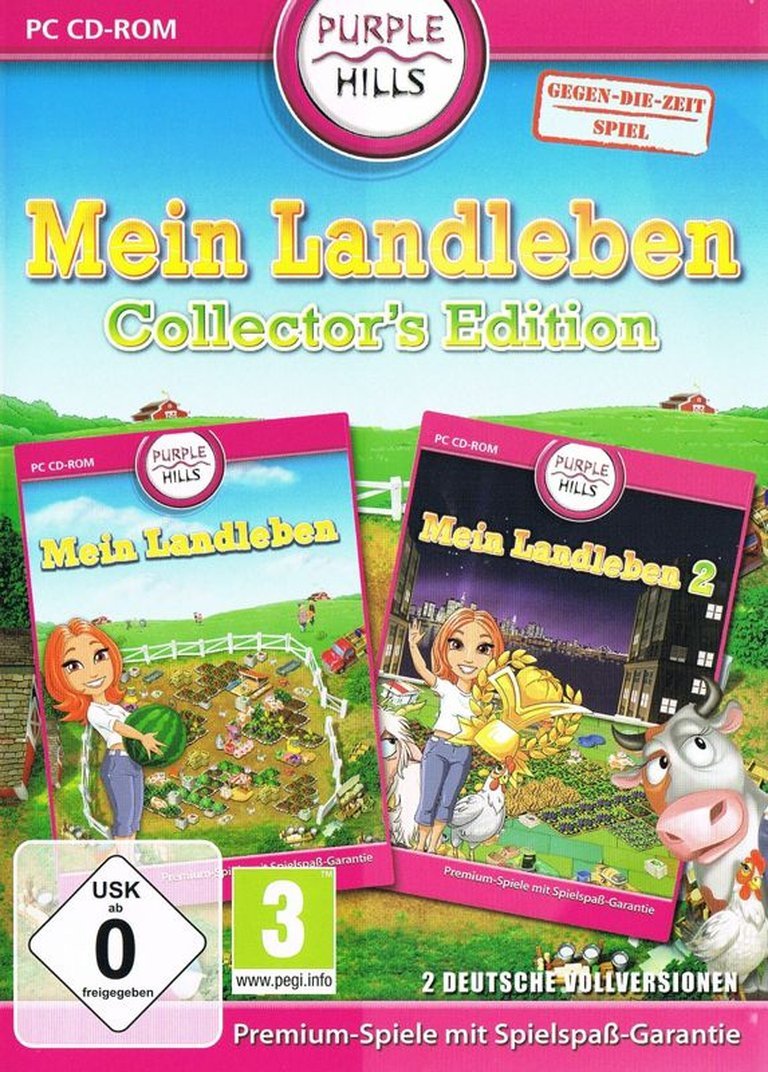
Mein Landleben: Collector’s Edition is a farm-life simulation compilation that includes both ‘My Farm Life’ and ‘My Farm Life 2.’ Players step into the shoes of Lisa, an aspiring star who unexpectedly finds herself managing a farm for a reality TV show. The game challenges players to plant crops, care for animals, craft products, and thwart nightly thefts by neighbors aiming to sabotage the show’s ratings. With its lighthearted story and rural setting, it offers a mix of strategy and humor for fans of casual farming adventures.
Mein Landleben: Collector’s Edition Reviews & Reception
spielemagazin.de : Ein Muss für Genre-Freunde
Mein Landleben: Collector’s Edition: Review
Introduction
In an era dominated by sprawling open worlds and cinematic narratives, Mein Landleben: Collector’s Edition (2012) carved out a niche as an unapologetically frenetic time-management farm simulator. Bundling My Farm Life and My Farm Life 2, this budget-friendly compilation offered over 100 levels of crop-planting, animal-tending, and theft-deterring chaos—all for under €10. While hardly a critical darling, it became a cult favorite among German casual gamers seeking a stress-test masquerading as rural escapism. This review argues that Mein Landleben exemplifies the farm-sim genre’s addictive, if repetitive, appeal—a relic of early 2010s casual gaming that balanced charm and challenge with surgical precision.
Development History & Context
Studio & Vision
Developed by Purple Hills (credited as the publisher in some regions) and published by S.A.D. Software—a German studio notorious for mid-tier casual titles like Mein Beautyhotel für Tiere—Mein Landleben targeted a demographic overlooked by AAA studios: time-strapped players craving quick, rewarding gameplay loops. Released on March 9, 2012, exclusively for Windows, it arrived during the zenith of farm-sim mania, capitalizing on FarmVille’s cultural footprint while offering offline, CD-ROM-based play.
Technological Constraints
The game’s design adhered to early 2010s casual benchmarks: modest system requirements (compatible with Windows 7), no 3D rendering, and a CD-ROM distribution model that prioritized accessibility over innovation. Its simplicity was both a limitation and a strength, ensuring broad compatibility but rendering it visually archaic compared to contemporaries like Harvest Moon.
Gaming Landscape
2012 was a transitional year for PC gaming, marked by the rise of digital storefronts like Steam and the decline of physical casual compilations. Mein Landleben’s CD-ROM release and €10 price point positioned it as a bargain-bin impulse buy—a relic of retail-focused distribution in an increasingly digital market.
Narrative & Thematic Deep Dive
Plot & Characters
The game’s narrative hinges on a fish-out-of-water premise: Lisa, an aspiring actress, signs a TV contract expecting glamour, only to find herself managing a sabotage-ridden farm for a reality show. The absurdity escalates as producers pay neighbors to steal her crops nightly—a darkly comic critique of exploitative entertainment. In My Farm Life 2, Lisa embraces rural life, relocating to a rooftop farm to supply a boutique grocery store. Her arc—from disillusioned starlet to proud agriculturist—subtly champions self-reliance over fame.
Themes
– Labor vs. Exploitation: The game literalizes gig-economy struggles through Lisa’s unpaid interns (players can hire helpers) and corporate-backed theft.
– Urban vs. Rural Ideals: The sequel’s rooftop farm juxtaposes hyper-local sustainability with urban isolation—a commentary on modern “greenwashing.”
– Fame’s Fragility: Lisa’s journey satirizes celebrity culture; her success hinges not on talent, but on surviving scripted disasters.
Gameplay Mechanics & Systems
Core Loop
Players juggle:
1. Crop Management: Planting, watering, and harvesting crops (e.g., corn for popcorn machines).
2. Animal Care: Milking cows, collecting eggs, and expanding coops/barns.
3. Production Chains: Converting raw materials into goods (e.g., eggs → mayonnaise).
4. Security: Hiring guard dogs to deter thieves—a mechanic that intensifies nocturnal time pressure.
Progression & Difficulty
Each of the 50 levels per game offers escalating complexity:
– Part 1: Two modes (Campaign and Expert) with stricter time limits.
– Part 2: Three modes, adding rooftop-specific challenges like automated irrigation systems.
Resource scarcity forces players into triage: prioritizing high-value crops while fending off raids.
UI & Flaws
The point-and-click interface is functional but lacks tooltips, exacerbating early-game frustration. A notorious flaw is the sound design: looping folk tunes and animal noises grow grating, necessitating manual volume adjustments.
World-Building, Art & Sound
Visual Direction
The game opts for bright, cartoonish visuals—think Hay Day meets Windows XP-era clip art. Farms burst with primary colors, while rooftops in Part 2 feature whimsical skyscraper backdrops. Though technically rudimentary, the art’s cheerfulness softens the gameplay’s stress.
Sound Design
Tracks like “Bauerngarten Polka” reinforce the rural theme but lack dynamic variation. Sound effects—clucking chickens, mooing cows—are serviceable but repetitive. Muting the audio, as critic Jana advises, paradoxically enhances immersion by reducing sensory overload.
Reception & Legacy
Launch Reception
The game garnered scant mainstream coverage but earned praise from niche German outlets. Spielemagazin.de rated it highly for gameplay (86/100) and affordability, noting its “hours of stressful fun.” Its PEGI 3 rating and sub-€10 price made it a parent-friendly option, though hardcore gamers dismissed it as derivative.
Enduring Influence
While Mein Landleben didn’t revolutionize the genre, it typified early 2010s casual design:
– Legacy of Compilations: It preceded the trend of bundling sequels (e.g., Turrican: Collector’s Edition).
– Time-Management Template: Its theft mechanic inspired later titles like Farm Frenzy: Heist.
Today, it’s a curio—rarely played but remembered fondly by fans of German casual schlock.
Conclusion
Mein Landleben: Collector’s Edition is a time capsule of farm-sim design: uncomplicated, relentless, and oddly endearing. Its punishing time limits and CD-ROM-era aesthetics won’t entice modern gamers, but as a budget compilation, it delivered exceptional value, squeezing two games and 100+ levels into a single €10 disc. For genre historians, it epitomizes a bygone era when “casual” didn’t mean “compromise”—it meant crops, cows, and cathartic chaos. Final Verdict: A flawed but fascinating artifact for farm-sim completists; everyone else may flee the dreaded polka soundtrack.