
- Release Year: 2022
- Platforms: Macintosh, Nintendo Switch, PlayStation 5, Windows
- Publisher: Half Asleep Games Ltd.
- Developer: Half Asleep Games Ltd.
- Genre: Action
- Perspective: 1st-person, Diagonal-down, Side view
- Game Mode: Single-player
- Gameplay: Music, rhythm
- Setting: Dream
- Average Score: 77/100
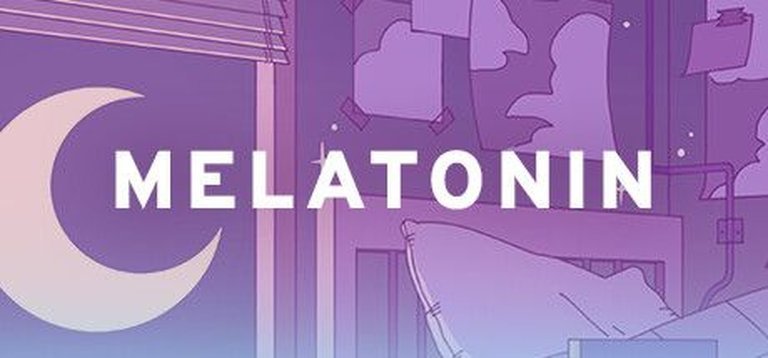
Description
Melatonin is a rhythm-action game set in whimsical dreamscapes, where players engage in intuitive tap-along challenges inspired by the Rhythm Heaven series. With a chill lo-fi soundtrack and stunning 2D visuals, each dream-themed level is meticulously crafted for a relaxing, accessible experience that appeals to both newcomers and rhythm game fans.
Gameplay Videos
Where to Buy Melatonin
PC
Melatonin Guides & Walkthroughs
Melatonin Reviews & Reception
metacritic.com (77/100): Melatonin is a short but kind experience, a hint of melancholy and a splash of retro vibes.
opencritic.com (78/100): Melatonin is a dreamy rhythm game that hits all the right notes. It’s compelling yet relaxing, with an addictive quality that will have you yearning for more.
waytoomany.games : Melatonin delivers a really tight and hard-to-fault experience.
Melatonin: A Somnambulant Symphony – An In-Depth Analysis
Introduction: The Dreamscape Awaits
In the quiet, fertile soil of the indie rhythm game scene, a title emerged in late 2022 that seemed to materialize directly from the collective subconscious of a generation weaned on Nintendo’s beloved Rhythm Heaven series. Melatonin, the debut (and so far only) project of Canadian solo developer David Huynh operating as Half Asleep, is not merely a game; it is a meticulously crafted experience—a pastel-hued, lo-fi-scored meditation on the strange, often anxious, landscapes of the modern dreaming mind. It arrived as a response to a decade-long hiatus for its primary inspiration, offering not imitation, but a tonal and aesthetic evolution. This review will argue that Melatonin succeeds as a profound and cohesive work precisely because it prioritizes atmosphere and thematic resonance over sheer scope or mechanical complexity. It is a game that understands the genre’s core tenet—that rhythm is a bodily, emotional, and psychological experience—and uses its dream framework to explore the anxieties of adult life, all while delivering a mechanically sharp and aesthetically stunning package. Its legacy will be defined not by a vast catalog of songs, but by its unwavering artistic vision and its role as a catalyst for a new wave of “chillwave” rhythm design.
Development History & Context: A Solo Vision in a Post-Rhythm Heaven World
The genesis of Melatonin is a testament to the power of a singular, focused vision. The game was developed almost single-handedly by David Huynh, a designer with a background in graphic design, under the moniker Half Asleep. This solo development context is crucial: there was no committee mandating feature creep or broad market appeal. Instead, the game’s scope—a tight, 20-level experience—feels like a deliberate artistic choice, born from the constraints and freedoms of a one-person studio. Built in the accessible and powerful Unity engine, its development represents the democratization of game creation, allowing a designer to realize a highly specific aesthetic without the resources of a major publisher.
The game’s context is inextricably linked to the legacy of Rhythm Heaven. First conceptualized from a drum tech demo and Tsunku’s desire for a game without explicit visual cues, the Nintendo series (spanning GBA, DS, Wii, and 3DS) cultivated a cult following worldwide for its absurdist humor, infectious music, and pure, unadulterated rhythm gameplay. After the release of Rhythm Heaven Megamix in 2015, the series entered a dormant period, leaving a void in the mainstream consciousness. The early 2020s indie scene saw various attempts to capture that magic, but Melatonin distinguished itself by announcing its inspiration openly while carving a fundamentally different identity. Announced during the Wholesome Direct’s 2022 Summer game fest—a showcase known for cozy, aesthetically-driven indies—it was positioned not as a successor, but as a contemplative cousin. Its release on December 15, 2022, for Windows and Nintendo Switch (with a PlayStation 5 port following in March 2024), filled a palpable niche for players seeking that Rhythm Heaven feel but with a maturer, more introspective skin.
Narrative & Thematic Deep Dive: The Anxieties of the Unconscious
Melatonin’s narrative is minimalist, impressionistic, and entirely conveyed through environmental storytelling and the content of the dreams themselves. There is no dialogue, no named protagonist. We are given only fleeting, static cutscenes of a young person’s living room before each “Night” of dreaming—a space littered with the detritus of a life in stasis: empty energy drink cans, a laptop, tangled cords, a cluttered couch. This is the “reality” from which the dreams erupt, and it speaks volumes. The protagonist is not a heroic figure but someone perpetually tired, perhaps stuck in a white-collar job (“Work”), overwhelmed by digital connection (“Followers”), and haunted by past mistakes (“The Past”).
The genius of the narrative lies in its translation of modern, mundane anxieties into surreal, game-ified dream logic:
* “Work” transforms the drudgery of office life into a dizzying typing and phone-answering simulator, capturing the Sisyphean feeling of administrative tasks.
* “Followers” literalizes social media anxiety into a precarious journey leaping between giant, tilting smartphones, the platform icons shifting just out of reach.
* “The Past” is the most thematically potent, set in a darkroom where the player must burn photographs of memories with a lighter, the satisfying click-whoosh of the Zippo masking agrim act of destruction.
* “Stress” depicts a climb inside a volcano with rising lava, a direct metaphor for mounting pressure.
* “Dating” reduces the awkwardness of romance to a clumsy crane game, fishing for trinkets.
* “Nature” offers a brief, serene respite, but even its “Hard” mode removes visual cues, suggesting tranquility can be fragile.
These are not fantastical adventures but internal monologues made manifest. The final “Morning” mashup doesn’t just test skill; it forces the player to mechanically re-enact the entire night’s anxieties in rapid succession, a overwhelming cognitive load that mirrors the feeling of a mind racing upon waking. The game’s ending, noted by several critics as a highlight, provides a subtle, melancholic sense of resolution without explicit exposition—the player simply returns to the couch, the cycle perhaps ready to begin again. It’s a story about the Sisyphean task of managing one’s own psyche, where “winning” means merely navigating the chaos with rhythm and grace.
Gameplay Mechanics & Systems: The Uncluttered Beat
Mechanically, Melatonin is a distillation of the Rhythm Heaven formula into its purest essence. The core loop is brutally simple: each “Dream” is a short, one- to two-minute sequence. A brief, unskippable Practice Mode first runs the player through the cues. Then, Normal Mode begins. There are no life bars, no fail states. The only metric is a star ranking (1-3 stars) based on the percentage of “Perfect” hits, with “Early” or “Late” hits counting against you. A certain number of stars unlocks the Hard Mode of that level and, ultimately, the Night’s “Mashup” remix.
The input scheme is minimalist to the point of elegance: primarily a single button (or keyboard key) for “tap” cues, and the L/R triggers (or Shift/Ctrl) for “hold-and-release” or dual-button cues. This physical simplicity is a masterstroke. It removes any barrier of finger gymnastics, forcing all concentration onto timing and pattern recognition. The game’s central, defining mechanic is the gradual removal of visual prompts. While the tutorial explicitly shows a button icon over the cue, these prompts vanish during the scored run. Players must instead learn to read the character animations—a wink, a fist clench, a phone screen flash—or, more challengingly, internalize the musical beat itself. This is the game’s true test: it demands you listen, transforming you from a passive rhythm game player into an active participant in the music.
This design has two profound effects:
1. It creates a sublime “flow state.” When synchronization is achieved, the player feels genuinely in the groove, their actions feeling like an extension of the music and animation. Criticisms of “unforgiving timing” (as seen in the Storied Tower review) often stem from this very demand—the window for “Perfect” is tight, and misalignment feels jarring because it breaks that seamless fusion of input and audiovisual response.
2. It makes accessibility paramount. Recognizing this potential frustration, Huynh included a superb suite of assist options. Players can permanently re-enable visual cues, add a metronome, or most critically, widen the “Perfect” timing window (“Wiggle Room”). Crucially, the game does not penalize players for using these assists, a design philosophy of pure empathy that_reflects the game’s overarching theme of managing difficulty and stress.
The Hard Mode is not merely a speed increase; it frequently alters patterns, removes environmental distractions, or introduces “gotchas” like misleading visual cues (the three clocks of “Time” where only one enters the wormhole). The Mashups are clever medleys that remix the Night’s mechanics to a new, often more complex, song. Finally, the Level Editor is a significant post-game feature, allowing players to create custom beatmaps for existing songs or import their own audio files. While its tutorialization is noted as lacking (Checkpoint Gaming), its inclusion speaks to the developer’s desire to foster a community around the core rhythm-creation mechanic, mirroring the fan-created content ecosystems of larger rhythm franchises.
The primary criticisms of the gameplay are consistent across sources: a short runtime (2-3 hours for a full clear), occasionally unintuitive cues (the crane game’s speed distinction, the “Work” level’s natural vs. forced input feel), and a difficulty spike that can feel unfair rather than challenging. As Game Rant noted, towards the end the experience can become automatic, “just pressing the space bar to the beat,” suggesting the later levels may not scale the pattern complexity as well as the tempo.
World-Building, Art & Sound: The Lo-Fi Dreamscape
If the gameplay is the skeleton, the art and sound are the flesh, blood, and soul of Melatonin. The visual presentation is its most immediate and celebrated feature. The game employs a hand-drawn, pastel-centric aesthetic with rounded, soft shapes and a color palette dominated by lavenders, pinks, soft yellows, and muted blues. This is not a hyper-saturated “dream world” but a hazy, comfortable, slightly washed-out subconscious. The animation is fluid and expressive, with the protagonist’s perpetually tired eyes (accentuated by the eponymous “Exhausted Eye Bags” trope) and subtle movements conveying a world of narrative. The UI is nonexistent in-level, and the overworld menus are simple, cloud-filled dreamscapes that maintain the atmospheric immersion.
This art style does more than look pretty; it reinforces the game’s core themes. The pastel haze represents the blurred line between sleep and wakefulness, the comforting blanket of the subconscious. The surreal level concepts—flying on a chair through a food-filled sky, shooting aliens in a trench-run style sequence, manipulating time itself—are rendered with a whimsical, cartoonish logic that feels like a cross between Adventure Time and the surreal humor of Rhythm Heaven, but filtered through a tired, melancholic lens. The “Perpetual Frowner” protagonist is key: the world may be colorful, but the dreamer is not necessarily happy. This tonal dissonance—between the cozy visuals and the anxious subject matter—is the game’s most sophisticated artistic achievement. As Multiplayer.it observed, it speaks of a life “in bilico tra l’ipertrofico desiderio di consumo e la voglia di staccare la spina” (on a tightrope between hyper-trophic desire for consumption and the need to disconnect).
The soundtrack is inseparable from this vision. Composed primarily by Darby Phillips and Filippo Vicarelli (with contributions from Yotam Perel, Gravity Sound, and sample packs), the music is entirely lo-fi and atmospheric. It eschews lyrics or sweeping orchestral pieces for chill, beat-driven tracks that incorporate chiptune, ambient electronica, and soft instrumentation. The genius lies in how the music dynamically responds to gameplay. In Melatonin, the song itself can change based on performance: missing cues can cause the track to distort, stutter, or drop out, a clever auditory feedback loop. Speeding up in Hard Mode literally increases the tempo and density of the beat. This creates a profound sense that the player is directly manipulating the soundtrack, a key tenet of great rhythm game design. The tracks are memorable not as standalone songs (though they work as a playlist), but as experiential entities tied to specific dream sequences. The “Work” theme is a tense, clock-ticking industrial piece; “Nature” is a gentle, watery ambient track. The soundtrack’s reception was so strong it warranted a two-disc lavender vinyl release via iam8bit, a significant accolade for an indie title.
Reception & Legacy: A Cult Success with a Distinct Footprint
Upon release, Melatonin was met with “generally favorable” reviews, aggregating to 77/100 on PC (Metacritic) and 87/100 on Switch. The critical consensus was remarkably consistent: overwhelming praise for its art direction, soundtrack, and faithful yet innovative adaptation of the Rhythm Heaven template, punctuated by consistent criticism of its short length and occasional difficulty spikes.
The highest scores (Thumb Culture’s 100%, eShopper’s 91%, multiple 90%s) celebrated it as a “must-have” for rhythm fans, a “gorgeous love letter” that built upon its inspiration with clever level twists and an unparalleled suite of accessibility options. The median scores (70-85%) acknowledged its strengths but repeatedly noted, as Nintendo Life did, that it “doesn’t fill the Rhythm Heaven-shaped hole… but instead it creates a dreamy new space.” The detractors (Fintendo‘s 60%, Game Rant‘s 60%) often cited the brevity and a feeling that the mechanics didn’t evolve enough over the short runtime, or that the pastel palette could become grating.
Its commercial performance isn’t publicly detailed, but indicators point to success: strong community engagement on Steam (over 4,300 “Very Positive” reviews), a vinyl soundtrack release (a mark of cultural cachet usually reserved for breakout hits), and a subsequent PlayStation 5 port in 2024. This suggests a healthy return for a solo dev and a solid fanbase.
The legacy of Melatonin is threefold:
1. It proved the Rhythm Heaven formula could be successfully adapted with a new, mature tone. It decoupled the series’ identity from its specific humor, proving the core “non-overlay, cue-based” gameplay could support somber, introspective themes.
2. It championed “chillwave” aesthetics and accessibility in rhythm games. Its pastel art and lo-fi beats helped define a visual-aural subgenre, and its commitment to non-punitive assists set a new standard for inclusive design in a genre often obsessed with purity and difficulty.
3. It fostered a creative community. The included level editor, while rough, empowered players to create and share their own dream levels, extending the game’s life far beyond its short campaign. This user-generated content pipeline is a significant part of its lasting appeal.
Conclusion: A Brief, Brilliant Nocturne
Melatonin is a game of profound contrasts: it is both intensely stressful and deeply relaxing; visually soft but thematically heavy; mechanically simple yet demands deep listening; short in duration but rich in atmosphere. Its potential flaw—a runtime that can be finished in a single sitting—is also the source of its greatest strength. Like a perfect, vivid dream that you remember upon waking, its impact is concentrated and unforgettable. It does not outstay its welcome because its core loop and aesthetic are so potent that they risk becoming repetitive if elongated. It is a symphonic suite, not a symphony.
David Huynh, as Half Asleep, achieved something remarkable with his debut: a game that is a love letter to a classic genre while being utterly its own entity. It uses the structure of dreams—fragmented, symbolic, emotionally charged—to explore the quiet anxieties of modern adulthood, all wrapped in a package that is a joy to look at and listen to. The gameplay is sharp, the accessibility is praiseworthy, and the artistic cohesion is near-flawless.
For the historian, Melatonin represents a pivotal moment in the 2020s indie rhythm renaissance. It is the game that finally gave the Rhythm Heaven faithful a new North Star, one that pointed not back to the past, but towards a more atmospheric, inclusive, and thematically daring future for the genre. Its place in history is secure: as the defining “chillwave” rhythm game, as a masterpiece of minimalist design, and as a poignant digital artifact that understands that sometimes, the most challenging rhythm to master is the one of our own restless minds. It is not just a game to play, but a state of mind to inhabit—a fleeting, beautiful, and strangely comforting descent into the logic of sleep.