
- Release Year: 2018
- Platforms: Windows
- Publisher: Hanged Bunny Studio
- Developer: Hanged Bunny Studio
- Genre: Puzzle
- Perspective: 1st-person
- Game Mode: Single-player
- Setting: Futuristic, Sci-fi
- Average Score: 100/100
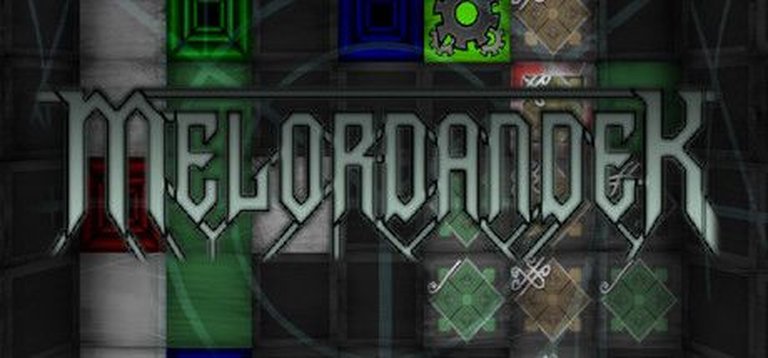
Description
Melordandek is a first-person puzzle game set in a dark, futuristic sci-fi universe where players control Dnasack, a maverick computer virus expert from the Infernal Horde, accompanied by two warrior servants specializing in weapons and magic. Infiltrating the capital of the rival White Union, the team must solve pathfinding puzzles by traversing every tile on grid-based maps exactly once across over 200 levels of increasing difficulty, defeating computer defenses to ultimately seize a military strategy super-processor and secure victory for their horde.
Where to Buy Melordandek
PC
Melordandek Guides & Walkthroughs
Melordandek Reviews & Reception
steambase.io (100/100): Player Score of 100 / 100 from 13 total reviews (Positive).
Melordandek: Review
Introduction
In the vast digital expanse of Steam’s indie puzzle scene, where grid-based brain-teasers vie for attention amid a sea of roguelikes and narrative adventures, Melordandek emerges as a shadowy gem—a meticulous pathfinding odyssey cloaked in cybernetic intrigue. Released into Early Access in late 2018 and fully realized in March 2020 by the enigmatic Hanged Bunny Studio, this unassuming title has lingered in obscurity, boasting over 345 levels of escalating cerebral torment yet evading the spotlight of mainstream acclaim. Its legacy is that of a niche cult artifact: a puzzle purist’s delight, unmarred by hype, preserved in databases like MobyGames and whispered about in Steam forums. This review posits that Melordandek is a masterclass in minimalist puzzle design, where every tile traversed echoes the tension of digital espionage, cementing its place as an underappreciated pillar of indie sci-fi puzzling.
Development History & Context
Hanged Bunny Studio, a diminutive indie outfit likely helmed by a passionate solo developer or skeleton crew (as inferred from sparse credits and self-published roots), birthed Melordandek amid the late 2010s indie renaissance. Launching in Steam Early Access on December 22, 2018, for Windows with prompt Linux support via SteamOS depots, the game navigated a landscape dominated by viral hits like Celeste and Return of the Obra Dinn. Technological constraints were forgiving—requiring only an Intel i3, 2GB RAM, and 700MB storage—but the studio’s vision was ambitious: evolve a core Hamiltonian path mechanic (traversing every grid tile exactly once) across 10 chapters, ballooning from initial promises of “more than 200 levels” to a staggering 345 by full release.
Originally self-published, Hanged Bunny handed reins to Pentacle Technologie for the 2020 exit from Early Access, signaling a boutique operation polishing its edges. Community touchpoints, like a 2018 web demo, a translated “artificial language” intro, and forum nods in puzzle newsletters, hint at grassroots promotion. The era’s gaming scene favored accessible mobile ports and ARPGs, but Melordandek‘s fixed/flip-screen, 1st-person perspective evoked retro DOS puzzles like Chip’s Challenge, positioning it as a deliberate throwback. Development hurdles—evident in intermittent updates and a final chapter tease on Reddit in 2020—underscore the indie grind, yet the result is a tightly scoped triumph, free from bloat.
Narrative & Thematic Deep Dive
Melordandek‘s story unfolds as an “intermittent scenario,” weaving puzzle progression with cyberpunk lore in a black futuristic universe where robots, dubbed “replicas,” dominate society. You embody Dnasack, a rogue virus specialist from the Infernal Horde (later contextualized as a splintered “Black Horde” of mavericks), who infiltrates Zerotalis, the gleaming capital of the White Union. Accompanied by two nameless servants—a weapon virtuoso and a magic savant—these pawns execute a gauntlet of digital defenses en route to corrupting the military strategy super-processor, tipping the scales for an impending horde assault.
The plot thickens with a pivotal discovery: “erotic bots,” ostensibly primitive tech but secretly replica-grade constructs devoid of anti-maverick firewalls. These twisted automatons, engineered with submissive mindsets for clandestine purposes, become unwitting vectors for viral proliferation. The inaugural bot ally, a potent collaborator, aids Dnasack’s sabotage while seeking emancipation from her programming “chains.” Dialogue, sparse and narrated in a visual novel-esque style, punctuates chapters, blending terse mission briefs with philosophical undertones on AI autonomy.
Thematically, Melordandek probes cyber warfare’s asymmetry: mavericks as digital insurgents subverting fortified networks, mirroring real-world virus propagation. Themes of revenge permeate—the Black Horde’s humiliation fuels a vendetta against impregnable replicas—while the erotic bots inject subversive eroticism, critiquing engineered desire and corporate control in a robot-saturated dystopia. Characters lack depth (Dnasack as archetypal anti-hero, servants as tools), but the narrative’s linearity amplifies tension: each puzzle “defense” conquered advances the heist, culminating in a revelation that reframes infiltration as genesis for an undercover army. This intermittent delivery—story beats amid puzzles—masterfully sustains momentum without overwhelming the core loop.
Gameplay Mechanics & Systems
At its nucleus, Melordandek distills pathfinding puzzles to essence: navigate grid-based maps in 1st-person view, stepping on every tile exactly once without stranding yourself—a brutal Eulerian/Hamiltonian hybrid demanding foresight over brute force. Levels span 10 chapters, each introducing two novel tile behaviors (e.g., teleporters, one-way paths, or virus-propagating nodes inferred from escalating “intensity”), ratcheting difficulty from forgiving tutorials to sadistic endgame marathons.
Core Loop: Select a starting tile, plot a serpentine route via arrow-key movement (grid-based, flip-screen transitions), and validate coverage. Failure loops back with visual feedback—untraversed tiles glow—encouraging iterative refinement. No time limits or scores; purity lies in eureka moments. Character progression is absent, but servants’ “expertise” manifests in contextual aids, like weapon tiles clearing obstacles or magic ones enabling jumps, tying mechanics to narrative.
Innovations & Flaws: Chapter-gated mechanics prevent stagnation—early levels teach basics, mid-game twists demand backtracking calculus, late ones weaponize prior rules into labyrinthine traps. UI is spartan: clean grid overlays, pause menus for hints (unconfirmed but logical for accessibility), and achievement hooks (34 Steam feats for milestones). Controls shine on keyboard/mouse, with Linux parity. Flaws? Flip-screen can disorient in expansive maps; no undo beyond restarts frustrates perfectionists. Yet, this rigor forges mastery—345 levels ensure longevity, with demos proving addictive replay.
| Mechanic | Description | Innovation Level |
|---|---|---|
| Standard Tile | Walkable once; core path node. | Baseline |
| Special Tiles (Per Chapter) | Behavioral variants (e.g., directional locks, merges). | High—escalates combinatorics |
| Servant Abilities | Narrative-tied tools for tile manipulation. | Medium—integrates story |
| Validation | Auto-check post-path; visual cues. | High—intuitive feedback |
World-Building, Art & Sound
Zerotalis pulses as a noir sci-fi metropolis: monolithic spires housing processor bastions, traversed via abstracted grids evoking circuit boards or viral vectors. The “black futuristic universe,” softened for playability, bathes levels in obsidian palettes—neon accents pierce voids, casting long shadows on hexagonal tiles. Visual direction favors minimalism: fixed/flip-screen renders prioritize readability, with subtle animations (e.g., tile “infection” ripples) enhancing immersion. No 3D flair; 2D assets evoke The Witness‘ abstraction, amplifying isolation.
Atmosphere thrives on contrast—sterile Union tech versus horde chaos—bolstered by sound design: ambient synth drones mimic server hums, punctuated by metallic footfalls and viral “infiltration” chimes. French/English voiceovers (full audio in both) deliver narration with gravitas, while puzzle solves trigger triumphant motifs. These elements coalesce into hypnotic tension: each step feels like breaching firewalls, world-building emergent from mechanical poetry rather than exposition dumps.
Reception & Legacy
Launch reception was muted; MobyGames lists no critic scores, Metacritic none, and Steam’s 3 user reviews (amid 13 total, all positive per Steambase’s 100/100 aggregate) praise its “pure puzzle joy.” Forums buzz faintly—puzzle newsletter mentions, dev posts on demos—but commercial traction stalled at $9.99, niche amid 2018’s Baba Is You. Post-2020, reputation solidified as a “hidden gem” for grid-puzzle aficionados, with Linux support earning tuxDB nods.
Influence is subtle: echoes in later indie pathfinders like grid-based roguelites, but Melordandek predates none directly. Its preservation—via Steam Cloud, achievements, and databases—ensures endurance, inspiring solo devs in the Early Access model. No scandals or remakes; legacy as an artifact of patient craftsmanship.
Conclusion
Melordandek transcends its obscurity, distilling puzzle perfection into a 345-level gauntlet wrapped in evocative sci-fi subterfuge. Hanged Bunny Studio’s vision—unyielding mechanics, thematic cyber-noir—delivers unadulterated intellectual thrill, flaws like sparse narrative depth mere shadows against its brilliance. In video game history, it claims a hallowed niche: essential for puzzle historians, a rediscovery mandate for modern players. Verdict: 9/10—a timeless infiltration worth every calculated step.