
- Release Year: 2010
- Platforms: Arcade, Windows
- Publisher: Arc System Works Co., Ltd., SEGA Corporation, Type-Moon
- Developer: Ecole Software Corp., French-Bread, Type-Moon
- Genre: Action
- Perspective: Side view
- Game Mode: Online PVP, Single-player
- Gameplay: Fast-paced, Fighting, Multiple fighting styles
- Setting: Tsukihime, Vampires
- Average Score: 78/100
- Adult Content: Yes
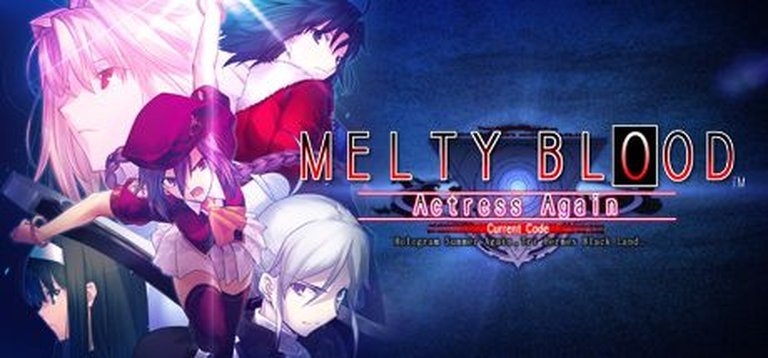
Description
Melty Blood: Actress Again – Current Code is a 2D fighting game spinoff of the vampire-themed visual novel ‘Tsukihime’, featuring a roster of 31 characters each with movesets based on three distinct fighting styles. This rebalanced version of the previous release, ‘Actress Again’, introduces two new characters while omitting single-player visual novel modes, focusing on fast-paced, intense combat with deep mechanics and a dedicated cult following in the fighting game community.
Gameplay Videos
Where to Buy Melty Blood: Actress Again – Current Code
PC
Melty Blood: Actress Again – Current Code Free Download
Melty Blood: Actress Again – Current Code Mods
Melty Blood: Actress Again – Current Code Guides & Walkthroughs
Melty Blood: Actress Again – Current Code Reviews & Reception
metacritic.com (78/100): If I had to choose just one game to play for the rest of my life, it would be Melty Blood.
destructoid.com : She may not look like much, but she’s got it where it counts, kid.
macsplicer.com : Melty Blood Actress Again Current Code (MBAACC) defies expectations, showcasing unique fighting game mechanics and character versatility.
Melty Blood: Actress Again – Current Code Cheats & Codes
Melty Blood: Actress Again – Sega Naomi
1) Open SYSTEM MENU, GAME TEST MODE, and SECRET CODE
2) Enter SECRET CODE “CKFY”
3) Place the cursor on “ARCUEID” and press the START button
| Code | Effect |
|---|---|
| CKFY | Unlocks Neco-Arc character |
Melty Blood: Actress Again – Current Code: A Relic Perfected
Introduction
In the pantheon of fighting games, few titles possess the cult mystique of Melty Blood: Actress Again – Current Code (MBAACC). Born from the ether of Type-Moon’s adult visual novel Tsukihime, this 2D fighting game emerged not as a blockbuster, but as a meticulously crafted artifact of doujin culture—self-published, community-driven, and fiercely dedicated to its niche. Yet over a decade since its 2010 arcade debut, MBAACC has transcended its origins to become a revered benchmark for combat depth, a testament to how passion projects can evolve into enduring masterpieces. This review argues that while MBAACC’s archaic presentation and steep learning curve alienate casual players, its mechanically sublime core stands as one of the most sophisticated and exhilarating fighting experiences ever created—a relic that, like a vintage Cuban car, has aged into something timeless through relentless refinement.
Development History & Context
French-Bread, a studio rooted in Japan’s doujin scene, spearheaded MBAACC’s development alongside Type-Moon and Ecole Software. Their vision was iterative perfectionism: starting as a 2002 Tsukihime spinoff, the series evolved through arcade updates (Act Cadenza, Actress Again) before culminating in Current Code (2010). Running on Sega’s RingWide arcade hardware—a successor to the NAOMI boards of earlier entries—the game leveraged limited resources to maximize animation fluidity and frame-based precision. This technological constraint fostered a design philosophy where every pixel and input mattered. The gaming landscape of 2010 was dominated by AAA titans like Street Fighter IV and BlazBlue: Calamity Trigger, but MBAACC thrived in defiance: it was a niche arcade darling, kept alive by obsessive community tinkering and tournament play (even infamously staged in hallways). The 2011 PC port, initially bundled with the Carnival Phantasm Blu-ray, and the 2016 Steam release curated by Arc System Works, cemented its legacy by making this cult classic globally accessible—albeit with compromises like missing single-player modes.
Narrative & Thematic Deep Dive
MBAACC’s narrative is inseparable from Tsukihime’s intricate lore, a Gothic tapestry of vampires, mages, and cursed humans. The arcade mode continues the Actress Again saga, focusing on Shiki Tohno’s clashes with Arcueid Brunestud and the enigmatic Aoko Aozaki. Yet the storytelling is labyrinthine, assuming deep familiarity with prior installments. Newcomers are adrift in a sea of untranslated dialogue and character-specific motivations—Sion Eltnam’s hunt for Roa Valdamjong or Akiha’s vampiric curse—rendered without context. Thematically, the Moon Styles (Crescent, Half, Full) mirror the series’ core conflict: power’s corrupting allure (Full Moon’s brute force), defensive resilience (Half Moon’s cautious parries), and balanced humanity (Crescent Moon’s adaptability). These styles aren’t just gameplay variants; they embody philosophical approaches to survival in a supernaturally hostile world. The story’s opacity, however, remains its Achilles’ heel—a barrier for outsiders, though fans cherish its fidelity to Type-Moon’s mythos.
Gameplay Mechanics & Systems
MBAACC’s genius lies in its combat architecture, a symphony of interconnected systems that reward obsessive mastery. At its core is the Moon Style triad, which fundamentally alters character identities:
– Crescent Moon: Prioritizes speed, air-dash cancels, and “Reverse Beat” (linking strong-to-weak attacks for extended combos). Manual Heat activation and Last Arc supers define its rushdown ethos.
– Half Moon: Emphasizes defense with automatic Shield Counters, high Guard Meter, and the game-saving Circuit Spark. Less meter but greater survivability.
– Full Moon: Focuses on raw power, manual Magic Circuit charging, and Initiative Heat (canceling any move in MAX mode). Sacrifices mobility for devastating single hits.
Beyond these, universal mechanics like Shield (a parry rewarding meter gain) and EX Guard (frame-perfect defense) demand split-second timing. The Heat/Blood Heat system acts as a super meter, enabling Arc Drives or health recovery, while MAX mode (triggered at meter limits) amplifies options. Combat is blisteringly fast, with combos stretching 20+ hits via Reverse Beat and status effects (e.g., poison) adding layers. Yet its depth is double-edged: no tutorials or mode breakdowns exist, forcing players to rely on external resources. Sparse modes (arcade, training, versus) and the Steam version’s removal of LAN play further limit accessibility.
World-Building, Art & Sound
MBAACC’s visual identity is a paradox of simplicity and dynamism. Stages are static, often bathed in monochromatic blues or industrial dreariness—functional but uninspired. Yet character sprites are animated with breathtaking fluidity; each slash, dodge, and super move (e.g., Arcueid’s Blood Pit or Shiki’s Nanaya-style strikes) flows with cinematic grace. The UI, though dated (4:3 pillarboxed in Steam, showing movelists), is ruthlessly efficient: health/guard bars, Moon Type icons, and combo counters deliver critical data without clutter. Sound design is equally polarizing. The soundtrack blends orchestral grandeur, jazz, and rock, but odd choices like a recurring car alarm jarringly disrupt immersion. Voice acting, however, is exceptional, with veteran seiyū (e.g., Arcueid’s voice actress, Kikuko Inoue) capturing characters’ personalities. Clashes of steel, shield impacts, and Heat activations punctuate battles with satisfying weight, creating a world where violence feels both beautiful and brutal.
Reception & Legacy
Upon release, MBAACC was a niche triumph. Arcade players lauded its depth, while the 2016 Steam port garnered “generally favorable” reviews (75% Metacritic, 78% Metascore). Critics like Destructoid hailed it as “technically slick” and “near-perfection” after 14 years, though 4Players.de criticized its “old-school” netcode and missing modes. Players, particularly Tsukihime devotees, embraced it as a faithful adaptation, but newcomers found its complexity daunting. Its legacy is profound: MBAACC shaped anime fighters through its Moon Style paradigm, influencing modern titles like Under Night In-Birth. It remains a staple in tournaments, celebrated for its balanced roster (31 characters) and frame-perfect gameplay. Yet its cult status persists; it’s revered as a historical artifact, not a mainstream contender—a relic of an era when fighting games valued depth over accessibility.
Conclusion
Melty Blood: Actress Again – Current Code is a masterpiece of compromise: technologically dated yet mechanically avant-garde, narratively impenetrable yet thematically resonant. It excels where it counts—combat is a sublime ballet of speed, strategy, and system mastery, rewarding dedication with unparalleled satisfaction. Yet its archaic presentation and lack of hand-holding make it an acquired taste. For fighting game purists, it is essential—a crown jewel in the genre’s history. For casual players, it is a cautionary tale of niche passion. Ultimately, MBAACC’s legacy endures not as a commercial triumph, but as a testament to the enduring power of obsessive craftsmanship: a relic that, through relentless refinement, achieved perfection.