
- Release Year: 2011
- Platforms: Windows
- Publisher: Asmodee North America, Inc., Days of Wonder, Inc.
- Developer: Days of Wonder, Inc.
- Genre: Strategy, Tactics
- Perspective: Top-down
- Gameplay: Board game, Turn-based
- Setting: World War II
- Average Score: 68/100
Description
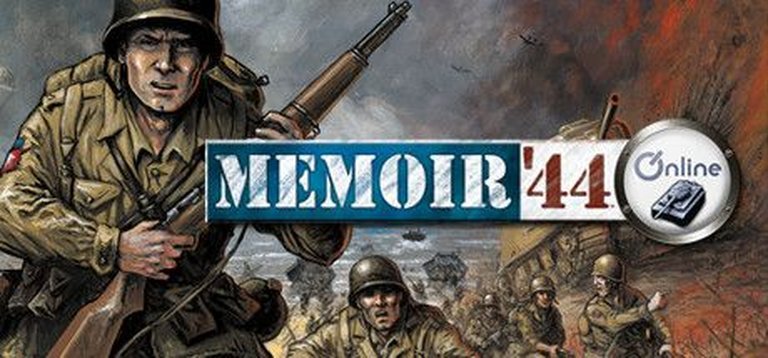
Memoir ’44 Online is a digital adaptation of the popular World War II board game, offering turn-based tactical combat with a top-down perspective. Players command historical military units in reenactments of WWII battles, emphasizing strategic decision-making and historical scenarios. Although the official online service concluded in April 2023, it served as a precursor to a new digital version on BoardGameArena.
Gameplay Videos
Memoir ’44 Online Guides & Walkthroughs
Memoir ’44 Online Reviews & Reception
metacritic.com (73/100): This is the online version of my favorite board game. The game revolves around each player taking turns as playing the Axis/Allied in scenarios based on historical battles. Unfortunately, this game features a pay-to-play model, and only two of the historical scenarios are actually free-to-play. Still, since those two are free and you can play them over-and-over again as much as you like, I encourage everyone to try it. If you have other board-game-playing members in your family, it may convince you to go out and purchase the actual board game, if nothing else.
steamcommunity.com : This might be the worst game ive ever played.
Memoir ’44 Online: A Digital Salute to a Board Game Masterpiece, and the Elegy of Its Servers
Introduction: The Ghost in the Machine
In the vast cemetery of online games, some tombstones mark failures of ambition, others of execution. The grave of Memoir ’44 Online bears a more complex epitaph: “A faithful, elegant, and beloved digital translation of a modern classic, undone not by design flaws but by the shifting economics of its era.” Released in 2011 by Days of Wonder, this was not merely another WWII strategy game; it was the long-awaited, official digital avatar of Richard Borg’s acclaimed 2004 board game, Memoir ’44. For a generation of players, the board game was a revelation—a “easy to learn, tough to master” system that distilled the tension and drama of pivotal WWII battles into a 60-minute, card-driven tactical experience. Memoir ’44 Online promised to sever the geographic tether, offering that same potent cocktail of historical flavor and agonizing decision-making to anyone with an internet connection. Its life, from a promising launch to a quiet server shutdown in 2023, tells a story of passionate community-building, innovative (if controversial) monetization, and the fundamental challenge of adapting a tangible, social pastime into a persistent digital service. This review dissects that journey, evaluating the game on its own merits as a piece of interactive software and as a cultural artifact of the early 2010s digital board game boom.
Development History & Context: From Tabletop to Server Room
Memoir ’44 the board game arrived in 2004 to critical acclaim, winning the International Gamers Award. Its genius lay in its streamlined, command-card-driven system. Units (infantry, tanks, artillery) move and fight based on cards from your personal deck, creating a constant tension between desired actions and available options. The physical game’s success spawned a prolific line of expansions covering the Eastern Front, Pacific Theater, and more.
The leap to digital was a logical, if daunting, step. Days of Wonder, a studio with a pedigree in board game adaptations (Ticket to Ride), began development on Memoir ’44 Online in the late 2000s. The technological context was one of burgeoning digital distribution (Steam’s dominance was solidifying) and growing comfort with “freemium” or “free-to-try” models in casual and strategy spaces. The team’s vision was clear: create a seamless, always-available platform that replicated the social and competitive thrill of the tabletop, with added features like automated dice rolling, persistent ranking, and a vast library of scenarios.
The constraints were significant. The board game’s charm is deeply tactile—the clatter of custom dice, the shuffle of cards, the physical manipulation of miniatures on a hex map. The digital version had to evoke this feel through UI, animation, and sound. More critically, it had to solve the “opponent problem.” The board game is primarily a two-player experience; finding a local opponent at any given moment is hard. The online version’s primary value proposition was guaranteed matchmaking, a 24/7 pool of human opponents (or a competent AI) without the setup or cleanup. This required robust server architecture and a community large enough to sustain short queue times—a classic chicken-and-egg problem for any new multiplayer service.
Narrative & Thematic Deep Dive: The Stories Written in Dice and Cards
Memoir ’44 Online possesses no traditional narrative. There is no campaign, no characters with dialogue, no overarching plot. Its “story” is emergent, historical, and deeply personal to each player. This is where the adaptation brilliance—and limitation—is most apparent.
The plot is whatever battle you choose from the 40+ historical scenarios. You are not a general with a biography; you are the commander on the ground, your perspective limited to the units on your side of the double-sided hex map. The “narrative” is the sequence of cards you draw: do you have the “Recon” card to scout ahead, or the “Armor Assault” to push your tanks? It’s the desperate infantry unit holding the bocage against overwhelming odds, saved by a well-timed “Medics and Supplies” card. It’s the paratroopers landing behind enemy lines, their survival hanging on a single dice roll.
The characters are the unit types themselves, each with etched-in historical and gameplay identity. British Commando infantry have different rules and a distinct feel from American Paratroopers. German Panzer divisions play differently from the vaunted SS units. The “dialogue” is the tactical language of the board: the click of a card played, the clack of wooden dice (beautifully recreated in sound), the visual cue of a unit’s strength being reduced by a red damage marker. The expansions brought more “characters” to the digital roster, from Soviet hordes to Japanese Banzai charges.
The underlying themes are pure, unadulterated tactical WWII nostalgia. The game doesn’t critique the war; it evokes its iconic moments—the hedgerows of Normandy, the frozen steppes of the Bulge, the desert sands of North Africa. The theme is one of asymmetric historical simulation. You feel the firepower advantage of German tanks versus the flexible, card-rich command of the Allies. You experience the “fog of war” not through hidden information (units are always visible), but through the uncertainty of the command deck. The game’s theme is the experience of command under pressure, the constant calculation of odds against the whims of the cards and dice. It’s a theme of historical engagement, not storytelling.
Gameplay Mechanics & Systems: The Digital Refinement of a Classic
The core gameplay loop is a faithful, pixel-perfect translation of the board game, wrapped in a serviceable (if dated) client.
Core Loop & Combat:
1. Scenario Selection: Choose from historical scenarios (Pegasus Bridge, Operation Cobra) or user-created maps (in later modes). Each has a specific map layout, force composition, and victory conditions.
2. Deployment: Players place their pre-determined units on their assigned map sections.
3. Turn Sequence: A turn consists of drawing Command cards (from a shared deck that simulates command initiative), then playing one card to order a specific subset of units (e.g., “Left Section: move 3 units and battle”). This is the game’s genius—you can’t order everything. The card dictates your scope of control.
4. Battle Resolution: When ordering a unit to battle, you roll custom dice. Each unit type has a specific “to-hit” number and number of dice. Tanks need a 3+ to kill infantry, infantry need a 4+ to kill tanks, etc. Dice are rolled, hits are assigned, and units are removed or weakened.
5. Victory: Secure specified map objectives (hexes) or eliminate enemy units to reach a victory point threshold.
The digital implementation excelled at automating the mundane. Dice rolls are animated, casualties auto-removed, unit strengths tracked. The UI clearly highlights playable cards and movable units. For newcomers, the extensive video tutorials and in-game help were invaluable, guiding players from the basics of “how to move a unit” to the nuances of “using terrain to break line-of-sight.” The AI for solo training, while not a grand strategic mind, was perfect for learning the rules and testing basic tactics.
Innovative & Flawed Systems:
* The Gold Ingot Economy: This was the game’s most defining and controversial system. It was a pay-to-play model with a generous free tier. You received 50 Gold Ingots on sign-up (enough for 15-25 games). Each subsequent scenario cost 2-3 ingots to unlock permanently. New scenarios were added regularly. Packs could be bought with real money ($5 for 200 Ingots up to $60 for 2,400). This model was generous but psychologically manipulative. It allowed true free play for those disciplined enough to conserve ingots, but constantly dangled new, historically appealing scenarios (a new Pacific Theater map!) just out of reach unless you paid. It funded server costs and development, but created a permanent sense of “renting” content versus “owning” it—a constant friction point in community forums.
* Officer Ranks & Achievements: A compelling meta-game progression system. Starting as a Cadet, you advanced through military ranks (2nd Lieutenant, Captain, Major, etc.) by winning human matches. Each nation (US, British, German, Soviet, etc.) had its own rank insignia and title. This created powerful psychological investment. Coupled with three tiers of Achievements (Honor Badges for basics, Specialist Badges for tactics, rare Expert Awards like “Bring the Boys Back Home”), it provided endless, self-directed goals beyond winning a single match. The public leaderboards for achievements fostered community recognition.
* Scenario Editor & “Expert Mode”: A powerful tool that kept the community alive for years. Players could design and share custom scenarios. Playing these required purchasing a “Captain” or “Major” ingot pack, a clear monetization gate that funded this creative feature. It transformed the game from a static product into a platform.
Flaws: The client could feel dated and clunky compared to modern digital board games. The “Expert Mode” gating behind a paywall was a sore point. The core monetization, while fair, left a perpetual “shadow economy” over the experience. Most critically, the game was fundamentally dependent on a living, breathing opponent pool. As the player base inevitably shrank (a natural lifecycle for any niche online game), queue times lengthened, degrading the core value proposition.
World-Building, Art & Sound: Evocation Over Emulation
Memoir ’44 Online’s presentation is a masterclass in functional evocation, not high-fidelity simulation.
Visual Direction: The game uses simple, bright 2D sprites for units—a stylized but recognizable tank, an infantryman. The maps are digitized versions of the physical board’s terrain tiles, with clear, contrasting colors for different nations (US tan, German field grey, British khaki). The top-down perspective is perfect for tactical clarity. The art doesn’t try to be photorealistic; instead, it channels the aesthetic of a clean, well-organized war game board. Animations are minimal but effective: a unit shuffling forward, a brief explosion when destroyed, cards flying onto the table. The UI is dense with information (unit stats, card text, objective markers) but remains navigable. It prioritizes game-state clarity over visual spectacle, a wise choice for a tactics game where a single tile’s terrain type (bocage, hill, river) is critical.
Sound Design: The soundscape is sparse but purposeful. The distinctive clatter of the wooden dice is the star audio event, perfectly capturing the board game’s tactile sound and injecting tension with every roll. Card plays have a satisfying thwip. Unit movement is quiet. Battle sounds are generic explosions and gunfire. There is no ambient battlefield drone, no score. This minimalism focuses player attention on the game mechanics. The sound is not immersive; it is mechanically communicative.
Atmosphere: The atmosphere is born entirely from the juxtaposition of historical scenario names with abstract game pieces. Knowing you are fighting for “Pegasus Bridge” or “Hill 317” while moving simple blue and grey rectangles on a green and brown grid is a powerful, evocative act of historical imagination. The game trusts the player’s own knowledge (or quick Wikipedia search) to fill in the sensory gaps. It’s the difference between a documentary and a historical painting—it suggests rather than depicts.
Reception & Legacy: A Cult Favorite with a Tragic Curtain Call
Critical & Commercial Reception at Launch:
Reviews at launch were generally positive but measured. Critics praised its faithful adaptation, ease of access, and strong matchmaking. The Warfare History Network article called it “worth checking out” and highlighted the deep, simple system. However, the Gold Ingot model was a frequent point of criticism. It wasn’t predatory, but it was an unfamiliar, perpetual microtransaction model for a full-priced board game translation. Commercially, it likely achieved a stable, modest success through Steam sales and ingot purchases, but never broke into the mainstream. Its MobyScore is listed as “n/a,” reflecting its status as a niche, service-oriented title rather than a blockbuster.
Evolution of Reputation:
Within the hardcore board game and wargame community, Memoir ’44 Online earned a deep respect and affection. It was the way to play Memoir ’44 competitively. Its ranking system and active user-created tournament scene fostered a dedicated, skilled community. The Scenario Editor kept it fresh for years. Reputation was that of a diamond in the rough: a superb game hidden behind a slightly awkward client and a persistent monetization model that was easy to understand but hard to fully embrace.
Influence & Legacy:
Memoir ’44 Online‘s legacy is twofold:
1. The Digital Board Game Template: It was a pioneer in demonstrating how to successfully translate a physical board game to a persistent online service. It proved the model: core rules fidelity, automated state management, matchmaking, and optional paid content for dedicated players. Its architecture influenced later, more polished adaptations like Twilight Struggle on Steam or the official Gloomhaven digital game.
2. The Ephemeral Nature of Online Services: Its ultimate fate is its most potent legacy. The April 30, 2023 server shutdown, announced in late 2022, was a quiet, undignified end to a decade of service. Asmodee (which had acquired Days of Wonder) shifted focus to the new official digital version on BoardGameArena. The shutdown highlighted a brutal truth: online game preservation is not guaranteed. Even a well-loved, functional game can be terminated when corporate strategy shifts or maintenance costs outweigh perceived value. For its community, it left a void, a digital ghost town where hundreds of thousands of historical battles were once fought. Its legacy is now a cautionary tale about the fragility of digital game preservation and a cherished memory for the thousands who logged in for “one more quick game” of Pegasus Bridge.
Conclusion: A Worthy Commander, Invalidated by Logistics
Memoir ’44 Online was not a perfect game. Its client showed its age, its freemium model created perpetual tension, and its fate was sealed by business realities beyond its control. Yet, to judge it solely on its shutdown is to miss its profound success as an adaptation. For over a decade, it served as the perfect global headquarters for a beloved board game. It faithfully captured the agonizing card-play, the dice-fuelled drama, and the historical verisimilitude of Borg’s design. Its ranking and achievement systems created a compelling parallel universe of competitive advancement. Its scenario editor fostered breathtaking creativity.
It was a successful translation that failed as a sustainable business. The game itself was a 9/10 piece of software for its target audience. The service around it was a 6/10, vulnerable to the vicissitudes of the market. Historians will note Memoir ’44 Online as a key milestone in the digital board game evolution, a proof-of-concept that such adaptations could be deep, faithful, and vibrant. Players will remember it as the place they finally beat their rival at the Bulge, or discovered a brilliant new custom scenario, all from the comfort of their desktop.
Its final verdict in the annals of gaming is bittersweet: a technically competent and lovingly crafted service that ultimately could not overcome the fundamental challenge of monetizing a niche passion in a way that ensured its own perpetuity. The servers are silent, but the battlefields it created—from the beaches of Normandy to the tables of a thousand virtual maps—remain etched in the memories of those who commanded there. It was a good game. It deserved a longer shelf life.