
- Release Year: 2014
- Platforms: Windows
- Genre: Adventure
- Perspective: 3rd-person (Other)
- Game Mode: Single-player
- Gameplay: Inventory, Point-and-click, Puzzle elements
- Setting: Fantasy
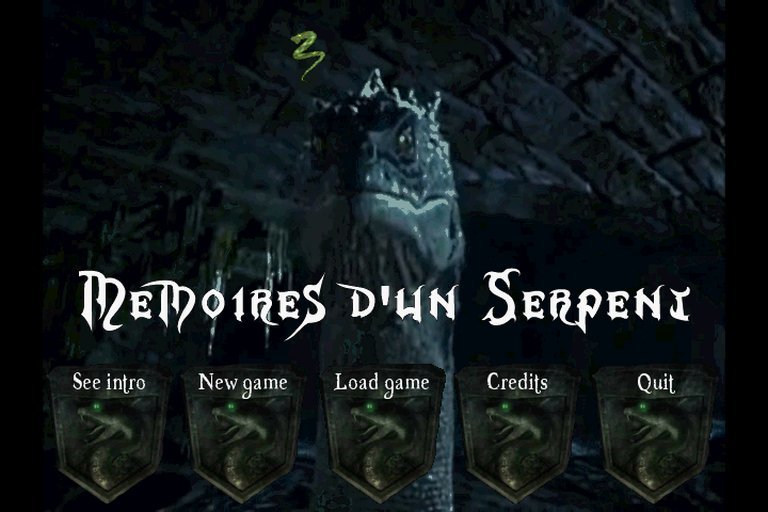
Description
Mémoires d’un Serpent (Memories of a Snake) is a free 2D point-and-click adventure game set in the Harry Potter universe, where players control a young Salazar Slytherin, heir to a wizard family with the ability to speak to snakes. After Muggles execute his parents, Merlin shelters him with other orphaned wizards, including the future Hogwarts founders; as they grow, they establish the magical school of Hogwarts, teaching classes amid fantasy puzzles, romance, and adventure.
Mémoires d’un Serpent: Review
Introduction
In the shadowed annals of video game history, few titles slither as stealthily as Mémoires d’un Serpent (English: Memories of a Snake), a 2014 freeware gem that dares to rewrite the origins of one of fantasy’s most infamous wizards: Salazar Slytherin from J.K. Rowling’s Harry Potter universe. Released amid the post-Deathly Hallows fan content explosion, this 2D point-and-click adventure invites players to embody Slytherin from cradle to grave, forging his legendary disdain for Muggles through tragedy and triumph. As a professional game journalist and historian, I’ve dissected countless fan works, but this one stands out for its audacious lore expansion—blending heartfelt homage with pointed reinterpretation. My thesis: Mémoires d’un Serpent is a poignant, if mechanically modest, testament to fan-driven storytelling, elevating Slytherin from cartoonish bigot to a sympathetic anti-hero whose serpentine path illuminates the perils of prejudice in a magical world on the brink.
Development History & Context
Crafted by French developer Marion Poinsot (also credited as Shai-la in some circles), Mémoires d’un Serpent emerged from the vibrant ecosystem of amateur game creation in the early 2010s. Poinsot, a fan-fiction author whose original tale inspired the game, adapted it into interactive form using Adventure Game Studio (AGS), a free engine popularized by titles like The Blackwell Legacy and countless indie adventures. Released on October 4, 2014, for Windows as freeware/public domain, it arrived during a golden age for fan games—post-Harry Potter mania, when tools like AGS democratized development for enthusiasts without budgets.
The era’s technological constraints were minimal: AGS handled 2D sprites, basic scripting, and room-based navigation effortlessly on modest PCs. Poinsot operated solo or with minimal collaboration, recycling assets from Sierra classics (King’s Quest, Quest for Glory) for backgrounds and generating characters via the Ultima sprite tool— a resourceful nod to retro adventure heritage amid 2014’s rising indie wave (Undertale, To the Moon). The gaming landscape? Harry Potter had spawned official games like Lego Harry Potter, but fan works thrived underground, evading IP scrutiny via free distribution. Forums like AmigaFrance and Abandonware-France hailed it as a “point’n’click à l’ancienne” (old-school point-and-click), with ScummVM ports extending its life to AmigaOS. Poinsot’s vision: humanize Slytherin, tracing his “hatred anti-moldus” (anti-Muggle bias) to personal trauma, in a ~1-hour vignette that prioritizes narrative intimacy over blockbuster polish. No studio backing, no marketing—just pure, fan-fueled passion in an ocean of licensed cash-grabs.
Narrative & Thematic Deep Dive
At its core, Mémoires d’un Serpent is a cradle-to-grave biopic of Salazar Slytherin, reframing Rowling’s Chamber of Secrets founder as a product of medieval wizarding persecution. The plot opens in a foreboding castle, where young Salazar—heir to Lord Slytherin’s parseltongue legacy—apprentices in magic under his great wizard father. Tragedy strikes: Returning home, Salazar discovers his family slaughtered, parents captured and burned at the stake by rampaging Muggles. Helpless, he flees as flames consume his world, a pivotal scene etching irreversible scars.
Enter Merlin, the deus ex machina who whisks Salazar to a sanctuary for orphaned wizards. Here, he bonds with Hogwarts’ future founders—Godric Gryffindor, Helga Hufflepuff, Rowena Ravenclaw—as peers in grief. Adulthood brings exile: Merlin dispatches them to shelter magical orphans, culminating in Hogwarts’ founding. Each founder claims a house specialty (Slytherin’s serpentine affinity shines), but undertones of discord foreshadow schisms. The tale crescendos with Slytherin’s death, implied construction of the Chamber of Secrets, and a romance narrative tag (subtle flirtations amid loss, per MobyGames specs).
Thematically, it’s a masterclass in causa sine qua non: Slytherin’s Mugglephobia isn’t innate villainy but trauma-forged ideology. Parseltongue chats with snakes underscore isolation and otherness, mirroring Rowling’s blood purity motifs but adding empathy—Slytherin as victim-turned-bigot. Romance elements humanize him further, contrasting Harry Potter‘s portrayals. Dialogue (in French, with English options via setup) is sparse but evocative, blending fanfic lyricism with AGS-era text dumps. Pacing falters in linearity, but the emotional arc—from innocent boy to burdened founder—delivers a revisionist gut-punch, challenging canon while honoring it. Subtle nods to HP lore (e.g., orphan wizards prefiguring students) reward purists, making this a thematic deep dive into prejudice’s roots.
Key Characters
- Salazar Slytherin: Protagonist avatar; evolves from eager pupil to haunted patriarch.
- Lord & Lady Slytherin: Foils of privilege, brutally martyred.
- Merlin: Mentor figure, bridging loss to legacy.
- Founders: Ensemble foils; their camaraderie sows seeds of future rivalry.
- Snakes: Interactive allies, embodying Slytherin’s gift/curse.
Gameplay Mechanics & Systems
Classic point-and-click fare, Mémoires d’un Serpent thrives on exploration, inventory puzzles, and light spellcasting in a ~1-hour loop. Mouse/keyboard controls shine: left-click interacts, right-click examines—intuitive for genre vets. Inventory unfurls bottom-screen; core item: a spellbook, populated via progression (e.g., unlock Alohomora-esque charms). Casting? Drag book to self/object/target—elegant, if finicky.
Core loop: Navigate static 2D rooms (castle halls, Merlin’s home, nascent Hogwarts), hunt hotspots, solve context-driven puzzles. Childhood: Fetch herbs, converse with snakes for clues. Post-trauma: Flee Muggles via stealth/magic hybrids. Founding phase: Resource-gathering for shelter, founder alliances via dialogue trees. Innovation: Parseltongue mini-game—chat with serpents for intel/aid, tying mechanics to theme.
Flaws abound: AGS-era UI feels dated (clunky save via bottom-right menu), puzzles occasionally opaque (e.g., obscure Sierra-asset interactions), no voice acting (text-only). Progression is linear, sans branching—pacing suits brevity but lacks replay. Combat? Absent; puzzles emphasize wits/magic over action. Winsetup.exe tweaks (windowed, sprite smoothing, language) enhance accessibility. Overall: Solid homage to King’s Quest-style adventures, rewarding patience over frustration.
| Mechanic | Strengths | Weaknesses |
|---|---|---|
| Point-and-Click | Fluid mouse nav, hotspot hints | Obscure solutions |
| Inventory/Spells | Progressive unlocks | Drag-and-drop imprecision |
| Parseltongue | Thematic integration | Limited encounters |
| UI/Saves | Quick-access menu | No autosave |
World-Building, Art & Sound
Medieval fantasy pulses through reappropriated Sierra backdrops—misty castles evoke Quest for Glory‘s peril, foggy Merlin’s lair King’s Quest‘s whimsy. Ultima-generated sprites lend a pixelated charm: Slytherin’s flowing robes, serpents’ sinuous coils. 800×600 resolution (ScummVM upscaleable) suits 2D stasis; “smooth sprites” option polishes edges.
Atmosphere? Oppressive: Fiery stakes cast long shadows, Hogwarts’ genesis inspires awe amid ruins. Snakes add eerie intimacy—recurring motif slithers through lore. Sound design: Minimalist AGS MIDI loops (ominous flutes for tragedy, triumphant horns for founding); no SFX bloat, letting visuals breathe. French VO absent, but ambient whispers (wind, hisses) immerse. Collectively, it crafts a lived-in HP prequel—cozy orphanages contrast Muggle pyres, forging emotional heft despite asset flips.
Reception & Legacy
Launch reception? Muted: MobyGames lists no scores/reviews (added 2016 by Sunset Sundowner), mirroring freeware obscurity. Niche praise on Abandonware-France (“adaptation d’une fan-fiction”), Retrotaku (“point’n click à l’ancienne et gratuit”), and forums (LPC: “1 heure environ”). Amiga ports via ScummVM (v2.3) extend playability, earning preservation nods on Archive.org.
Commercially null (freeware), its legacy endures in fan-game canon: Humanizes Slytherin, influencing HP fic (Poinsot’s PDF novelization). No direct industry ripple—AGS peers like Kathy Rain iterated better—but it exemplifies 2010s fan dev boom, predating Hogwarts Legacy. Evolved rep: Cult curiosity for HP historians, underscoring indie tools’ power. Influence? Subtle; serpentine tales in Hogwarts Mystery echo its trauma lens.
Conclusion
Mémoires d’un Serpent coils ambition around modesty: A heartfelt fan odyssey reclaiming Slytherin’s soul amid recycled pixels and sparse mechanics. Its narrative depth—trauma birthing bias—outshines technical limits, cementing a vital niche in video game history as peak Harry Potter fan craftsmanship. Not flawless, but essential for lore hounds. Verdict: 8/10—a slithering triumph of passion, eternally free and fangs-out fierce. Download it; let Salazar whisper his truth.