
- Release Year: 2020
- Platforms: Windows
- Publisher: Boogygames Studios
- Developer: Boogygames Studios
- Genre: Card, Concentration, Memory, Puzzle, Tile game
- Perspective: Fixed / flip-screen
- Game Mode: Single-player
- Gameplay: Point and select, Tile matching puzzle
Description
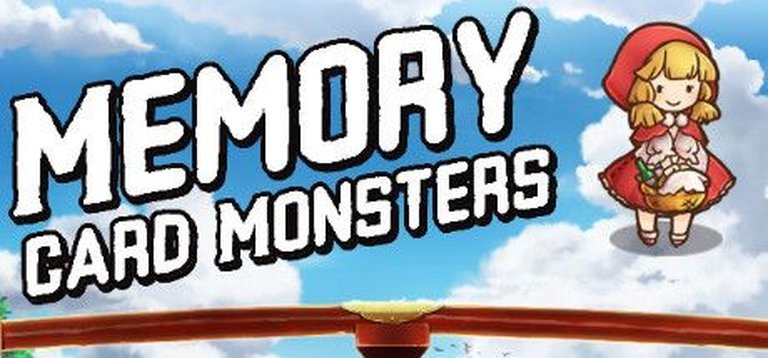
Memory Card Monsters is a puzzle game released in 2020 for Windows, developed by Boogygames Studios. The game challenges players to match pairs of cards by memorizing their positions, testing memory, concentration, and logic skills. With four game modes, a simple interface, and colorful HD graphics, it offers a fun way to train visual memory and cognitive abilities. Players can compete against others or their own records, with time counting adding to the challenge.
Where to Buy Memory Card Monsters
PC
Memory Card Monsters Guides & Walkthroughs
Memory Card Monsters: A Nostalgic Yet Flawed Exercise in Cognitive Training
Introduction: The Allure of Simplicity in a Complex World
In an era dominated by hyper-realistic graphics, sprawling open worlds, and narrative-driven epics, Memory Card Monsters (2020) emerges as a curious throwback—a digital homage to the timeless card-matching games of yesteryear. Developed and published by the obscure Boogygames Studios, this title positions itself not as a revolutionary experience but as a cognitive workout, a game that promises to sharpen memory, concentration, and logical reasoning. Yet, beneath its vibrant, cartoonish exterior lies a product that is as much a testament to the enduring appeal of simple mechanics as it is a cautionary tale about the pitfalls of minimalist design in a crowded marketplace.
At its core, Memory Card Monsters is a tile-matching puzzle game, a genre with roots stretching back to the physical card games of the 19th century and digital adaptations like Concentration (1988) and Memory (1991). What sets it apart—or attempts to—is its modernized presentation, its claim to scientific benefit, and its ambitious framing as a tool for mental fitness. But does it succeed? Or does it merely scratch the surface of what a memory game can be in the 21st century?
This review will dissect Memory Card Monsters across its development context, narrative (or lack thereof), gameplay systems, aesthetic choices, reception, and legacy, ultimately determining whether it stands as a worthy successor to classic memory games or a missed opportunity in the vast ocean of indie puzzlers.
Development History & Context: A Labor of Obscurity
The Studio Behind the Cards: Boogygames Studios
Boogygames Studios is not a household name. In fact, it’s barely a blip on the radar of the gaming industry. A quick scan of their portfolio reveals a plethora of casual, low-budget titles—Jigsaw Puzzles, Mahjong Challenges, Hidden Object games—all designed for quick consumption and minimal risk. Memory Card Monsters fits snugly into this mold, released on September 15, 2020, exclusively for Windows via Steam.
The studio’s approach is utilitarian: identify a proven mechanic, apply a fresh coat of digital paint, and release it into the Steam ecosystem with little fanfare. There’s no grand vision here, no autuerist statement—just a product, designed to fill a niche in the casual gaming market. This is not a criticism so much as an observation of the realities of indie development in the 2020s, where survival often means churning out accessible, marketable experiences rather than innovative ones.
Technological Constraints & Design Philosophy
Memory Card Monsters is a game of minimalist requirements. Its system specifications are laughably modest:
– OS: Windows XP or later
– Processor: Pentium 4 (2GHz)
– Memory: 1GB RAM
– Storage: 75MB
This is a game that could run on a toaster—and that’s by design. The developers clearly prioritized accessibility over ambition, ensuring that even the most outdated machines could handle it. The fixed/flip-screen visual style and point-and-select interface further reinforce this philosophy. There are no 3D models, no complex physics, no demanding animations—just cards, a timer, and a score.
Yet, this simplicity is both the game’s greatest strength and its most glaring weakness. On one hand, it’s inclusive, welcoming to players of all ages and technical backgrounds. On the other, it lacks depth, offering little to distinguish itself from the dozens of free memory games available online or the classic Memory games of the ’90s.
The Gaming Landscape in 2020: A Crowded Puzzle Market
2020 was a banner year for indie games, but it was also a year of oversaturation. The Steam storefront was—and remains—a digital flea market, with thousands of titles vying for attention. In this environment, Memory Card Monsters faced an uphill battle.
Competitors like:
– Fantasy Memory: Card Game (2020)
– Cute Animals Memory Card Game (2021)
– Juicy Memory Card (2020)
All offered similar mechanics, often with more polished presentations or thematic hooks. Memory Card Monsters attempted to carve its niche with monster-themed cards and a “brain training” angle, but without a strong marketing push or unique selling point, it risked being lost in the shuffle.
The game’s $1.99 price tag (later discounted in bundles) positioned it as an impulse buy, but in a market where players expect either free-to-play models or premium experiences, it occupied an awkward middle ground.
Narrative & Thematic Deep Dive: The Absence of Story
A Game Without a Plot: Is That a Problem?
Memory Card Monsters is, at its heart, a pure gameplay experience. There is no narrative, no characters, no dialogue, no lore. The player is not a hero on a quest, not a scholar uncovering ancient secrets—just a participant in a cognitive exercise.
This is not inherently flawed. Games like Tetris and Bejeweled prove that mechanics alone can carry a title. However, in an era where even the simplest mobile games often wrap their core loops in light storytelling or thematic dressing, Memory Card Monsters feels starkly utilitarian.
Thematic Elements: Monsters as a Thin Veneer
The game’s sole concession to theme is its monster-themed cards. The artwork features cute, cartoonish creatures—demons, fantasy beasts, and magical entities—rendered in a bright, minimalist style. This choice is deliberate, aiming to appeal to a younger audience or casual players who might be drawn to the whimsical aesthetic.
However, the monsters serve no functional purpose. They are not part of a larger world, nor do they interact with the player beyond being visual placeholders. There is no progression in their design, no unlockable lore, no sense of discovery or collection. They are, in essence, interchangeable.
The Psychology of Memory Games: What’s the Point?
The game’s Steam description markets it as a tool for memory training, citing benefits like:
– Improved concentration
– Enhanced logical reasoning
– Faster cognitive processing
These claims are not unfounded. Studies have shown that memory-matching games can improve short-term recall and pattern recognition, particularly in children and older adults. However, Memory Card Monsters does little to leverage this potential.
There is no adaptive difficulty, no personalized feedback, no data tracking to show improvement over time. The game presents itself as a brain trainer, but it lacks the structural depth of dedicated cognitive training apps like Lumosity or Elevate.
In this sense, Memory Card Monsters is a game pretending to be a tool, without fully committing to either identity.
Gameplay Mechanics & Systems: The Core Loop Examined
The Basics: How It Works
The gameplay is straightforward:
1. A grid of face-down cards is presented.
2. The player clicks two cards to reveal their images.
3. If the images match, the cards remain face-up.
4. If they don’t match, they flip back over.
5. The goal is to clear the board by matching all pairs.
This is the classic “Concentration” mechanic, unchanged for decades. Memory Card Monsters adds four game modes to this formula:
1. Classic Mode – Standard memory matching.
2. Time Attack – Race against the clock.
3. Relaxed Mode – No timer, for casual play.
4. Multiplayer (Local) – Compete with friends on the same device.
What Works: Accessibility and Simplicity
The game’s greatest strength is its accessibility:
– Intuitive controls (point-and-click).
– Clear visual feedback (cards flip smoothly).
– Multiple difficulty settings (grid sizes from 4×4 to 8×8).
The HD graphics are colorful and crisp, making the cards easy to distinguish—a crucial factor in a memory game. The sound design is minimal but effective, with satisfying “click” and “match” sounds that provide auditory reinforcement.
What Fails: Lack of Depth and Progression
For all its polish, Memory Card Monsters suffers from a lack of meaningful progression. There are:
– No unlockable cards or themes.
– No leaderboards or online competition.
– No save feature for scores (a glaring omission, as noted by players in Steam discussions).
– No adaptive AI to adjust difficulty based on performance.
The multiplayer mode is local-only, limiting its appeal in an age of online connectivity. The timer in Time Attack mode feels arbitrary, as there’s no penalty for failure beyond a lower score.
Most damningly, the game fails to evolve. Once a player masters the largest grid, there’s nothing left to achieve. There are no new mechanics, no power-ups, no meta-game systems to keep players engaged long-term.
UI/UX: Functional but Uninspired
The user interface is clean but bland:
– Menus are straightforward but lack personality.
– No animations or transitions to make navigation feel dynamic.
– Score tracking is basic, with no historical data or trends.
The lack of a save feature is particularly egregious. In a game that markets itself as a training tool, the inability to track progress over time undermines its core premise.
World-Building, Art & Sound: Aesthetic Choices
Visual Design: Cute but Generic
The game’s art style is bright, cartoonish, and inoffensive. The monster designs are simple and colorful, with a child-friendly appeal. However, they lack distinctiveness—many of the creatures could be lifted from any generic fantasy asset pack.
The backgrounds are static and unremarkable, offering no sense of place or atmosphere. There’s no world-building, no environmental storytelling—just a blank canvas for the cards.
Sound Design: Minimalist to a Fault
The audio experience is functional but forgettable:
– Card flips have a satisfying click.
– Matches are accompanied by a pleasant chime.
– There is no background music, only ambient silence.
While this avoids sensory overload, it also fails to create immersion. A light, looping melody or thematic soundscapes could have elevated the experience, making it feel more like a cohesive game and less like a digital flashcard set.
Atmosphere: The Absence of Mood
Memory Card Monsters has no atmosphere. There is no narrative context, no emotional resonance, no sense of discovery. It is a purely mechanical experience, which may appeal to purists but will leave others cold.
Reception & Legacy: A Game Lost in the Crowd
Critical Reception: Silence Speaks Volumes
Memory Card Monsters has no Metacritic score and no professional reviews listed on MobyGames. On Steam, it has only two user reviews—one positive, one negative—resulting in a 50% approval rating.
The positive review praises its simplicity and effectiveness as a memory trainer, while the negative review criticizes its lack of depth and polish.
This lack of attention is telling. In a market saturated with puzzle games, Memory Card Monsters failed to stand out.
Commercial Performance: A Niche Product
The game’s Steam statistics reveal minimal player engagement:
– No data on concurrent players (suggesting very low activity).
– Included in bundles (indicating it was used as filler content).
– Price reductions (suggesting weak sales).
It is not a commercial failure—it likely recouped its minimal development costs—but it is far from a success.
Legacy: A Footnote in Puzzle Game History
Memory Card Monsters will not be remembered as a groundbreaking title. It is, at best, a competent but unremarkable entry in the memory game genre.
Its legacy, if any, lies in its representativeness of the modern indie puzzle market—a game designed to fill a gap, not redefine one.
Conclusion: A Missed Opportunity for Depth
Memory Card Monsters is not a bad game, but it is a forgettable one. It executes the classic memory-matching mechanic with competence, offering clean visuals, intuitive controls, and multiple difficulty settings. However, it fails to innovate, lacks meaningful progression, and does little to justify its existence in a market flooded with superior alternatives.
Final Verdict: 5/10 – “Adequate but Uninspired”
- Pros:
- Simple, accessible gameplay.
- Colorful, child-friendly art style.
- Multiple difficulty modes.
- Cons:
- No narrative or thematic depth.
- Lack of progression or unlockables.
- No online features or save system.
- Minimal sound design and atmosphere.
Who Should Play It?
– Parents looking for a kid-friendly memory game.
– Casual players who want a no-frills cognitive exercise.
– Fans of classic Concentration-style games.
Who Should Avoid It?
– Players seeking depth, storytelling, or innovation.
– Those who prefer games with progression systems.
– Anyone expecting a “brain training” experience with data tracking.
In the grand tapestry of video game history, Memory Card Monsters is a minor thread—a reminder of gaming’s simple pleasures, but also a cautionary tale about the dangers of playing it too safe. It is not a monster—just a ghost of greater potential.