
- Release Year: 1996
- Platforms: Windows 16-bit, Windows
- Publisher: Siemens Nixdorf
- Developer: Rauser Advertainment GmbH
- Genre: Educational, Puzzle
- Perspective: 1st-person
- Game Mode: Single-player
- Gameplay: Exploration, Puzzle solving
- Setting: Futuristic, Sci-fi
- Average Score: 62/100
- VR Support: Yes
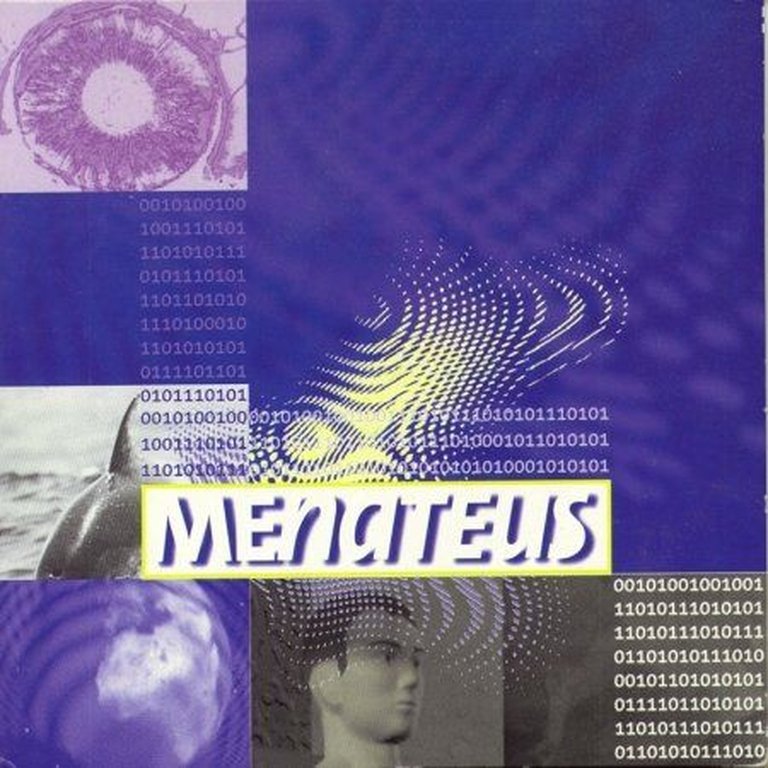
Description
Menateus, the official commercial game for the EXPO 2000 World Exhibition in Hannover, Germany, is a sci-fi futuristic 1st-person puzzle adventure centered on ecology and nature, where players combat the ‘fog of indifference’ threatening Earth with pollution. Traveling through time and space, explorers visit the Cyberdome, palace of elements, and pyramids of mystic to collect puzzle pieces and save the planet.
Menateus: Review
Introduction
In the neon haze of mid-1990s gaming, where Quake was shattering expectations with 3D gore and Myst reigned supreme in puzzle mystique, Menateus emerged as an unassuming yet ambitious artifact—an official tie-in to Germany’s EXPO 2000 World Exhibition in Hannover. Blending first-person exploration, ecology-themed puzzles, and a dash of sci-fi futurism, this 1996 Windows release from Rauser Advertainment GmbH and publisher Siemens Nixdorf dared to educate while entertaining, challenging players to combat the metaphorical “fog of indifference” threatening humanity’s bond with nature and technology. As a game historian, I view Menateus not as a blockbuster, but as a poignant time capsule of promotional gaming at its most earnest: a thesis that in an era of technological optimism, interactive media could inspire planetary stewardship, even if its execution occasionally stumbles under hardware constraints and sparse polish.
Development History & Context
Menateus was born from the promotional fervor surrounding EXPO 2000, a massive world’s fair themed around “Man * Nature * Technology” (the game’s very name being a portmanteau of these German words: Mensch-Natur-Technologie). Developed by the boutique German studio Rauser Advertainment GmbH, led by project head Jörn Kleemann (who also directed and ideated alongside Thorsten Rauser), the game was tightly optimized for Siemens Nixdorf’s “Scenic” Pentium PCs—mid-90s workhorses popular in Europe. Publisher Siemens Nixdorf, a computing giant, ensured hardware synergy, with support for the VFX1 Headgear VR system, an early virtual reality headset that promised immersive 1st-person navigation but was niche at best.
The 42-person credit list reads like a snapshot of late-90s European talent: Rachel Blum handled lead and internet programming (hinting at optional multiplayer), Heiko Schröder tackled 3D, while 3D graphics came from Celal and Ogan Kandemiroglu with input from India’s Third Eye Consultancy Bangalore. Soundtrack duties fell to chiptune legend Chris Hülsbeck (of Turrican fame) and Fabian Del Priore, infusing Hülsbeck’s synth mastery into an ecological narrative. Texts and level design by Haluk Soyoglu, Arno Schröder, and Wolfgang Schulz emphasized educational depth.
Released in 1996 (with a Windows 16-bit variant), Menateus arrived amid a booming CD-ROM era, where edutainment like The Magic School Bus and adventure-puzzles like The Last Express dominated. Technological limits—1MB VRAM minimum, 4MB RAM—constrained ambitions, yet the game’s internet multiplayer tease and VR compatibility positioned it as forward-thinking. In Germany’s gaming landscape, overshadowed by imports, it served as patriotic promo-ware, much like Olympic tie-ins, prioritizing message over mass appeal.
Narrative & Thematic Deep Dive
At its heart, Menateus is an allegorical eco-fable set in a near-future Earth shrouded by the “Fog of Indifference”—a creeping miasma symbolizing humanity’s apathy toward environmental collapse and technological hubris. Players embody an anonymous ambassador, summoned to EXPO 2000’s grounds to restore balance by collecting puzzle pieces scattered across time and space. The plot unfolds non-linearly: portals whisk you to the Cyberdome (a neon labyrinth probing technology’s dual role as isolator and savior), the Palace of Elements (primal halls embodying earth, air, fire, water, and humanity’s stewardship), and the Pyramids of Mystic (ancient enigmas evoking lost wisdom).
Dialogue, delivered via text logs, holographic oracles, and robotic guides, is cryptic yet poignant—e.g., oracles dispense riddles like “Technology without nature is a blade without hilt; nature without man, a garden untended.” Themes interweave Mensch-Natur-Technologie: Cyberdome sequences critique digital alienation, Palace challenges demand elemental harmony, Pyramids urge timeless unity. NPCs (voiced minimally, per IMDb cast like Nicole Bourgeois and Hans-Dieter Bögel) reinforce urgency, their lines tying puzzles to lore—solving a fire elemental grid “clears” fog, visually banishing pollution.
The narrative’s strength lies in interactivity: progress literally disperses the fog, mirroring real-world activism. Weaknesses? It’s didactic, with exposition dumps feeling like EXPO pamphlets, and the silent protagonist limits emotional investment. Yet, as edutainment, it excels—subtly weaving sustainability into sci-fi, predating Eco or Terra Nil by decades.
Gameplay Mechanics & Systems
Menateus crafts a deliberate first-person loop of exploration-puzzle-time travel, eschewing combat for cerebral challenges. Core progression: navigate stylized maps to jump eras/locations, incurring “time fuel” costs scaled to fog density—strategic resource management adds tension. Puzzles vary richly:
- Cyberdome: Pattern-matching circuits, cyberface interfaces, logic grids reprogramming drones.
- Palace of Elements: Spatial manipulations (rotate elemental orbs), lever puzzles balancing forces.
- Pyramids: Hieroglyph decodings, shadow-based riddles, object combinations revealing hidden paths.
Non-linearity shines: revisit areas with new clues/tools for “aha” unlocks, bolstered by side quests like collecting EXPO memorabilia or decoding history logs. UI is minimalist—compass, inventory HUD, pop-up tutorials—prioritizing immersion, though sparse hints frustrate novices. Controls (keyboard/mouse/other inputs) feel intuitive for 1996, with VR support enhancing spatial puzzles.
Flaws emerge: steep curves in mystic sections, fog-obscured items, frame dips on complex scenes. Multiplayer (internet-optional) likely enabled co-op puzzle-solving, rare for era. Progression feels rewarding, blending Myst-like deduction with light adventure, clocking 8-12 hours for completionists.
World-Building, Art & Sound
The game’s sci-fi/futuristic setting—EXPO 2000 as nexus for temporal jaunts—builds immersive worlds via low-poly 3D and pre-rendered backdrops. Cyberdome pulses with blue-purple neons, circuit-veined corridors evoking cyberpunk isolation. Palace explodes in elemental vibrancy: fiery oranges, aquamarine waves, verdant earth reliefs. Pyramids master mystery via hieroglyph shadows, light shafts in dusty tombs, particle effects hinting energies.
Art direction compensates dated tech: dynamic lighting, panning cutscene stills advance plot with gravitas. Atmosphere thickens via fog mechanic—visually evolving from opaque threat to clearing vista.
Sound elevates: Hülsbeck/Del Priore’s soundtrack fuses ambient synths (ethereal Cyberdome pads) with tribal percussion (Pyramids) and orchestral swells (victories). Stereo effects amplify immersion—distant echoes in pyramids, humming circuits. Minimal voicework prioritizes effects: bubbling elements, grinding stone. Collectively, these forge a cohesive, hopeful tone—technology/nature in symphony.
Reception & Legacy
Launch reception was muted: no Metacritic aggregate, MobyGames lists zero critic reviews and a 4.0/5 from three player ratings (unreviewed). IMDb’s 4.4/10 (15 votes) suggests niche appeal, likely among EXPO attendees or Siemens users. Commercially, as promo CD-ROM, sales were secondary to branding—collected by few (6-7 on MobyGames).
Reputation evolved modestly: forums query release dates (e.g., 2008 Moby thread), Retro Replay praises its edutainment balance. Influence? Minimal direct—prefigures eco-puzzles in Botanicula or The Witness, VR nods echo Myst evolutions. As artifact, it spotlights 90s edutainment’s optimism, Siemens’ hardware push, Hülsbeck’s versatility. Undigitized (no GOG), it’s preserved via abandonware curiosity, a footnote for historians studying expo-games like Expo ’98.
Conclusion
Menateus endures as a valiant, if flawed, relic: innovative puzzles, thematic depth, and sensory craft redeem dated visuals and didacticism, capturing EXPO 2000’s humanistic zeal. Not a masterpiece like contemporaries, but a definitive edutainment milestone—proof interactive media could proselytize ecology amid Pentium pixels. In video game history, it claims a humble pedestal: essential for genre scholars, nostalgic for 90s adventurers. Verdict: 8/10—play for the fog-lifting thrill, preserve for posterity’s clarity.