
- Release Year: 2018
- Platforms: Nintendo Switch, PlayStation 4, Windows, Xbox One
- Publisher: ArtVostok
- Developer: ArtVostok
- Genre: Driving, Racing
- Perspective: Behind view
- Game Mode: Co-op, Single-player
- Gameplay: Arcade
- Setting: Fantasy
Description
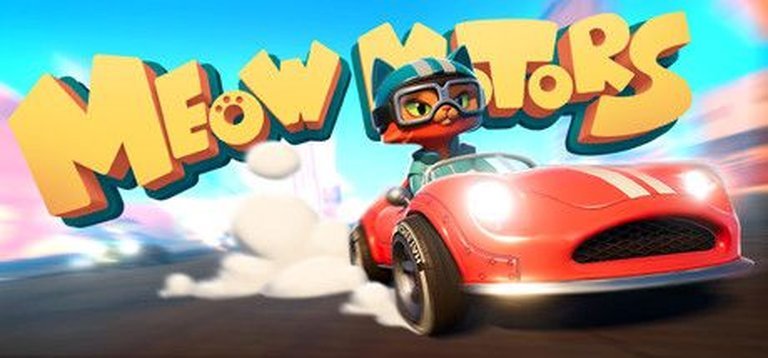
Meow Motors is a charming and colorful arcade-style kart racing game where players control cats driving vehicles through a variety of tracks. Set in a whimsical fantasy world, the game offers multiple event types including races, time trials, and strike modes. With a focus on fun and accessibility, it features a selection of feline characters, customizable cars, and power-ups, making it a delightful alternative to traditional kart racers.
Gameplay Videos
Where to Buy Meow Motors
PC
Meow Motors Cracks & Fixes
Meow Motors Patches & Updates
Meow Motors Guides & Walkthroughs
Meow Motors Reviews & Reception
higherplaingames.com : Meow Motors thankfully goes a very long way to show me exactly what a kart racer should be like in 2018 by giving gameplay and fun by the bucketload and plenty of character too.
Meow Motors: Review
Introduction
In the crowded genre of kart racing, where titans like Mario Kart and Crash Team Racing dominate, Meow Motors emerges as a charming, under-the-radar contender from indie developer ArtVostok. Released in 2018, this title swaps the Mushroom Kingdom for a whimsical feline universe, offering a blend of accessible arcade racing and strategic depth that, despite its flaws, carves out a distinct niche. Its legacy is not one of revolution, but of refinement—an unpretentious, delightful experience that prioritizes pure fun over technical spectacle. This review will dissect Meow Motors through its development context, narrative ambitions, mechanical innovations, sensory design, and enduring impact, arguing that while it may not dethrone genre giants, its clever systems and inviting charm make it a purr-fect alternative for casual racers and cat enthusiasts alike.
Development History & Context
Meow Motors was a labor of love from Russian studio ArtVostok, helmed by a team that invested 2.5 years in crafting the game, as documented in their 2018 GameDev.net announcement. Their vision was clear: to create a PC and console kart racer that served as a “nice alternative to Mario Kart” with “vivid graphics, unique design style, and cutest characters.” Built on Unreal Engine 4, the game capitalized on the era’s indie boom, aiming for accessibility and broad appeal across platforms (Windows, PlayStation 4, Xbox One, and Nintendo Switch). This was a crowded market, with 2018–2019 seeing the release of high-profile titles like Team Sonic Racing and Crash Team Racing Nitro-Fueled. ArtVostok’s strategy was to differentiate through simplicity and personality, focusing on local multiplayer over online features—a pragmatic choice given the costs and niche audience of competitive karting. The constraints of indie development are evident: limited polish in UI translation (e.g., menu typos like “Xbox One realese”) and reused track hazards across environments. Yet, these limitations allowed the team to concentrate on core gameplay mechanics, resulting in a surprisingly well-tuned experience that punches above its weight.
Narrative & Thematic Deep Dive
The narrative of Meow Motors is intentionally uncomplicated, serving as a loose framework for its racing action. Players embark on a “storyline campaign” to “gather the team, overcome Master Duke and discover his scary mystery.” This arc is told through rudimentary 2D cutscenes, featuring a generic villain (Master Duke) and a roster of anthropomorphic cats, each with distinct personalities—though these traits manifest more in gameplay than dialogue. The story lacks depth, with themes of teamwork and perseverance presented superficially. Yet, its thematic strength lies in accessibility. By avoiding complex lore, the game focuses on universal appeals: the joy of competition and the charm of its animal protagonists. The cats—like the Sphynx Rusty or immune-to-oil slicks Whiskers—are archetypes rather than developed characters, but their designs (varying from fierce to fluffy) reinforce the game’s light-hearted tone. This minimalist narrative approach aligns perfectly with Meow Motors’s arcade roots, ensuring the story never intrudes on the core racing experience. However, it also highlights a missed opportunity; a more inventive plot could have elevated the game beyond a simple “unlock all content” pretext.
Gameplay Mechanics & Systems
Meow Motors distinguishes itself through subtle, intelligent refinements to kart-racing conventions. At its core are three event types—circle races, drift challenges, and “strike” mode—but the brilliance lies in how mechanics interconnect. The boost and energy system is a masterclass in player agency: boost can be used for acceleration, converted into defensive oil slicks (when leading), or saved to amplify power-ups (e.g., a “shark bazooka” becomes deadlier with a full charge). This dual-purpose mechanic counters the genre’s typical leader-punishment design, letting front-runners actively defend while allowing laggards to strategically conserve resources. Character traits add tactical depth: each of the 10 cats has unique abilities (e.g., immunity to stalling starts or reduced grass slowdown), encouraging players to tailor choices to tracks. The damage system, featuring 5 hit points, introduces resource management; taking hits slows straights, forcing players to weigh weapon use against health-kit pickups.
Race starts demand precision—feathering the throttle in a tachometer’s “green zone” avoids stalling, rewarding skill. While drifts feel initially “floaty,” they become intuitive, and the AI is praised as “tough but fair,” with rubberbanding that keeps races competitive without feeling punitive. However, systems falter in execution. Tracks reuse identical trap objects (mines, bombs) with only reskins, reducing variety. Local multiplayer (split-screen for 1–4 players) suffers from performance drops beyond two players, and the absence of online play limits longevity. Ultimately, Meow Motors’s greatest triumph is its balance: complex enough to reward mastery yet simple enough for beginners to enjoy.
World-Building, Art & Sound
ArtVostok’s art direction is the game’s undeniable triumph, leveraging its fantasy setting to create a vibrant, cohesive world. The 20 tracks span diverse environments—jungles, cities, and candy-colored circuits—all rendered in a bold, cartoonish style. Textures are crisp, and colors pop, evoking the whimsy of children’s books while maintaining visual clarity during chaotic races. Character design excels, with 10 distinct cats whose personalities shine through animations: a grumpy-looking pilot, a whimsical driver with oversized goggles, and so on. Cars, though aesthetically varied, prioritize personality over performance differentiation, allowing players to choose based on traits like “immunity to oil slicks.”
Sound design, while less documented, complements the visuals with playful sound effects—meows on boosts, comical weapon impacts—and a buoyant, upbeat soundtrack. The absence of voice acting (replaced on-screen text) fits the game’s indie roots, though minor audio cues for power-up pickups could have enhanced feedback. The fantasy setting unifies these elements, creating an immersive, low-stakes universe where cats rule the racetrack. However, the world-building is static; tracks lack interactive narratives, and the story’s cutscenes lack the polish of the core game. Still, the art and audio synergy ensures Meow Motors feels cohesive and inviting, making even repetitive tracks visually delightful.
Reception & Legacy
At launch, Meow Motors received a mixed-to-positive reception. On MobyGames, it holds a 69% critic average based on four reviews, with scores ranging from 60% (Nintendo Life, Digitally Downloaded) to 78% (Gamer’s Palace). Praise centered on its “excellent boost energy tactics,” “sturdy handling,” and “frantic fun,” while criticism targeted its “generic presentation,” “questionable AI,” and lack of online modes. User reviews on Steam were more enthusiastic, with an 87% “Very Positive” rating from 181+ players, highlighting its value for money and multiplayer appeal.
Legacy-wise, Meow Motors occupies a unique space. It’s not a trendsetter but a refiner, cited as a “great little kart game” for younger players (LifeisXbox) and a “surprising” alternative to AAA racers (Higher Plain Games). Its influence lies in proving that indie kart games could achieve polish and depth without massive budgets. However, it didn’t spawn sequels or imitators, perhaps due to its niche appeal. Over time, it’s been remembered as a “charming” curiosity—a solid, if unspectacular, entry in the genre’s history, particularly beloved by local multiplayer groups. Its enduring “Very Positive” Steam rating suggests a lasting cult following, cementing its status as a purr-fect party game.
Conclusion
Meow Motors is a testament to the power of focused design. It may not innovate the kart-racing genre, but it refines its conventions with exceptional cleverness: the boost/dual-energy system, character traits, and damage mechanics create layers of strategy within an accessible framework. ArtVostok’s commitment to cuteness and local multiplayer ensures it remains a go-to for family fun, even as its narrative simplicity and technical limitations hold it back from greatness.
In the annals of video game history, Meow Motors won’t be remembered as a revolution, but as a delightful footnote—a game that prioritized joy over spectacle. For players seeking a lighthearted, well-balanced racing experience or a respite from the intensity of AAA titles, it stands as a purr-fect choice. Its legacy is one of quiet competence: a charming, unpretentious racer that proves even the smallest indie studios can deliver big fun. Final verdict: a Good 7.5/10—essential for cat lovers and local multiplayer seekers, but not a genre-redefining classic.