
- Release Year: 2021
- Platforms: Windows
- Publisher: FobTi interactive
- Developer: FobTi interactive
- Genre: Action, Puzzle
- Perspective: Side view
- Game Mode: Single-player
- Gameplay: Arcade
- Average Score: 96/100
Description
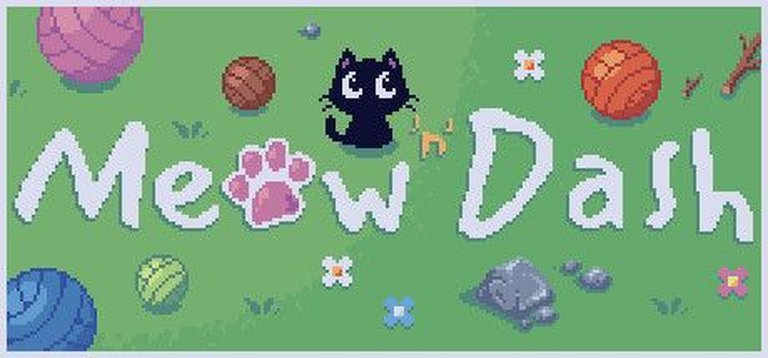
Meow’n’Dash is a fast-paced, addictive arcade game where players control adorable kittens to clear stages by turning all yarn balls to the same color. The game features three modes: Classic, Zen, and Versus, and includes seven unlockable kittens. Players must navigate through levels within a 90-second time limit, pushing yarn balls against each other to change their colors, while avoiding black yarn balls that yield no points. The game offers infinite replayability, cute retro pixel-art graphics, and great music by Kevin MacLeod.
Where to Buy Meow’n’Dash
Meow’n’Dash Cracks & Fixes
Meow’n’Dash Guides & Walkthroughs
Meow’n’Dash Reviews & Reception
stmstat.com (96/100): Fun, casual & relaxing game with colorful yarns & cute pixel kitties.
Meow’n’Dash: A Feline-Fueled Arcade Romp Through Yarn and Whimsy
Introduction
At a glance, Meow’n’Dash might seem like just another indie darling trading on the internet’s undying love for cats—but beneath its pixelated fur lies a surprisingly addictive arcade experience. Released in 2021 by Slovak studio FobTi Interactive, this $4.99 title blends the frantic energy of Katamari Damacy with the puzzle simplicity of Sokoban, all wrapped in a cozy aesthetic tailor-made for casual gamers and cat enthusiasts. This review argues that while Meow’n’Dash never reinvents the wheel, its charm, accessibility, and pick-up-and-play design solidify its place as a hidden gem in the indie arcade renaissance.
Development History & Context
A Solo Vision in a Crowded Market
Developed and self-published by FobTi Interactive (a single-person studio according to MobyGames credits), Meow’n’Dash emerged during a surge of indie “coffee-break” games targeting time-strapped players. With no prior titles under its belt, FobTi leaned into simplicity, leveraging the universal appeal of cats to carve a niche. The game’s Steam release in September 2021 coincided with a post-lockdown appetite for low-stakes, therapeutic experiences—a zeitgeist reflected in its Zen mode and family-friendly design.
Technical Constraints as Creative Fuel
The game’s fixed-screen, side-view perspective and retro pixel art suggest intentional limitations to evoke nostalgia for early ’90s arcade titles. FobTi’s reliance on royalty-free music by Kevin MacLeod (“Incompetech”) further underscores its indie roots. Yet, these constraints become strengths: the modest scope ensures polish, with Xbox 360 controller support and Steam Achievements adding modern conveniences.
Narrative & Thematic Deep Dive
Meow’n’Dash dispenses with traditional storytelling, opting instead for thematic coherence through its mechanics and aesthetics. Players control one of seven unlockable kittens—each named with punny flair (Murky, Frosty, Robocat Giskard)—to “solve” stages by homogenizing the color of yarn balls. The absence of narrative stakes leans into the game’s thesis: joyful, uncomplicated play.
Subtext in Simplicity
Beneath the surface, the game explores themes of order versus chaos. Black yarn balls (which yield no points) represent disruptive forces, while the kittens’ mission to standardize colors mirrors the human desire to impose structure on randomness. The meow button—functionally useless yet irresistibly charming—serves as a meta-commentary on gaming’s oft-overlooked pleasures: whimsy for whimsy’s sake.
Gameplay Mechanics & Systems
Core Loop: Zen and the Art of Yarn Herding
The primary objective—turn all yarn balls the same color by colliding them—is deceptively simple. Faster yarns overwrite slower ones, creating a physics-based puzzle requiring strategic positioning and timed dashes. The 90-second time limit per stage injects tension, while bonus fish (which extend the clock) reward mastery. Three modes diversify the experience:
– Classic: Score-attack with escalating difficulty.
– Zen: Relaxed, timer-free play for stress-free herding.
– Versus: Local multiplayer chaos perfect for family showdowns.
Innovations and Flaws
The dash mechanic (hold A/X for one second) adds a risk-reward layer, though its input delay frustrates precision. Similarly, the scoring system—1 point per recolored yarn—feels underwhelming, lacking the dopamine spikes of high-score chases like Pac-Man. However, the multiplayer mode shines, leveraging the simple mechanics for competitive fun.
Progression and Replayability
Unlocking all seven kittens requires minimal effort, reducing long-term incentives. While the infinite replayability touted in Steam blurbs rings hollow for solo players, high-score hunters and local multiplayer devotees may find enduring appeal.
World-Building, Art & Sound
A Pixelated Playground
Meow’n’Dash’s visuals evoke a condensed Stardew Valley charm, with bright palettes and chunky sprites. Each kitten sports distinct designs—Frosty’s icy blue fur, Robocat’s metallic sheen—though environmental diversity is lacking. Stages are interchangeable backdrops, a missed opportunity to deepen the whimsy with thematic levels (e.g., a yarn-filled living room or a scratching-post obstacle course).
Sound Design: Purr-fect Ambiance
Kevin MacLeod’s soundtrack—a mix of upbeat chiptunes and calming loops—complements the gameplay without overshadowing it. The lack of original compositions is noticeable but not detrimental, while the kittens’ meows (triggered gratuitously via the C button) are a masterclass in auditory charm.
Reception & Legacy
Critical and Commercial Purr-formance
With a 96% “Very Positive” Steam rating from 25 reviews, Meow’n’Dash resonated with its target audience. Praise centered on its accessibility (“played it with my mom’s cat!”), cozy aesthetic, and multiplayer fun. Criticisms targeted repetitive gameplay and buggy achievements, though its $2.49 sale price tempered expectations.
While ignored by mainstream critics (Metacritic lists no reviews), its cult following is evident in heartfelt player stories. One Steam review recounts a grieving father reconnecting with his son through the game—a testament to its emotional resonance despite mechanical simplicity.
Industry Influence
Meow’n’Dash’s legacy lies in its proof that niche appeal and tight design can thrive. It foreshadowed the “cozy game” boom of 2023–2024, while its local multiplayer focus offered a counterpoint to the online-dominated market. Though not groundbreaking, it remains a touchstone for indie devs balancing charm and affordability.
Conclusion
Meow’n’Dash is the video game equivalent of a warm cup of tea: unassuming, comforting, and fleeting. Its lack of depth limits its historical significance, but as a family-friendly diversion or a palette cleanser between AAA marathons, it delivers purr-fectly. For $4.99, few games offer this much feline frivolity. While it won’t top “best of” lists, Meow’n’Dash earns its place as a delightful footnote in indie gaming—a reminder that sometimes, all we need is a kitten, a yarn ball, and 90 seconds of joy.
Final Verdict:
A charming, if slight, arcade puzzler best enjoyed in short bursts or with loved ones. Worth the price of admission for cat lovers and casual gamers alike.