
- Release Year: 2015
- Platforms: PlayStation 3, PlayStation 4, Windows, Xbox One
- Publisher: Konami Digital Entertainment B.V., Konami Digital Entertainment Co., Ltd., Konami Digital Entertainment, Inc.
- Developer: Konami Digital Entertainment
- Genre: Compilation
- Perspective: Third-person
- Game Mode: Single-player
- Average Score: 94/100
Description
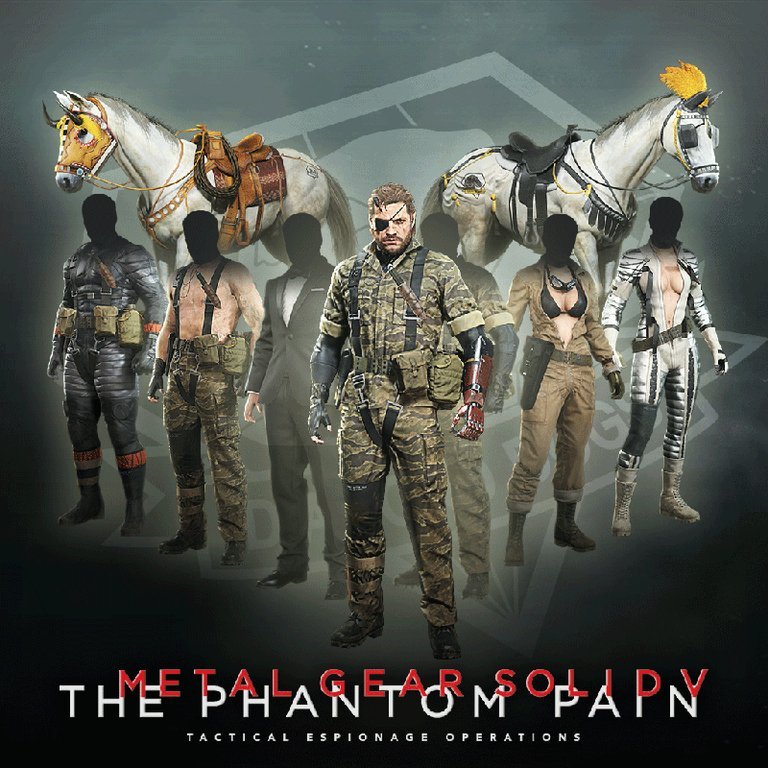
Metal Gear Solid V: The Phantom Pain – Costume & Tack Pack is an add-on bundle for the acclaimed stealth game set in a fictional Cold War-era world, where players control the legendary soldier Big Boss leading a private military force through tactical espionage missions across open environments. The pack enhances gameplay with additional cosmetic options including costumes and tack for player customization, extending the core experience of infiltration, combat, and narrative-driven storytelling in this war-torn setting.
Metal Gear Solid V: The Phantom Pain – Costume & Tack Pack Mods
Metal Gear Solid V: The Phantom Pain – Costume & Tack Pack: Review
Introduction
In the annals of gaming, few franchises command the reverence and analytical scrutiny of Metal Gear Solid. Hideo Kojima’s magnum opus, Metal Gear Solid V: The Phantom Pain (2015), redefined tactical stealth with its open-world design, emergent gameplay, and hauntingly fractured narrative. Yet, even a masterpiece is incomplete without its supplementary lore, and the Costume & Tack Pack serves as a vital, if cosmetic, coda to this epic. This DLC bundle, released concurrently with the base game on October 20, 2015, transcends mere vanity items; it is a curated artifact of Metal Gear’s DNA, offering players tangible connections to the series’ storied past while reflecting the industrial realities of modern game monetization. This review deconstructs the pack’s significance as both a narrative extension and a commercial product, arguing that its true value lies in its role as a bridge between The Phantom Pain’s revolutionary gameplay and the franchise’s rich, often melancholic, legacy.
Development History & Context
The Costume & Tack Pack emerged from the crucible of Kojima Productions’ ambitious vision for The Phantom Pain and Konami’s shifting corporate priorities. As the final entry in Kojima’s 30-year Metal Gear saga, The Phantom Pain was developed concurrently across Windows, PlayStation 3/4, and Xbox One, leveraging the Fox Engine to deliver a vast, dynamic Afghanistan and Angolan sandbox. However, the game’s development was marked by turmoil: Kojima’s contentious departure from Konami in 2015 left the narrative incomplete, and the studio’s pivot toward live-service models influenced its monetization strategy.
The DLC pack exemplifies this transition. While The Phantom Pain’s core gameplay was lauded for its freedom, its monetization—DLC like the Costume & Tack Pack—faced criticism for fragmenting content. Released at launch, the bundle (priced at $4.99/£3.99) consolidated seven cosmetic items, including iconic costumes from Metal Gear Solid 3: Snake Eater (2004) and Metal Gear Solid 4: Guns of the Patriots (2008). This timing suggests Konami aimed to capitalize on the game’s launch hype, treating these items as essential “collector’s content” rather than post-launch add-ons. The pack’s existence underscores a broader industry trend: cosmetic DLC as a low-risk, high-reward revenue stream that enhances player investment without altering gameplay—a model Kojima himself had critiqued in earlier works.
Narrative & Thematic Deep Dive
As a compilation of cosmetic assets, the Costume & Tack Pack lacks explicit plot, yet its items are steeped in Metal Gear’s thematic tapestry. Each costume is a narrative time capsule:
- Fatigues (Naked Snake) & Sneaking Suits: Directly lifted from Snake Eater, these outfits reference Big Boss’s origins as a legendary soldier. Naked Snake’s fatigues symbolize his vulnerability and idealism, while The Boss’s sneaking suit—woven with her iconic bandana—embodies sacrifice and mentorship. In The Phantom Pain, where Big Boss is a phantomized, vengeful shell, equipping these costumes becomes an act of homage to the character’s lost humanity.
- Jumpsuit (EVA) & Tuxedo: EVA’s provocative jumpsuit from Snake Eater evokes Cold War espionage and female agency, while the tuxedo—an Easter egg for Metal Gear Solid 2’s “Plant Chapter”—injects absurdist humor. Both reflect Metal Gear’s duality of gritty realism and campy theatricality.
- Parade Tack & Western Tack: These horse-riding accoutrements tie to The Phantom Pain’s focus on Diamond Dogs as a military enterprise. The parade tack suggests pageantry and propaganda, while the western tack evokes frontier mythology, mirroring Big Boss’s descent into militaristic idolatry.
Thematically, the pack reinforces The Phantom Pain’s core conflict: legacy versus erasure. By wearing these costumes, players resist the game’s narrative fragmentation, preserving the ghosts of past Metal Gear tales within the Phantom Limbs’ new reality. This act of “dressing the past” becomes a poignant commentary on Kojima’s departure and Konami’s attempts to commodify his legacy.
Gameplay Mechanics & Systems
The Costume & Tack Pack operates within The Phantom Pain’s intricate development system, where items are unlocked via the Mother Base R&D division. Players must progress to Mission 43 (the “Truth” mission) and fulfill specific development requirements—e.g., recruiting certain staff or accumulating resources—before the costumes become available. This gatekeeping ensures the pack aligns with the game’s meta-narrative about military-industrial complexity.
Functionally, the items offer no gameplay advantages, adhering to the “cosmetic only” promise. However, their integration into the core loop is seamless:
– Character Customization: Suits are interchangeable with Venom Snake’s default attire, allowing players to role-play as Naked Snake or The Boss during missions or Mother Base interactions.
– Horse Customization: Tack sets alter D-Horse’s appearance, adding a layer of personalization to traversal mechanics.
– Meta-Gameplay: The pack incentivizes completionists, rewarding those who engage with The Phantom Pain’s meta-systems.
Notably, the pack’s exclusion from Metal Gear Online (MGO) highlights Konami’s strategy of segregating single-player and multiplayer monetization, a design choice that preserved the pack’s narrative integrity while limiting its utility.
World-Building, Art & Sound
The pack’s visual and auditory design is a masterclass in franchise reverence:
– Art Direction: Costumes faithfully replicate textures, colors, and wear from their original appearances. Naked Snake’s fatigues feature weathered fabric fraying, while EVA’s jumpsuit retains its signature zipper and thigh-high boots. The Boss’s suit, with its red sash and balaclava, is a meticulous recreation of her Snake Eater design.
– World Integration: In-game, these items exist within The Phantom Pain’s 1980s setting. The tuxedo feels jarrily anachronistic yet thematically resonant, mirroring the game’s tonal dissonance. The tack sets complement Diamond Dogs’ aesthetic, blending military practicality with nostalgic flair.
– Sound & Atmosphere: Equipping The Boss’s suit triggers no unique audio cues, but its visual presence evokes her absence—a silent homage. D-Horse’s jingling tack adds subtle auditory texture during rides, enhancing immersion.
The pack’s greatest achievement is its ability to make the player feel like a part of Metal Gear history, transforming cosmetic choices into acts of fandom within the game’s war-torn world.
Reception & Legacy
Upon release, the Costume & Tack Pack received lukewarm reception. Critics noted its niche appeal but praised its authenticity; IGN called it a “must-have for completionists” while Kotaku lamented its “fragmented monetization.” Players on PlayStation Store rated it 4.7/5 stars, reflecting high satisfaction among series loyalists, though some criticized the need to grind for unlocks.
In retrospect, the pack’s legacy is twofold:
1. Commercial Precedent: As part of The Phantom Pain’s launch-day DLC strategy, it set a template for Konami’s post-Kojima monetization, influencing later titles like Metal Gear Survive. Its bundling of nostalgic items normalized the practice of selling “memory” as a commodity.
2. Cultural Artifact: The costumes endure as fan favorites, symbolizing Metal Gear’s unresolved nostalgia. In modding communities, they remain staples, underscoring their emotional resonance beyond mere DLC.
Conclusion
The Metal Gear Solid V: The Phantom Pain – Costume & Tack Pack is a microcosm of Metal Gear’s identity crisis: a lovingly crafted tribute to its past, yet a symptom of its commercialized future. While it lacks the gameplay innovation of the base game, its strength lies in its ability to transcend cosmetics, becoming a narrative artifact that honors the series’ legacy. For completionists and Metal Gear devotees, it is an essential piece of the puzzle—a tangible link between Kojima’s vision and Konami’s reality. In the pantheon of Metal Gear DLC, it stands not as a standalone achievement, but as a poignant footnote in one of gaming’s most turbulent sagas. Verdict: A niche but evocative collector’s item that enriches, rather than redefines, The Phantom Pain’s world.