
- Release Year: 2019
- Platforms: iPad, iPhone, Nintendo Switch, Windows Apps, Windows, Xbox One, Xbox Series
- Publisher: Isdec Soluciones Globales En RR.HH., S.L., Titan Deep Space Company
- Developer: Titan Deep Space Company
- Genre: Action
- Perspective: 1st-person
- Game Mode: Single-player
- Gameplay: Shooter, Space flight
- Setting: Fantasy, Futuristic, Sci-fi
Description
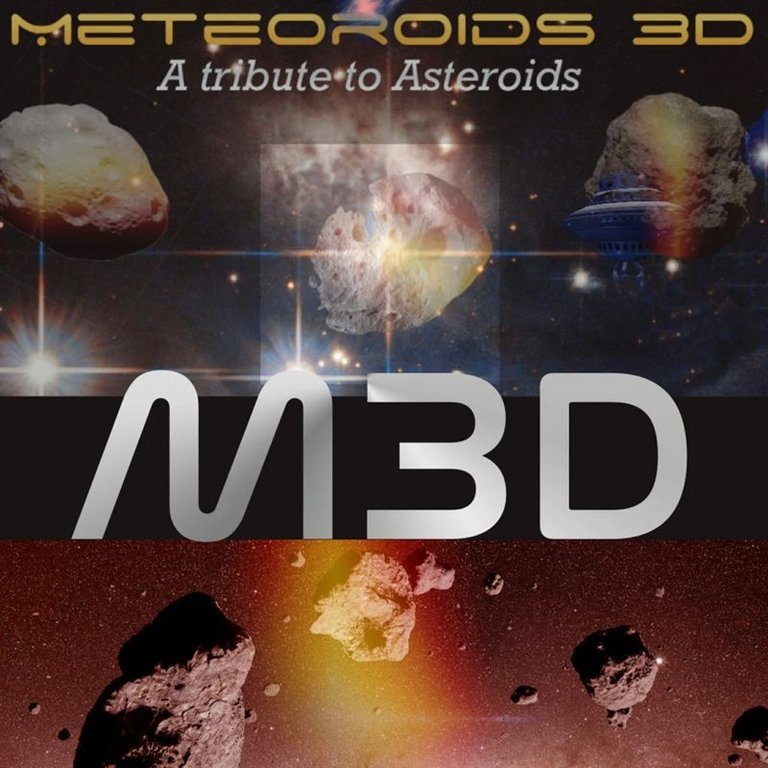
Meteoroids 3D: A Tribute to Asteroids is a modern 3D space shooter that pays homage to the classic arcade game Asteroids. Set in a futuristic sci-fi universe, players pilot a spaceship from a first-person perspective to destroy asteroids and combat enemies like UFOs and demons across 24 levels, utilizing various weapons while preserving the simple, addictive core of the original game.
Gameplay Videos
Meteoroids 3D: A Tribute to Asteroids Cracks & Fixes
Meteoroids 3D: A Tribute to Asteroids Guides & Walkthroughs
Meteoroids 3D: A Tribute to Asteroids – Review
Introduction: A Pixel-Perfect Homage in a Three-Dimensional Universe
In the pantheon of video game history, few titles possess the mythic simplicity and enduring legacy of Atari’s 1979 arcade masterpiece, Asteroids. Its stark vector graphics, hypnotic Newtonian physics, and pure, distilled gameplay loop created a template for the shoot-’em-up genre that remains influential decades later. Enter Meteoroids 3D: A Tribute to Asteroids, a 2019 project from the small Spanish studio Titan Deep Space Company, helmed by developer I. Campomanes. This title is not an attempt to surpass or reinvent its hallowed predecessor; as its creators explicitly state, that would be “impossible.” Instead, it is a deliberate, reverent, and surprisingly expansive love letter—a bridge from the monochrome vector monitors of the golden age to the high-definition, multi-platform world of the 2020s. This review will dissect how Meteoroids 3D successfully channels the addictive spirit of Asteroids while navigating the complex demands of modern game design, and what its quiet, niche existence says about preservation, tribute, and the very nature of gameplay purity.
Development History & Context: From Pocket Change to Pixel Perfection
The Studio and the Vision: Titan Deep Space Company is a micro-studio, with Meteoroids 3D representing a passion project for its creator. The development ethos is laid bare in the game’s own store descriptions: a nostalgic recollection of “leaving school… to spend our precious coins in the arcade machines.” This is not a corporate-driven reboot but a personal tribute, born from a desire to recapture the “absurd and crazy way” of destroying space rocks. The choice of the name “Meteoroids” instead of “Asteroids” is a necessary legal避雷针 (lightning rod), a common practice for fan tributes, immediately signaling its status as an homage rather than a licensed product.
Technological Constraints & Shifts: The original Asteroids was a marvel of minimalism, using vector monitors to create crisp, geometric shapes with a tiny memory footprint. Its “constraints” were its genius. Meteoroids 3D faces the inverse challenge: leveraging modern hardware (from iPhones to Xbox Series X|S) to create a 3D environment without losing the core’s tactile, immediate feel. The shift from 2D to 3D is the game’s most significant formal change. While the core play remains on a single 2D plane (the “z-axis” is largely cosmetic, with scenarios being “not the main goal”), the addition of a third dimension offers new visual possibilities and slight tactical depth in asteroid spawning and ship orientation. The development spanned multiple platforms, with an initial mobile release (December 2019) followed by ports to PC, Xbox, and Nintendo Switch (2021), showcasing a small team’s ambition to reach the widest possible audience of retro enthusiasts.
The Gaming Landscape of its Release: By 2019, the “retro revival” was a dominant indie trend. However, most projects fell into two camps: meticulous recreations (often via compilations) or modern re-imaginings that heavily altered the source material. Meteoroids 3D occupies a unique middle ground. It arrives after the wave of pure nostalgia (like the Atari Vault collections) and amidst a sea of roguelike shooters. Its timing is interesting—released just as players were beginning to critically examine what elements of classic games were truly essential versus what was merely a product of technological limitation. Its message is clear: the “simplicity” was the point, not the bug.
Narrative & Thematic Deep Dive: The Story is the Gameplay
To discuss narrative in Meteoroids 3D is to discuss the narrative of Asteroids, because the former intentionally forgoes any original storytelling. There is no plot, no characters, no dialogue, and no explicit thematic underpinning beyond the pure mechanics of survival and destruction. This is a deliberate and intellectually honest design choice.
Thematic Inheritance from Asteroids: The original Asteroids was a game of cosmic loneliness and terrifying vastness. The player’s tiny triangle floated in an infinite, black void, besieged by indifferent space rocks and the occasional alien intruder. The theme was survival against an overwhelming, unbounded environment. Meteoroids 3D inherits this theme but subtly alters it through its visual presentation. Where Asteroids used stark black to emphasize emptiness, Meteoroids 3D uses colorful, often vibrant or neon-hued 3D environments (“scenarios”). This shifts the tone from existential dread to a more playful, arcade-style spectacle. The “fantasy” tag applied on MobyGames feels apt—this is a fantasy of space where the laws of physics can be toggled, where you can summon a “Demon” enemy alongside classic UFOs, and where the Greek alphabet orders your progression (Alpha, Beta, Gamma… Why the Greek alphabet? “It’s cool.”). The narrative is the score, the leaderboard, the personal quest for a new record in “destroying meteors in 20 seconds.”
Creator’s Narrative as Meta-Commentary: The most potent “narrative” in Meteoroids 3D is the one woven by its own creator in the ad blurbs. It’s a first-person account of arcade nostalgia, a meditation on how “imagination did the rest” in the face of simple graphics. This meta-narrative—the story of why the game was made—is more compelling than any in-game lore could be. It frames the entire experience as an act of preservation and communal memory, inviting the player to share in that nostalgia while simultaneously creating new memories with modernized mechanics.
Gameplay Mechanics & Systems: The Calculus of Chaos
Meteoroids 3D is a masterclass in additive design, taking a proven loop and layering optional complexity without disrupting its fundamental heartbeat.
The Core Loop: Identical to its ancestor: pilot a ship, shoot procedurally generated asteroids/meteoroids to break them into smaller pieces, avoid collision with rocks and enemies, manage limited lives, and survive for a set time or until the level’s asteroid count reaches zero. The “incremental count that finishes after a time” mentioned in the features is a direct evolution of the original’s “saucer” spawning timer, repurposed as a scoring/duration mechanic.
Innovative or Flawed Systems:
* Weapon Progression & Energy Management: The introduction of seven distinct weapons, unlocked over the 24 Greek-lettered levels, is the game’s most significant systemic addition. This creates a meta-progression and allows for player choice—do you stick with the reliable rapid-fire blaster, or save energy for the devastating plasma cannon? The “energy weapons are far more effective, but consume a lot of energy” rule introduces a crucial resource management layer absent in the original’s infinite bullets. This is a smart modernization, adding tactical depth without overwhelming the core.
* Intelligent Missiles: A fascinating upgrade. Standard bullets are hitscan or projectile, but missiles are guided with “priority targets.” This AI introduces a new strategic layer: in a chaotic field, do you fire missiles to automatically hunt the most dangerous enemy fighters, or save them for a dense cluster of large meteors? It automates a decision the original player had to make manually.
* Enemy Ecosystem: The expansion from the lone UFO to a “Demon, Mother Ship, and enemy fighters” is another key evolution. Each enemy type presumably has distinct behaviors (the fast “very, very dangerous” fighters, the presumably heavier Mother Ship), creating varied threat profiles. Crucially, the option to deactivate all enemies is a stroke of design genius. It allows purists to experience the “old way, destroying meteors” in a 3D environment, making the game serve two distinct audiences: those who want a pure Asteroids experience with new visuals and physics, and those who want a more complex, enemy-heavy arcade shooter.
* Physics as a Philosophy: The “full physics option” is arguably the game’s most important feature. Activating it restores the original’s classic inertia-based control, where momentum carries you and rotation is independent of thrust. This mode is “logically more complex” and demands the same spatial reasoning and predictive flying that made the original so deep. The default “simple mode” likely uses more direct, modern control schemes (e.g., ship moves relative to stick position). This is not a flaw but a brilliant accommodation, letting players choose their desired fidelity to the source material.
* Time as the Ultimate Difficulty: The adjustable timer per level (3 to 15 minutes) is a masterful difficulty knob. A 3-minute “Alpha” level becomes a frantic, high-score sprint. A 15-minute “Omega” level transforms into a marathon of endurance and resource conservation. This single variable adjusts the game’s entire psychological tempo.
* UI and Menus: Based on descriptions, the UI is functional and focused on the HUD (score, time, weapon/energy status). The configuration menu is robust, offering view choice (first-person “is the best!” but third-person available), enemy toggles, time limits, and weapon selection—empowering the player to customize their experience from the outset.
Flaws and Omissions: From the source material, potential weaknesses are implied. The reliance on a gamepad is a strong recommendation, suggesting touch controls on mobile might be suboptimal. The “two initial scenarios, more to come” comment hints at a potential lack of environmental variety at launch. The absence of a true co-op mode is notable for a modern arcade game. However, these are conscious scopes-for-tributes decisions, not necessarily failures.
World-Building, Art & Sound: Aesthetics of Homage
Setting & Atmosphere: The setting is “fantasy” and “sci-fi / futuristic,” but it’s an abstract one. The “scenarios” are not narrative spaces but aesthetic arenas. Given the game’s tags (“Colorful,” “Family Friendly,” “Retro”) and the move from monochrome to full color 3D, one can infer environments that range from deep-space starfields to nebulae, perhaps with geometric planetoids or stylized asteroid belts. The atmosphere is one of vibrant, clean arcade action—a sharp contrast to the grimdark sci-fi prevalent in the era. It seeks to evoke the feeling of an 80s arcade cabinet: bright, immediate, and fun.
Visual Direction: The visual philosophy is “3D, but with the simplicity of the game of the time.” This likely means low-poly models for meteors and ships, clean shaders, and a focus on readability over realism. The ship itself is probably a modernized take on the iconic triangle. The use of color is crucial—whereas Asteroids used white vectors on black, Meteoroids 3D uses color to differentiate threats (enemy ships, different meteor types) and weapon fire. It’s a translation of vector logic into polygonal form.
Sound Design: This is a major gap in the source material. The original’s iconic, minimalist hum of the ship’s engine and the satisfying thwip of the laser are legendary. Meteoroids 3D‘s sound is unmentioned. One hopes for a soundtrack that mixes retro synthwave with classic arcade sound effects (explosions, weapon pews, alert tones). The lack of commentary here is a missed opportunity to analyze how audio fidelity or modern soundscapes might alter the nostalgic experience.
Reception & Legacy: A Quiet Tribute in a Loud World
Critical and Commercial Reception: Here, the data is stark. On MobyGames, it has a “Moby Score” of n/a and is “Collected By” only 1 player. On Steam, it has “No user reviews” and only 3 curator reviews mentioned. On the Xbox and Nintendo Switch stores, review data is similarly non-existent or minimal. This is not a game that captured mainstream or even broad indie attention. Its commercial model is interesting: free on mobile (iOS/iPad) with a $4.99-$6.89 price on consoles/PC. It is the definition of a niche product.
Evolution of Reputation: Without reviews, its reputation is purely organic and based on word-of-mouth within retro communities. Its legacy is currently confined to being a well-documented curiosity—a faithful tribute that executed its mission competently but flew under the radar. Its presence on multiple stores suggests modest commercial success or at least the developer’s commitment to making it widely available.
Influence on the Industry: It is unlikely to have had measurable influence. It is too obscure and too specifically a tribute. However, it serves as a valuable case study in preservation-through-adaptation. It demonstrates a path for keeping a classic mechanics-set alive: not by burying it in a collection, but by thoughtfully updating its presentation and controls while offering the original’s difficulty/physics as an option. It argues that the “soul” of a game can be separated from its technical specs.
Place in the Asteroids Franchise’s History: The Asteroids franchise has seen official modernizations (Asteroids: Reinvented, Asteroids: Outpost) that took the concept in wildly different directions (MMO, survival). Meteoroids 3D stands in stark contrast: it is the most conservative, the most respectful, and arguably the purest experience in spirit to the 1979 original, despite being in 3D. Its legacy may be as the “purist’s port,” the game you recommend to someone who wants to play Asteroids on a modern screen with a modern controller, but who balks at emulation.
Conclusion: Achieving the Impossible by Not Trying
Meteoroids 3D: A Tribute to Asteroids is a resounding success on its own deliberately narrow terms. It does not seek to be better than Asteroids—an impossibility—but to be a worthy vessel for its essence. By offering a robust suite of options (physics toggle, enemy deactivation, time limits, view switching), it respects both the purist and the modernizer. Its 24 levels provide a structured challenge, and its added enemy types and weapon variety offer fresh tactical puzzles without obscuring the clean, geometric ballet of rock-breaking and evasion.
Its weaknesses are those of its scope: a thin audiovisual identity (sound is notably unaddressed), minimal world-building, and a lack of any broader hook to attract those not already predisposed to love Asteroids. It is a game for appreciators, not converts.
In the grand tapestry of video game history, Meteoroids 3D is a small, meticulously crafted stitch. It will not be remembered as a landmark, but it deserves recognition as a perfect tribute. It proves that the “simplest” game can be the most addictive, and that honoring a classic doesn’t require changing it, but rather understanding which of its parts are sacred (the inertia, the tension, the joy of a perfect split) and which are artifacts of time (the black void, the single screen). In an era of contentious remakes and reboots, Meteoroids 3D offers a quieter, more sincere model: a bridge, not a replacement. Its final, supreme irony is that in trying so hard to emulate the impossible greatness of Asteroids, it has created something uniquely and definitively itself—a 21st-century shrine to the joy of shooting at polygons in space.
Final Verdict: 4/5 Stars – A near-flawless homage that understands that paying tribute means preserving the soul, not just the shell. Its niche obscurity is a loss for anyone who values gameplay purity.