
- Release Year: 2024
- Platforms: Linux, Macintosh, Windows
- Publisher: Erabit Studios, LockedOn Games
- Developer: LockedOn Games
- Genre: Adventure
- Perspective: 1st-person
- Game Mode: Single-player
- Gameplay: Puzzle elements, Visual novel
- Setting: Detective, Mystery
- Average Score: 87/100
Description
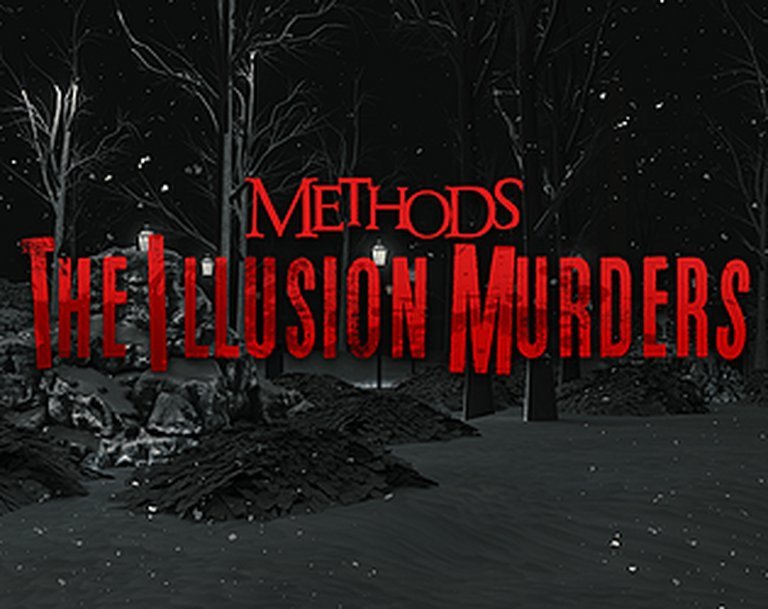
Methods: The Illusion Murders is an extra story in the Methods series that follows Detective Red July early in her career as she investigates perplexing illusion-themed murders, including an impossible case where three victims were shot by a single bullet while arranged in a triangle. Set in a point-and-click adventure with puzzle elements and visual novel narrative, players guide Red July through a first-person fixed-screen environment to unravel the mystery behind the elusive Illusion Killer.
Where to Buy Methods: The Illusion Murders
PC
Methods: The Illusion Murders Guides & Walkthroughs
Methods: The Illusion Murders: Review
Introduction
In the ever-evolving landscape of indie visual novels, few franchises manage to carve out a niche as distinct as Methods: The Detective Competition. Within this universe, Methods: The Illusion Murders stands as a pivotal, self-contained story that redefines the boundaries of prequel content. Originally conceived as a fan-requested extra chapter in 2021, it later emerged as a free standalone release in April 2024, offering players a glimpse into the early career of the enigmatic Detective Red July. This review posits that despite its brevity and modest scope, The Illusion Murders transcends its origins as DLC to become a masterclass in psychological storytelling. It serves not only as a compelling murder mystery but also as a profound meditation on genius, isolation, and the fragility of infallibility.
Development History & Context
LockedOn Games, the sole developer and publisher of the Methods series, crafted The Illusion Murders as a response to direct fan engagement. The story originated from a 2020 Twitter DM exchange, where a fan inquired about Red July’s past cases—a query that ignited the developer’s imagination. Development commenced in December 2020, with LockedOn iterating on the narrative over six months. By June 2021, the script was complete, though only sprites and music tracks were finalized. To coincide with the LockedOn Tenth Anniversary Presentation, the first chapter was hastily polished in July 2021. Remarkably, the remaining four chapters were developed and translated in just 20 days, culminating in a July 30, 2021 release as part of the main Methods game.
Technologically, the game leveraged the Ren’Py engine, a choice that enabled cross-platform compatibility (Windows, macOS, Linux) while accommodating its visual novel format. This engine facilitated the signature “fixed/flip-screen” aesthetic and point-and-click interface, aligning with the genre’s conventions. Released during a period when narrative-driven games were gaining mainstream traction, The Illusion Murders capitalized on the growing appetite for detective-themed indies like AI: The Somnium Files and Danganronpa. Its evolution from paid DLC to free standalone in 2024 reflected LockedOn’s commitment to accessibility and world-building, ensuring the Methods lore remained approachable to newcomers.
Narrative & Thematic Deep Dive
Plot and Structure
The narrative unfolds across five tightly woven chapters, set early in Red July’s career. The central mystery revolves around the “Illusion Killer,” a serial murderer who orchestrates crimes defying physics—most notably, the impossible “triangle murder,” where three victims are slain by a single bullet. As Red July’s famed “method” (her ability to deduce any crime instantly) fails her, the story shifts from a procedural puzzle to a psychological confrontation. The plot culminates in a dual revelation: the killer’s identity (a disillusioned former detective) and the truth behind the “impossible” crime (a bullet ricocheting off a victim’s military skull plate).
Character Analysis
– Detective Red July: The protagonist embodies the duality of brilliance and emotional detachment. Her crisis of confidence when her method fails humanizes her, while her cold dismissal of assistants Latch and Gumn underscores her pathological fear of attachment.
– The Illusion Killer: A former detective who abandoned mundane cases for “thrills,” he represents the antithesis of Red July. His monologue about desiring to “hurt” her not physically but emotionally exposes the theme of envy between geniuses.
– Supporting Cast: Ratty, a journalist and victim’s friend, complicates the narrative with her own agenda (leaking Red July’s address). Assistants Latch and Gumn symbolize the emotional connections Red July actively rejects.
Themes
– The Fragility of Genius: Red July’s identity is predicated on infallibility. The “illusion” of her method’s failure forces her to confront her limitations.
– Illusion vs. Reality: The killer’s crimes are optical illusions, mirroring the broader theme of appearances deceiving. Red July’s eventual solution—relying on an overlooked physical anomaly (the skull plate)—emphasizes truth beneath artifice.
– Isolation as Armor: Red July’s firing of her assistants after solving the case reinforces her belief that emotional bonds are liabilities. This echoes her future partnership with Detective Honor in the main Methods series.
Gameplay Mechanics & Systems
Core Loop
As a visual novel, The Illusion Murders prioritizes narrative interactivity over traditional gameplay. Players navigate via point-and-click selections, progressing through text-heavy scenes punctuated by choice-driven interactions. The primary mechanic involves evidence examination, implemented as simple mini-games (e.g., analyzing bullet trajectories or blood patterns). These puzzles are rudimentary but thematically resonant, requiring players to dismantle the killer’s “illusions” logically.
Innovations and Limitations
– Dynamic Storytelling: Choices subtly influence dialogue, though outcomes remain largely linear. This aligns with the game’s focus on Red July’s internal monologue over player agency.
– UI Design: The Ren’Py interface is clean and functional, with a minimalist aesthetic that avoids clutter. Text boxes and sprite backgrounds are efficiently utilized to maintain immersion.
– Flaws: The brevity (estimated playtime: 30 minutes) and lack of progression systems (e.g., leveling, branching paths) may disappoint players seeking depth. The puzzle mini-games, while thematically fitting, offer minimal challenge.
World-Building, Art & Sound
Setting and Atmosphere
The game unfolds in a stylized, unnamed city, blending noir-inspired grit with vibrant anime aesthetics. Locations—Red July’s cluttered office, a rain-slicked crime scene, a dimly lit bar—evolve from mundane to ominous, mirroring Red July’s deteriorating confidence. The “illusion” theme permeates the environment, with visual motifs (triangular blood spatters, distorted reflections) hinting at the killer’s psychological warfare.
Art Direction
Character designs are expressive and stylized, with Red July’s sharp features and the Illusion Killer’s unsettling grin emphasizing their opposing philosophies. Backgrounds are detailed yet painterly, using color palettes to shift tones (e.g., cool blues for detachment, warm reds for violence). This distinct “cartoony” art style, noted in player tags, contrasts with the narrative’s darker themes, creating a unique tonal dissonance.
Sound Design
The original soundtrack elevates tension through minimalist piano melodies and dissonant strings, heightening scenes of deduction and confrontation. Sound effects—gunshots, rain, phone rings—are sparse but impactful. While lacking voice acting, the audio design compensates by amplifying the narrative’s claustrophobia, especially during Red July’s rooftop confrontation with the killer.
Reception & Legacy
Launch and Commercial Impact
Initially released as paid DLC in 2021, The Illusion Murders garnered niche attention within the Methods community. Its 2024 standalone release—free on Steam and Itch.io—significantly broadened its reach. On Steam, it holds a “Very Positive” rating (86% of 83 reviews), with players praising its “story-rich” narrative and “distinctive artwork.” Critics lauded it as a “must-play prequel” (via Steambase), though lamented its short length. Commercial success is measured by accessibility rather than revenue, with 83 user reviews indicating modest but dedicated engagement.
Critical Reception
While Metacritic lists no critic scores, player reviews on Steam highlight its strengths:
– Strengths: Tight pacing, compelling character study, and seamless integration with the Methods lore.
– Criticisms: Limited interactivity and a puzzle solution perceived as contrived (as noted in a Steam discussion: “Why plan for a victim’s skull plate?”).
Legacy
The Illusion Murders cemented Red July as a franchise cornerstone, providing backstory that enriches her partnership with Detective Honor in Methods 2: Secrets and Death. Its release as free content demonstrated LockedOn’s commitment to expanding their universe without monetary barriers. Thematically, it influenced subsequent games like Methods: The Canada Files, which similarly blend procedural puzzles with psychological depth. Its legacy lies in proving that even short, self-contained stories can profoundly shape a larger narrative tapestry.
Conclusion
Methods: The Illusion Murders is a microcosm of what makes the Methods series exceptional: a marriage of intricate plotting, thematic ambition, and character-driven drama. As a standalone experience, it transcends its origins as DLC, offering a self-contained mystery that is as much a study in genius as it is a whodunit. While its brevity and simplistic gameplay may deter players seeking robust mechanics, its strengths lie in narrative precision and emotional resonance. Red July’s journey from infallible detective to a woman confronting her own limitations is rendered with nuance, making the 30-minute playtime feel weighty.
Final Verdict:
The Illusion Murders is not merely a prequel; it is a vital piece of the Methods mythos. LockedOn Games has crafted a testament to the idea that the most compelling “illusions” are those we create to shield ourselves from vulnerability. For fans of psychological thrillers and detective fiction, it is an essential, free entry point into a universe where every crime hides a deeper truth. Its place in video game history is secure as a masterclass in concise, impactful storytelling—one that proves the most profound mysteries often lie not in the crimes themselves, but in the minds that solve them.