
- Release Year: 2019
- Platforms: Android, Windows
- Genre: Action
- Perspective: Side view
- Game Mode: Single-player
- Gameplay: Arcade, Shooter
- Setting: Futuristic, Sci-fi
Description
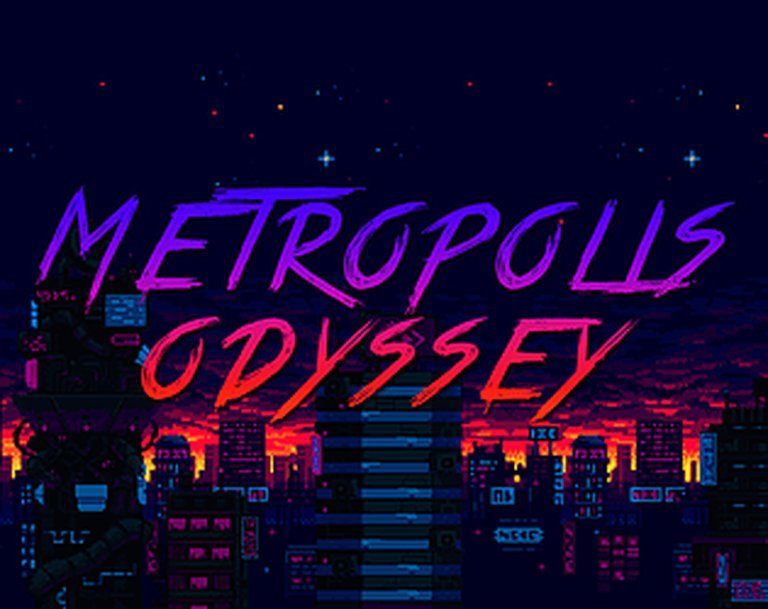
Metropolis Odyssey is a 2019 side-scrolling shoot ’em up set in a futuristic, sci-fi metropolis, featuring pixel art visuals and a synthwave soundtrack. Players pilot a vehicle through horizontally scrolling levels, engaging in fast-paced arcade shooting action with the primary goal of achieving the highest possible score.
Metropolis Odyssey: Review
Introduction: A Cyberpunk Ghost in the Machine
In the bustling landscape of 2019’s video game releases, dominated by sprawling open-world epics and cinematic narrative juggernauts, Metropolis Odyssey exists as a deliberate and quiet anachronism. It is a title that whispers its presence rather than declares it—a distilled, pixelated essence of the shoot ’em up genre, dripping with neon-soaked cyberpunk atmosphere and the pulsing rhythms of synthwave. Unlike its phonetically similar and globally renowned cousin, Metro Exodus, which charted a gritty, narrative-driven path through a post-nuclear Russia, Metropolis Odyssey has no story to tell, no characters to meet, and no world to save. Its sole, unwavering objective is the pursuit of a higher score. This review will dissect this fascinatingly minimalist artifact, arguing that while Metropolis Odyssey lacks the scope, narrative weight, and commercial impact of its contemporaries, it stands as a pure, unadulterated love letter to arcade fundamentals. Its significance lies not in changing the industry but in perfectly capturing a specific, timeless gaming ethos: the relentless, satisfying loop of dodging, shooting, and striving for one more point.
Development History & Context: The Solo Dev’s Synthwave Vision
Metropolis Odyssey emerges not from a 150-person studio like 4A Games, but from the singular vision of AlchemistDev, an independent creator operating under a pseudonym. Developed in and released in 2019 for Windows and Android, the game was built using the Unity engine, a common and accessible tool for indie developers seeking to craft polished experiences without the resources of a AAA powerhouse.
The development context is one of deliberate retro affection. The late 2010s saw a robust resurgence of “neo-retro” gaming—titles that embraced the aesthetic constraints of the 8-bit and 16-bit eras (pixel art, chiptune music) but leveraged modern tools for smoother gameplay and visual effects. Metropolis Odyssey fits squarely within this movement. Its stated inspirations are clear: the fast-paced, screen-filling action of classic arcade shooters like Gradius or R-Type, filtered through a late-20th/early-21st-century cyberpunk aesthetic. The choice of synthwave for its soundtrack is particularly telling, as that musical genre itself is a retro-futurist homage to 1980s electronic music and film scores. There was no sprawling team, no partnership with a famed author, and no multi-year press campaign. This was a project born from passion, released onto digital storefronts like itch.io (where it operates on a “name your own price” model) and Game Jolt, targeting a niche audience seeking pure, uncomplicated arcade thrills. The technological constraints were self-imposed: the pixel art style and 2D scrolling were artistic choices, not limitations of hardware, representing a conscious design philosophy over graphical arms races.
Narrative & Thematic Deep Dive: The Beauty of Absence
To discuss the narrative of Metropolis Odyssey is to engage in a profound exercise in minimalism. There is no narrative. There are no characters, no dialogue, no plot, and no themes in any conventional sense. The game presents a setting—a perpetually neon-drenched, futuristic cityscape implied by its title and visual style—but never contextualizes it. Who are you? A pilot in a sleek aircraft? A rogue AI? A cybernetically enhanced courier? The game provides no answers.
This absence is its most significant thematic statement. In an era where games like Metro Exodus build entire civilizations and moral systems around a protagonist’s journey, Metropolis Odyssey strips away all pretense of story to focus on pure gameplay as experience. The “odyssey” is not a literal journey across a wasteland but a metaphorical one into the self, measured only in rising scores and increasing skill. The cyberpunk aesthetic—typically laden with themes of corporate dystopia, transhumanism, and societal decay—is utilized here purely for mood and visual identity. The rain-slicked skyscrapers and glowing holograms create a sense of cool, atmospheric danger, but they are a backdrop, not a commentary. The game theorizes that the essence of the “odyssey” in gaming is not about reaching a destination, but about the mastery of the journey itself. It is a thesis that gameplay need not be burdened by narrative to be meaningful; the meaning is generated by the player’s own pursuit of excellence.
Gameplay Mechanics & Systems: The Calculus of Survival
Metropolis Odyssey operates on a classic side-scrolling shoot ’em up (shmup) architecture, refined to an almost surgical degree.
- Core Loop: The entire game is a single, continuous run from start to inevitable defeat. The loop is immediate: spawn, dodge, shoot, collect potential point items (if any), avoid collision with enemies and bullets, survive as long as possible, and achieve a high score. There are no levels, no checkpoints, no boss fights in the traditional sense—just an endless, escalating barrage.
- Combat & Control: Control is direct and responsive. The player’s vessel (a small, pixel-art aircraft or ship) moves with a 1:1 precision that is critical. The primary weapon is a default forward-firing shot, likely with no upgrade paths or weapon variations within a single run—this is a game of mastery of a single tool, not arsenal management. Enemy designs are simple but distinct, with varied attack patterns (straight shots, curved beams, spreading patterns) that require pattern recognition and屏息 (屏息 – holding one’s breath—a metaphor for tense focus).
- Progression & Systems: There is no character progression. You start with your full complement of firepower and health (often a single hit kill, or “one-hit death,” a classic shmup trope). There are no RPG elements, no skill trees, no upgrades to find or purchase. The only “progression” is the player’s own skill curve. The UI is mercifully minimal, likely displaying only score, lives (if any), and perhaps a simple hitbox indicator. This reinforces the game’s purity: the only system is the raw interaction between player input and enemy pattern.
- Innovation & Flaws: The game’s innovation is not in mechanics but in presentation and philosophy. Its “innovative” act is its refusal to innovate beyond the core arcade formula in an era obsessed with complexity. Potential flaws are inherent to its design: the single-weapon limitation can lead to repetitive gameplay, and the lack of a structured difficulty curve or diverse stages may limit long-term engagement for some. The one community feedback piece from itch.io user “Dibaka” highlights a common shmup readability issue: small bullet sprites. Their suggestion to make bullets “10x bigger” is a classic design debate in the genre—balancing visual clarity against screen clutter. The comment also notes the absence of a controls tutorial, a small but significant barrier to entry in an otherwise pick-up-and-play genre.
World-Building, Art & Sound: A Masterclass in Atmospheric Efficiency
Where Metropolis Odyssey truly distinguishes itself is in its aesthetic coherency. With no narrative dialogue or exposition, the world is built entirely through its art and sound.
- Visual Direction: The pixel art is not merely a stylistic choice but a narrative device. The detailed, small-scale sprites of towering, rain-smeared megastructures, flickering neon signs in a non-existent language, and sleek, hostile enemy craft create a dense, lived-in cyberpunk world implied rather than stated. The 2D scrolling is often parallax, with multiple layers of backgrounds moving at different speeds to create a profound sense of depth and speed in a 2D plane. The color palette is dominated by deep blues, purples, and the stark, vibrant glow of neon pinks, cyans, and yellows against dark skies—a perfect visual translation of the synthwave aesthetic.
- Sound Design & Music: The synthwave soundtrack is not just background music; it is the game’s heartbeat. Driving, melodic basslines and arpeggiated synthesizers directly inform the game’s pace and tension. The music likely swells during denser enemy formations and recedes during lulls, creating an emotional rhythm that guides the player’s adrenaline. Sound effects for weapons, explosions, and player destruction are crisp, 8-bit-inspired, and satisfying, providing crucial audio feedback in a visually dense environment. Together, the art and sound create a diegetic cyberpunk atmosphere that the game’s lack of story desperately needs. You are not told you’re in a dystopian metropolis; you are made to feel it through the relentless sensory input.
Reception & Legacy: The Niche’s Niche
Metropolis Odyssey occupies a space so niche that it barely registered in the critical or commercial spheres. There are no critic reviews aggregated on MobyGames or Metacritic. Its commercial performance is infinitesimal compared to a title like Metro Exodus, which sold over 10 million units. By February 2024, Metropolis Odyssey was “Collected By” only 2 players on MobyGames—a stark statistic underscoring its obscurity.
Its reputation is confined to the small ecosystem of indie shmup enthusiasts on platforms like itch.io. The sole user comment there is positive but constructive, praising its “solid controls” and “lovely” art and music while offering specific, technical feedback on bullet size and tutorials. This represents the totality of its discourse: a handful of players who stumbled upon it and appreciated its craftsmanship.
Consequently, its influence on the industry is non-existent. It did not spawn clones, inspire major studios, or receive awards. Its legacy is purely as a curation item—a perfect example of a specific subgenre executed with clarity and love. In the vast museum of gaming history, it is a small, hand-drawn placard next to the grand exhibit of Metro Exodus. While Metro Exodus was discussed in relation to its Epic Games Store exclusivity controversy, its narrative innovations, and its sales milestones, Metropolis Odyssey‘s story is one of quiet creation and quiet reception. It is a testament to the fact that for every game aiming to redefine the medium, there are dozens aiming to perfect a classic form for a handful of devoted connoisseurs.
Conclusion: A Perfect, Forgotten Gem
Metropolis Odyssey is not a “great” video game by the conventional metrics of critical acclaim, commercial success, or cultural impact. It will not appear on any “Best Of” lists, be studied in game design courses outside of niche case studies, or have a sequel. It is, however, a perfectly realized artifact of a specific design philosophy. It understands that the core joy of the arcade shooter is the dance between player and pattern, the tension of a near-miss, and the dopamine spike of a new high score. It wraps this timeless loop in an immaculately cohesive cyberpunk-synthwave aesthetic that is both nostalgically 80s and timelessly cool.
Its place in video game history is not as a landmark but as a preservation of form. In an era of ever-expanding game scope, it is a refreshing reminder that a game can be simply, purely about its moment-to-moment gameplay. It is a ghost in the machine of 2019’s release schedule—a small, brilliant, and largely forgotten flash of neon that proved, to those who found it, that the old ways can still burn bright. For the historian, it is a crucial data point: evidence that the indie scene of the late 2010s was not just about narrative-driven adventures or roguelikes, but also about the quiet, dedicated preservation and perfection of classic arcade action. Its verdict is not one of stars, but of profound, unassuming integrity.