
- Release Year: 2023
- Platforms: Linux, Macintosh, Windows
- Genre: Adventure, Horror
- Perspective: 1st-person
- Game Mode: Single-player
- Gameplay: Visual novel
- Average Score: 94/100
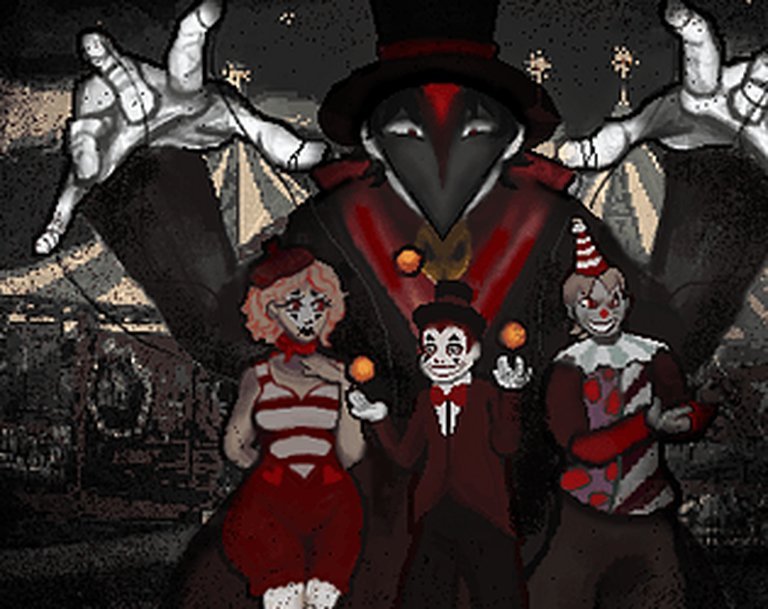
Description
Midway Circus is a first-person horror visual novel where players assume the role of a magician exploring a sinister circus. As you navigate the eerie setting, you’ll uncover dark secrets about the circus and its unsettling inhabitants, all while trying to survive the horrors lurking within. Developed for the 2022+1 SCREAM JAM, the game blends adventure and psychological horror in a fixed-screen, menu-driven narrative experience.
Midway Circus Reviews & Reception
italohildebrandt.itch.io (94/100): Interesting start, I love that the dressing room is simply a horror showcase as soon as you start looking around; really makes you want to learn the story behind the circus and the ringleader.
Midway Circus Cheats & Codes
PlayStation 2
Enter codes at the main menu or during gameplay as specified.
| Code | Effect |
|---|---|
| ?PB | Unlocks all boats and tracks in Hydro Thunder. |
| Right, Up, Left | Unlocks the Cliffhanger track in Offroad Thunder. |
| Right(3) | Unlocks the Hyena vehicle in Offroad Thunder. |
| Right(3) again | Unlocks the Bad Omen vehicle in Offroad Thunder. |
| Up(3) | Unlocks the Wildcat vehicle in Offroad Thunder. |
| Up(3) again | Unlocks the Thrasher vehicle in Offroad Thunder. |
| Left(3) | Unlocks the Chieftain vehicle in Offroad Thunder. |
| Left(3) again | Unlocks the General vehicle in Offroad Thunder. |
| Left, Up, Right | Unlocks the Dust Devil vehicle in Offroad Thunder. |
| Left, Up, Right again | Unlocks the Silver Streak vehicle in Offroad Thunder. |
| Left, Up, Left | Disables drones in Offroad Thunder. |
| Up, Left, Up | Disables nitros in Offroad Thunder. |
| Right, Left, Right | Disables catch-ups in Offroad Thunder. |
| L1 + R1 + Square + Circle | Enables cheat mode in San Francisco Rush 2049. |
| X(2), Circle(2), L1(2), Hold R1 + Square, Release, Hold L1 + X | Unlocks all cars in San Francisco Rush 2049. |
| Hold L1 + R1 + Square + Circle + X, Release, Press Square, Circle, X | Enables car collisions in San Francisco Rush 2049. |
| Hold L1 + X, Press Square, Circle, Release, Hold R1 + X, Press Square, Circle | Enables random battle mode weapons in San Francisco Rush 2049. |
| Hold L1 + X, Press Circle, Square, Release, Hold R1 + X, Press Circle, Square | Toggles demolition battle mode in San Francisco Rush 2049. |
| Hold L1 + Square, Press Circle, X, Release, Hold R1, Press X, Square, Circle | Enables invincibility in San Francisco Rush 2049. |
| Hold R1, Press Square(3), Release, Hold L1, Press X(2), Circle | Unlocks super tires in San Francisco Rush 2049. |
| Circle(3), Hold L1 + R1 + X + Square | Toggles brakes on/off in San Francisco Rush 2049. |
| Hold L1 + Square, Release, Hold X + Square, Release, Hold Circle + Square, Release, Hold R1 + Square | Changes the color of the fog in San Francisco Rush 2049. |
| Hold R1, Press Square(3), Release, Hold L1, Press X(2), Circle | Unlocks super tires in San Francisco Rush 2049. |
| Hold L1 + Square, Release, Hold R1 + Circle, Release, Press X, Hold L1 + R1, Press Square, Release, Press Circle(3) | Makes your car invisible in San Francisco Rush 2049. |
| Circle, R1, L1, R1, L1, Square, R1, L1, R1, L1 | Enables suicide mode in San Francisco Rush 2049. |
| Hold X + Square, Press R1, Release, Hold Square + Circle, Press L1, Release, Press X(2), Circle(2), Hold L1 + R1, Press Square | Unlocks all tracks in San Francisco Rush 2049. |
| Hold R1 + Circle, Press L1, Release, Hold X + Square, Release, Press X(3) | Enables super speed in San Francisco Rush 2049. |
GameCube
Enter codes at the main menu or during gameplay as specified.
| Code | Effect |
|---|---|
| ?PB | Unlocks all boats and tracks in Hydro Thunder. |
| Right, Up, Left | Unlocks the Cliffhanger track in Offroad Thunder. |
| Right(3) | Unlocks the Hyena vehicle in Offroad Thunder. |
| Right(3) again | Unlocks the Bad Omen vehicle in Offroad Thunder. |
| Up(3) | Unlocks the Wildcat vehicle in Offroad Thunder. |
| Up(3) again | Unlocks the Thrasher vehicle in Offroad Thunder. |
| Left(3) | Unlocks the Chieftain vehicle in Offroad Thunder. |
| Left(3) again | Unlocks the General vehicle in Offroad Thunder. |
| Left, Up, Right | Unlocks the Dust Devil vehicle in Offroad Thunder. |
| Left, Up, Right again | Unlocks the Silver Streak vehicle in Offroad Thunder. |
| Left, Up, Left | Disables drones in Offroad Thunder. |
| Up, Left, Up | Disables nitros in Offroad Thunder. |
| Right, Left, Right | Disables catch-ups in Offroad Thunder. |
| L + R + X + Y | Enables cheat mode in San Francisco Rush 2049. |
| A(2), Y(2), L(2), Hold R + X, Release, Hold L + A | Unlocks all cars in San Francisco Rush 2049. |
| Hold L + R + X + Y + A, Release, Press X, Y, A | Enables car collisions in San Francisco Rush 2049. |
| Hold L + A, Press X, Y, Release, Hold R + A, Press X, Y | Enables random battle mode weapons in San Francisco Rush 2049. |
| Hold L + A, Press Y, X, Release, Hold R + A, Press Y, X | Toggles demolition battle mode in San Francisco Rush 2049. |
| Hold L + X, Press Y, A, Release, Hold R, Press A, X, Y | Enables invincibility in San Francisco Rush 2049. |
| Hold R, Press X(3), Release, Hold L, Press A(2), Y | Unlocks super tires in San Francisco Rush 2049. |
| Y(3), Hold L + R + A + X | Toggles brakes on/off in San Francisco Rush 2049. |
Midway Circus: A Haunting Ode to the Macabre Spectacle
Introduction: The Curtain Rises on a Nightmare
Midway Circus is not just a game—it’s an experience, a descent into the grotesque underbelly of a place where laughter curdles into screams and the sawdust hides more than just peanuts. Released in April 2023 by the indie collective Ítalo H., Beatriz Bon, Carolinx, and Gabiscoitinha, this visual novel horror game is a love letter to the eerie allure of circuses, wrapped in the trappings of psychological terror. It’s a game that understands the inherent uncanniness of the circus: the exaggerated smiles of clowns, the unnatural contortions of acrobats, the way the calliope’s music always seems just a half-step off. Midway Circus doesn’t just lean into these tropes—it weaponizes them, crafting a narrative that feels like a lost episode of The Twilight Zone directed by David Lynch.
At its core, Midway Circus is a game about discovery. You play as a magician, a newcomer to a circus family that is equal parts welcoming and sinister. The game’s genius lies in its ability to make the mundane terrifying. A dressing room isn’t just a place to change costumes—it’s a horror showcase, a museum of the macabre. The circus isn’t just a collection of tents and attractions—it’s a living, breathing entity with secrets buried deeper than the stakes holding up the big top. The game’s tagline—“Prepare to be scared and work your way to the end while discovering the secrets of this hellish circus”—isn’t just marketing hyperbole. It’s a promise.
What makes Midway Circus so compelling is its commitment to atmosphere. This isn’t a game that relies on jump scares or gore (though there’s plenty of the latter). Instead, it builds dread through implication, through the slow unraveling of a mystery that feels both personal and ancient. The circus is a character in its own right, a place where the past and present collide in ways that are as tragic as they are terrifying. And as the magician, you’re not just an observer—you’re a participant, complicit in the horrors that unfold.
In this review, we’ll peel back the layers of Midway Circus, examining its development, narrative depth, gameplay mechanics, and the ways it subverts and honors the traditions of both visual novels and horror games. We’ll explore how it fits into the broader landscape of indie horror, and why it deserves a place in the pantheon of games that understand the power of storytelling in interactive media. So step right up, ladies and gentlemen, boys and girls—the show is about to begin. Just don’t blame us if you leave with more questions than answers.
Development History & Context: The Birth of a Nightmare
The Scream Jam and the Indie Horror Renaissance
Midway Circus was born from the crucible of the 2022+1 SCREAM JAM, a game jam dedicated to horror games that push the boundaries of the genre. Game jams have long been a breeding ground for innovation, a place where developers can experiment with ideas that might be too risky for a full commercial release. The SCREAM JAM, in particular, has a reputation for producing games that are as creatively ambitious as they are unsettling. Past entries have included everything from surreal psychological horror to visceral body horror, and Midway Circus fits neatly into this tradition.
The team behind Midway Circus—Ítalo H., Beatriz Bon, Carolinx, and Gabiscoitinha—are relative unknowns in the gaming industry, but their work on this project demonstrates a deep understanding of horror tropes and a willingness to subvert them. The game was developed using Ren’Py, a popular engine for visual novels that has been used in everything from romantic comedies to psychological thrillers. Ren’Py’s flexibility allowed the team to craft a game that is as much about mood and atmosphere as it is about narrative, using its tools to create a world that feels alive with menace.
The Circus as a Horror Trope: A Brief History
The circus has long been a staple of horror fiction, from the eerie carnivals of Ray Bradbury’s Something Wicked This Way Comes to the twisted spectacle of American Horror Story: Freak Show. There’s something inherently unsettling about the circus: the way it exists on the fringes of society, the way it attracts both the curious and the desperate, the way it hides its secrets behind a veneer of whimsy and wonder. Midway Circus taps into this rich tradition, drawing inspiration from the likes of Carnival of Souls and Killer Klowns from Outer Space, but also from real-world circus lore.
The game’s title itself is a nod to the midway, the central thoroughfare of a circus or carnival where games, rides, and attractions are located. In Midway Circus, the midway isn’t just a setting—it’s a character, a labyrinth of horrors that the player must navigate. The game’s developers clearly did their research, drawing on the history of circuses and carnivals to create a world that feels authentic, even as it spirals into the supernatural. The dressing room, for example, is a masterclass in environmental storytelling, filled with artifacts that hint at the circus’s dark past.
The Indie Horror Landscape in 2023
Midway Circus arrived at a time when indie horror was experiencing a renaissance. Games like Doki Doki Literature Club! and The House in Fata Morgana had proven that visual novels could be just as effective at delivering horror as traditional survival horror games. Meanwhile, titles like LISA: The Painful RPG and Omori demonstrated that pixel art and retro aesthetics could be used to create deeply unsettling experiences. Midway Circus fits squarely into this tradition, using its visual novel format to explore themes of identity, trauma, and the cost of spectacle.
The game’s release on itch.io—a platform known for its support of indie developers—was a strategic move. Itch.io has become a hub for experimental and avant-garde games, a place where developers can release projects that might not find a home on more mainstream platforms like Steam. By releasing Midway Circus on itch.io, the developers ensured that their game would reach an audience that was already primed for its particular brand of horror.
Technological Constraints and Creative Solutions
One of the most impressive aspects of Midway Circus is the way it uses its technological constraints to its advantage. Ren’Py is not a cutting-edge engine—it’s designed for simplicity and accessibility, not graphical fidelity. But the developers of Midway Circus turned this limitation into a strength, using pixel art and a fixed first-person perspective to create a world that feels both retro and timeless. The game’s visuals are reminiscent of classic adventure games like King’s Quest and Space Quest, but with a darker, more modern sensibility.
The game’s sound design is equally impressive. The calliope music, the distant laughter, the creaking of the big top—all of these elements come together to create an atmosphere that is as immersive as it is unsettling. The developers clearly understood that horror is as much about what you hear as what you see, and they used sound to great effect.
Narrative & Thematic Deep Dive: The Horror Beneath the Big Top
The Plot: A Magician’s Descent into Madness
Midway Circus begins with a simple premise: you are a magician, newly arrived at a circus that is equal parts family and prison. The game’s narrative unfolds through a series of interactions with the circus’s performers, each of whom has their own secrets and motivations. As you explore the circus, you begin to uncover the dark history of the place, from the tragic fate of its former performers to the sinister rituals that keep it running.
The game’s story is told through a combination of dialogue, environmental storytelling, and surreal dream sequences. The dressing room, for example, is filled with artifacts that hint at the circus’s past, from old photographs to cryptic notes. These elements are woven together to create a narrative that is as much about discovery as it is about horror. The player is not just a passive observer—they are an active participant, piecing together the circus’s secrets one clue at a time.
The Characters: A Gallery of Grotesques
The characters of Midway Circus are a motley crew of misfits and monsters, each with their own tragic backstory. The ringleader, for example, is a figure of both authority and menace, a man who seems to know more about the circus’s dark secrets than he lets on. The clowns are not just comic relief—they are harbingers of doom, their painted smiles hiding something far more sinister. Even the magician, the player’s avatar, is not as innocent as they seem, their past tied to the circus in ways that are only revealed as the game progresses.
What makes these characters so compelling is the way they subvert expectations. The circus is a place of spectacle, where everything is exaggerated and larger than life. But Midway Circus peels back this veneer, revealing the human (and inhuman) stories beneath. The game’s characters are not just archetypes—they are fully realized individuals, each with their own fears, desires, and secrets.
Themes: The Cost of Spectacle
At its heart, Midway Circus is a game about the cost of spectacle. The circus is a place where people go to be entertained, to forget their troubles and lose themselves in the wonder of the performances. But behind the scenes, there is a darker reality: the performers are trapped in a cycle of exploitation and abuse, their bodies and minds pushed to the breaking point for the sake of the show.
The game explores this theme through a variety of lenses. The magician, for example, is a figure who is both a performer and a prisoner, their illusions hiding a deeper truth about the circus’s operations. The clowns, meanwhile, are a metaphor for the way society treats those who are different, their exaggerated features masking the pain and suffering they endure. Even the circus itself is a character in this story, a place that is both a home and a prison, a sanctuary and a hell.
The Horror: Psychological and Visceral
Midway Circus is a game that understands the difference between fear and horror. Fear is the jump scare, the sudden noise in the dark. Horror is the slow, creeping dread, the realization that something is deeply wrong. The game leans heavily into the latter, using its narrative and atmosphere to create a sense of unease that lingers long after the credits roll.
The game’s horror is both psychological and visceral. On the one hand, there are the surreal dream sequences, the cryptic notes, the way the circus seems to shift and change around you. On the other hand, there is the gore, the body horror, the way the game forces you to confront the physical cost of the circus’s spectacle. The dressing room, for example, is filled with artifacts that hint at the violence and suffering that have taken place within the circus’s walls.
The Ending: Ambiguity and Interpretation
Like all great horror stories, Midway Circus ends on a note of ambiguity. The game’s final moments are open to interpretation, leaving the player to piece together the true nature of the circus and its performers. Is the magician a victim or a villain? Are the horrors of the circus real, or are they a manifestation of the magician’s fractured psyche? The game doesn’t provide easy answers, and that’s part of its genius. The horror of Midway Circus isn’t just in what happens—it’s in what might happen, in the possibilities that linger in the shadows.
Gameplay Mechanics & Systems: The Illusion of Choice
The Visual Novel Format: A Double-Edged Sword
Midway Circus is, at its core, a visual novel, a genre that is often criticized for its lack of interactivity. But the developers of Midway Circus use this format to their advantage, crafting a game that is as much about exploration as it is about narrative. The game’s fixed first-person perspective and menu-driven interface create a sense of claustrophobia, trapping the player in the circus’s labyrinthine corridors and forcing them to confront its horrors head-on.
The game’s gameplay loop is simple: explore the circus, interact with its performers, and uncover its secrets. But within this simplicity lies a depth of mechanics that keep the experience engaging. The dressing room, for example, serves as a hub where the player can examine artifacts and piece together the circus’s history. The game’s dialogue system is equally well-crafted, with each conversation revealing new layers of the story.
The Illusion of Choice: Agency and Consequence
One of the most interesting aspects of Midway Circus is the way it plays with the concept of choice. On the surface, the game presents the player with a series of decisions, from how to interact with the circus’s performers to which areas to explore. But as the game progresses, it becomes clear that these choices are largely illusory. The circus is a place of fate and destiny, where the past dictates the present and the future is written in blood.
This is not to say that the game is without agency. The player’s choices do have consequences, but they are often subtle and unexpected. A seemingly innocuous decision in one scene might have ripple effects that are only felt hours later. This creates a sense of tension and unpredictability, keeping the player on edge as they navigate the circus’s treacherous corridors.
The UI: Minimalism and Immersion
The game’s user interface is a masterclass in minimalism. The menu structures are simple and intuitive, allowing the player to focus on the narrative without being distracted by unnecessary clutter. The fixed first-person perspective creates a sense of immersion, trapping the player in the magician’s point of view and forcing them to experience the horrors of the circus firsthand.
The game’s visual design is equally impressive. The pixel art is detailed and atmospheric, with each location in the circus feeling distinct and lived-in. The dressing room, for example, is filled with artifacts that hint at the circus’s dark past, from old photographs to cryptic notes. These elements are woven together to create a world that feels both real and surreal, a place where the ordinary and the extraordinary collide.
Innovations and Flaws: A Mixed Bag
Midway Circus is not without its flaws. The game’s fixed first-person perspective, while immersive, can sometimes feel limiting, especially in scenes where the player is expected to explore a large area. The menu-driven interface, while intuitive, can also feel clunky at times, particularly in scenes where the player is expected to make quick decisions.
But these flaws are outweighed by the game’s innovations. The way it uses environmental storytelling to build its narrative, for example, is a masterstroke, creating a sense of discovery that keeps the player engaged. The game’s sound design is equally impressive, using music and ambient noise to create an atmosphere that is as unsettling as it is immersive.
World-Building, Art & Sound: The Circus as a Character
The Setting: A Labyrinth of Horrors
The circus of Midway Circus is not just a setting—it’s a character, a living, breathing entity with its own history and secrets. The game’s world-building is meticulous, with each location in the circus feeling distinct and lived-in. The dressing room, for example, is filled with artifacts that hint at the circus’s dark past, from old photographs to cryptic notes. The big top is a place of both wonder and terror, its grandeur masking the horrors that take place beneath its canvas.
The game’s art direction is equally impressive. The pixel art is detailed and atmospheric, with each location in the circus feeling distinct and lived-in. The dressing room, for example, is filled with artifacts that hint at the circus’s dark past, from old photographs to cryptic notes. These elements are woven together to create a world that feels both real and surreal, a place where the ordinary and the extraordinary collide.
The Atmosphere: Dread and Wonder
The atmosphere of Midway Circus is one of its greatest strengths. The game’s sound design is a masterclass in creating tension, with the calliope music, the distant laughter, and the creaking of the big top all contributing to a sense of unease. The game’s visuals are equally effective, with the pixel art creating a world that feels both retro and timeless.
The game’s use of light and shadow is particularly effective. The circus is a place of contrasts, where the bright lights of the midway give way to the dark corners of the dressing room. This creates a sense of tension, as the player is never quite sure what lurks in the shadows.
The Sound Design: A Symphony of Horror
The sound design of Midway Circus is one of its most impressive aspects. The game’s music, composed of eerie calliope tunes and discordant melodies, creates a sense of unease that lingers long after the credits roll. The ambient noise—the distant laughter, the creaking of the big top, the whispers of the performers—adds to this atmosphere, creating a world that feels alive with menace.
The game’s voice acting is equally impressive. The performers of the circus are brought to life through a series of haunting performances, each one adding depth and nuance to the game’s characters. The ringleader, for example, is a figure of both authority and menace, his voice dripping with a quiet malice that sends shivers down the spine.
Reception & Legacy: A Cult Classic in the Making
Critical Reception: A Mixed but Positive Response
Midway Circus was released to a mixed but largely positive response from critics. The game’s atmosphere, narrative depth, and sound design were widely praised, with many reviewers noting its ability to create a sense of dread that lingers long after the credits roll. The game’s pixel art and fixed first-person perspective were also highlighted as strengths, with critics noting the way they contribute to the game’s immersive atmosphere.
However, the game was not without its detractors. Some critics found the game’s fixed first-person perspective limiting, particularly in scenes where the player is expected to explore a large area. Others criticized the game’s menu-driven interface, noting that it can feel clunky at times. But these criticisms were largely overshadowed by the game’s strengths, with many reviewers concluding that Midway Circus is a must-play for fans of horror and visual novels.
Commercial Reception: A Niche Success
Midway Circus was released on itch.io, a platform known for its support of indie developers. The game’s free-to-play model (with an option to donate) made it accessible to a wide audience, and its unique blend of horror and visual novel elements helped it stand out in a crowded marketplace. While the game did not achieve mainstream success, it developed a dedicated fanbase, with many players praising its atmosphere, narrative depth, and sound design.
Influence and Legacy: A New Standard for Indie Horror
Midway Circus may not have achieved mainstream success, but its influence on the indie horror scene is undeniable. The game’s use of environmental storytelling, its commitment to atmosphere, and its willingness to subvert expectations have set a new standard for what indie horror can achieve. Games like Doki Doki Literature Club! and The House in Fata Morgana paved the way for Midway Circus, but it is this game that has taken the lessons of its predecessors and forged something truly unique.
The game’s legacy is also evident in the way it has inspired other developers. The SCREAM JAM, the game jam that birthed Midway Circus, has continued to produce innovative and unsettling horror games, many of which cite Midway Circus as an influence. The game’s success has also helped to cement itch.io’s reputation as a hub for experimental and avant-garde games, a place where developers can release projects that might not find a home on more mainstream platforms.
Conclusion: A Masterclass in Horror and Storytelling
Midway Circus is more than just a game—it’s an experience, a descent into the grotesque underbelly of a place where laughter curdles into screams and the sawdust hides more than just peanuts. It’s a game that understands the inherent uncanniness of the circus, the way it exists on the fringes of society, the way it attracts both the curious and the desperate. And it’s a game that uses this understanding to craft a narrative that is as much about discovery as it is about horror.
The game’s strengths lie in its atmosphere, its narrative depth, and its commitment to subverting expectations. The circus is not just a setting—it’s a character, a living, breathing entity with its own history and secrets. The game’s pixel art and sound design create a world that feels both retro and timeless, a place where the ordinary and the extraordinary collide. And the game’s fixed first-person perspective and menu-driven interface create a sense of claustrophobia, trapping the player in the magician’s point of view and forcing them to confront the circus’s horrors head-on.
But Midway Circus is not without its flaws. The game’s fixed first-person perspective can sometimes feel limiting, and its menu-driven interface can feel clunky at times. But these flaws are outweighed by the game’s innovations, its willingness to take risks, and its commitment to crafting a narrative that lingers in the mind long after the credits roll.
In the end, Midway Circus is a masterclass in horror and storytelling, a game that understands the power of atmosphere and the importance of subverting expectations. It’s a game that deserves to be remembered, not just as a cult classic, but as a landmark in the evolution of indie horror. So step right up, ladies and gentlemen, boys and girls—the show is about to begin. Just don’t blame us if you leave with more questions than answers.
Final Verdict: 9/10 – A haunting, atmospheric masterpiece that redefines what indie horror can achieve.