
- Release Year: 2011
- Platforms: Windows
- Publisher: ak tronic Software & Services GmbH, Ubisoft Entertainment SA
- Developer: Black Hole Entertainment
- Genre: Strategy, Tactics
- Perspective: Diagonal-down
- Game Mode: Hotseat, Online PVP, Single-player
- Gameplay: RPG elements, Turn-based strategy
- Setting: Fantasy
- Average Score: 77/100
Description
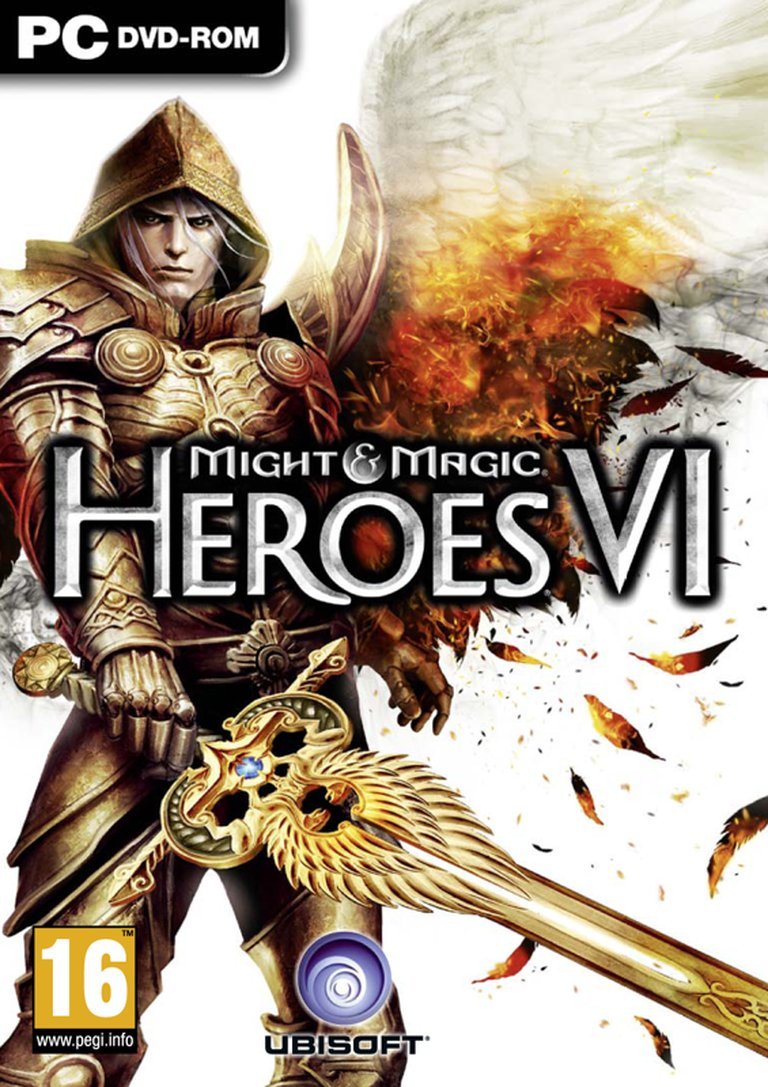
Might & Magic: Heroes VI is a turn-based strategy and RPG game set in the fantasy world of Ashan, 400 years before the events of Heroes V. After the assassination of Duke Slava Griffin, his five children, each pledged to a different faction—Haven knights, Necropolis undead, Stronghold orcs, Inferno demons, or the new Sanctuary nagas—must defend the world from a demon invasion and angelic plot, recruiting armies, capturing towns, and battling on an adventure map with new features like area control, a reputation system (Paths of Blood or Tears), and deadly boss encounters.
Gameplay Videos
Where to Buy Might & Magic: Heroes VI
PC
Might & Magic: Heroes VI Free Download
Might & Magic: Heroes VI Cracks & Fixes
Might & Magic: Heroes VI Patches & Updates
Might & Magic: Heroes VI Guides & Walkthroughs
Might & Magic: Heroes VI Reviews & Reception
metacritic.com (77/100): Might & Magic Heroes VI is a solid installment of the popular turn-based strategy series, probably one of the best.
ign.com : A heroic effort.
pcgamer.com : Immersive, absorbing, annoying, and very long, get in there.
gamespot.com : The addictive rhythm of building, fighting, and exploring is as powerful as ever.
Might & Magic: Heroes VI: Review
Introduction
In the shadowed annals of turn-based strategy gaming, few franchises evoke the epic scope of empire-building and tactical warfare quite like Might & Magic: Heroes. Emerging from the ashes of New World Computing’s golden era, the series has endured reboots, studio shifts, and narrative overhauls, yet its core allure—recruiting fantastical armies, conquering sprawling maps, and outmaneuvering foes in hex-grid battles—remains intoxicating. Might & Magic: Heroes VI, released in 2011 to celebrate the franchise’s 25th anniversary, dares to rekindle that flame in the lore-rich world of Ashan, 400 years before Heroes V. Amid demon invasions and angelic machinations, players guide the fractured heirs of the Griffin dynasty through moral quandaries and brutal conquests. This review posits that Heroes VI masterfully refines the series’ addictive loops with innovative reputation mechanics and atmospheric storytelling, cementing its status as a pivotal entry—flawed by launch woes but enduringly replayable for strategy aficionados.
Development History & Context
Heroes VI marked a turbulent chapter in the series’ evolution, helmed by Hungarian studio Black Hole Entertainment under Ubisoft’s publishing umbrella. Founded by veterans of the local scene, Black Hole—led by CEO Zoltán Zsuffa, creative director István Zsuffa, and development director Gábor Illés—brought a fresh vision after Nival Interactive’s work on Heroes V. Announced at Gamescom 2010 following cryptic teases in Clash of Heroes dev diaries, the game aimed to honor the Might & Magic legacy with tributes like remixed soundtracks from Heroes II/III/V and reimagined artifacts (e.g., Angelic Alliance, Iron Feather).
Technological constraints of the early 2010s era shaped its ambitions: a full 3D engine with free camera views pushed hardware limits, replacing isometric perspectives for immersive diagonal-down exploration. This came amid a strategy landscape dominated by real-time giants like StarCraft II (2010) and Total War iterations, yet turn-based stalwarts like Civilization V (2010) proved the genre’s vitality. Black Hole’s focus on Ashan’s unified lore—bridging Heroes V, Dark Messiah, and Clash of Heroes—addressed fan gripes over disjointed universes, introducing five factions including the innovative Asian-inspired Sanctuary (naga-led).
Development spanned roughly two years, with an alpha complete by May 2011 and a public beta in June, delaying release from September to October 13 for polish. Budget strains and creative clashes culminated in Black Hole’s bankruptcy in April 2012, blamed on Ubisoft’s mismanagement; Limbic Entertainment handled patches (1.3+), DLC (Pirates of the Savage Sea, Danse Macabre), and Virtuos delivered the 2013 Shades of Darkness expansion (adding Dungeon). Ubisoft’s Uplay DRM—requiring constant online for features—exemplified era-specific controversies, clashing with the offline-friendly genre amid growing anti-DRM sentiment.
Narrative & Thematic Deep Dive
Heroes VI‘s campaign is a tapestry of familial tragedy and cosmic intrigue, structured as simultaneous arcs for Duke Slava Griffin’s five heirs: Anton (Haven), Anastasya (Necropolis), Kiril (Inferno), Sandor (Stronghold), and Irina (Sanctuary). Framed by a tutorial under Slava, it unfolds in 564 YSD during a Blood Moon Eclipse, as resurrected Archangel Michael—fused with Slava’s father Pavel—plots to reignite Elder Wars against Faceless void-beings, masking it as a demon incursion from Sheogh.
Plot Structure and Interconnectivity
Post-assassination (revealed as Archangel Uriel’s manipulation via a Faceless comb), the heirs scatter: Anton quells rebellions and uncovers angelic deceit; Anastasya, resurrected by aunt Sveltana, probes her patricide in mind-realms battling inner demons; Kiril, possessed in Sheogh, conquers demons to hunt betrayer Sarah; Sandor leads orcs against imperial foes; Irina, escaped from marital rape by Duke Gerhart, allies with naga. Campaigns intersect—e.g., Irina slays Gerhart amid Anton’s probes—culminating in Blood/Tears epilogues: Tears heirs assault angel citadels, slaying Michael; Blood hunts Faceless with his aid.
Characters
The Griffins embody grey-and-gray morality: Slava’s “glory” (Slava=glory) as a just ruler contrasts his bastard son Sandor’s angst; Anastasya’s “resurrection” (Anastasya=immortal) fuels undead irony; Kiril (“lord”) hellishly ascends. Antagonists like manipulative angels (Uriel romances Anastasya for soul-theft) and Kha-Beleth’s demons subvert tropes—demons as pawns, angels as genocidal zealots.
Themes
Central is legacy vs. free will: Dynasty Weapons (transferable via Conflux) symbolize bloodlines, while Reputation (Blood ruthlessness/Tears mercy) yields dual endings, multiple subclasses (e.g., Tears Necromancer=Embalmer), and replayability. Ashan’s cosmology—dragons from Asha/Urgash’s corpse, barred-afterlife angels—explores cycles of violence: Elder Wars’ scars, demon eclipses, Faceless oblivion. DLC expands: Pirates revives Crag Hack; Danse Macabre Sandro; Shades Raelag/Vein against Faceless. Dialogue shines in moral choices (e.g., execute fleeing foes?), but stiff voice acting (e.g., over-enunciated heirs) undercuts drama.
Chronological play (e.g., Stronghold 1 → Sanctuary 1 via fan guides) reveals simultaneity, rewarding lore dives into Ancients nods (“Week of the Ancients”) and fan tributes (heroes named Eduardo/Harald).
Gameplay Mechanics & Systems
Heroes VI deconstructs the series’ loops—explore/develop/fight—with refinements balancing accessibility and depth.
Core Loops
Adventure maps emphasize area control: Towns auto-claim nearby mines/dwellings, curbing hit-and-run; forts extend influence. Heroes travel army-less (vulnerable sans troops), recruit from any town into unified pools. Economy simplifies to gold/wood/ore/crystals (upgrades +1 crystal).
Combat
Hex-based TBS reverts to standard initiative (no V‘s luck/morale priorities); 7 stacks max. Creatures tiered Core/Elite/Champion (e.g., Haven: Sentinels→Praetorians, Seraph→Celestial); upgrades cost crystals. Heroes cast from talent trees (Might/Magic/Heroic), no Mage Guilds—spells via points/scrolls. Quick Combat automates weak fights. Bosses (campaign-enders) are super-stacked immunes (e.g., no buffs).
Progression
Reputation revolutionizes: Blood/Tears points from choices (slaughter flee-ers=Blood) unlock Prime/Realm ranks (lv8/30), super-abilities, 4 subclasses/faction (e.g., Blood Knight=Warlord). Talents replace RNG wheels; one free respec. Dynasty Traits/Weapons (Conflux-bound, tradable) add persistence.
UI/Flaws
Intuitive radial menus, kingdom overview; town windows (screen return in DLC). Multiplayer: hotseat/internet (servers shut 2024). Innovative but flawed: early AI dumb (ignores control), balance issues (e.g., Inferno gating overpowered pre-patches), pathing bugs.
Expansions
Pirates/Danse add 2-mission campaigns, Dynasty gear; Shades introduces Dungeon (shadow elves), Dynasty Traits, AI tweaks.
| Mechanic | Innovation | Impact |
|---|---|---|
| Reputation | Moral choices → trees/endings | Replayable heroes |
| Area Control | Town auto-resources | Fewer micro, more sieges |
| Talent Trees | Deterministic skills/spells | Strategic builds |
| Bosses | Immune mega-units | Climactic tension |
World-Building, Art & Sound
Ashan’s prequel era enriches: scarred Elder Wars landscapes (plains/mountains east Griffin Duchy=Slavic vibes), dragon gods (Elrath vs. Malassa), Sheogh demons. Factions vivid: Haven knights, Necropolis spiders (Fate Weavers time-weave), Sanctuary naga/kappa/yuki-onna (Wutai flair), Inferno sin-demons (Madness/Hunger), Stronghold orcs (bloodrage).
Visuals
3D shines: dynamic lighting, vast maps, larger Champions (4-hex). Creature bestiary (e.g., Lamasu undead sphinxes) grotesque/beautiful; trailers (Blood/Tears) epic. Town windows efficient but soulless (screens restored DLC); bugs marred launch (glitches/crashes).
Sound
Cris Velasco/Jason Graves/Paul Romero/Rob King score remixes classics (e.g., Heroes III motifs), orchestral swells for Griffin flight, sulfurous chaos for Inferno. VO mixed: emotive heirs, wooden angels; multilingual dubs.
Elements coalesce into addictive immersion—”just one more turn”—evoking series’ addictive syndrome.
Reception & Legacy
Launch Metacritic 77/100 (38 critics: Hooked Gamers 94%, IGN/GameSpot 80%); players 2.8/5 (bugs/DRM backlash). Praised: campaigns (50+ hours), reputation, visuals (GamesRadar: “addictive premise”); critiqued: AI/balance/DRM (GameSpy 60%, RPGFan 61%: “masochistic”). Patches/DLC improved (e.g., 2.1 AI), Shades 66/100 (new faction lauded, repetition not).
Commercially solid (Steam $2.49 low), influenced Heroes VII (2015) with reputation echoes. Legacy: refined formula for newcomers, nostalgia for vets; servers’ 2024 shutdown ended multiplayer, but hotseat/mods endure. #3 German reader strat game 2011; endures as Ashan cornerstone, bridging old/new eras.
Conclusion
Might & Magic: Heroes VI stands as a triumphant-yet-tormented evolution: reputation’s moral depth and Ashan’s lore elevate it beyond rote conquest, delivering 100+ hours of branching epics amid refined TBS mastery. Launch stumbles—bugs, DRM, AI—belie Black Hole’s passion, patched into respectability via DLC. Not Heroes III‘s untouchable peak, but a definitive modern entry, honoring 25 years while paving VII. Verdict: Essential for series faithful (8.5/10); recommended gateway for TBS newcomers. In Ashan’s blood-dimmed tides, it endures as a griffin’s fierce flight.