
- Release Year: 2012
- Platforms: Windows
- Publisher: Ubisoft Entertainment SA
- Genre: Compilation
- Game Mode: Single-player
Description
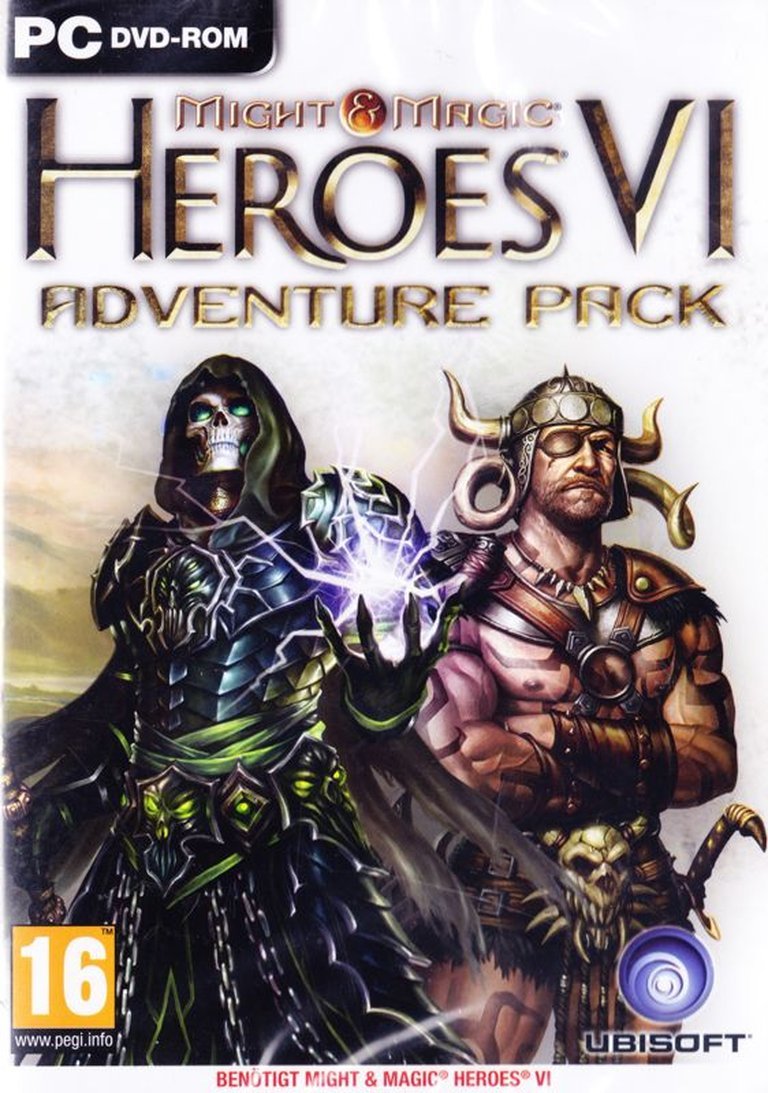
Might & Magic: Heroes VI – Adventure Pack is a compilation expansion for the acclaimed fantasy strategy game, featuring two additional campaigns set in the rich Might & Magic universe. Players embark on new adventures in ‘Danse Macabre,’ confronting necromantic threats in gothic settings, and ‘Pirates of the Savage Sea,’ exploring naval conflicts and tropical islands. As part of the Heroes VI series, it combines tactical turn-based combat, faction-based storytelling, and strategic empire-building across mystical landscapes filled with mythical creatures and magical conflicts.
Might & Magic: Heroes VI – Adventure Pack Cracks & Fixes
Might & Magic: Heroes VI – Adventure Pack Patches & Updates
Might & Magic: Heroes VI – Adventure Pack Mods
Might & Magic: Heroes VI – Adventure Pack Guides & Walkthroughs
Might & Magic: Heroes VI – Adventure Pack Cheats & Codes
PC
Press Tab on the adventure screen, enter code using top row number keys.
| Code | Effect |
|---|---|
| 101495 | Reveals full map |
| 101496 | Get gold |
| 101111 | Enchants spell to hasten army |
| 844690 | Get crystals |
| 844691 | Get Ores |
| 899101 | Get diamonds |
| 991001 | Get plutos |
Might & Magic: Heroes VI – Adventure Pack: Review
Introduction
In the sprawling tapestry of the Heroes of Might & Magic franchise, Might & Magic: Heroes VI stands as both a tribute to its legacy and a flawed step into modern strategy-RPG design. Released in 2011 amid Ubisoft’s celebration of the series’ 25th anniversary, its Adventure Pack – comprising the Danse Macabre and Pirates of the Savage Sea DLCs – sought to expand the game’s narrative and mechanical horizons. This review dissects the Adventure Pack not merely as ancillary content but as a microcosm of Heroes VI’s ambitious yet troubled vision: a compendium of rich world-building and inventive faction design hamstrung by technical instability and the ghosts of Black Hole Entertainment’s abrupt departure.
Development History & Context
Heroes VI emerged during a transitional period for turn-based strategy. Developed by Hungarian studio Black Hole Entertainment (notable for Warhammer 40,000: Dawn of War – Soulstorm), it was conceived as a soft reboot of Ubisoft’s Ashan universe, set 400 years before Heroes V. The studio aimed to modernize the series’ classic formula—blending hexagonal-grid combat, hero progression, and town management—while accommodating contemporary tastes for narrative-driven campaigns and RPG-like choice systems.
The Adventure Pack’s development, however, unfolded amidst turmoil. Black Hole filed for bankruptcy in April 2012, citing Ubisoft’s alleged mismanagement of funds and shifting design demands. Limbic Entertainment (later known for Park Beyond) took over post-launch support, including these DLCs, developed under severe time constraints. Released in mid-to-late 2012, the DLCs arrived during a wave of skepticism toward always-online DRM (Ubisoft’s Uplay) and a fragmented player base still reeling from the base game’s bug-ridden launch.
Technologically, Heroes VI leveraged the Essence Engine 2.0, enabling dynamic 3D battlefields and intricate town screens—though Limbic controversially omitted these in initial builds before fan outcry reinstated them. The DLCs, crafted with limited resources, prioritized narrative expansions over engine overhauls, reflecting the era’s trend of “quantity-over-innovation” downloadable content.
Narrative & Thematic Deep Dive
The Adventure Pack’s two campaigns diverge tonally yet share a thematic backbone: the corruption of power and the allure of forbidden knowledge.
-
Pirates of the Savage Sea: This DLC follows Crag Hack, a series veteran reimagined as a grizzled corsair navigating the Jade Ocean. The plot centers on his quest to dismantle a pirate alliance threatening Ashan’s trade routes. While ostensibly a swashbuckling romp, the narrative explores colonialism’s scars, with Crag confronting the hubris of empires—both human and naga. His moral choices (e.g., sparing rival captains vs. executing them) lack the base game’s Blood/Tears system’s depth but amplify the DLC’s themes of cyclical violence.
-
Danse Macabre: A love letter to Heroes lore, this campaign resurrects Sandro, the necromancer antihero, embroiling him in a conspiracy to weaponize a plague against the Holy Falcon Empire. Sandro’s sardonic wit masks a poignant critique of immortality’s toll, as he manipulates mortals and liches alike. The writing shines in its moral ambiguity—Sandro is neither saint nor cartoonish villain—but suffers from pacing issues, cramming espionage, body horror, and political intrigue into four missions.
Both DLCs tie into Heroes VI’s broader Griffin Dynasty saga through environmental storytelling (e.g., letters referencing Anastasya’s undead crusade) but feel detached from the main arc, functioning as anthological side-quests.
Gameplay Mechanics & Systems
The Adventure Pack inherits Heroes VI’s revamped systems while introducing bespoke mechanics:
-
Faction Hybridization: Danse Macabre introduces “Necrocorruption,” allowing Sandro to convert enemy towns into Necropolis-aligned strongholds mid-campaign—a lore-friendly twist on the base game’s town conversion mechanic, rewarding tactical flexibility.
-
Naval Combat (Pirates of the Savage Sea): A first for the series, naval battles replace traditional grids with streamlined “boarding actions,” abstracting ship-to-ship combat into auto-resolved dice rolls. While innovative, this system feels undercooked, lacking the tactical depth of land battles.
-
New Units and Spells: Each DLC adds faction-specific units (e.g., the spectral Fate Weavers for Necropolis) and spells (Plague Lord in Danse Macabre), though balancing issues persist—Crag’s pirate-themed Buccaneers overpower Sanctuary’s roster, trivializing late-game encounters.
The DLCs integrate with Heroes VI’s controversial Reputation System, but only superficially; choices lack the cascading consequences of the main campaign’s Blood/Tears paths. Dynasty Weapons (Gravestorm, a scythe boosting necromancy) and artifacts (Admiral’s Cutlass) offer meaningful progression but are locked behind grindy achievement hunts.
World-Building, Art & Sound
Limbic preserved Black Hole’s lush, painterly aesthetic—a blend of Olivier Ledroit’s gothic concept art and Tamás Sándor’s vibrant 3D environments. Danse Macabre’s plague-ridden swamps and decaying cathedrals exude a Tim Burton-esque grotesquery, while Pirates’ sun-drenched islands and coral reefs nod to Monkey Island’s whimsy.
Creature designs remain a highlight:
- Pirates: From cannon-wielding Buccaneers to the Kraken (a reskinned Hydra), units brim with pirate lore.
- Necropolis: Putrid Lamassus (undead sphinxes) and Fate Weavers (multi-armed specters) showcase macabre creativity.
The sound design, however, falters. Cris Velasco and Jason Graves’ score recycles base game motifs (e.g., Griffin Dynasty Theme), with few new tracks. Voice acting swings between hammy (Crag Hack’s growling one-liners) and wooden (Sandro’s monotone schemes)—a step down from the main cast’s performances.
Reception & Legacy
The Adventure Pack garnered muted reviews upon release. Critics praised its narrative ambition (PC Gamer called Danse Macabre “a Sandro fan’s delight”) but panned its technical state—game-breaking bugs, save corruption, and Uplay sync issues plagued early adopters. Player sentiment, per MobyGames’ 4.0/5 average (based on limited data), tilted positive, valuing the campaigns’ length (6–8 hours each) over polish.
Legacy-wise, the DLCs epitomize Heroes VI’s fractured identity: ambitious in scope, yet hobbled by corporate tumult. Limbic’s subsequent Shades of Darkness expansion (2013) refined these ideas, but the Adventure Pack remains a footnote—a relic of Ubisoft’s awkward transition from niche strategy steward to live-service aspirant.
Conclusion
Might & Magic: Heroes VI – Adventure Pack is a paradox: a lovingly crafted expansion hamstrung by its creators’ instability. Its campaigns excel as narrative vignettes, enriching Ashan’s lore with pirate intrigue and necromantic nihilism, while new mechanics flirt with innovation but lack refinement. For series diehards, it’s essential—a testament to the franchise’s enduring charm. For broader audiences, it’s a curiosity, best enjoyed via the patched Complete Edition or as a historical artifact of early-2010s strategy gaming. In the pantheon of Heroes expansions, it sits neither among the zeniths (Heroes III: The Shadow of Death) nor nadirs but as a flawed yet fascinating middle child—a dance macabre between ambition and reality.