
- Release Year: 2012
- Platforms: Windows
- Publisher: Ubisoft Entertainment SA
- Genre: Compilation, Special edition
- Game Mode: Single-player
- Average Score: 77/100
Description
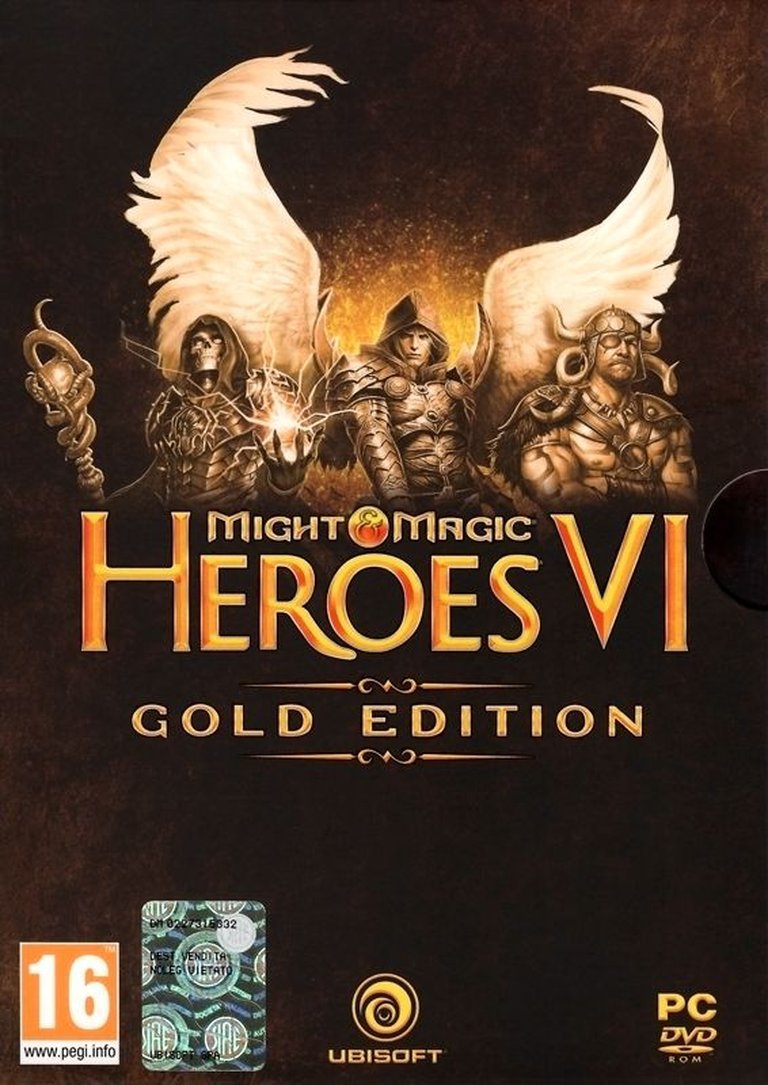
Might & Magic: Heroes VI – Gold Edition is a compilation that includes the base game Might & Magic: Heroes VI, along with the DLC expansions Pirates of the Savage Sea and Danse Macabre, plus a bonus scenario set in Enroth. The game is a turn-based strategy title set in the world of Ashan, serving as a prequel to Heroes of Might and Magic V. Players lead heroes, manage armies, and engage in tactical battles across a fantasy realm, with a unique reputation system that influences hero development based on moral choices—Tears for mercy or Blood for cruelty. The Gold Edition offers expanded content, including new campaigns, factions, and gameplay mechanics, enriching the core experience.
Might & Magic: Heroes VI – Gold Edition Cracks & Fixes
Might & Magic: Heroes VI – Gold Edition Mods
Might & Magic: Heroes VI – Gold Edition Guides & Walkthroughs
Might & Magic: Heroes VI – Gold Edition Reviews & Reception
ign.com : A heroic effort.
pcgamer.com : Immersive, absorbing, annoying, and very long if youre after getting a tan from your monitor, get in there.
metacritic.com (77/100): Might & Magic Heroes VI is a solid installment of the popular turn-based strategy series, probably one of the best.
gamewatcher.com : Might and Magic: VI represents a slightly new direction for the franchise.
Might & Magic: Heroes VI – Gold Edition Cheats & Codes
PC (Steam) – Gold Edition v2.1.1
Use the following key combinations during gameplay.
| Code | Effect |
|---|---|
| NUMPAD1 | Unlimited energy in battle |
| NUMPAD2 | Increase reputation of Tears |
| NUMPAD3 | Increase reputation of Blood |
| NUMPAD4 | Infinite movement for Rebellious heroes |
| NUMPAD5 | Infinite movement for Alliance of Light heroes |
| NUMPAD6 | Infinite movement for Necropolis heroes |
| NUMPAD7 | Infinite movement for Assassins heroes |
| NUMPAD8 | Infinite movement for Sanctuary heroes |
| NUMPAD9 | Infinite movement for Inferno heroes |
| NUMPAD0 | Infinite army in battle for Rebellious (999) |
| NUMPAD + | Infinite army in battle for Sanctuary (999) |
| NUMPAD – | Infinite army in battle for Inferno (999) |
| NUMPAD * | Infinite army in battle for Necropolis (999) |
| NUMPAD / | Infinite army in battle for Alliance of Light (999) |
| PAGE UP | Infinite army in battle for Elementari (999) |
| F1 | Infinite resources |
| F2 | Infinite army garrison |
| F3 | Infinite skill points (999) |
| F4 | Infinite mana (999) |
| PAGE DOWN | One-hit kill boss |
PC (Steam) – v1.7.1
Use the following key combinations during gameplay.
| Code | Effect |
|---|---|
| NUMPAD7 | Infinite number of moves within a round |
| NUMPAD8 | Warriors always have 999 energy points |
| NUMPAD9 | Immortality |
| NUMPAD4 | Unlimited mana |
PC (Steam) – v1.7.1 (Alternative)
Use the following key combinations during gameplay.
| Code | Effect |
|---|---|
| NUMPAD7 | Infinite number of moves within a round |
| NUMPAD8 | Warriors always have 999 energy points |
| NUMPAD9 | Immortality |
| NUMPAD4 | Unlimited mana |
Might & Magic: Heroes VI – Gold Edition: A Comprehensive Retrospective
Introduction
Might & Magic: Heroes VI – Gold Edition stands as a pivotal entry in the venerable Heroes of Might and Magic series, a franchise that has shaped the turn-based strategy genre since its inception in 1995. Released in 2012, the Gold Edition compiles the base game, two major DLC expansions (Pirates of the Savage Sea and Danse Macabre), and a bonus scenario set in the nostalgic world of Enroth. This iteration of the game arrived at a crossroads for the series, blending innovation with tradition while navigating the turbulent waters of modern game development. As a prequel to Heroes of Might and Magic V, it delves into the rich lore of Ashan, exploring the origins of the Griffin Dynasty and their struggle against celestial and infernal forces. This review will dissect the game’s development, narrative depth, gameplay mechanics, artistic achievements, and its lasting impact on the strategy genre.
Development History & Context
The Studio and Vision
Might & Magic: Heroes VI was developed by Black Hole Entertainment, a Hungarian studio known for its work on Warhammer: Mark of Chaos. Ubisoft, the publisher, entrusted Black Hole with revitalizing the Heroes franchise after parting ways with Nival Interactive, the developers of Heroes V. The decision was driven by Ubisoft’s desire to infuse fresh creativity into the series while maintaining its core identity. The development process was marked by extensive community engagement, with Ubisoft and Black Hole soliciting feedback from fans through private forums and beta tests. This collaborative approach aimed to address long-standing criticisms of Heroes V, particularly its linear campaigns and underwhelming AI.
Technological Constraints and Innovations
The game was built using a proprietary engine designed to handle its expansive maps and detailed 3D models. However, the engine’s limitations became apparent in the initial release, which suffered from performance issues, particularly in town screen rendering. These technical hurdles led to a controversial decision: the replacement of traditional town screens with simplified “town windows” to reduce CPU load. This change was met with significant backlash from the community, prompting Ubisoft to revert to the classic town screens in subsequent patches and DLCs.
Another notable innovation was the Dynasty Weapons system, which introduced account-bound artifacts that could be transferred between campaigns. This feature, tied to Ubisoft’s Conflux online platform, was intended to foster a sense of progression and community engagement. However, the reliance on online connectivity for unlocking content and accessing multiplayer features proved divisive, especially given the game’s eventual server shutdown in 2024.
The Gaming Landscape of 2011-2012
Heroes VI launched in an era dominated by real-time strategy games like StarCraft II and League of Legends, as well as the rising popularity of MOBAs. Turn-based strategy games, once a staple of PC gaming, were increasingly niche. Ubisoft’s decision to release Heroes VI as a single-player and multiplayer hybrid reflected an attempt to cater to both traditional fans and a broader audience. The inclusion of DRM (Digital Rights Management) requiring an internet connection for certain features further alienated some players, echoing the controversies surrounding Ubisoft’s Assassin’s Creed II and Settlers VII.
The game’s development was also marred by Black Hole Entertainment’s bankruptcy in 2012, a result of financial disputes with Ubisoft. This led to the transfer of development duties to Limbic Entertainment for post-launch patches and DLCs, and later to Virtuos for the Shades of Darkness expansion. The turbulent development cycle left a lasting impact on the game’s reception, with many critics and players noting its unfinished state at launch.
Narrative & Thematic Deep Dive
The Griffin Dynasty and the World of Ashan
Heroes VI is set 400 years before the events of Heroes V, during the reign of the Griffin Dynasty in the Holy Falcon Empire. The narrative revolves around the assassination of Duke Slava Griffin and the subsequent struggles of his five children—Anton (Haven), Anastasya (Necropolis), Kiril (Inferno), Sandor (Stronghold), and Irina (Sanctuary)—as they navigate a web of political intrigue, demonic invasions, and angelic machinations. The story is a prequel in the lost age, offering a glimpse into the origins of the Necropolis faction’s schism from the Academy and the rise of the Griffin family’s influence.
The world of Ashan is a rich tapestry of fantasy tropes, blending medieval European aesthetics with mythological elements. The game’s lore is deeply intertwined with the Dragon Gods, particularly Elrath (Light) and Malassa (Darkness), whose conflict serves as the backdrop for the Griffin siblings’ struggles. The narrative also reintroduces the Ancients, a lost civilization whose remnants hint at the broader Might & Magic multiverse.
Themes of Morality and Power
At the heart of Heroes VI lies the Tears and Blood Reputation System, a morality mechanic that influences both gameplay and narrative outcomes. Players are repeatedly faced with choices that align their heroes with either Tears (mercy, diplomacy, and redemption) or Blood (violence, domination, and vengeance). These choices are not merely cosmetic; they unlock distinct advanced classes, abilities, and even alternate endings.
- Tears Path: Emphasizes defensive and supportive abilities, often leading to diplomatic resolutions and alliances. Heroes aligned with Tears may gain access to healing spells, defensive buffs, and abilities that pacify enemies.
- Blood Path: Focuses on offensive and destructive powers, rewarding aggression and ruthlessness. Blood-aligned heroes excel in combat, with abilities that enhance damage output and exploit enemy weaknesses.
The duality of the Tears and Blood system reflects the game’s broader themes of power and corruption. The Griffin siblings, each representing a different faction, embody these themes in their personal arcs:
– Anastasya’s journey from a necromancer’s apprentice to a vengeful undead queen explores the cost of resurrection and the blurred line between justice and revenge.
– Kiril’s descent into Sheogh and his struggle against demonic possession highlight the seductive nature of power and the price of redemption.
– Irina’s transformation from a political pawn to a warrior queen underscores the theme of agency and defiance against oppressive systems.
Character Arcs and Dialogue
The game’s narrative is delivered through a combination of in-game cutscenes, dialogue, and environmental storytelling. While the voice acting is often criticized for its stilted delivery, the writing itself is ambitious, drawing inspiration from Slavic folklore, Arthurian legend, and classical mythology. The Griffin siblings are well-developed, each with distinct motivations and arcs:
– Anton, the eldest son, grapples with the burden of leadership and the moral compromises required to maintain power.
– Sandor, the bastard son, seeks to prove his worth through martial prowess, embodying the archetype of the noble barbarian.
– Anastasya’s arc is the most tragic, as she is manipulated by the archangel Uriel and later resurrects as a necromancer, seeking vengeance against those who wronged her.
The game’s villains are equally compelling. Archangel Michael, the resurrected general, is a complex antagonist whose actions are driven by a desire to end the ancient war between the Angels and the Faceless. His methods, however, are ruthless, and his manipulation of the Griffin family raises questions about the ethics of divine intervention. The Faceless, a shadowy faction of memory-stealing entities, serve as the true masterminds behind the conflict, adding layers of intrigue and moral ambiguity.
The Dual Endings
The game’s narrative culminates in a branching finale, where the player’s alignment with Tears or Blood determines the outcome of the Griffin family’s struggle:
– Tears Ending: The Griffin heir rejects Michael’s call to arms, leading a rebellion against the Angels. This path emphasizes redemption and unity, with the Griffins forging alliances with former enemies to defeat the celestial threat.
– Blood Ending: The Griffin heir embraces Michael’s cause, leading a crusade against the Faceless. This path is marked by betrayal and conquest, with the Griffins consolidating power through ruthless means.
The dual endings are a testament to the game’s commitment to player agency, offering meaningful consequences for the choices made throughout the campaign. However, the execution of these endings has been criticized for their abruptness, with some players feeling that the narrative build-up does not fully justify the divergent outcomes.
Gameplay Mechanics & Systems
Core Gameplay Loop
Heroes VI retains the classic Heroes formula of turn-based exploration, resource management, and tactical combat. The gameplay is divided into two primary phases:
1. Adventure Map Phase: Players control heroes who explore the world, gather resources, capture mines and dwellings, and engage in diplomacy or combat with neutral and enemy forces.
2. Combat Phase: When armies clash, the game shifts to a hex-based tactical battlefield, where players position units, cast spells, and exploit terrain advantages to secure victory.
The area control mechanic is one of the game’s most significant innovations. Unlike previous entries, where mines and dwellings could be captured independently, Heroes VI ties these structures to the nearest town. This means that capturing a town automatically secures all adjacent resources, streamlining the early-game grind while introducing strategic depth in territory management.
Faction Diversity and Unit Design
The game features five core factions at launch, each with unique units, heroes, and playstyles:
1. Haven (Holy Empire): The classic knightly faction, emphasizing balanced armies and defensive strategies. Units include Griffins, Paladins, and Seraphim.
2. Necropolis (Undead): A faction of necromancers and reanimated horrors, specializing in debuffs, summoning, and swarm tactics. Units include Skeletons, Vampires, and Fate Spinners.
3. Inferno (Demons): A high-risk, high-reward faction with powerful but expensive units. Demons excel in offensive magic and overwhelming force, with units like Hell Hounds, Succubi, and Pit Lords.
4. Stronghold (Orcs): A brutal, melee-focused faction with high mobility and regeneration. Orc units include Goblins, Cyclops, and Behemoths.
5. Sanctuary (Naga): A new faction inspired by East Asian mythology, featuring water-based units and hit-and-run tactics. Naga units include Kappas, Naga Warriors, and Sea Serpents.
Each faction’s units are divided into Core, Elite, and Champion tiers, replacing the traditional tiered system of previous Heroes games. This redesign aims to reduce redundancy and emphasize strategic synergy between units. For example:
– Core units (e.g., Peasants, Skeletons) are weak but cheap, serving as fodder or early-game workhorses.
– Elite units (e.g., Griffin Riders, Vampires) are specialized, with unique abilities that complement specific strategies.
– Champion units (e.g., Archangels, Black Dragons) are game-changers, often immune to certain spells and capable of turning the tide of battle.
Hero Progression and the Talent Tree
The hero progression system in Heroes VI is a departure from the randomized skill wheels of previous games. Instead, heroes level up through a predetermined talent tree, allowing players to customize their abilities based on their preferred playstyle. The talent tree is divided into Magic and Might paths, with further specialization available through the Tears and Blood alignments.
- Magic Heroes excel in spellcasting, with access to offensive, defensive, and utility spells. They can specialize in schools like Destruction, Dark Magic, or Light Magic.
- Might Heroes focus on combat prowess, with abilities that enhance unit stats, provide tactical bonuses, or enable unique battlefield maneuvers.
The Dynasty Weapons system adds another layer of progression, allowing players to unlock account-bound artifacts that persist across campaigns. These weapons, tied to Ubisoft’s Conflux platform, were intended to foster a sense of long-term investment in the game. However, the system’s reliance on online connectivity and microtransactions (via the purchase of bonus points) was met with mixed reactions.
Combat Mechanics and Boss Fights
The turn-based combat system in Heroes VI is a refinement of the classic Heroes formula, with several key improvements:
– Luck and Morale no longer grant additional attack chances but instead allow units to strike twice in a single turn, adding unpredictability without disrupting the flow of battle.
– Terrain effects play a more significant role, with obstacles, elevation, and environmental hazards influencing unit movement and combat effectiveness.
– Spellcasting is more dynamic, with heroes able to cast spells without requiring a Magic Guild, streamlining the early-game experience.
One of the most notable additions is the Boss Fight mechanic, a first for the Heroes series. Each campaign culminates in a high-stakes battle against a unique, overpowered enemy, such as:
– The Faceless Overlord (Tears Ending)
– Archangel Michael (Blood Ending)
– The Demon Sovereign Kha-Beleth (Inferno Campaign)
These battles are scripted spectacles, featuring multi-phase encounters, environmental hazards, and unique enemy abilities. While they add cinematic flair to the gameplay, some critics argue that they disrupt the strategic balance, as victory often hinges on brute force rather than tactics.
Multiplayer and Community Features
Heroes VI includes both local and online multiplayer modes, with support for hotseat, LAN, and internet matches. The Conflux platform, Ubisoft’s attempt to create a persistent online community, allowed players to:
– Share custom maps and scenarios
– Compete in ranked matches
– Unlock Dynasty Weapons and achievements
However, the multiplayer experience was plagued by connectivity issues, long turn times, and an underwhelming matchmaking system. The eventual shutdown of the Conflux servers in 2024 rendered many of these features inaccessible, leaving the multiplayer mode in a diminished state.
World-Building, Art & Sound
The World of Ashan
Heroes VI is set in the continent of Thallan, a region of Ashan steeped in political intrigue and ancient conflicts. The world is a melting pot of cultures, with each faction occupying distinct biomes:
– Haven dominates the fertile plains and fortified cities of the Holy Falcon Empire.
– Necropolis thrives in the decaying ruins and cursed lands of the Seven Cities.
– Inferno lurks in the volcanic wastelands and demonic portals of Sheogh.
– Stronghold rules the savage frontier and mountainous regions of the Pao Islands.
– Sanctuary inhabits the mist-shrouded swamps and coastal kingdoms of the Jade Ocean.
The game’s environmental design is a standout feature, with detailed landscapes, dynamic weather effects, and interactive elements that enhance immersion. The adventure maps are sprawling and intricate, filled with hidden treasures, neutral creatures, and scripted events that encourage exploration.
Visual Direction and Artistic Achievements
Heroes VI represents a significant leap in visual fidelity for the Heroes series, transitioning from the isometric 2D sprites of Heroes III to fully 3D-rendered models and environments. The art direction is a blend of dark fantasy and high medieval aesthetics, with:
– Detailed unit animations, from the flapping wings of Griffins to the sinuous movements of Naga warriors.
– Dynamic lighting and particle effects, particularly in spellcasting and combat.
– Expressive character designs, with each hero reflecting their faction’s themes (e.g., Anastasya’s gothic necromancer attire, Sandor’s barbarian armor).
The town screens (later reintroduced due to fan demand) are miniature masterpieces, showcasing the architectural styles of each faction:
– Haven towns are gothic cathedrals and fortified keeps.
– Necropolis towns are haunting mausoleums and bone-laden citadels.
– Sanctuary towns are floating pagodas and waterlogged temples.
However, the initial performance issues with town screens led to their temporary replacement with simplified “town windows”, a decision that alienated long-time fans and highlighted the technical limitations of the game’s engine.
Sound Design and Musical Score
The soundtrack of Heroes VI is a symphonic tour de force, composed by Rob King, Paul Romero, Cris Velasco, and Jason Graves. The score draws heavily from the classical Heroes themes, with reimagined tracks from Heroes II, III, and V, as well as original compositions that evoke the epic scale of the narrative.
Key musical themes include:
– The Griffin Dynasty Theme: A soaring, orchestral piece that underscores the family’s noble heritage and tragic downfall.
– The Necropolis March: A haunting, choral arrangement that reflects the undead faction’s eerie grandeur.
– The Sanctuary Lullaby: A melodic, Eastern-inspired track that captures the Naga’s mystical allure.
The sound design is equally impressive, with crisp unit voices, immersive ambient effects, and impactful combat sounds. However, some audio cues are missing, such as the sound of ships moving, a notable omission given the Naga faction’s naval focus.
Reception & Legacy
Critical Reception at Launch
Might & Magic: Heroes VI received generally favorable reviews upon release, with critics praising its visuals, faction diversity, and narrative ambition. However, the game was marred by technical issues, including:
– Frequent crashes and bugs, particularly in the town screen and multiplayer modes.
– Poor AI pathfinding, leading to frustrating combat encounters.
– Intrusive DRM, which required an internet connection for single-player features.
Metacritic scored the game 77/100, with reviewers highlighting its addictive gameplay and replayability while criticizing its unfinished state. IGN awarded it an 8/10, calling it “a heroic effort” despite its flaws, while PC Gamer praised its depth and immersion, scoring it 83%.
Player Reception and Community Response
The player community’s response was mixed, with many fans expressing disappointment over the simplified resource system, lack of random maps, and underwhelming multiplayer. The Steam user score sits at Mostly Negative (37%), reflecting the frustration with Ubisoft’s DRM and the game’s technical issues.
However, the game found a dedicated niche audience, particularly among long-time Heroes fans who appreciated its narrative depth and faction variety. The modding community also thrived, creating custom campaigns, balance patches, and restored town screens to address the game’s shortcomings.
Evolution of Reputation and Post-Launch Support
The post-launch support for Heroes VI was turbulent, shaped by Black Hole Entertainment’s bankruptcy and the subsequent handling of development by Limbic Entertainment and Virtuos. Key updates included:
– Patch 1.3-1.7: Addressed crashes, AI improvements, and restored town screens.
– Danse Macabre and Pirates of the Savage Sea (2012): Added new campaigns, units, and gameplay refinements.
– Shades of Darkness (2013): Introduced the Dungeon faction, new creatures, and significant balance changes.
Despite these efforts, the game’s reputation remained tarnished by its rocky launch and Ubisoft’s handling of online features. The shutdown of the Conflux servers in 2024 further diminished its multiplayer viability, leaving the game as a primarily single-player experience.
Influence on Subsequent Games and the Genre
Heroes VI’s legacy is complex, serving as both a cautionary tale and a blueprint for future Heroes games:
– Heroes VII (2015): Borrowed heavily from Heroes VI’s faction diversity and morality systems but suffered from similar technical issues and a divisive art style.
– Might & Magic: Era of Chaos (2019): A mobile adaptation that drew inspiration from Heroes VI’s unit design and faction themes.
– Indie Strategy Games: Titles like Age of Wonders: Planetfall and Warlock: Master of the Arcane adopted Heroes VI’s hybrid turn-based and RPG elements.
The game’s Tears and Blood system has been praised for its narrative integration, influencing later strategy games like Total War: Warhammer II’s faction-specific mechanics. However, its technical flaws and DRM controversies have also served as lessons in game development and player expectations.
Conclusion: A Flawed Masterpiece
Might & Magic: Heroes VI – Gold Edition is a game of contradictions: a visually stunning, narratively rich, and mechanically deep strategy experience that is undermined by technical shortcomings and corporate missteps. It stands as a testament to the enduring appeal of the Heroes franchise, offering hundreds of hours of gameplay for those willing to overlook its flaws.
Final Verdict: 7.5/10 – A Bold but Flawed Evolution
While Heroes VI may not have achieved the universal acclaim of Heroes III, it remains a significant entry in the series, pushing the boundaries of narrative-driven strategy gaming. Its legacy is one of ambition and adversity, a reminder of the challenges faced by niche genres in a rapidly evolving industry. For fans of turn-based strategy, deep lore, and tactical depth, Heroes VI – Gold Edition is a worthy addition to the pantheon of classic Heroes games, albeit one that could have been so much more.
Key Takeaways:
– Strengths: Rich narrative, diverse factions, innovative reputation system, stunning visuals, and deep strategic gameplay.
– Weaknesses: Technical issues at launch, intrusive DRM, underwhelming multiplayer, and abrupt endings.
– Legacy: Influenced later Heroes games and indie strategy titles, despite its flawed execution.
For those seeking a challenging, immersive, and visually spectacular strategy experience, Might & Magic: Heroes VI – Gold Edition is a journey worth undertaking—just be prepared for a few bumps along the way.